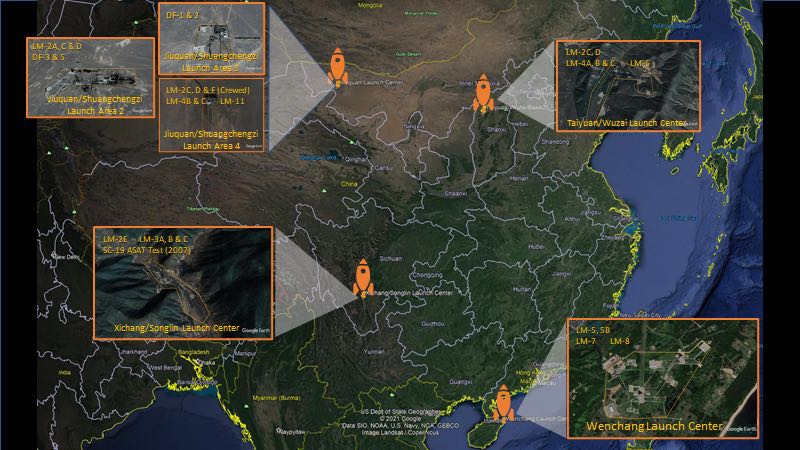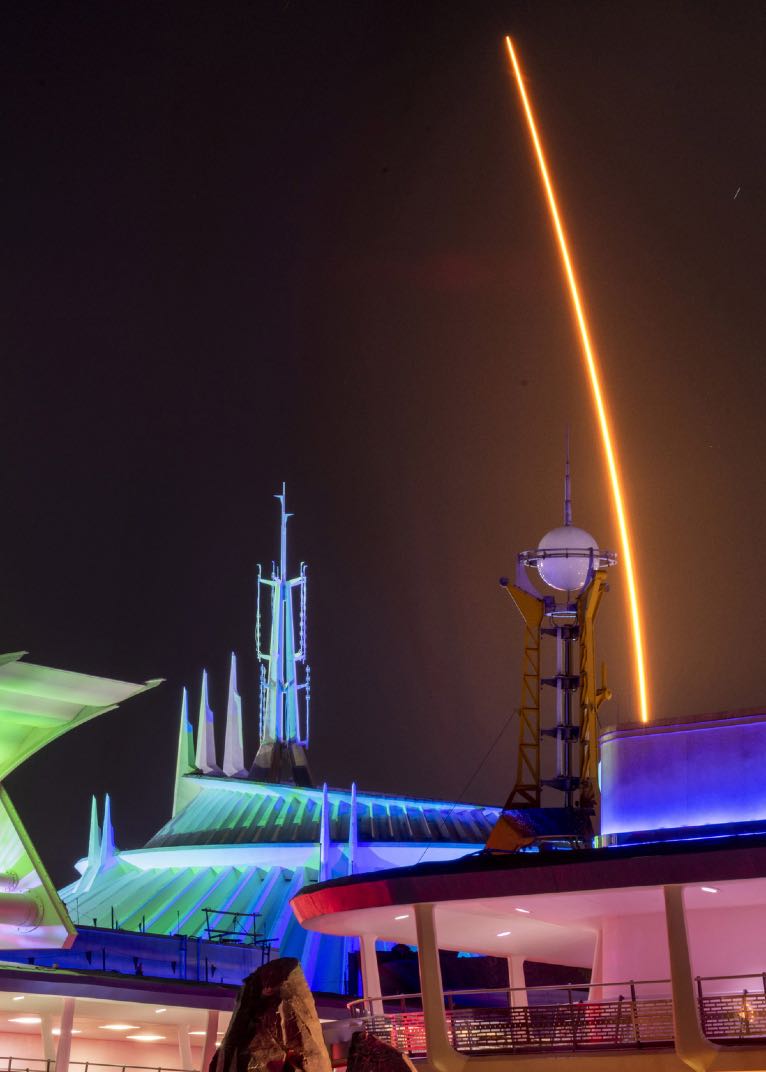
8 April 2021: China launched the third in a series of experimental Shiyan 6 satellites April 8 aboard a Long March 4B rocket. Not much is known about the satellite other than it will test new space technologies, including a new super-black coating to absorb stray light and improve the sensitivity of on-board optics. See VIDEO.

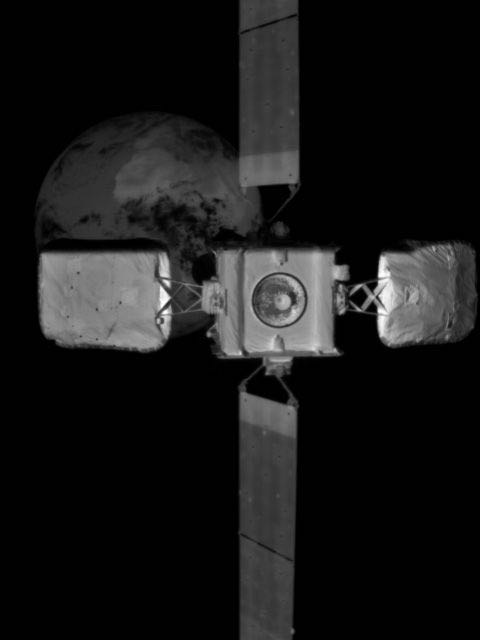
Image source: https://pbs.twimg.com/media/EyfTEigVIAAJ-el?format=jpg&name=large
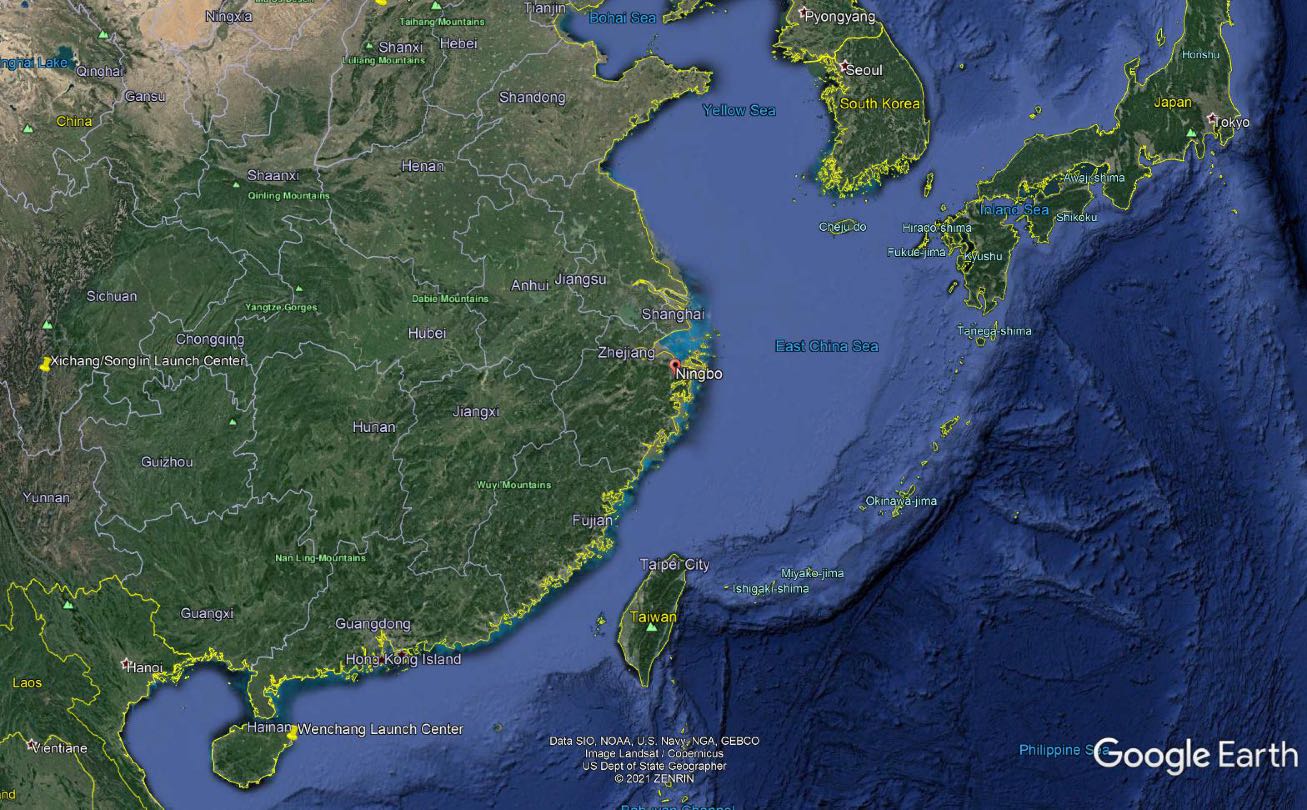
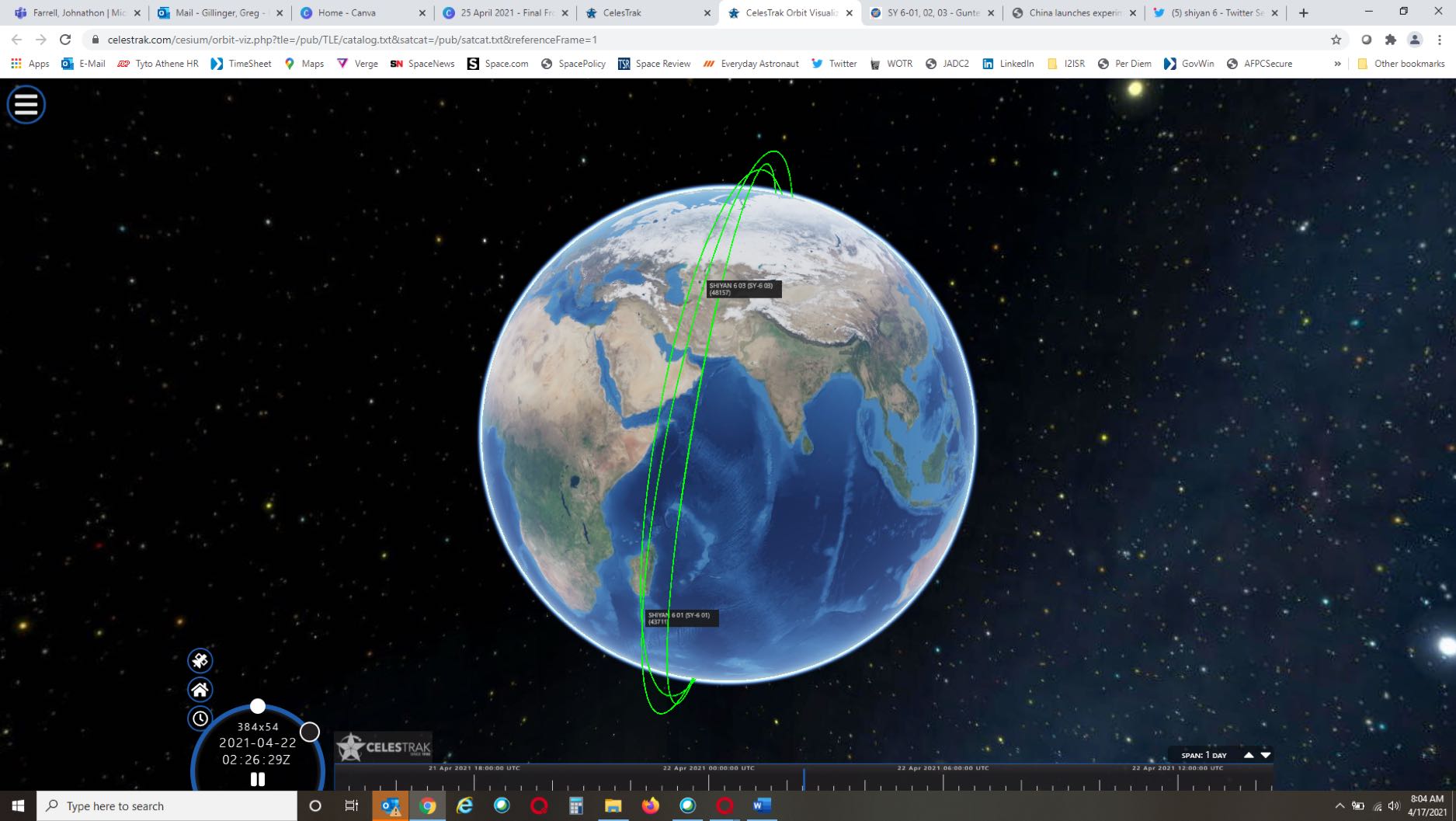
– The Long March 4B rocket carried the Shiyan 6 spacecraft into a polar orbit about 620 miles (1,000 km) above Earth, with an inclination of 99.5 degrees to the equator.
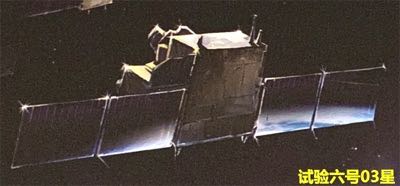
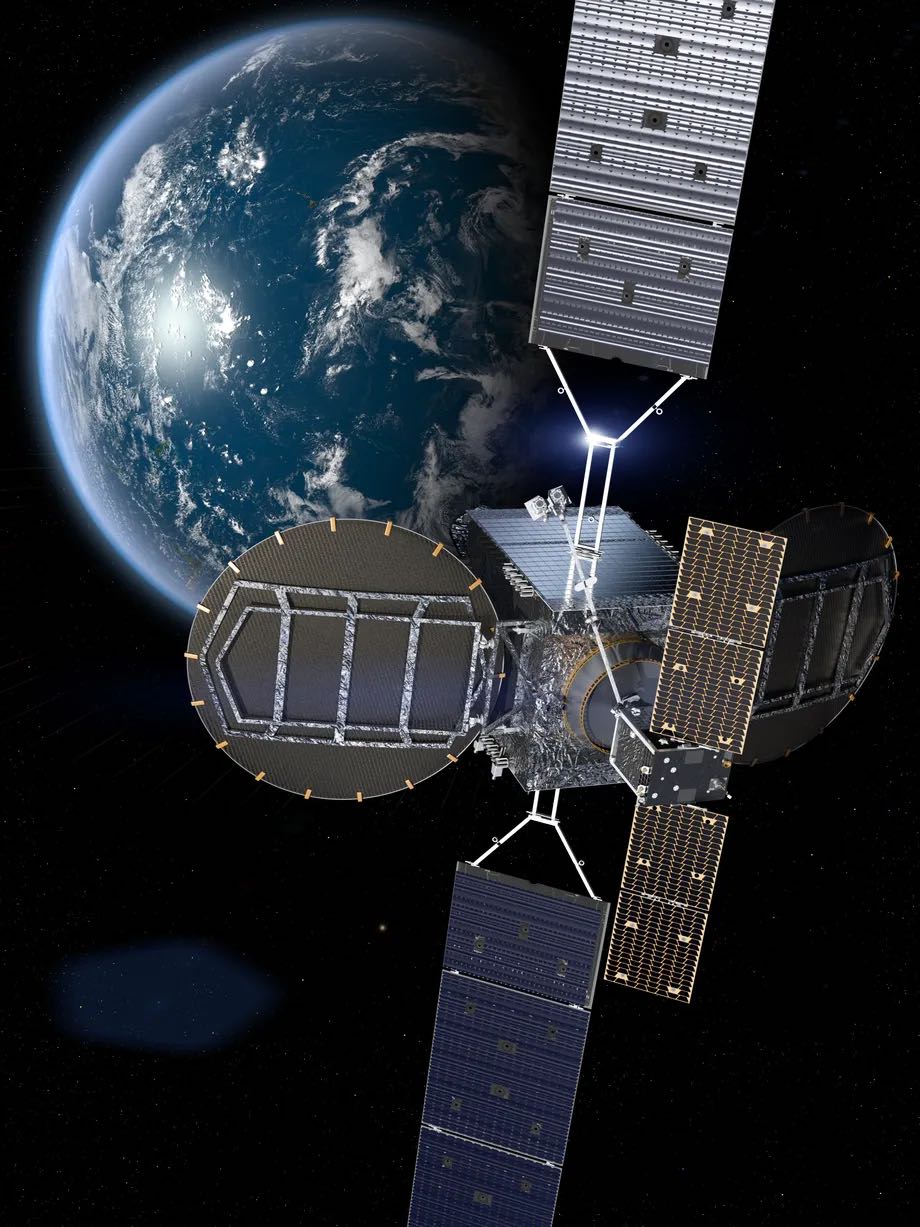
Image source: https://space.skyrocket.de/doc_sdat/sy-6.htm
– This is the third in a series of Shiyan 6-type satellites. The first two Shiyan 6 satellites launched on Long March 2D rockets from the Jiuquan space center in northwestern China in November 2018 and July 2020. The first two Shiyan 6 satellites were deployed at lower altitudes.
– Shiyan means “experiment” in Chinese.
– One of the technologies to be tested on the Shiyan 6 spacecraft is a new super-black coating designed to prevent stray light from disrupting optical cameras.
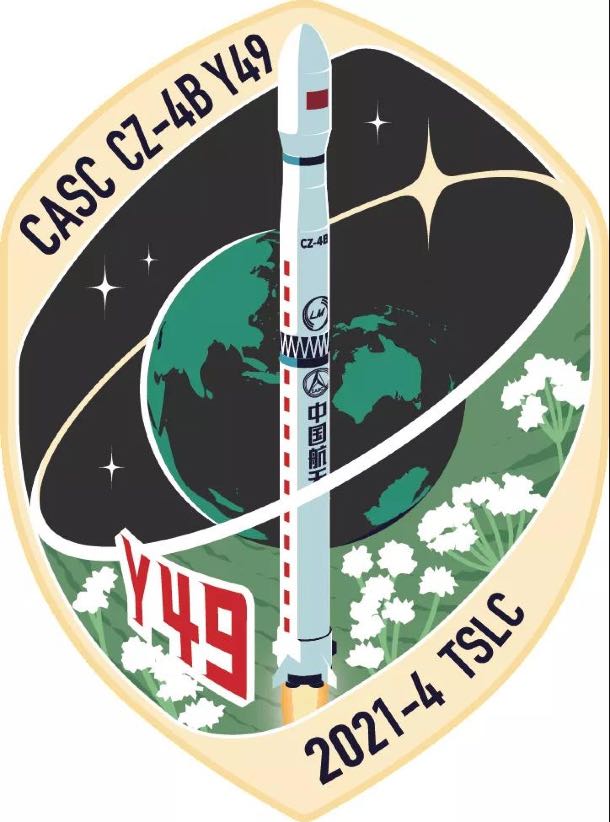
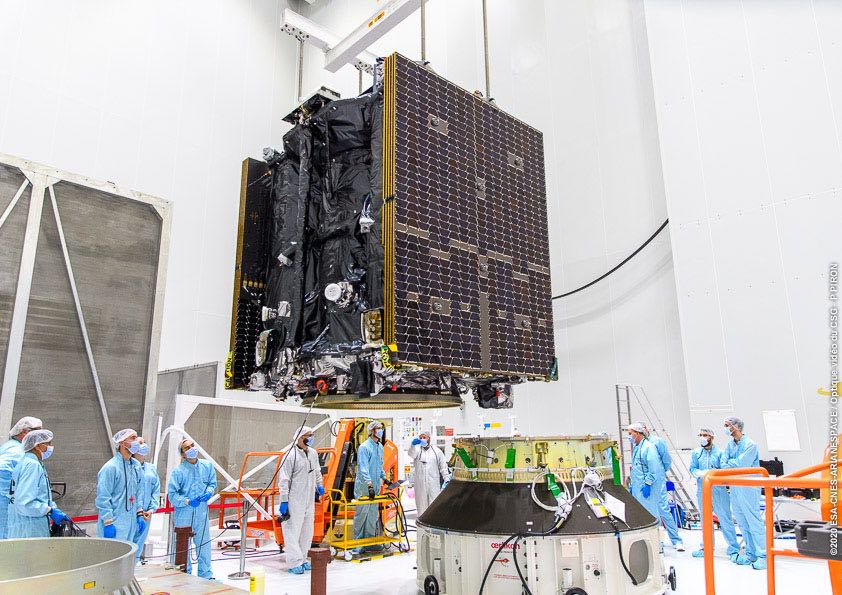
Image source: https://pbs.twimg.com/media/EyfTE4VUcAICPxa?format=jpg&name=medium
China’s National Center for Nanoscience and Technology said that the “nanocomposite” dark coating was installed on the Shiyan 6 satellite’s optical system. The dark material is designed to suppress stray light from the sun and Earth and “greatly improve the satellite optical system’s ability to detect dim targets.” The super-black material will absorb 99.6% of ultraviolet, visible, and near-infrared light…and has broad application prospects in dim target detection, interstellar navigation, infrared stealth and other fields.” Dim target detection capabilities can aid in tracking other satellites in orbit.
Fun Fact: 60 years ago, Soviet cosmonaut Yuri Alekseyevich Gagarin was the first human in space on Vostok-1, became a worldwide celebrity, and was awarded the Order of Lenin. However, Soviet space successes were attributable chiefly to one man: Sergei Pavlovich Korolev. He was part of a team that launched the first Soviet liquid-fueled rocket in 1933. In 1938 he was convicted of treason and sabotage and sentenced to 10 years in a labor camp. In 1945, Korolev was sent to Germany to learn about the V-2 rocket. By 1954 he built a rocket that could carry a 5-ton nuclear warhead leading to the launch of the first ICBM in 1957. On 4 Oct, 1957, Sputnik 1 was fired into Earth’s orbit, and Korolev, still technically a prisoner, was officially rehabilitated. Throughout his life, Korolev remained anonymous, known only as the “Chief Designer.” Upon his death in 1966, his identity was revealed to the world, and he was buried in the Kremlin wall as a hero of the USSR.