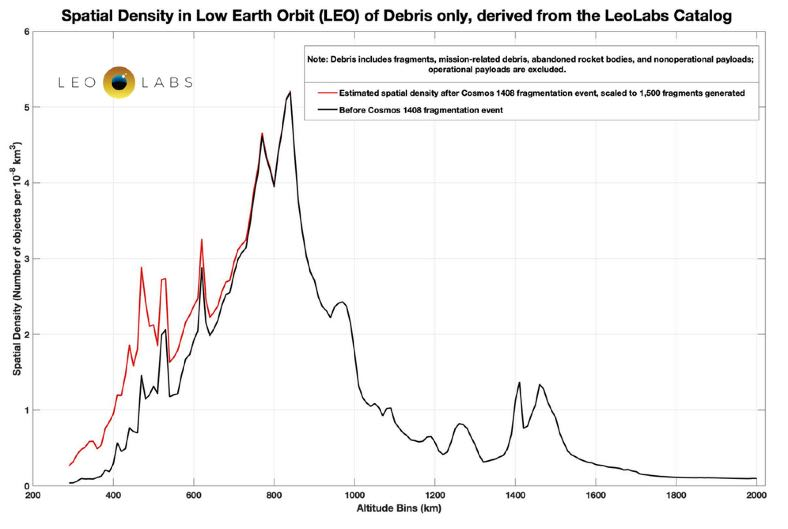
19 November 2021: LeoLabs posted a 2-part analysis of the debris field created from the 15 November Russian Nudol ASAT test (read part 1 & part 2). Conclusion: There will be some potential collision risk to most satellites in LEO from the fragmentation of Cosmos 1408 over the next few years to decades. Listen to Space Station Wake Up call from 15 November.
– While any ASAT test is a terrible idea, this one occurred in one of the worst possible orbits.
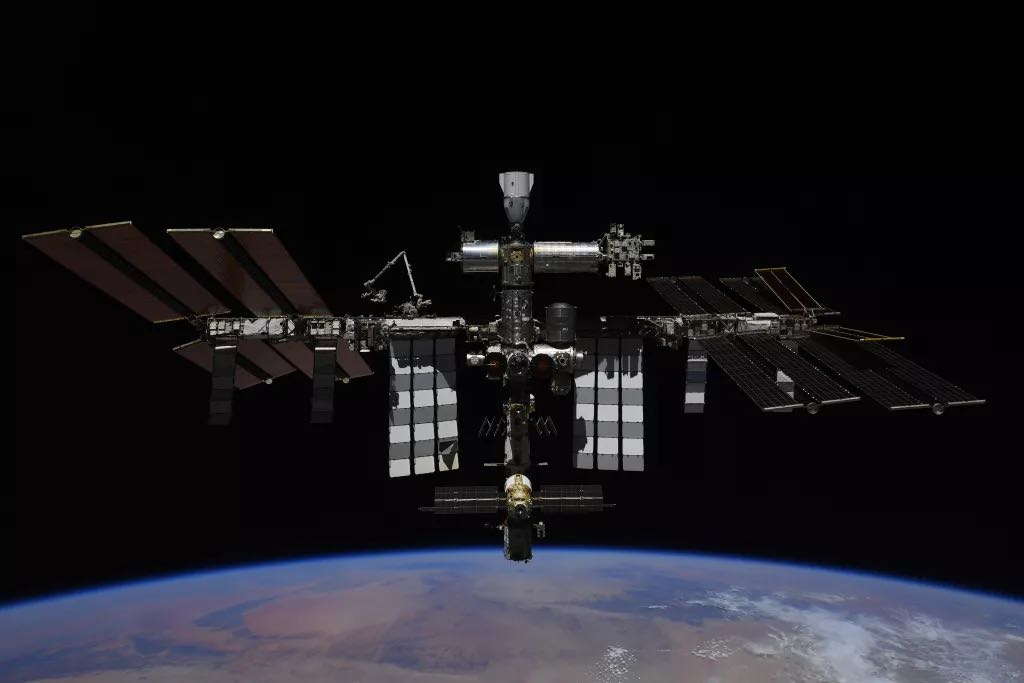
– This satellite was in a high inclination orbit, at an altitude that put it right in the middle of many other operational assets; notably, it was less than 100km above the International Space Station, and less than 100km below multiple commercial constellations including SpaceX’s Starlink fleet.
– Cosmos 1408 was also a very large satellite, with a reported mass of ~2,200 kg.
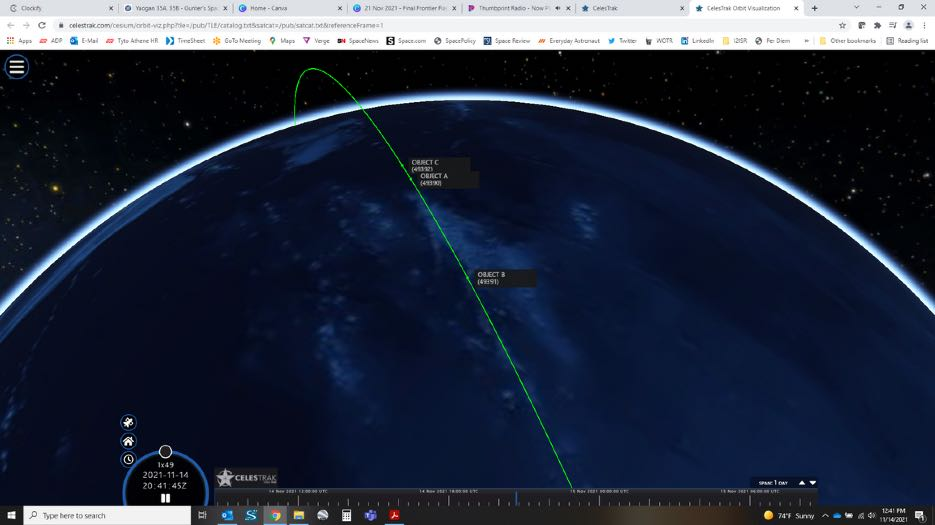
– LeoLabs detected 253 objects in the first days after the test. These objects likely represent the largest fragments with the least amount of delta velocity imparted to them, as they are orbiting closest to the original orbit of Cosmos 1408. If this is accurate, rules of thumb would indicate 5—10x more objects than this, putting total notional trackable debris counts in the area of 1,250—2,500 pieces.
– Objects ejected into lower perigees will have their orbits circularize relatively quickly, and the majority will re-enter the atmosphere over the next five years.
– Objects ejected into higher orbits will have their orbits circularize more slowly, and the majority will re-enter the atmosphere over much longer timeframes - potentially decades, depending on altitude.
– Within weeks to months of the breakup, the debris will largely be dispersed around the Earth (i.e., global spread of the fragments’ right ascension of the ascending node). Thus, ultimately the statistical collision risk to other LEO satellites will then be predominantly dependent on altitude.
– Based on previous collisions and ASAT tests, LeoLabs expected so see a greater number of objects.
– The low debris count number relative to the large mass of the Cosmos 1408 may be explained by a non-hypervelocity (<6km/sec) intercept.
– Potentially the Russian ASAT impactor approached Cosmos 1408 generally from behind to “rear end” Cosmos 1408 at a relative velocity well below 6 km/s, this would explain both the distribution of posigrade debris and the lower debris count currently observed.
Preliminary calculations suggest that the cloud of debris will increase the number of avoidance maneuvers performed by satellite operators all over the world by more than 100% in the next few years, Tim Flohrer, head of the European Space Agency’s (ESA) Space Debris Office, told Space.com.
“The peak can be even significantly higher than 100%,” Flohrer added. “In this 400 to 500 kilometer altitude, the fragments will not survive long. We expect them to decay slowly over months and years so the risk increase will still be significant after one or two years.”
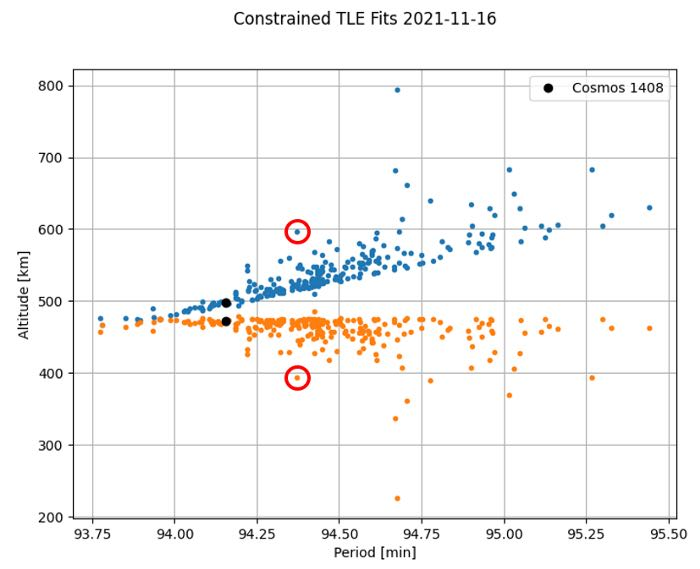
Diagram depicting apogee (blue) and perigee (orange) for 253 new Kosmos-1408 debris objects.