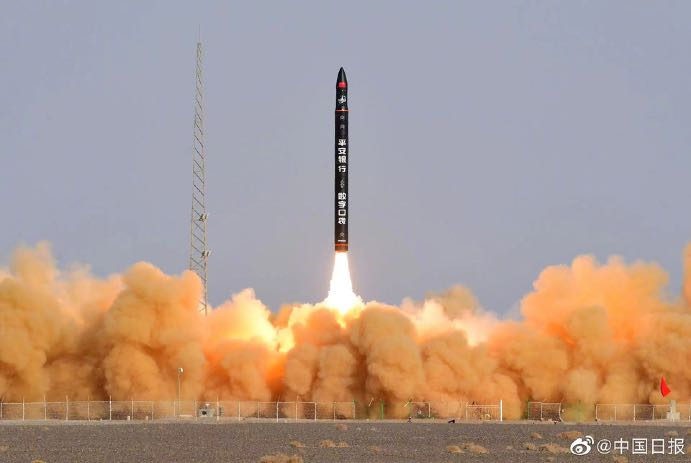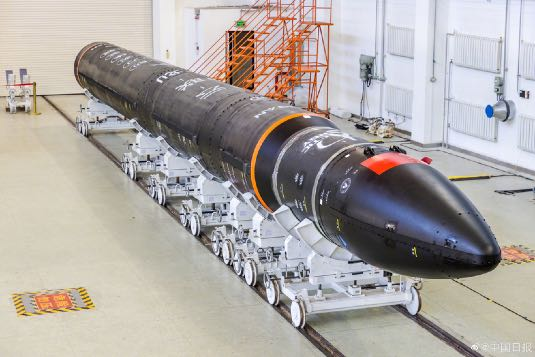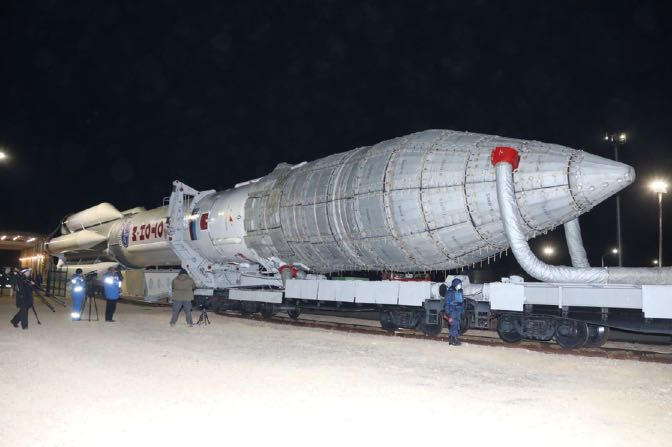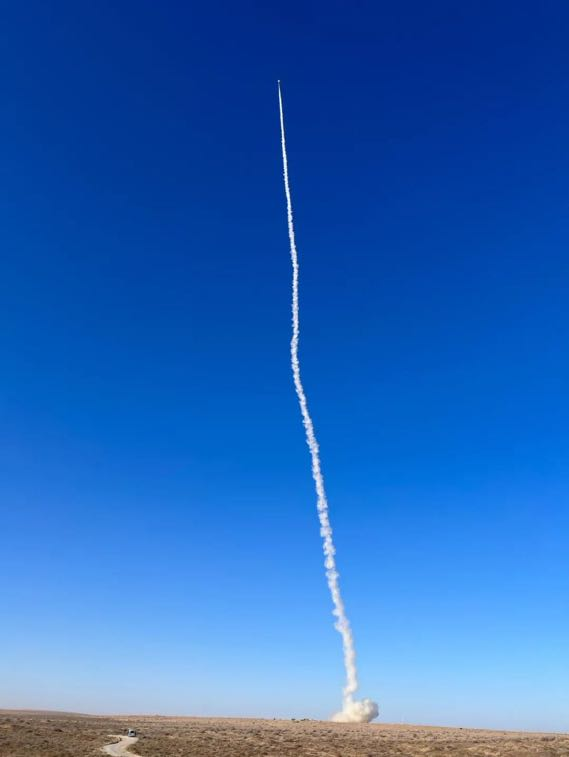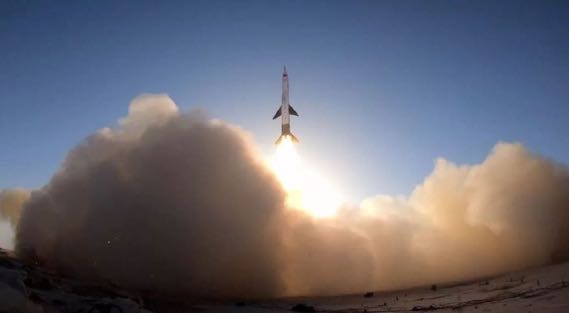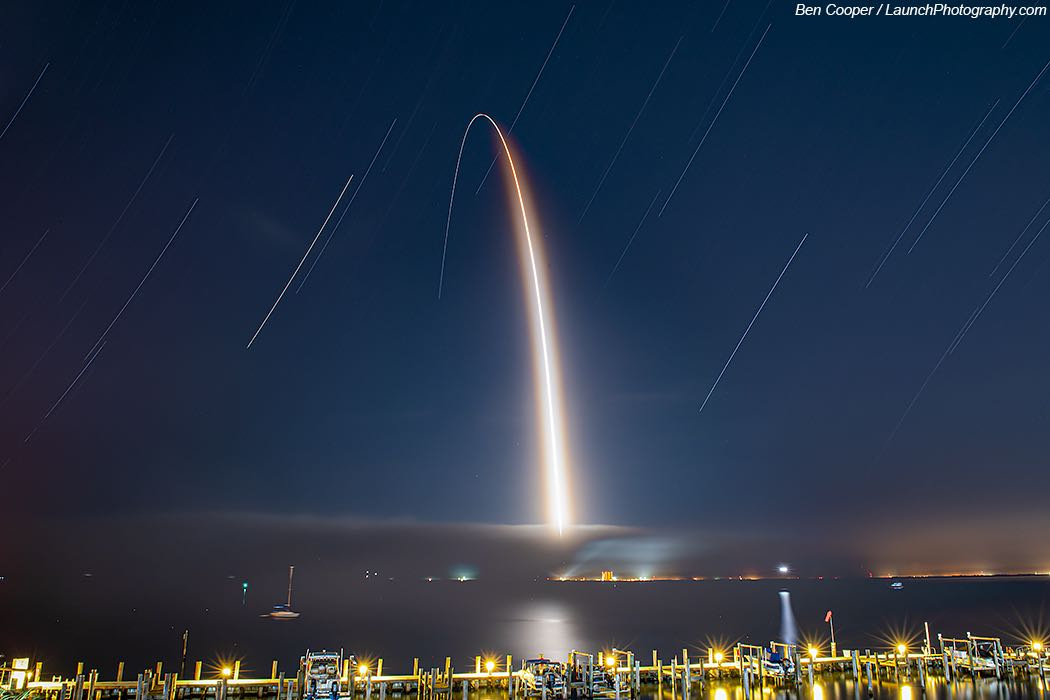
9 Dec 2021: Long March 4B launched the Shijian (SJ)-06 (05) group of satellites from Jiuquan on Dec. 9. This was the 400th launch of China’s Long March family of launch vehicles and the first SJ-6 launch in 11 years. The orbit appears to be lower than previous SJ-6 missions. See Launch Video.
– The SJ-6 (05) satellites were developed by the China Academy of Space Technology (CAST) and Aerospace Dongfanghong Satellite Co., Ltd. The last SJ-6 launch occurred in 2010.
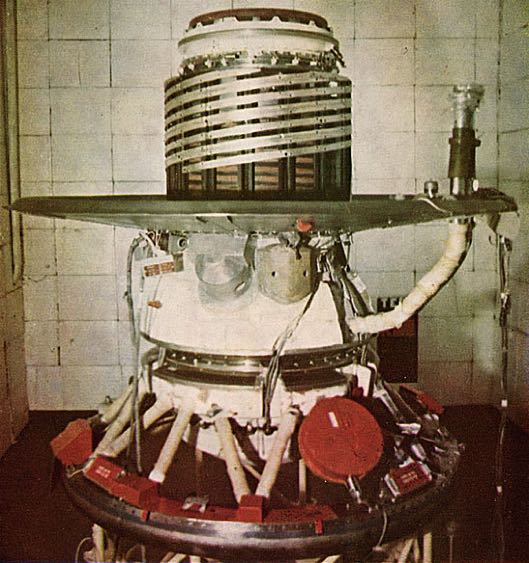
– No images of the satellites have been published.
– Western analysis of previous SJ-6 missions and their roughly 585km Sun-synchronous orbits suggests SJ-6 satellites are designed for signals intelligence or electronic intelligence purposes.
– The news release from CAST states the purpose of SJ-6 (05) is the same as the four pairs a decade ago (detection of space environment & new technology validation).
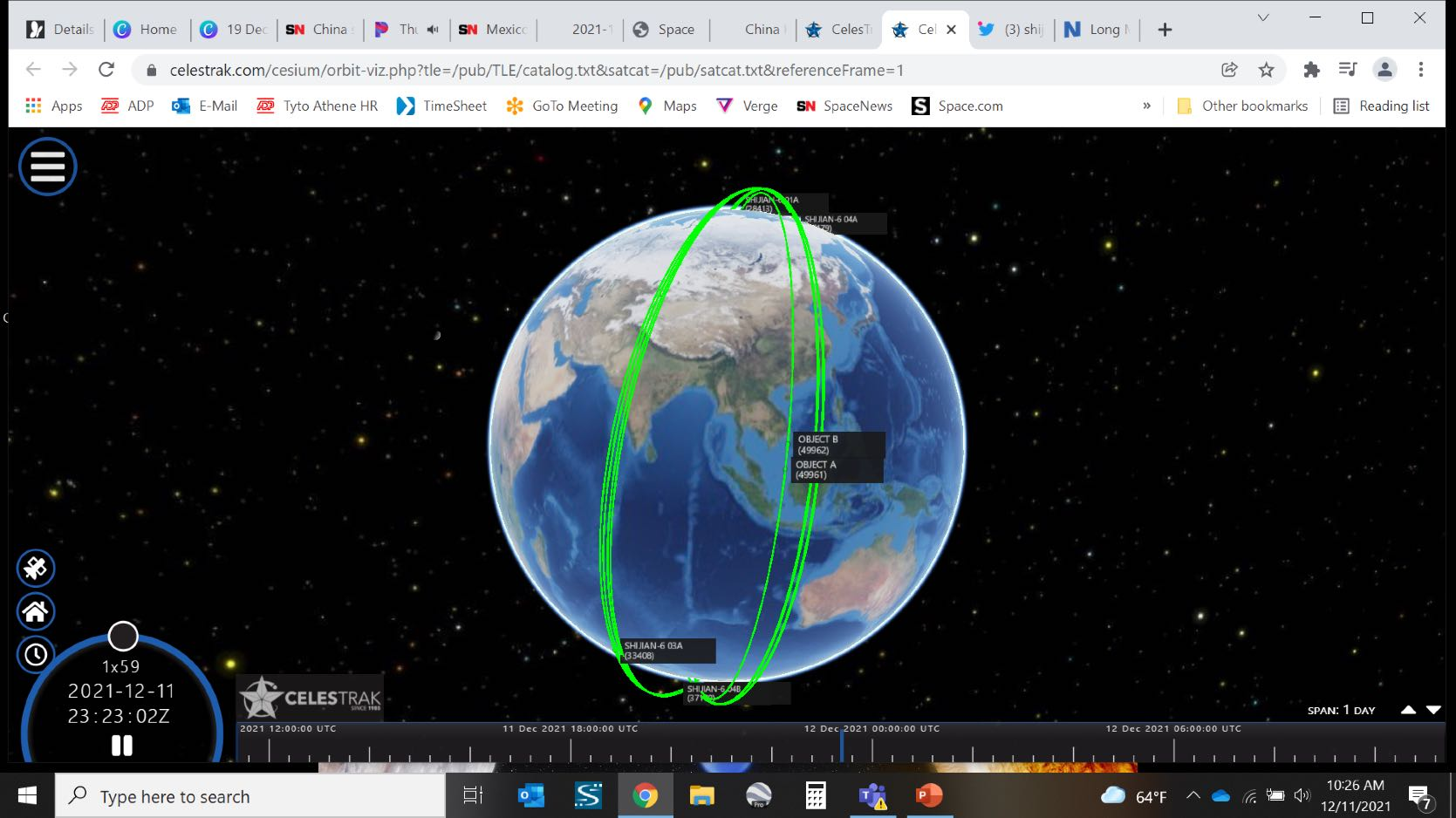
– However, the newest SJ-6 satellites are orbiting ~130km (21%) lower than previous missions. SJ-6 (05) satellites are at a similar inclination (97.4°), but have apogees between 465-467km and perigees between 451-453km.
– The SJ-6 (05) orbits are also lower in altitude than previous Yaogan or Gaofen missions. The closest of these being Yaogan 14 (493/491km) and Gaofen 14 (487/482km).
– While early in its deployment (and subject to change) the SJ-6 satellites remain in closer proximity to one another than previous SJ-6 missions.
– Previous SJ-6 missions were launched in two-year intervals beginning with SJ-6 01A & 01B in 2004 and concluding in 2010 with SJ-6 04G & 04H. These missions orbited at 97.7 degrees with apogees ranging between 582-602km and perigees between 561-574km.
– The nature of these orbits led to speculation that the SJ-6 mission was similar to the US Poppy program, the successor to the first American electronic intelligence satellite, known as “GRAB” (Galactic Radiation and Background). Poppy was designed to detect land-based radar emitters and support ocean surveillance.
The orbit for SJ-6 (5) differs from previous SJ-6 missions. Inclination is nearly the same but altitude is ~130km lower, suggesting an imagery mission. The SJ-6 (5) satellites also orbit in closer proximity to each other than previous SJ-6 missions. This separation could change as the mission progresses.
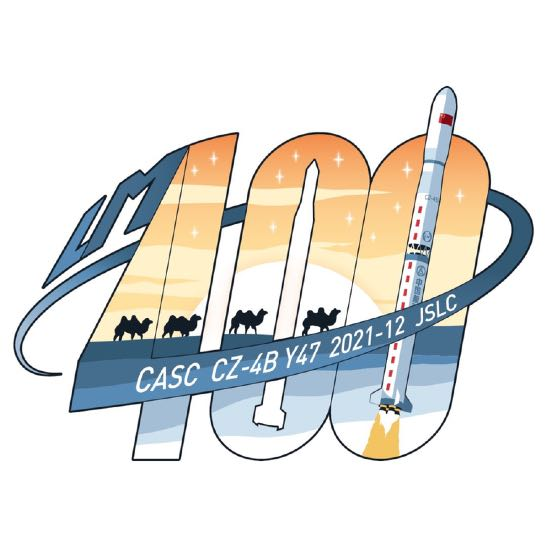
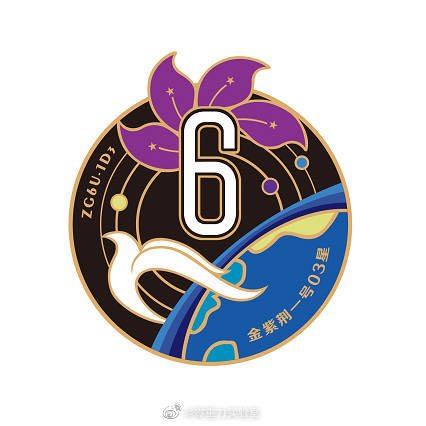
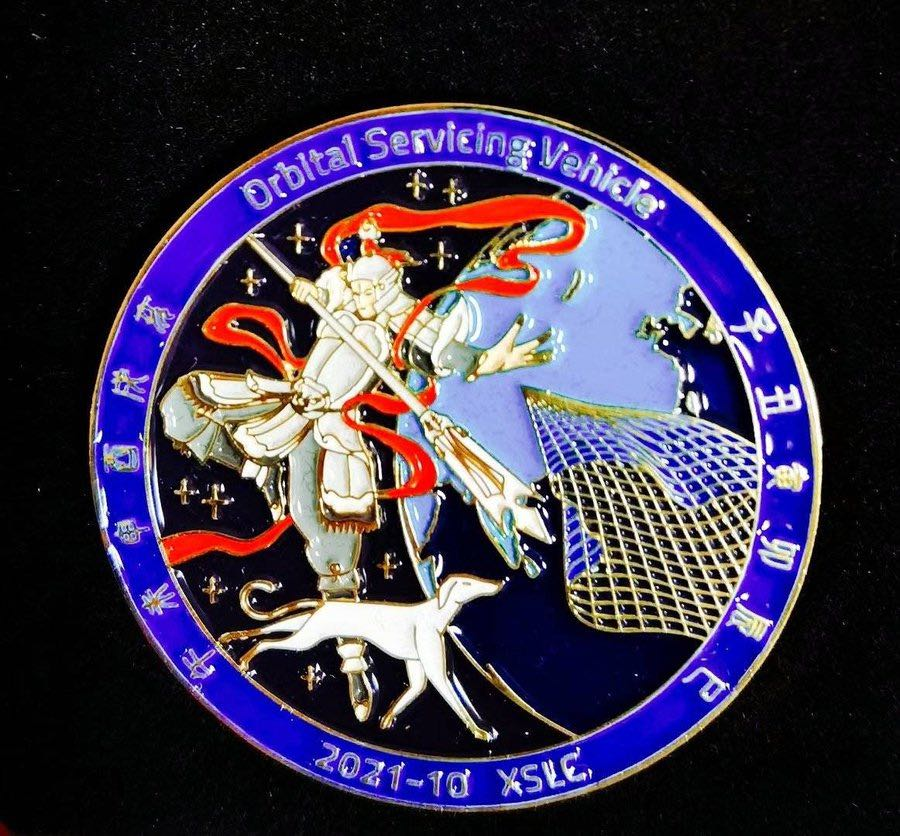
400th Long March launch mission patch.
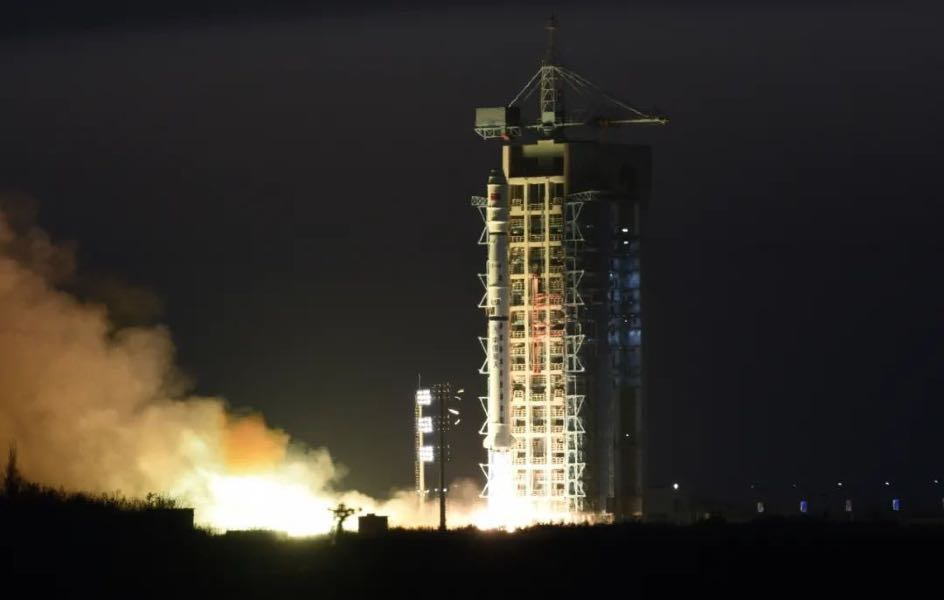
Shijian-6 Group 5 launch from Jiuquan.
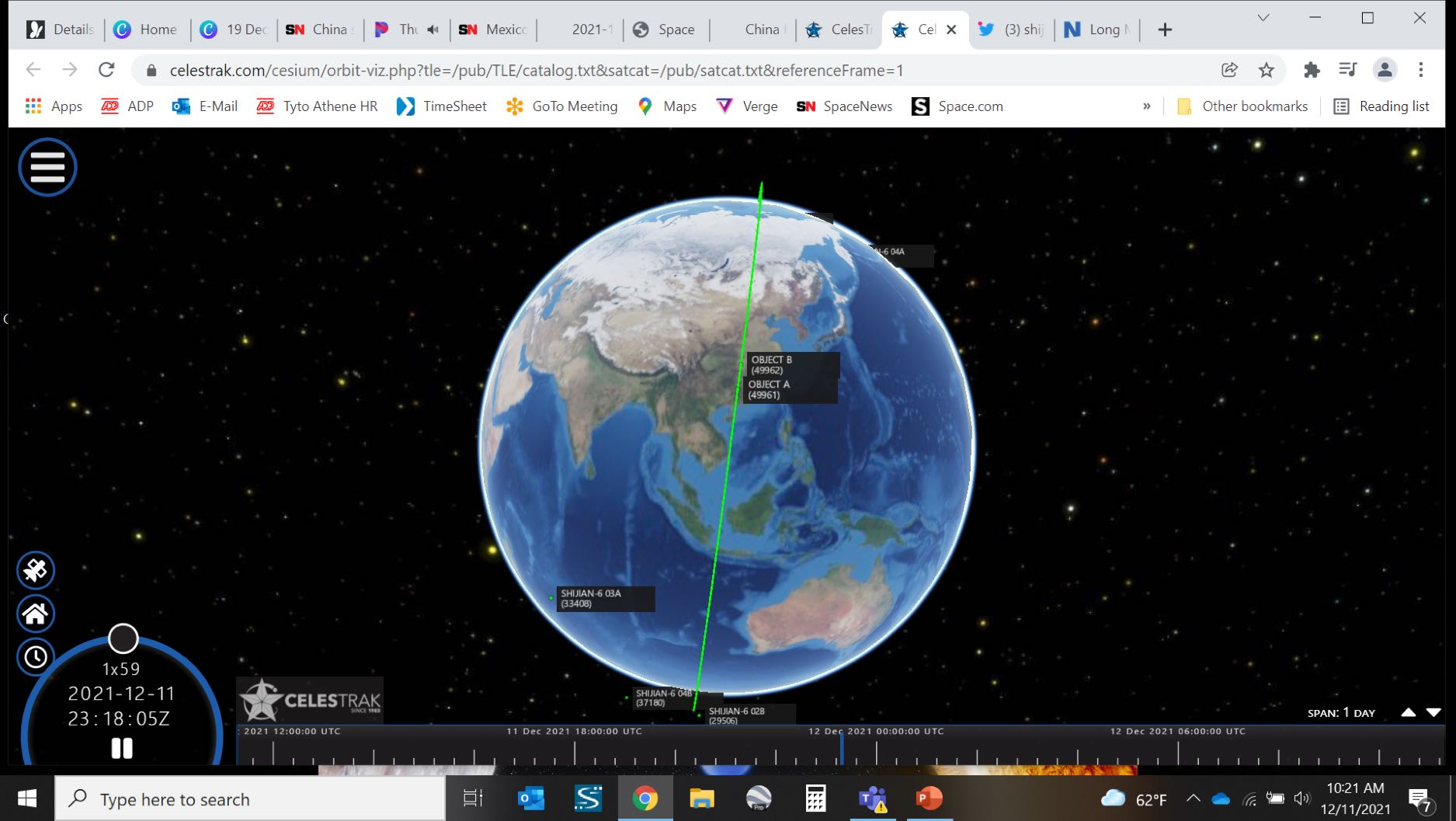
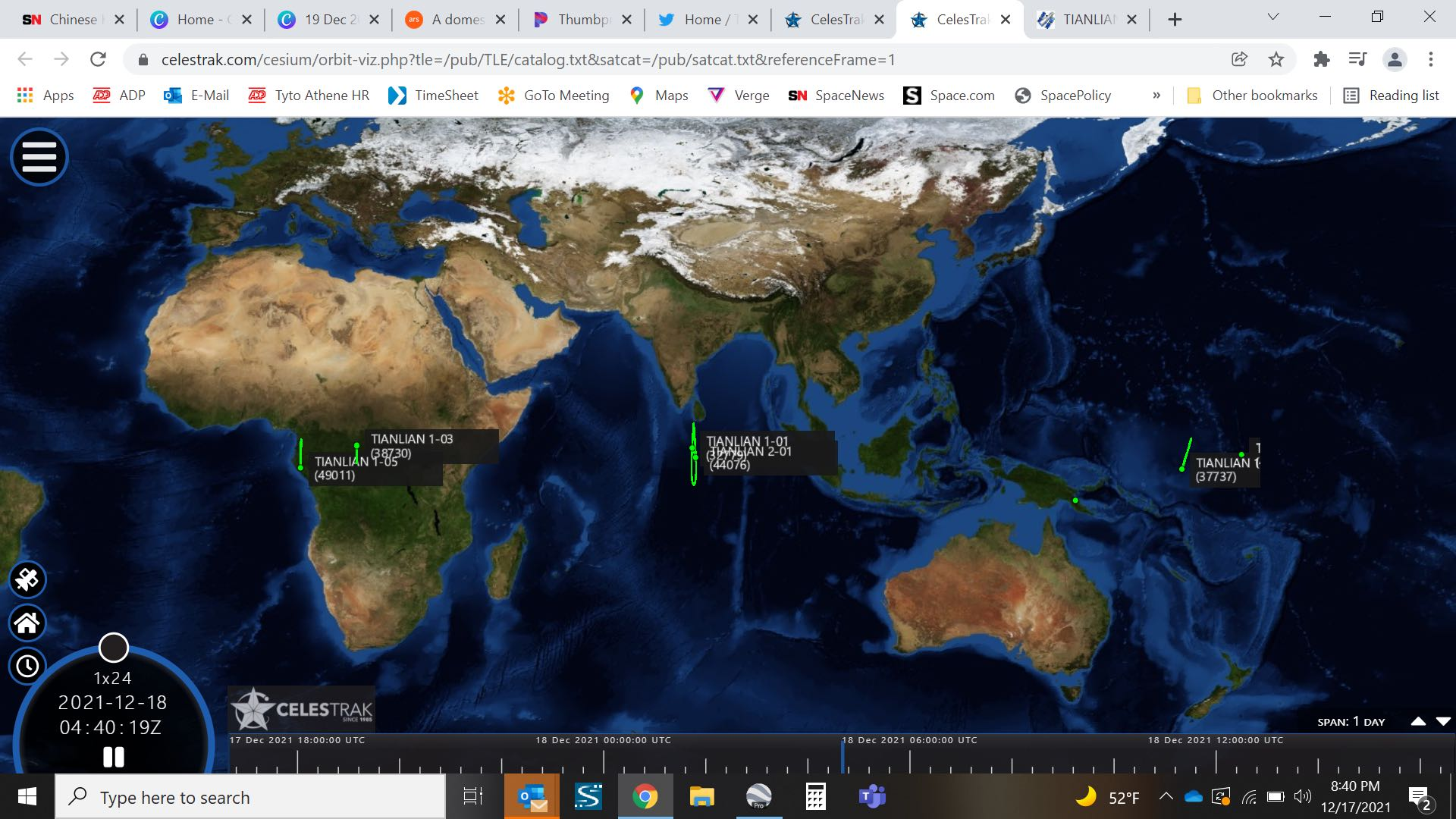
Current SJ-6 (5) Orbits.