8 Mar 2022: Iranian officials said a Qased launcher successfully placed the Noor 2 satellite into orbit. Iran’s state broadcaster showed video of the launch, which apparently took off from the Shahroud missile range in the northeastern part of the country. See Video.
– The Qased rocket is made of three stages, the first stage is based on an Iranian ballistic missile upgraded to loft a small payload into orbit.
– Iran’s Revolutionary Guard Corps said it placed a satellite named Noor 2 into orbit. The government-run Islamic Republic News Agency described Noor 2 as a reconnaissance satellite. The news agency said ground teams had received the first signals from the spacecraft.
– Noor means “light” in Persian.
– The Noor 2 satellite likely weighed less than 100 pounds (45 kilograms) at launch, but Iranian officials revealed no more details about the mission. It appears to be a follow-up to the Noor 1 satellite launched on the same type of rocket in April 2020.
– U.S. military showed two objects – likely the rocket’s upper stage and Noor 2 – orbiting at an altitude of roughly 310 miles (500 kilometers) at an inclination of 58.3 degrees to the equator.
– This was the second use of the Iranian military’s Qased satellite launcher. Both flights of the Qased – at least those publicly known – have been successful.
– The launch comes days after satellite pictures suggested Iran’s civilian program suffered another failed launch.
– The capabilities of Noor-2 remain unknown. Iran launched the Noor-1 in April 2020. Noor 1 has not maneuvered and has been described by US Space Command as “a tumbling webcam.”
– The launch occurred as nations awaited Tehran’s decision in negotiations over the country’s tattered nuclear deal.
– The US alleged Iran’s satellite launches defy a UN Security Council resolution and called on Tehran to undertake no activity related to ballistic missiles capable of delivering nuclear weapons.
– The US imposed sanctions on Iran’s civilian space agency and two research organizations in 2019, saying they were being used to advance Tehran’s ballistic missile program.

Qased launcher carrying Iran's Noor 2 satellite.
Launch-site camera view of the Noor 2 mission.
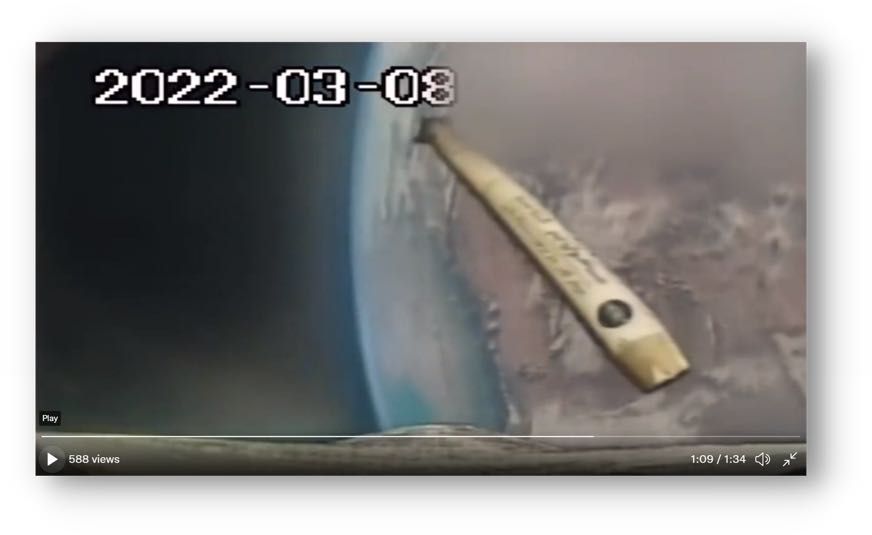
Noor 2 launch imagery dated 8 March 2022.