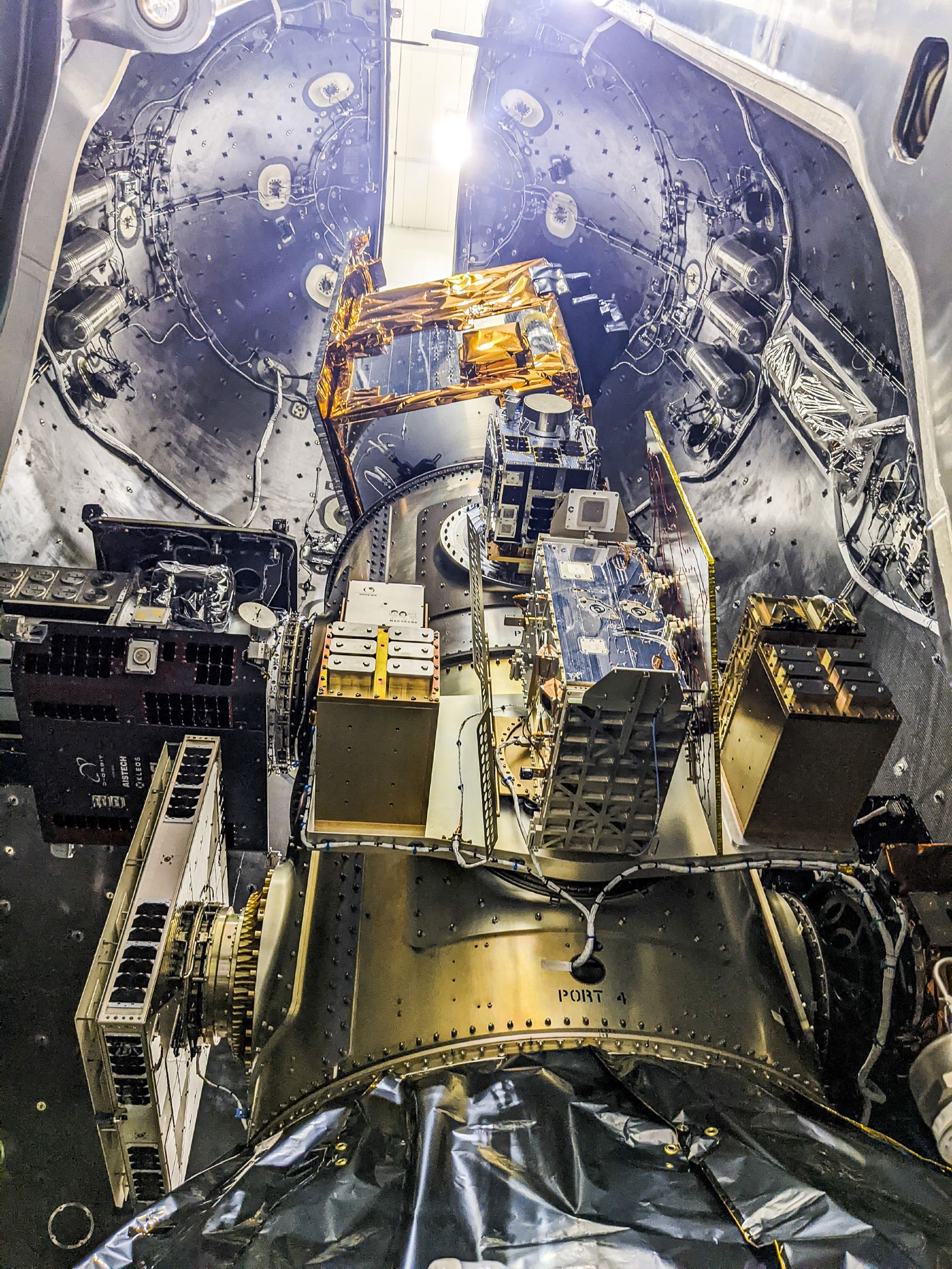
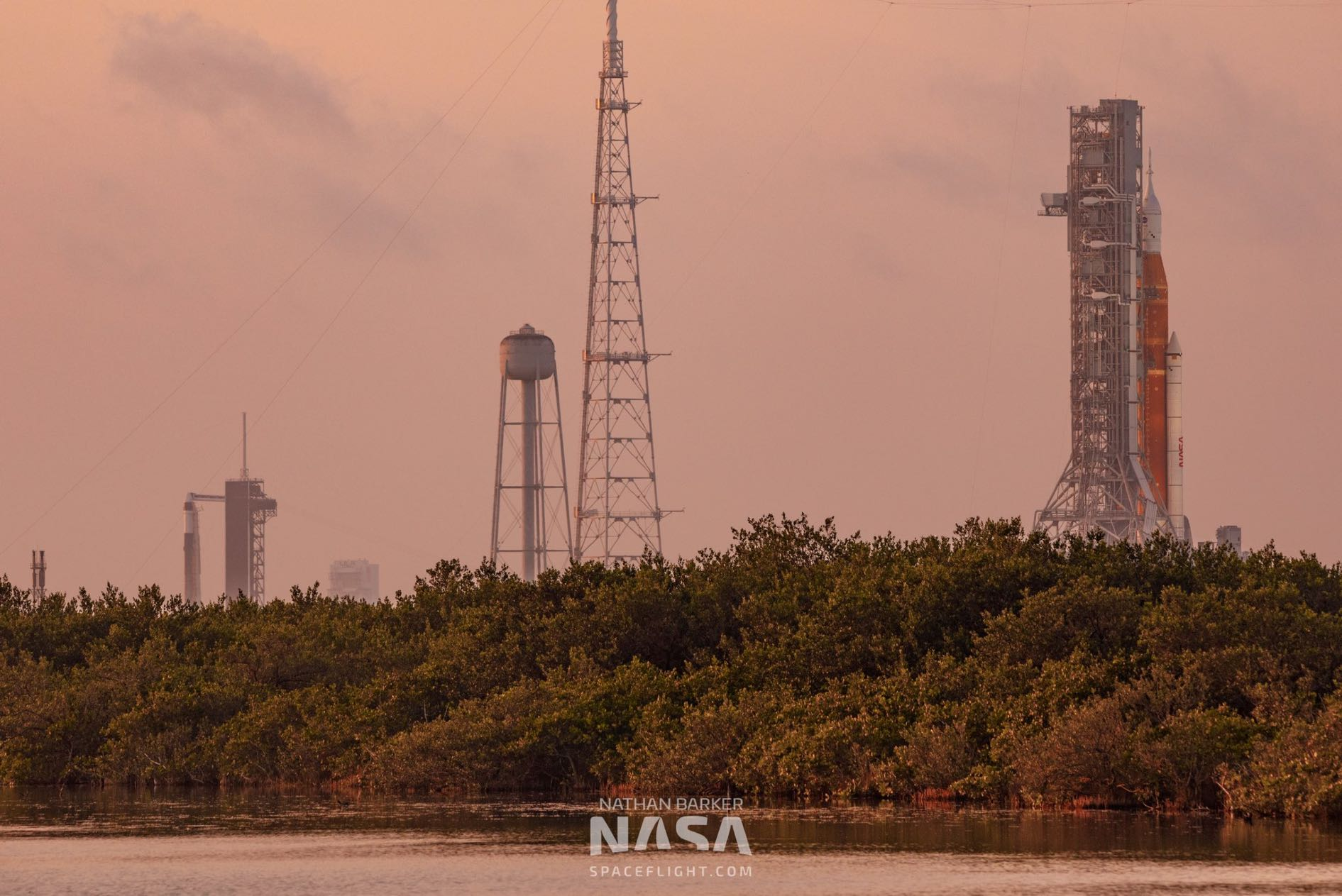
1 Apr 2022: SpaceX launched the fourth in its series of dedicated rideshare missions, placing one relatively large satellite and dozens of smallsats into low Earth orbit. See Video.
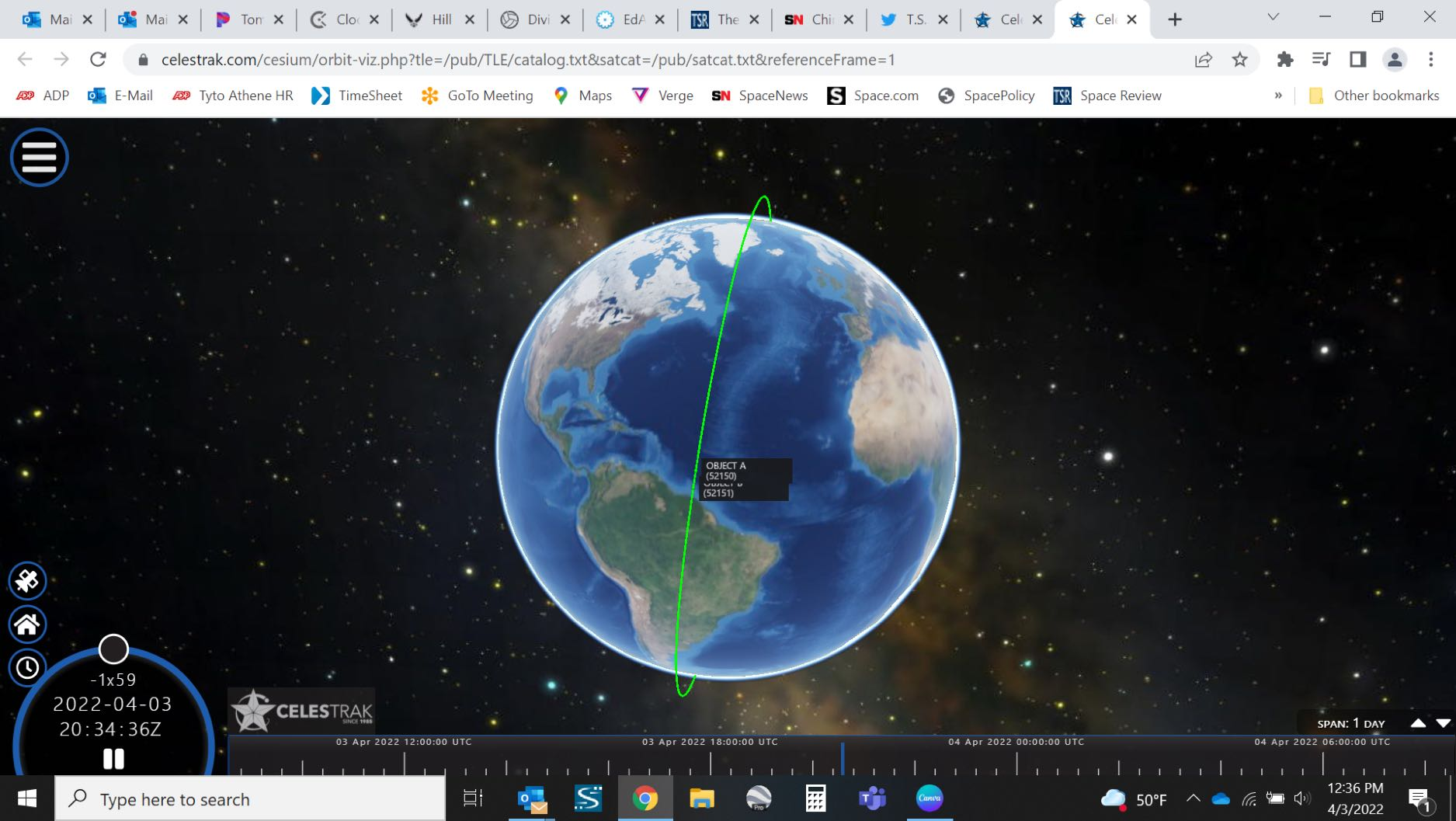
– The upper stage initially entered a sun-synchronous orbit at 650km, deploying three satellites, then maneuvered to 500km before deploying the remaining payloads.
– SpaceX used the “Polar Corridor” for this mission that allows launches from Cape Canaveral to polar orbits. With populated islands to the south, rockets complete a “dogleg” maneuver to essentially fly around them.
– This was the fourth SpaceX rideshare mission designed to carry large number of smallsats at relatively low prices.
– SpaceX launched the first Transporter mission on 24 Jan 2021, with a record 143 satellites. The Transporter 2 mission on 30 June 2021, carried 88 payloads into orbit, and Transporter 3 launched 13 Jan with 105 spacecraft.
– The manifest for Transporter 4 was down to 40 spacecraft, but that was due to EnMAP’s presence on the mission.
– At 980kg, EnMAP is heavier than any of the satellites SpaceX has flown on the previous Transporter missions. The Falcon 9 delivered EnMAP to an orbit higher than the the past rideshare launches.
– EnMAP carried a hyperspectral instrument for environmental studies.
– Swarm flew 12 of its SpaceBEE satellites, each 1/4 of a single-unit cubesat in size. Swarm is building a constellation of communication satellites to support IoT sensors.
– Satellogic flew five of its high-resolution imaging satellites on the mission. One of the five was a new “Mark 5” model with an improved multispectral camera featuring a resolution of 70cm and 40% larger imaging swath.
– HawkEye 360 flew three satellites to measure radio-frequency signals, joining nine others previously launched. The company said the new Cluster 4 satellites include enhanced antennas to better detect and geolocate terrestrial radio-frequency signals.
– Unseenlabs, flew its RF detecting BRO-7 satellite on the mission. BRO-6 will launch later this month on a Rocket Lab Electron, with a long-term goal of operating 20 satellites.
– Pixxel, an Indian startup planning a constellation of hyperspectral imaging satellites, launched its first “fully-fledged” satellite. The six-unit cubesat is designed to produce 10m visible and infrared hyperspectral imagery.
– Transporter-5 is scheduled for Jun 2022 and Transporter-6 in Oct 2022.
EnMAP Satellite.

3 Satellites at 650km.

Remaining 37 Satellites at 500km.
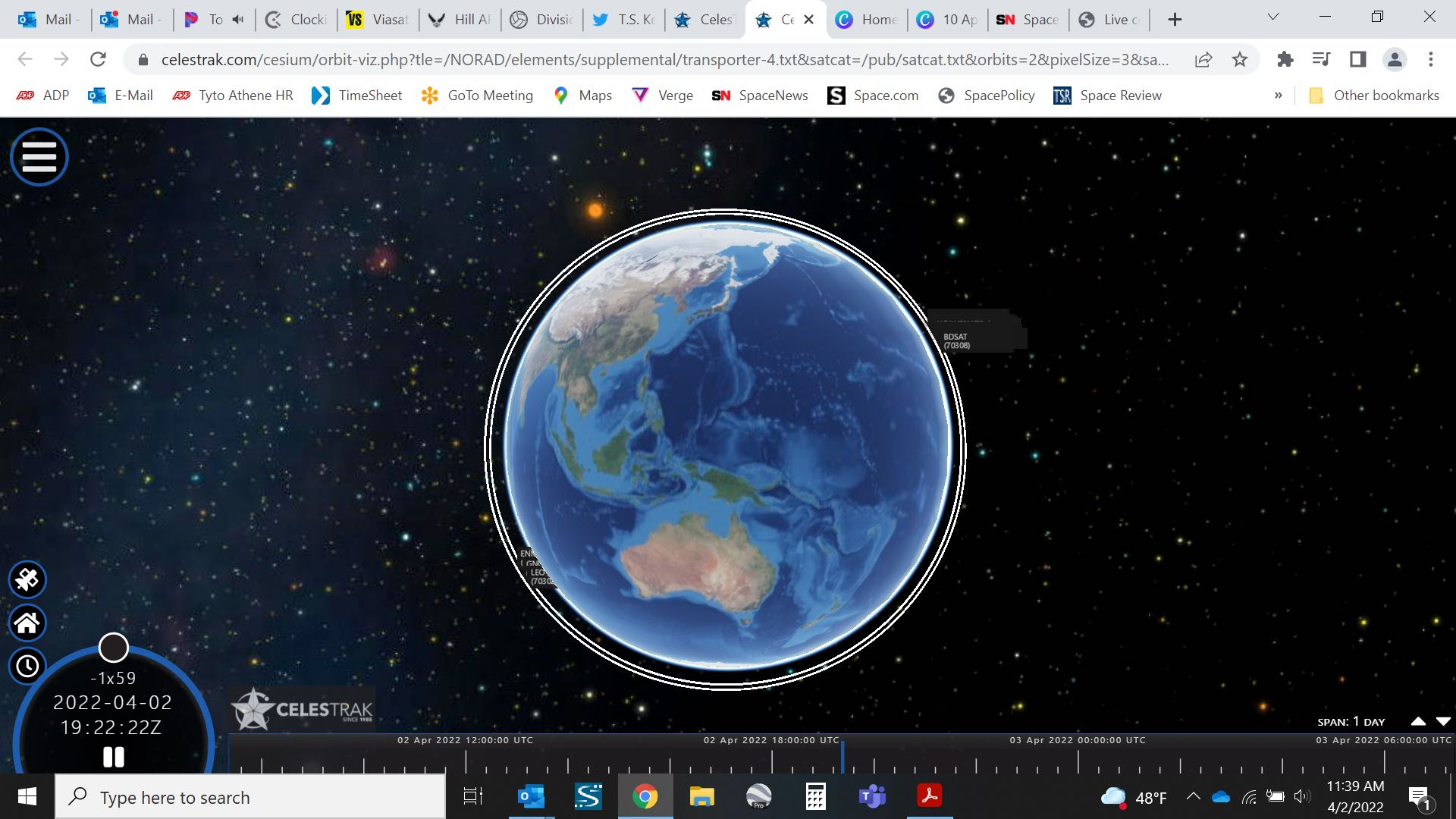
Orbital Comparison.