
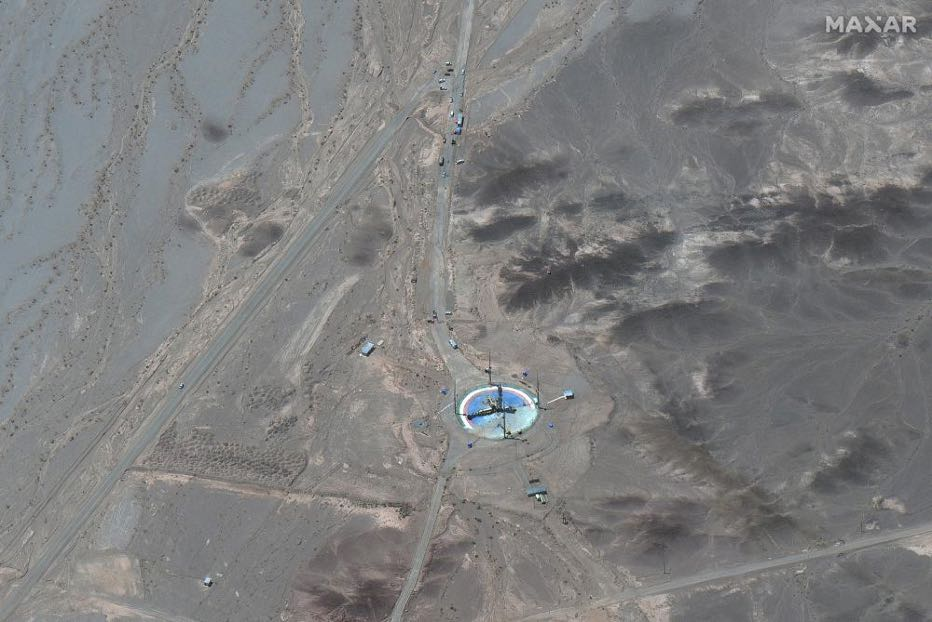


15 Jun 2022: Iran acknowledged it is planning two tests of its new solid-fueled rocket after satellite photos showed preparations at a desert launch pad previously used in the program, even as tensions remain high over Tehran's rapidly advancing nuclear program. Iran's state-run IRNA news agency quoted Defense Ministry…
15 Jun 2022: Iran acknowledged it is planning two tests of its new solid-fueled rocket after satellite photos showed preparations at a desert launch pad previously used in the program, even as tensions remain high over Tehran’s rapidly advancing nuclear program. Iran’s state-run IRNA news agency quoted Defense Ministry spokesman Ahmad Hosseini saying Iran will launch its satellite-carrying Zuljanah rocket twice more and acknowledged a previous test.
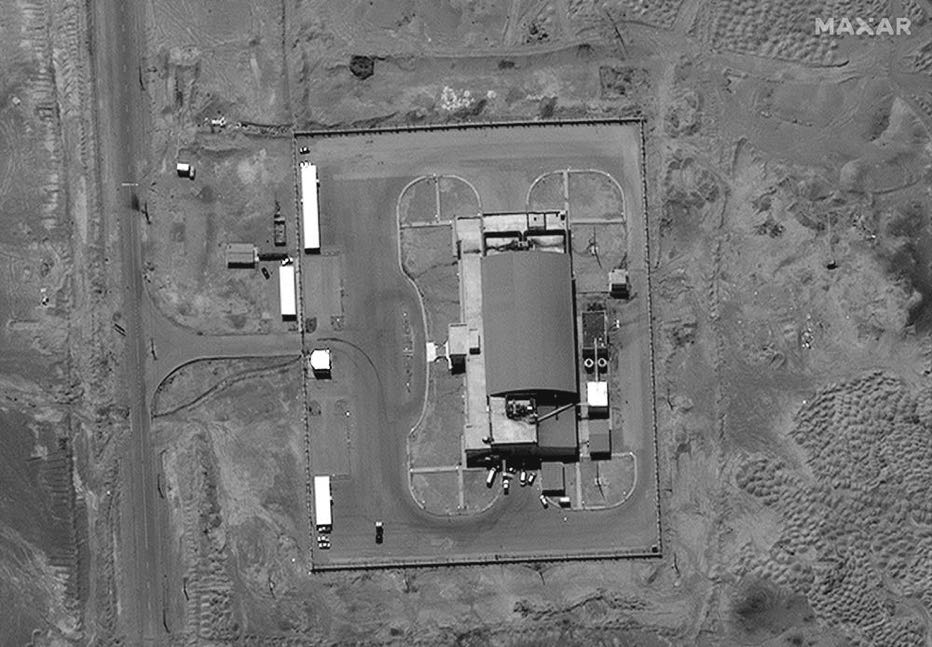
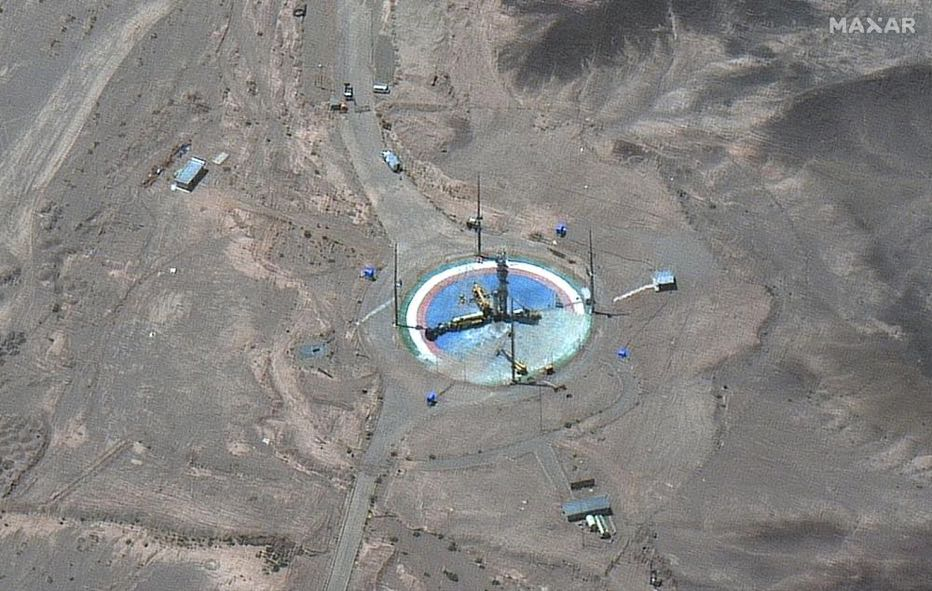
– 14 Jun satellite images taken by Maxar Technologies showed preparations at a launch pad at Imam Khomeini Spaceport in Iran’s rural Semnan province, the site of recent failed attempts to put a satellite into orbit.
– Iran’s Defense Ministry did not elaborate on a timeframe for the tests, nor when the previous launch occurred. They did state that each of the Zuljanah’s three stages will be evaluated during the tests.
– One set of images showed a rocket on a transporter, preparing to be lifted and put on a launch tower. A later image on 14 Jun showed the rocket on the tower.
– Though it isn’t clear when the launch will take place, erecting a rocket typically means a launch is imminent.
– Over the past decade, Iran has sent several short-lived satellites into orbit and in 2013 launched a monkey into space. The program has seen recent troubles, however. There have been five failed launches in a row for the Simorgh program, a type of satellite-carrying rocket. A fire at the Imam Khomeini Spaceport in February 2019 also killed three researchers, authorities said at the time.
– Satellite images from February suggested a failed Zuljanah launch earlier this year, though Iran did not acknowledge it.
The United States alleges Iran’s satellite launches defy a U.N. Security Council Resolution 2231 and called on Tehran to undertake no activity related to ballistic missiles capable of delivering nuclear weapons.
13 Jun 2022: Matthew Mowthorpe examines Russia's ASAT concepts and places them in the context of military space doctrine that threatens both US and NATO allies' satellites. Further the article describes the development of the concept of a bodyguard satellite. The Threat - Under Vladimir Putin, Russia reinvigorated…
13 Jun 2022: Matthew Mowthorpe examines Russia’s ASAT concepts and places them in the context of military space doctrine that threatens both US and NATO allies’ satellites. Further the article describes the development of the concept of a bodyguard satellite.
The Threat
– Under Vladimir Putin, Russia reinvigorated their political desire to obtain counterspace capabilities for the same reason as China – to advance its regional power and limit the ability of the US to counter Russia’s freedom of action.
– Russian military thought sees modern warfare as a struggle over information dominance and netcentric operations that can take place without clear boundaries.
-Russia’s goa is to incorporate EW capabilities throughout its military to both protect its own space-enabled capabilities and degrade or deny those capabilities to its adversary.
– In space, Russia is seeking to mitigate the superiority of US and NATO space assets by fielding a number of ground, air, and space-based offensive capabilities.
– Russia has a long history of developing space weapons. It has demonstrated a capability to kinetically intercept satellites in low Earth orbit (LEO) from space and more recently from the ground in late 2021. Additionally, it can use ground-based lasers to dazzle satellites in LEO. Russia can conduct radiofrequency (RF) jamming from mobile platforms against communication satellites in LEO.
Active Defense: Bodyguard Satellites
– The concept of a Bodyguard satellite is a co-orbital satellite able to react against increasing threats to satellites in orbit. It offers continuous monitoring of the environment of approaching objects, provides indicator and warning of threats prior to attack, and characterization of range, source, and capabilities.
– Bodyguard satellites is part of what would be termed Active Defense. Active Defense can be divided into two categories based on where these defensive systems are based.
– Space-based defenses include onboard systems integrated into the satellites they protect, and offboard systems hosted on separate satellites such as Bodyguard satellites.
– Offboard defenses can be used to provide “zone defense” of multiple satellites or act as defensive patrols that roam within orbital regimes in response to threats. Terrestrial defenses are cross-domain systems based on Earth that target counterspace systems and the systems that support them either on Earth or in space.
– France has incorporated Bodyguard satellites into their space defense strategy and in July 2020 announced it could launch small bodyguard satellites and position them around French geostationary assets, to detect and prevent hostile approaches against them.
Space defenses both raise the expected costs and reduce the expected benefits of beginning or extending conflict into space. For space defenses to act as a deterrent, an opponent must believe such defenses exist and that they are effective, even if the opponent does not fully understand what they are or how effective they may be.

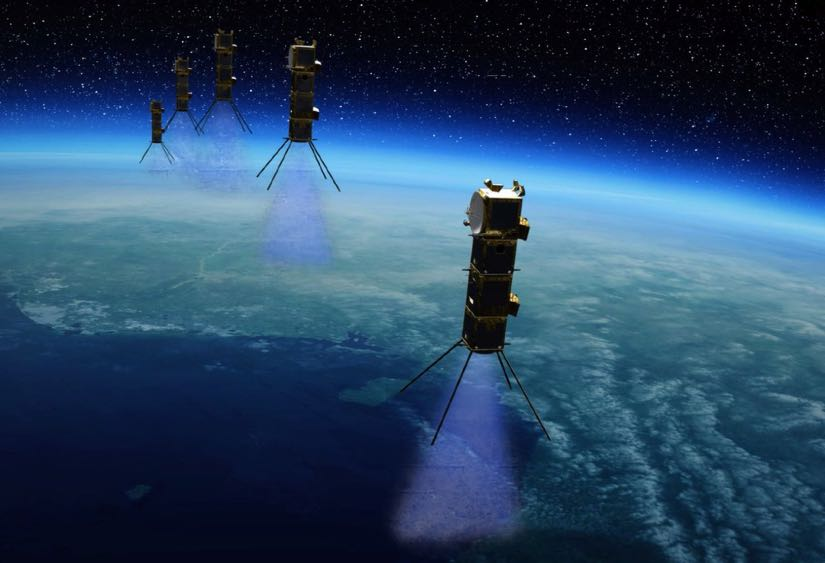
- SJ-20 Settles in at 33.5 ° E in an ITU slot registered to China. Curiously this is due south of Ukraine. - CHINASAT-20 (Zhongxing-20A or Shen Tong 1B) relocates from 126.39 ° E to 112.75 ° E & increases inclination 30%. Maneuvers coincide with SJ-20 relocation. - SY-12 (01) continues Westward drift. No nearby…
– SJ-20 Settles in at 33.5°E in an ITU slot registered to China. Curiously this is due south of Ukraine.
– CHINASAT-20 (Zhongxing-20A or Shen Tong 1B) relocates from 126.39°E to 112.75°E & increases inclination 30%. Maneuvers coincide with SJ-20 relocation.
– SY-12 (01) continues Westward drift. No nearby objects.
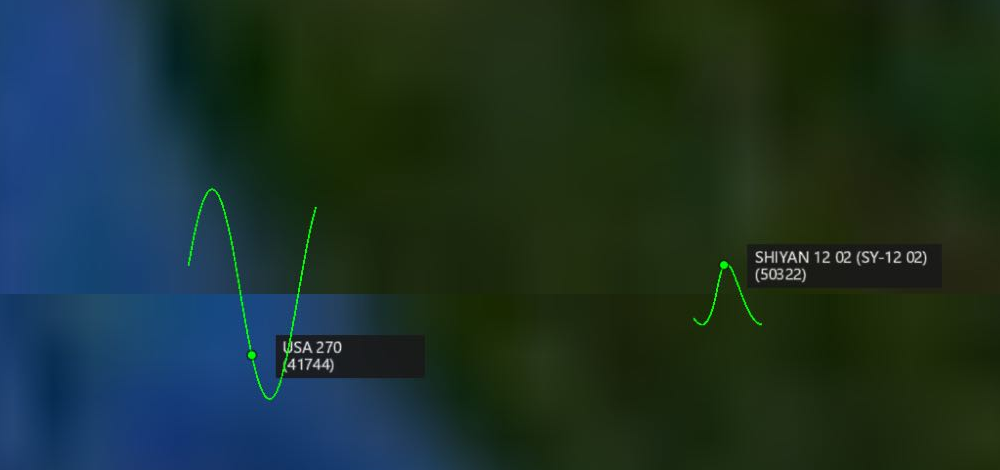
– SY-12 (02) Increased altitude & slowed Eastward Drift. No nearby objects. USA 270 will overtake (assuming no additional maneuvers) ~ 26 June @ 0500Z.
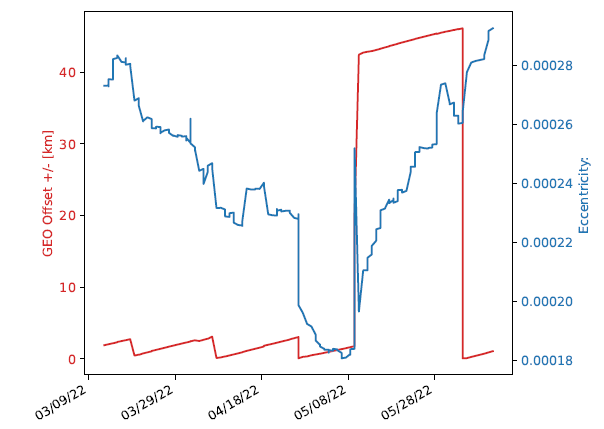
SJ-20: From ~8 May 2022 – 3 June 2022, SJ-20 was 157km above the GEO belt and moving westward at 2° per day. On 13 May it was located over 87.5° E. In early June SJ-20 settled into China’s ITU reserved orbital slot at 33.5°E.
– SJ-20’s inclination has increased nearly 70% in the past 3 weeks – going from .77° to 1.16°.
– SJ-20’s current location is due south of Ukraine, between Kyiv and Kharkiv.
CHINASAT-20 (ST-1B)
– In early May, near the same time as China began to maneuver SJ-20, ST-1B also increased its altitude ~45km and drifted West from 126.4°E to its new location at 112.75°E.
– ST-1B’s inclination has also been increased from 1.84° to 2.62°. Inclination has been steadily increasing since early March.
– ST-1B, launched in 2010, is a military communications satellite and provides secured voice/data communications services for PLA ground users in Ku-band.
– At the time of its launch, ST-1B was the first Chinese satellite to provide Ku-band communication and featured advanced multiple steerable spot beams to enable ground users to communicate while on the move. It had the most powerful onboard data processing capability of any Chinese COMSAT for its time.
Editor’s Note: Thanks to weekly reporting from Palski & Associates Inc, we’re going to try to keep track of maneuvers of select spacecraft in GEO. We’ll see how it goes! For this week, orbital information is courtesy of the 2022-06-10 & 2022-06-17, Space Domain Awareness Reports from Palski & Associates Inc. Send a request to david.pierce@palski.com to get added to their distro list!
Shiyan 12 (02)
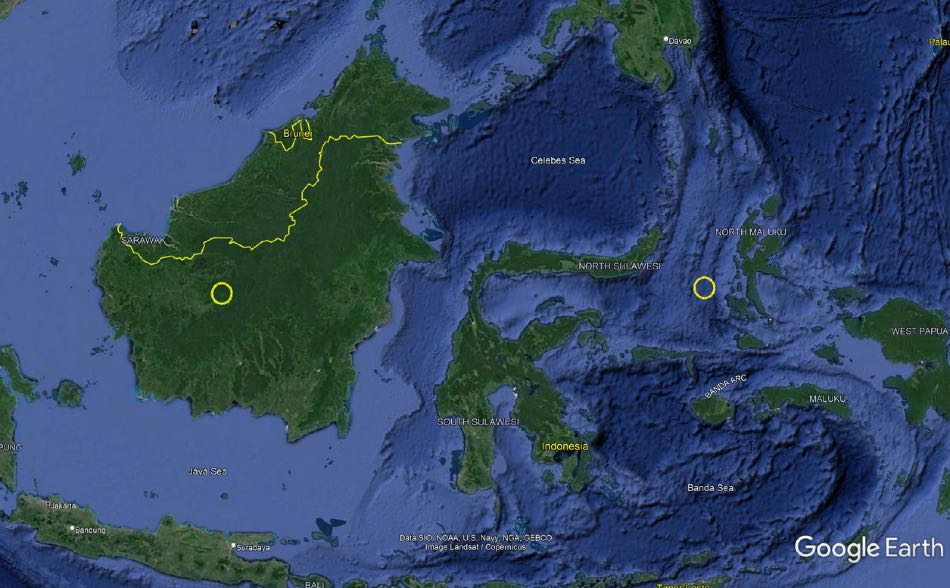
– After lowering its altitude to drift East over Indonesia, SY-12(02) increased its altitude, significantly slowing its progression. It is not near any objects at this time.
– However, USA-270 is drifting Eastward at a greater rate and (based on CelesTrak/SpaceTrak.org data) will overtake SY-12(02) at ~0500Z on 26 June 2022.






13 Jun 2022: A research team in China stated an anti-satellite A I system mastered the art of deception in a simulated space battle. In the experiment, the AI commanded 3 small satellites to approach and capture a high-value target, repeating the exercise thousands of times. - Researchers from the Shanghai Institute of…
13 Jun 2022: A research team in China stated an anti-satellite AI system mastered the art of deception in a simulated space battle. In the experiment, the AI commanded 3 small satellites to approach and capture a high-value target, repeating the exercise thousands of times.
– Researchers from the Shanghai Institute of Aerospace System Engineering developed Artificial Intelligence (AI) to play the game of on-orbit pursuit and evasion repeatedly without human intervention.
– In the experiment, the AI commanded three small satellites to approach and capture a high-value target, repeating the exercise thousands of times.
– Eventually the targeted satellite learned to detect the incoming threat and fired powerful thrusters to evade. However, the target was lured into a trap after the AI ordered the 3 hunters to veer off their original trajectory, as if giving up the pursuit…then one of the hunting satellites suddenly changed course and deployed a capturing device from a distance of less than 10m.
– Both hunter/hunted performed poorly in the first 10,000 rounds of training, with the total number of penalties far exceeding the rewards, according to the study.
– The researchers noted that the hunting satellites learned faster, “probably because they worked as a group”, and secured an advantageous position after about 20,000 rounds.
– The targeted satellite gradually recognized the simple tactics used by the hunters and became better at avoiding pursuit. However, under the pressure of repeated defeats, the hunting AI reversed the game by developing much more sophisticated tactics including collaboration, forward planning and deception that significantly increased the chance of successful capture.
– After more than 220,000 rounds of training, the target was left with “no room for mistakes”, according to the research team.

25 May 2022: The Russian State Duma (Lower House of Parliament) ratified a cooperation treaty with Venezuela on the peaceful use and exploration of space. The agreement between the two governments was signed on 30 Mar 21 and created a legal and organizational basis for mutually beneficial cooperation for both parties…
25 May 2022: The Russian State Duma (Lower House of Parliament) ratified a cooperation treaty with Venezuela on the peaceful use and exploration of space. The agreement between the two governments was signed on 30 Mar 21 and created a legal and organizational basis for mutually beneficial cooperation for both parties and for the countries’ organizations in the field of exploration and use of outer space for peaceful purposes.
– Joint space activities will be a part of the agreement will carried out on a commercial basis, which contributes to “attracting additional extra-budgetary funds to the national space and rocket industry”
– Specific conditions and financial obligations attached to bilateral cooperation programs and projects will be defined in separate contracts.
– In Nov, 2021, the Venezuelan National Assembly approved this agreement, similar to the one signed with other space powers such as China and India.
Moscow and Caracas plan to develop “joint projects”…which include cooperation in space science and research, Earth remote sensing, satellite communications and navigation, manned space exploration, as well as space geodesy, materials science and medicine.
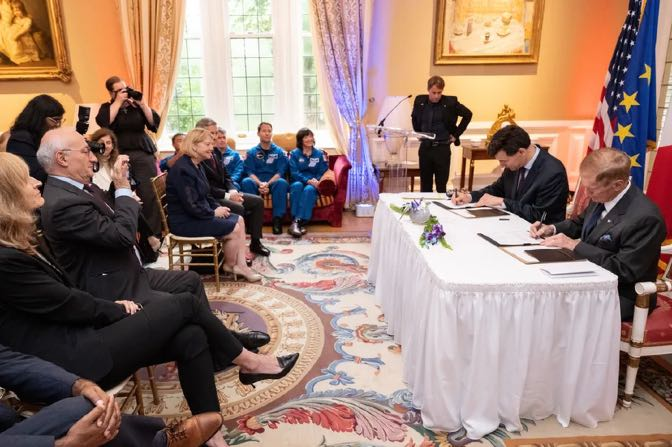
10 June 2022: France officially signed onto NASA's Artemis Accords - the space agency's set of guidelines and principles for how the US and other countries should explore the Moon in the future. France's addition brings the total number of signatory countries to 20, strengthening the international agreement ahead of…
10 June 2022: France officially signed onto NASA’s Artemis Accords – the space agency’s set of guidelines and principles for how the US and other countries should explore the Moon in the future. France’s addition brings the total number of signatory countries to 20, strengthening the international agreement ahead of NASA’s planned return to the lunar surface this decade.
– France, after 2 years, came to the table, and the country is considered the most significant signatory yet for the Accords.
– Gabriel Swiney, NASA policy advisor and an original Artemis Accord author stated, “It was critical to get France on the same page as us for our lunar exploration and other plans, because they’re the dominant player in Europe along with Germany.”
– The US also has a long-standing partnership with France’s space agency, CNES, and the country plays a pivotal role in operating the launch site and rockets for Europe’s primary launch provider, Arianespace.
– Hopes are high for Germany to sign on, and NASA is also looking to India as as signatory.
The Artemis Accords build on the backbone of international space law, known as the Outer Space Treaty. The Accords focus on standards for exploring the Moon. The agreement establishes areas on the Moon called “safety zones.” If one nation is conducting work on a region of the lunar surface, they will inform the other signatories and other countries will not interfere in that area. The Accords also call for the preservation of heritage sights, such as the landing locations for the Apollo missions, and also protect the “extraction and utilization” of space resources. That way, countries can mine the Moon for materials and then use those materials in their lunar exploration efforts.
Over the summer, Jack Anthony will break down each of the six orbital elements required to uniquely identify a specific orbit and satellite in that orbit. This week we start with semi-major axis. For those who can't wait the entire summer, please visit Jack's “ Orbit Element Dance” on YouTube ” and you'll find a 1:02…
Over the summer, Jack Anthony will break down each of the six orbital elements required to uniquely identify a specific orbit and satellite in that orbit. This week we start with semi-major axis. For those who can’t wait the entire summer, please visit Jack’s “Orbit Element Dance” on YouTube” and you’ll find a 1:02 video featuring Jack in his driveway demonstrating this highly effective way to learn about the 6 classical orbital elements (COE). Each movement ties to an important astrodynamics principle. Below is a screen grab from this video. As you can see, Jack uses the STP method of remembering the 6 COEs. Size, Shape, Tilt, Twist, Position of Perigee and Position of the Satellite at a particular time. Boogie Down.
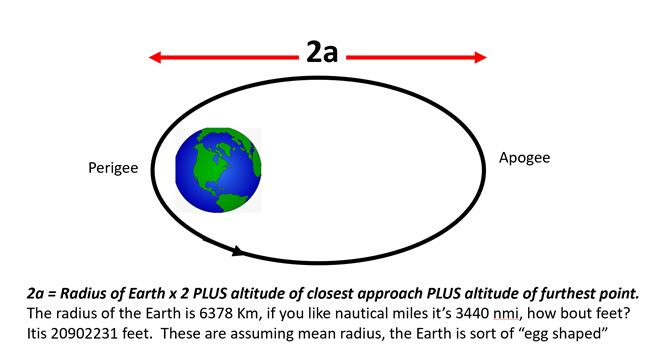
Semi-major axis “a” is the only COE that is a distance, s in km, feet, nautical miles, you can use furlongs if you want…km is the most popular and you’ll see we use a Gravitational Constant number that uses km. Here’s an illustration showing you that “2a” is the measure of the major axis or long axis of the orbit. Now, while semi-major axis is a nifty number to know, let’s see what insight it provides into the orbit’s characteristics.
Semi-major axis is the “orbit energy” parameter, if you add or subtract velocity in-track, you change the semi major axis, you also change eccentricity, more on that next time. Thus by changing “a”, you change the energy of the orbit. Let’s do an example, Let’s say the semi major axis of a circular orbit is 7,000 KM (mean altitude 622 Km), what can we tell about the orbit? Let’s see how we can use a simple equation to find how long an orbit takes, that’s called the Orbit Period. OK, we’re going to do a little math here, relax, it’s easy. First, let me introduce the Earth’s Gravitational Parameter denoted Greek “µ.” It’s value is 398,600.4 km^3/sec^2. It’s a constant and it’s in the equation for determining the Orbit Period, how long it takes to orbit the Earth once. Here’s the equation:
The a^3 is semi-major axis raised to the 3rd power, or “a times a time a.” There’s a square root involved. Math is so much fun! So, with “a” equal to 7,000 KM, let’s see how long a lap of the Earth takes. Pi is 3.14159 (good enough for our use, it continues out really far). Got a calculator or Excel? Crank it out, what do you get? I get 5,828 seconds. Hummm, what’s that in minutes? I get 97.1 minutes.
OK, one more nifty thing to know. The Space Force and other organizations like Celestrak publish orbit elements for you to use. If you look at a Two-Line Element Set (TLE) you will not see semi major axis listed. Oh my, what’s with that? Well, they list the Mean Motion or how many orbits per 24-hr day. This is related to semi major axis. There are 1440 mins in a 24-hr solar day, so we can divide our 97.1 minute orbit period into 1440 and see we orbit the Earth 14.82 orbits per day.
So, the semi major axis is the COE that describes SIZE.
It can help us determine the Mean Motion and also the Orbit Period. Pretty cool! In reality, the equations, calculations and software does all the awesome astrodynamics for Space Force is far more exact.
They get into the nitty gritty details of a lot of parameters so we can precisely detect, track, identify and characterize a space objects pathway…its orbit. Now for a thinking problem. Let’s say you are in an orbit where you cross over the equator heading south to north (we call that ascending) at 105° West Longitude. The next time you whiz by going south to north over the equator, what longitude will you cross at? Hint, the Earth rotates 15.04° per hour eastward. Your satellite will come back around in 97.1 minutes or 1.62 hours.
What’s the Earth doing while you are completing that orbit? Who knows the answer? “Bueller, Bueller, Bueller?” (editor’s note: For everyone born after 2000 this is a movie reference…look it up, it will change your life 😎) I bet you can figure it out! You can call me at 719-205-1741 if you get stuck, or ask a fellow Guardian.
How are you doing learning and showing your friends and family the Orbit Element Dance? Let’s all learn it, you’ll be the talk of the ops center, neighborhood or your living room. I can do a Zoom for a large group and teach it. We can together master the moves and effectively demonstrate the dance and the COEs. Maybe then we can add “BeatBoxing” sounds…really make learning Astro fun and memorable.



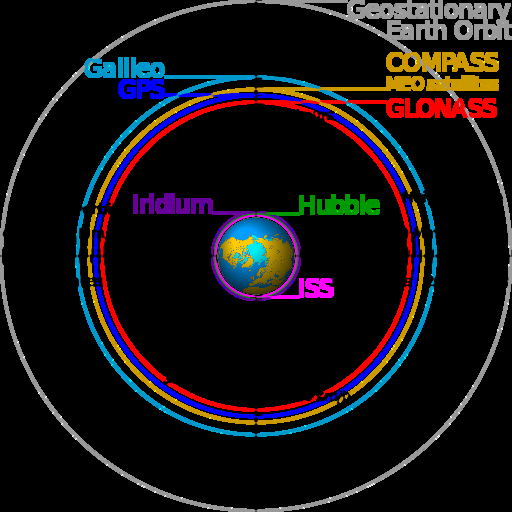
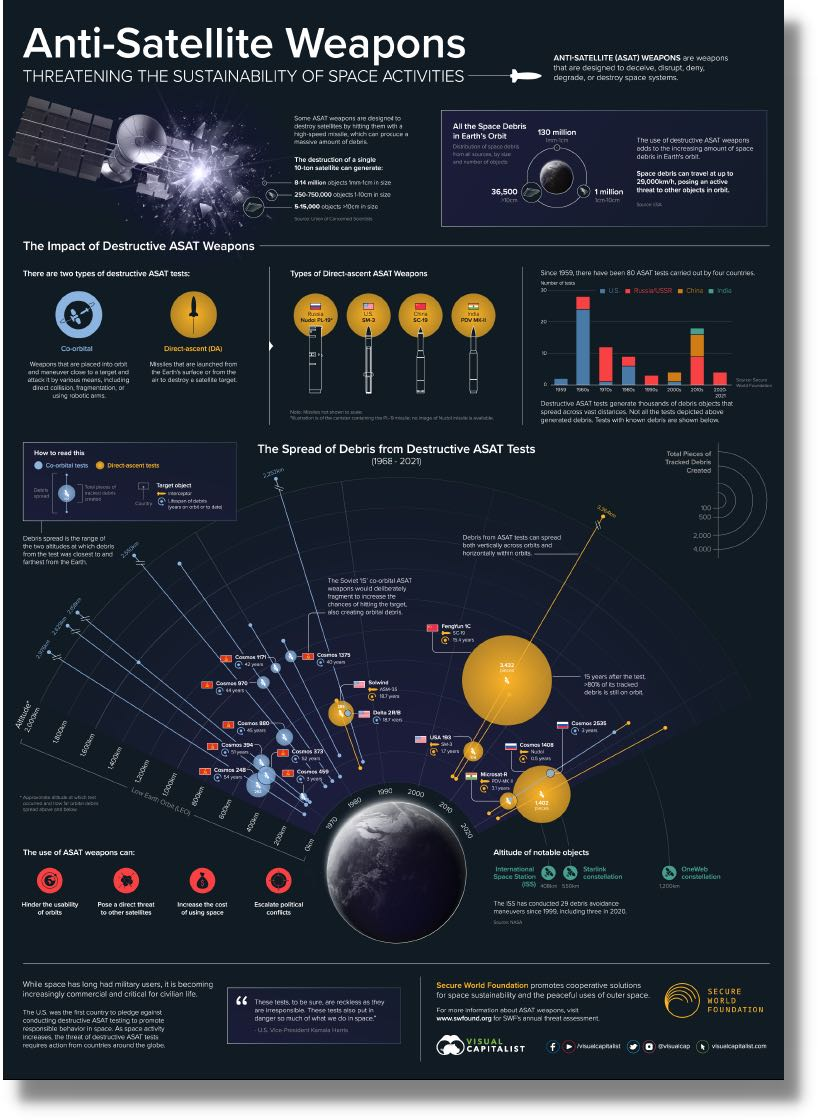
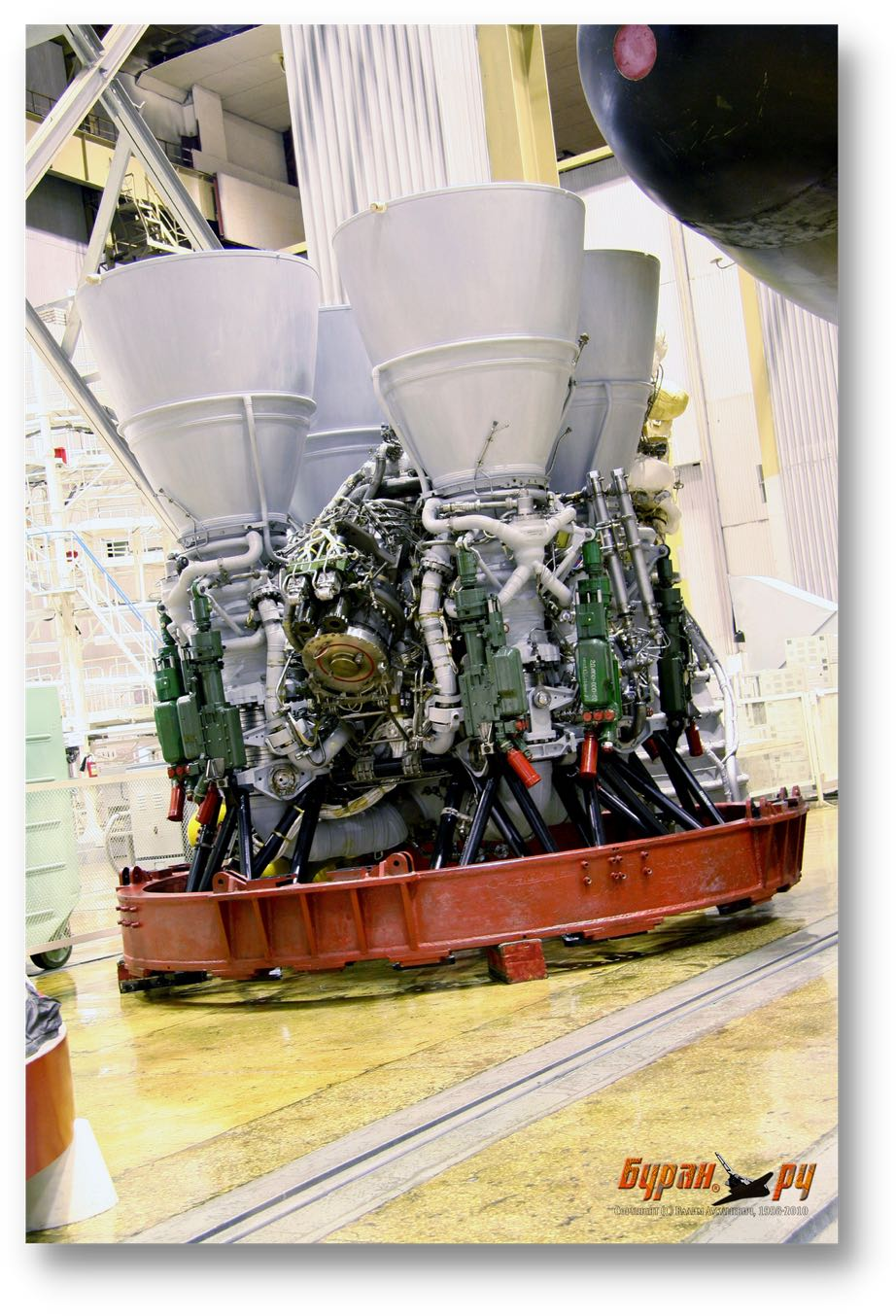
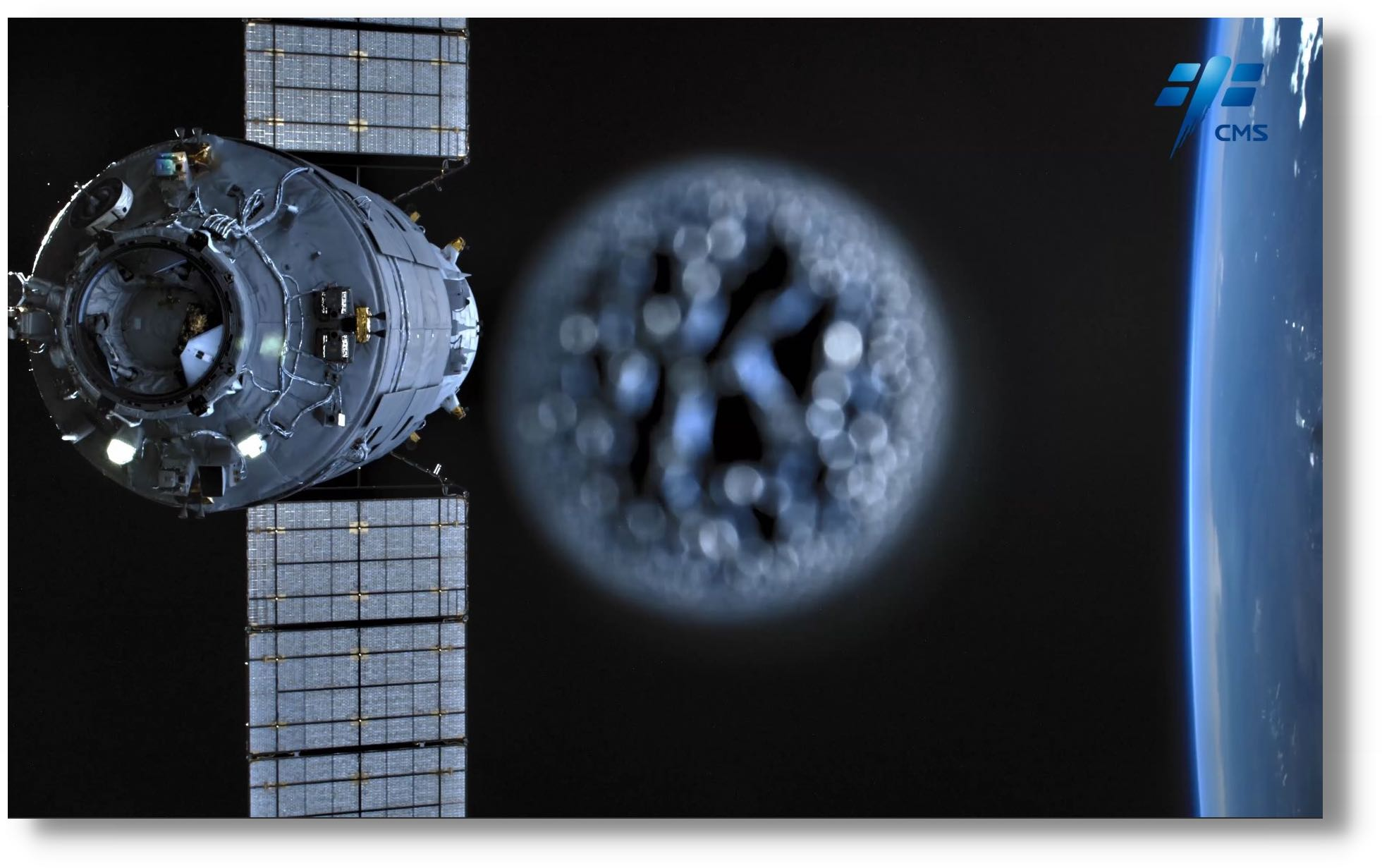
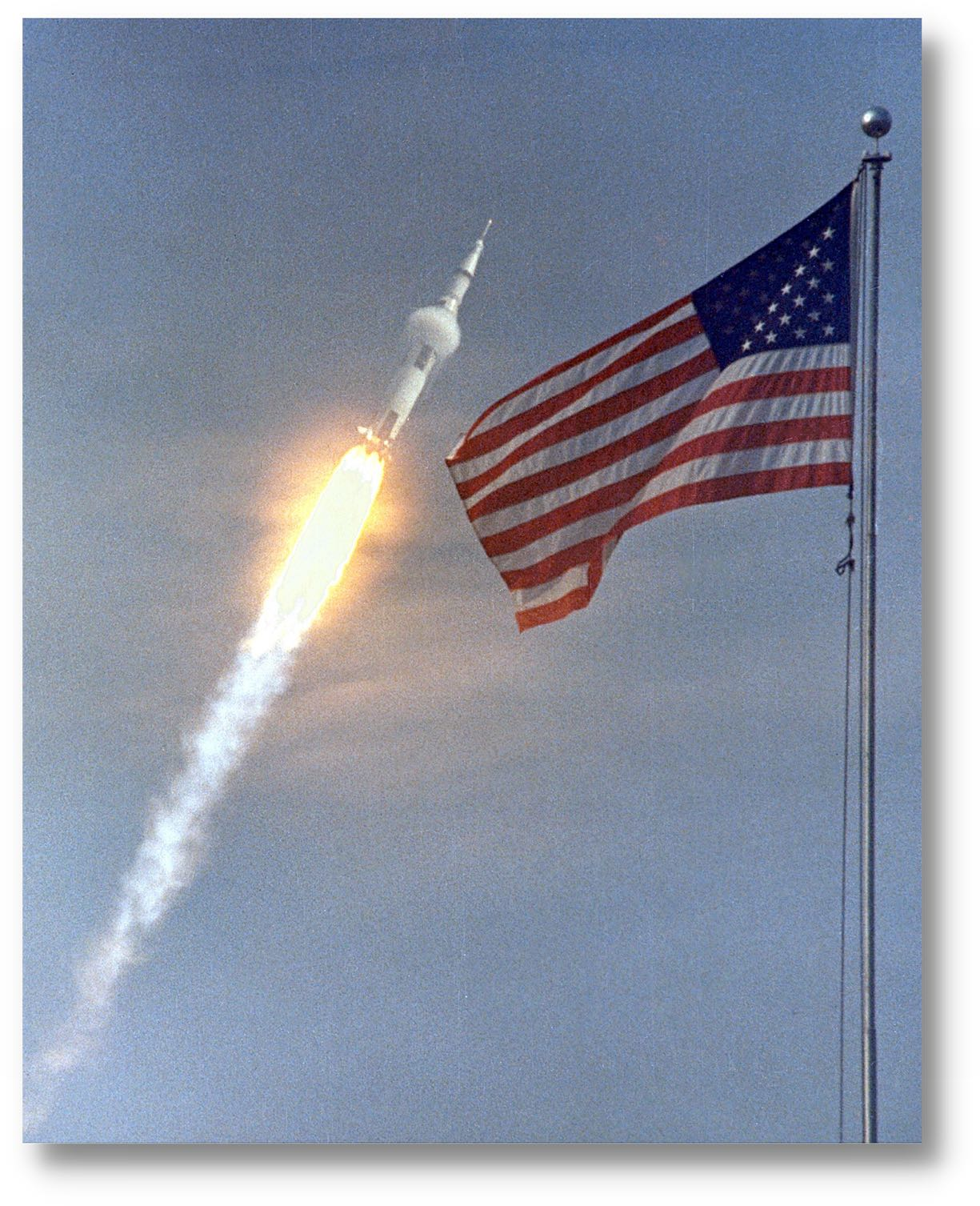
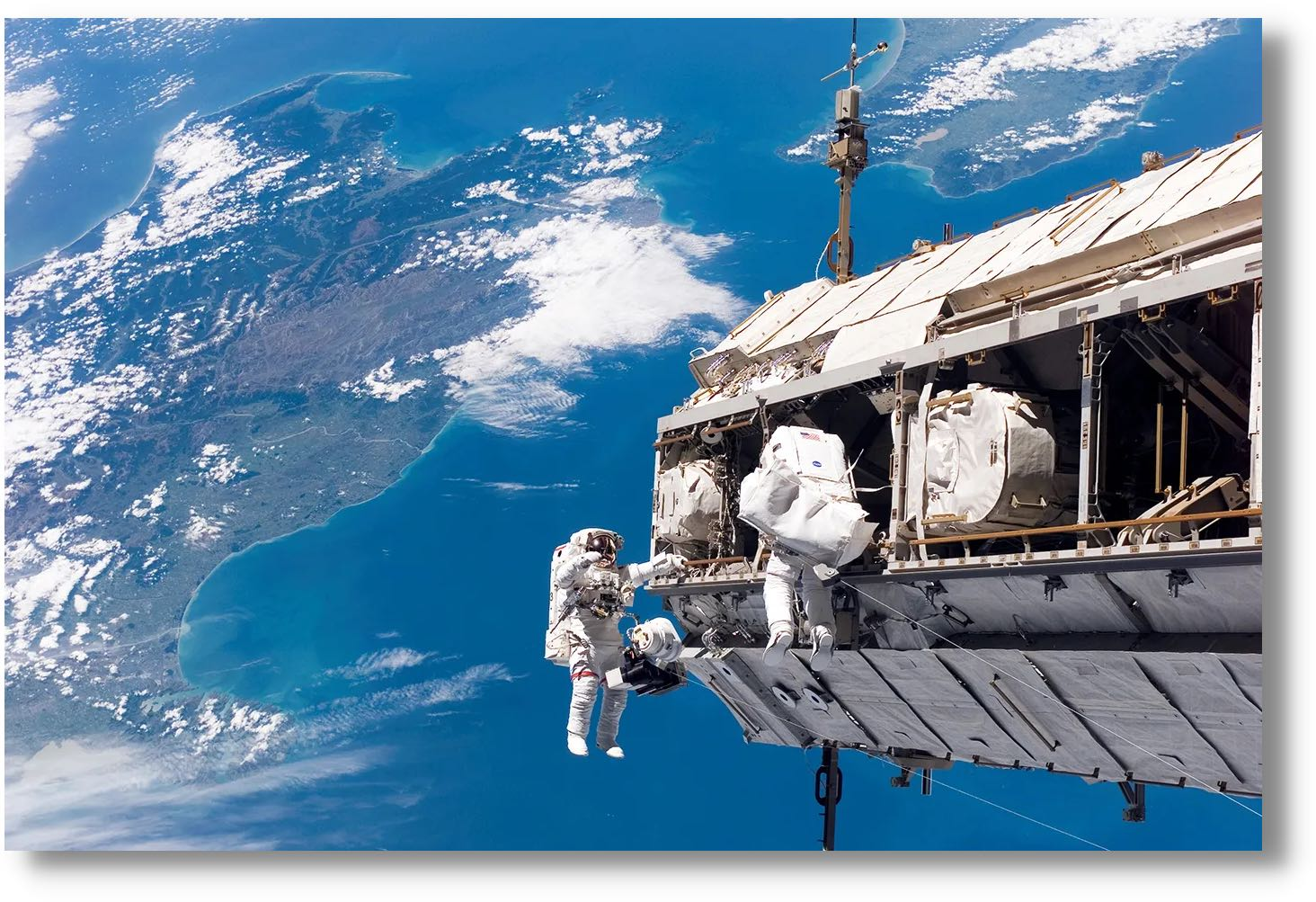
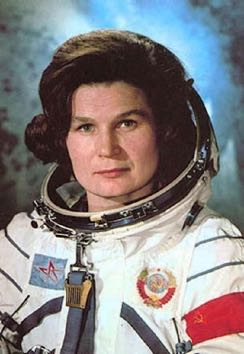
Images and graphics from the space domain, including anti-satellite weapons, rocket engines, Tiangong, Mars, ISS spacewalk imagery, near-space vehicles, and Valentina Tereshkova.



Flash Insider
Subscribe to unlock full access to this Issue and the complete Flash archive.
Subscribe Now Already Subscribed? Log In