

in a similar orbit with a trio of Yaogan-31 satellites. YG-31 satellites are believed to perform a maritime reconnaissance function. Launch Video . - All Yaogan 34 orbits are nearly identical to that of the Yaogan-31 triplets, with the Yaogan-31 formation leading and Yaogan-34 in trail. - Yaogan-34 satellites seem to…
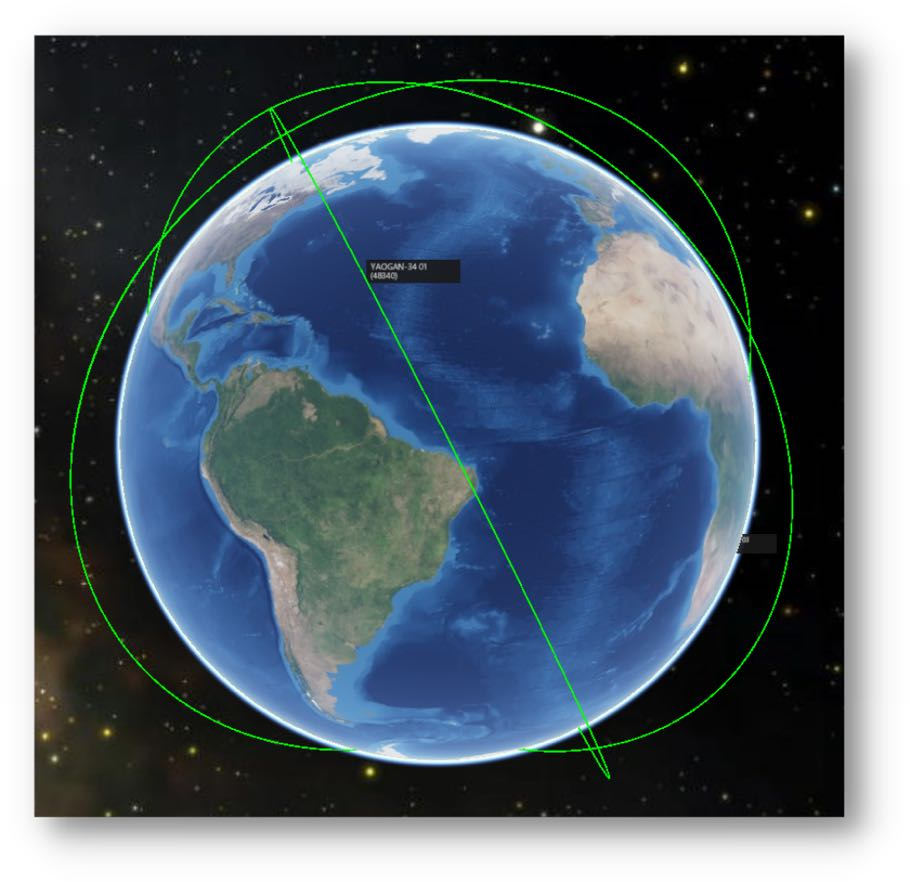
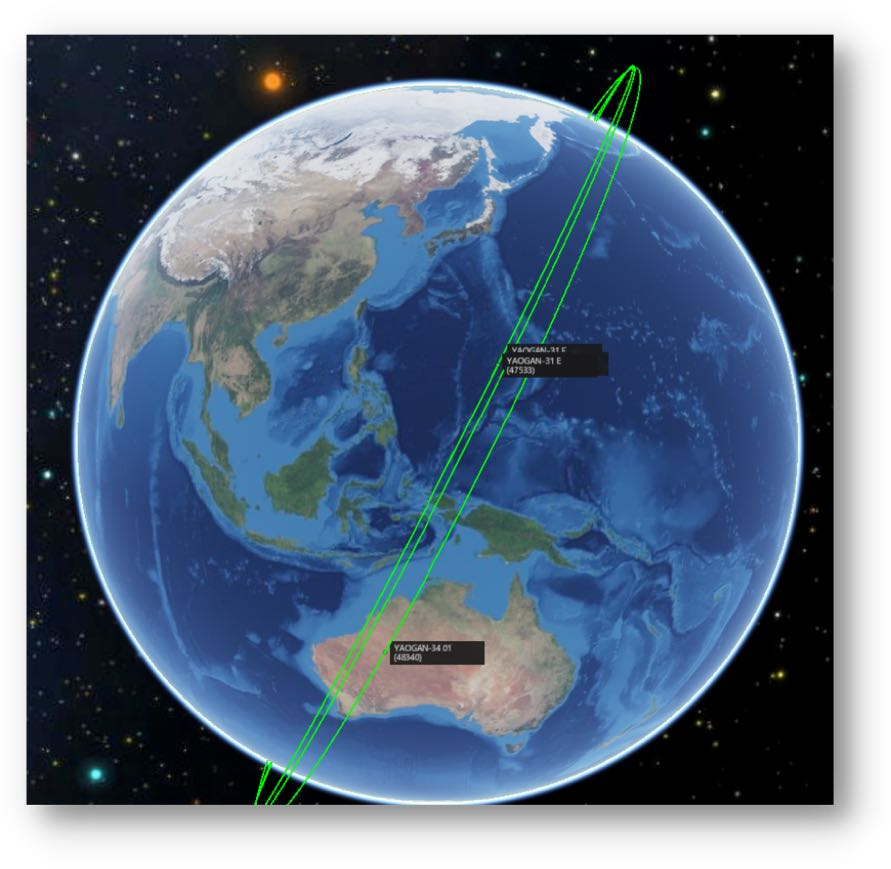
15 Nov 2022: China launched a Long March 4C (LM-4C) with the Yaogan 34-03 (YG-34(03)) government remote sensing satellite. As with the two previous Yaogan-34 missions, YG-34(03) is in a similar orbit with a trio of Yaogan-31 satellites. YG-31 satellites are believed to perform a maritime reconnaissance function. Launch Video.
– All Yaogan 34 orbits are nearly identical to that of the Yaogan-31 triplets, with the Yaogan-31 formation leading and Yaogan-34 in trail.
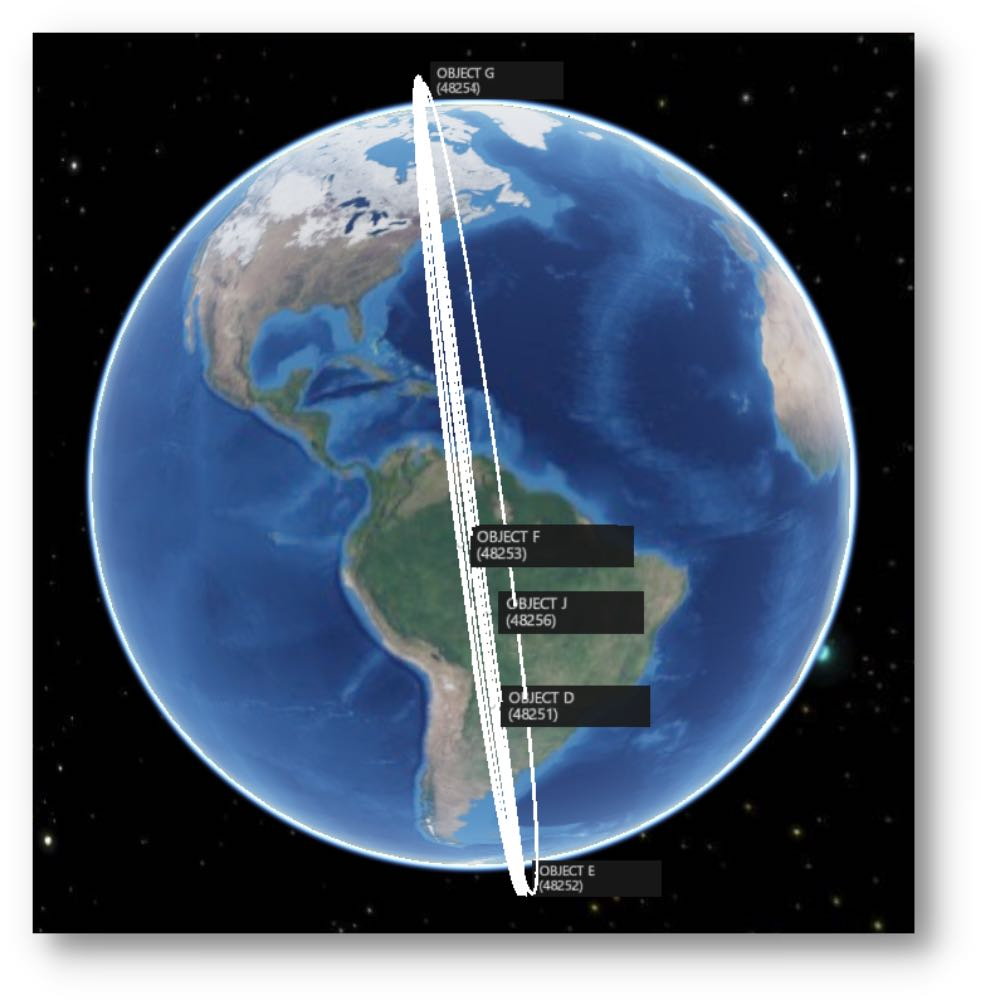
–Yaogan-34 satellites seem to be optical remote sensing satellites, likely used as a military reconnaissance satellites. They are coplanar w/ & used in tandem w/ the YG-31 “Chinese NOSS” triplets.
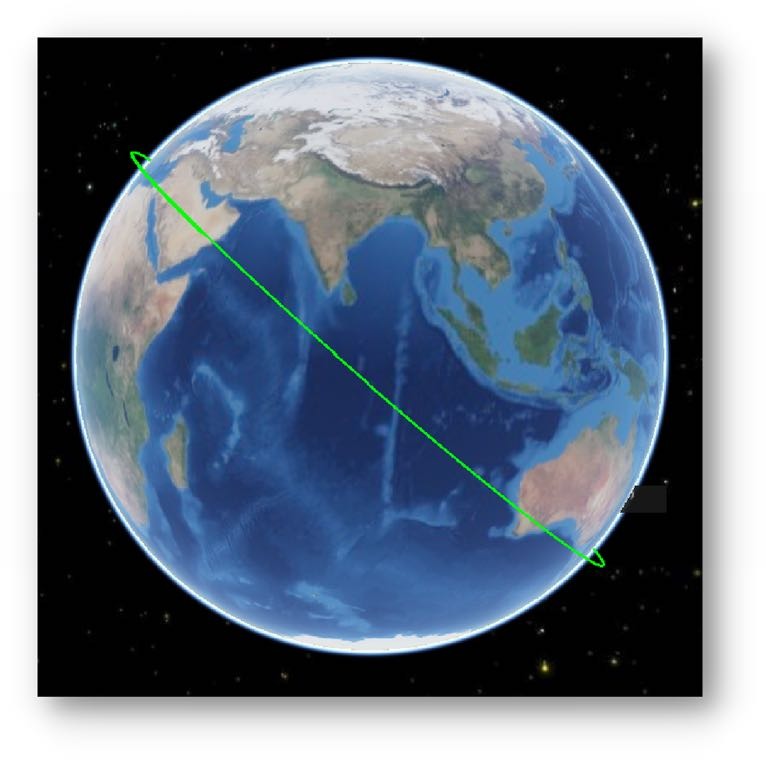
-All 4 satellites are 63.4° inclined and nearly the same altitude.
-Currently YG-34(03) is trailing YG-31 J/L/M by ~45 minutes. By comparison, YG-34(01) trails YG-31 D/E/F by ~11 min, and YG-34(02) trails YG-31 G/H/J by ~10 min.
-The orbits appear to have a RAAN offset to enable YG-34(01) and (02) to be over the same geographic location as the preceding YG-31 formation.
-Expect YG-34(03) to maneuver to close the gap with YG-31 J/L/M in the coming weeks. During its first week in orbit YG-34(01) altered its perigee and apogee to slowly catch up to YG-31 D/E/F and then remain at a relatively constant separation.
-Of the 4 YG-31 triplets on orbit, all have been paired with a YG-34 satellite with the exception of YG-31A/B/C which was launched in 2018. If there is a YG-34(04) expect it to be placed into a coplanar orbit with YG-31A/B/C.
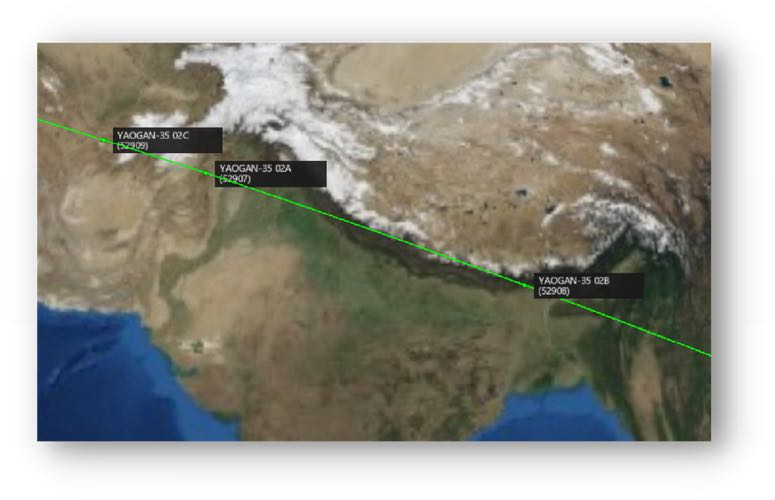
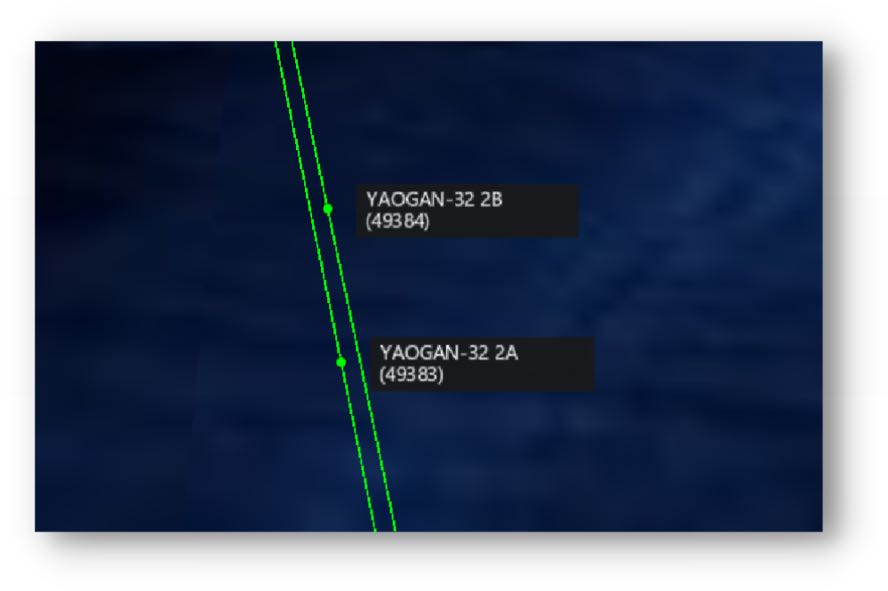
China is developing several symbiotic constellations made up of dissimilar satellites. The missions of these satellites and their capabilities have not been made public. However, like YG-31 and YG-34, the satellites have different manufacturers (CAST and SAST respectively.) YG-35 and YG-36 triplet satellites are also flown in a lead-trail formation with 2 of the satellites from DFH and the third from SAST. YG-32A and YG-32B also orbit in a lead-trail configuration and are believed to be SIGINT satellites.
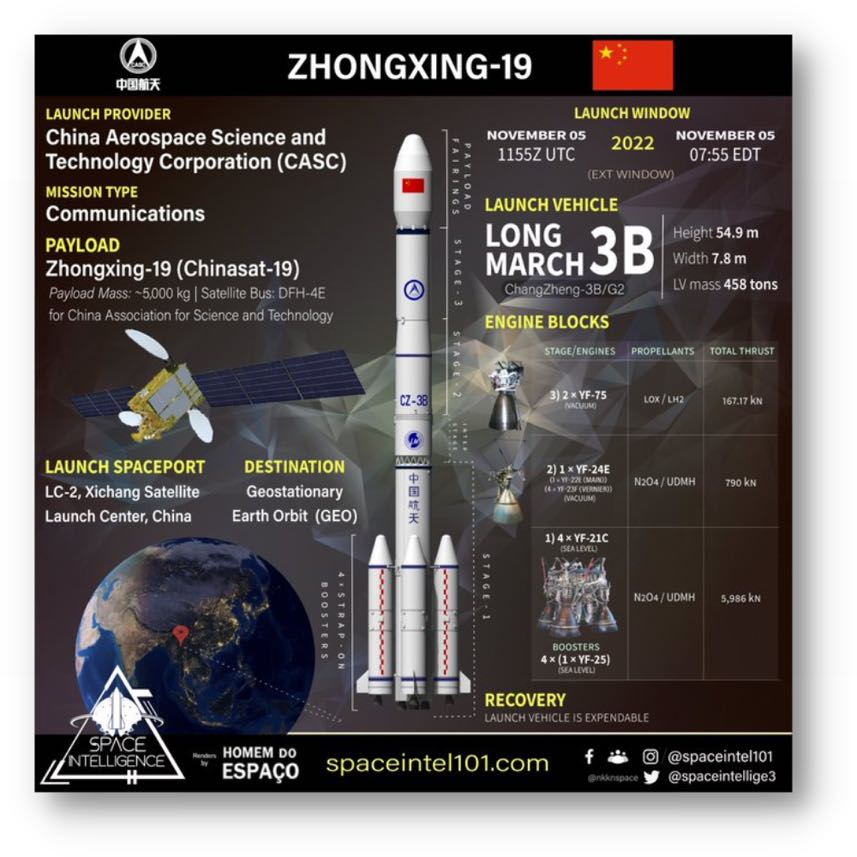
5 Nov 2022: China successfully launched the ChinaSat (Zhongxing)-19 mission on a Long March 3B/E rocket from the Xichang Satellite Launch Center. ChinaSat-19 will cover pacific trade routes, especially in the eastern pacific and the west coast of North America. Launch Video . - ChinaSat-19 is located at 163.34°E and…
5 Nov 2022: China successfully launched the ChinaSat (Zhongxing)-19 mission on a Long March 3B/E rocket from the Xichang Satellite Launch Center. ChinaSat-19 will cover pacific trade routes, especially in the eastern pacific and the west coast of North America. Launch Video.
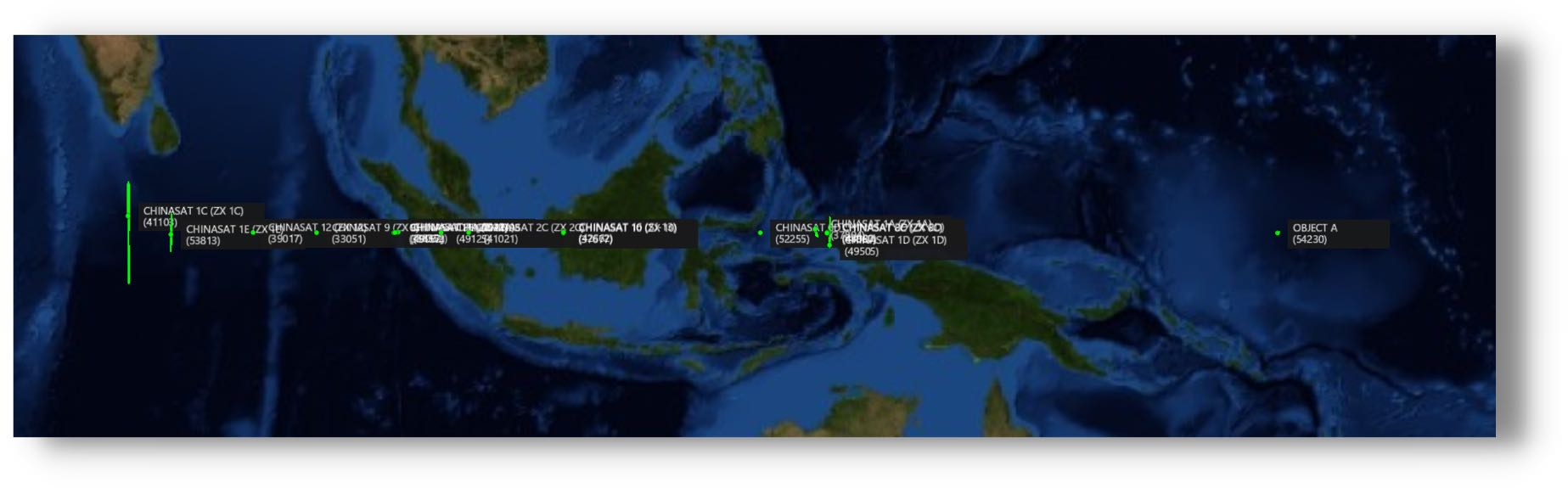
– ChinaSat-19 is located at 163.34°E and is the further east than any other ChinaSat spacecraft.
–The satellite carries a Ka-band high-throughout communications payload designed for broadband internet services, and also hosts Ku-band and C-band transponders
– ChinaSat-19 is a replacement for the previously malfunctioned ChinaSat-18 satellite, which was initially launched on the same rocket configuration in Aug 2019.
– ChinaSat-18 had a successful launch but suffered a critical malfunction in orbit, leaving it unable to communicate. The satellite remains in Geostationary Transfer Orbit (GTO).
– ChinaSat satellites are owned by China Satellite Communications. They are communication satellites produced to serve several different communication purposes for China. They provide reliable, high-bitrate uplinks for radio and TV stations.
– If the satellite is similar to the ChinaSat-18 it is replacing, it will have a mass of about 5,200kg and be about 2.3 x 2.1 x 3.6m in size. The two solar power arrays together provide 10.5 kW. It can use three-axis stabilization to orientate itself correctly.
-ChinaSat-19 is likely using the DFH-4E bus. The debut launch of the DFH-4E bus was the failed ChinaSat-18 mission. The second DFH-4E mission, Palapa-N1, also failed. This time the bus was not involved in the failure, as the launch vehicle did not reach orbit. In the third mission for the APStar-6D mission in Jul 2022, the bus performed without issues.
are close to residents.
–CASC says there will be 10-12 launches of Long March 7/7A per year in future. This may indicate the pending retirement of the LM-3B.
-Of the 24 ChinaSat launches conducted since 1988, all but one have used the LM-3 series and have launched from Xichang. The only outlier was the recently launched ChinaSat-1E which launched from Wenchang on a LM-7A.

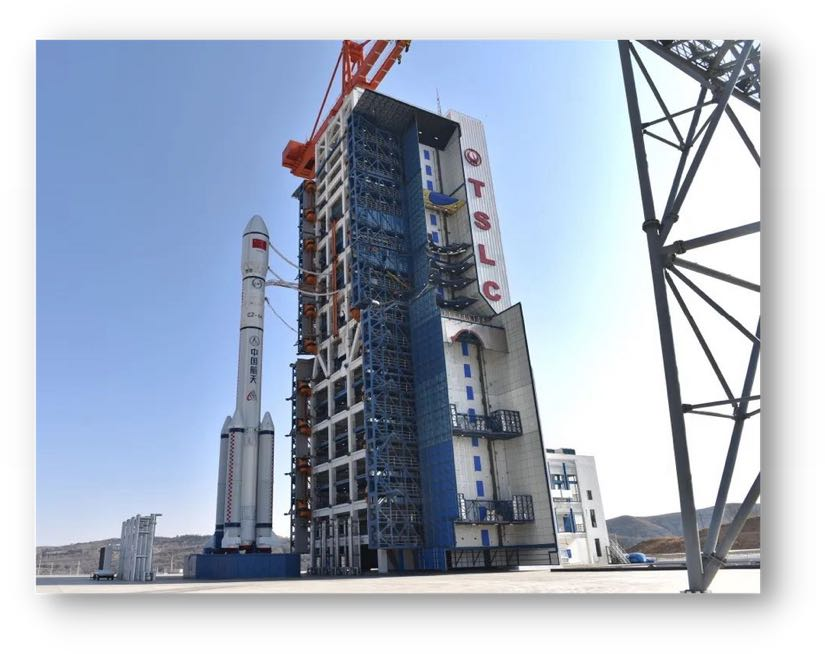
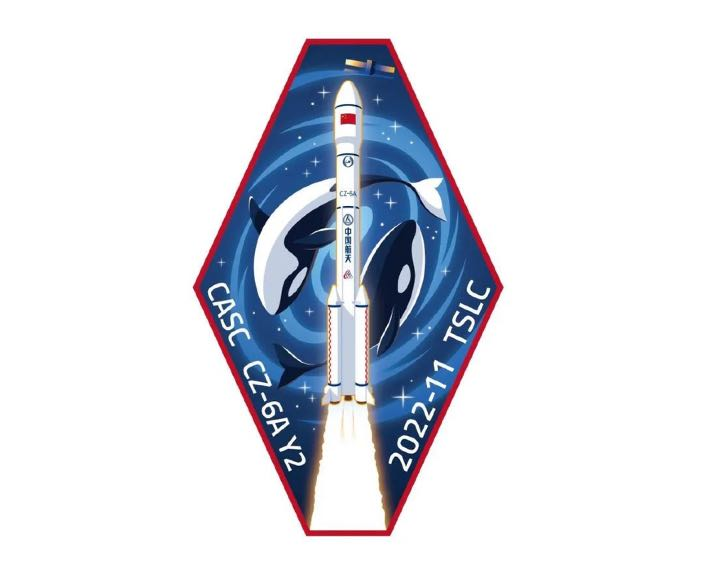
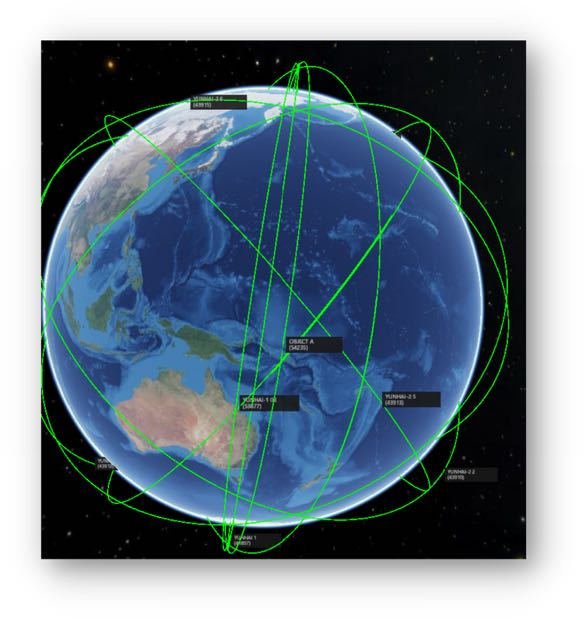
12 Nov 2022: China launched a Long March 6A from Taiyuan. The payload was the Yunhai-3 satellite, which will conduct atmospheric and environmental research. Yunhai-3 went to a Sun-synchronous orbit (SSO) and further details about the payload were not released. The mission was confirmed a success. Later on 12 Nov, the…
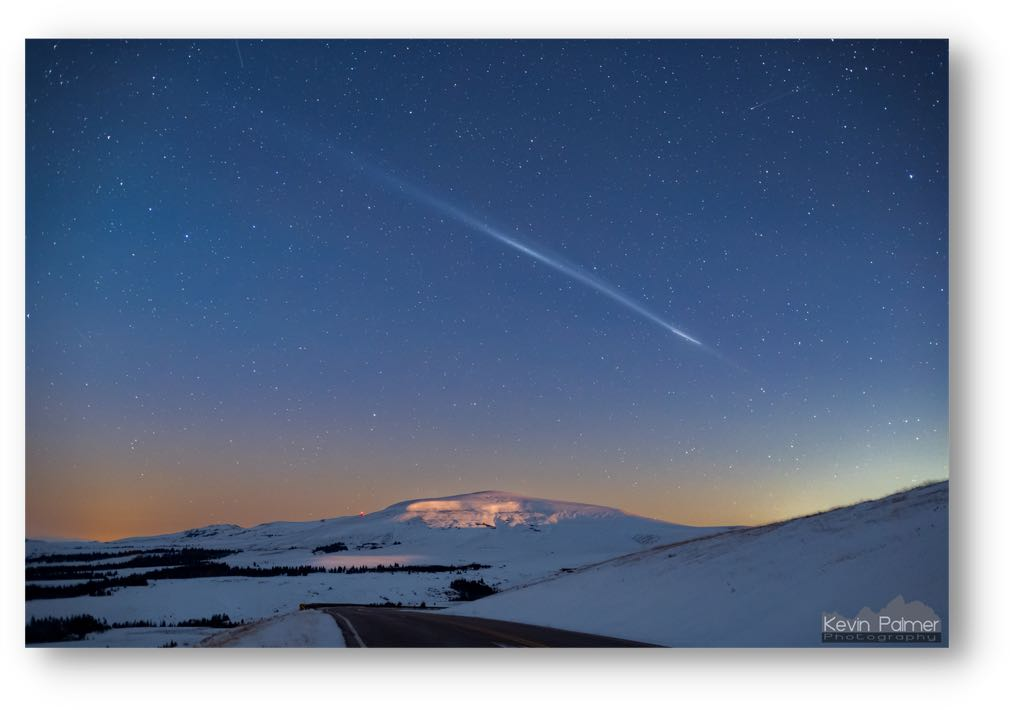
12 Nov 2022: China launched a Long March 6A from Taiyuan. The payload was the Yunhai-3 satellite, which will conduct atmospheric and environmental research. Yunhai-3 went to a Sun-synchronous orbit (SSO) and further details about the payload were not released. The mission was confirmed a success. Later on 12 Nov, the 18th Space Defense Squadron reported the upper stage of the LM-6A experienced a break up event generating 50+ pieces of debris. Launch Video.
– This appears to be the first launch of the Yunhai-3 family of satellites and there is reporting that it is a SAR radar imaging satellite.
– Yunhai-3 is in a sun synchronous polar orbit, with a 847km perigee and 863.5km apogee. Inclination is 98.8°.
– One part of the mission did not go according to plan, as the LM-6A’s upper stage suffered a breakup event and is now in more than 50 pieces at altitudes ranging from 310-435 miles (500-700km).
– The debris is orbiting at an altitude at which there are very few molecules from Earth’s atmosphere. This means it will take many years for the fragments to be brought out of orbit by atmospheric drag.
– Previous Yunhai satellites are the Yunhai 1-01 (2016), 02 (2019) & 03 (2022). All were launched from Jiuquan using Long March (LM)-2D space launch vehicles.
– In Dec 2018 China simultaneously launched 6 identical Yunhai 2 satellites from Jiuquan using a LM-2D. Three of the satellites are in a circular orbit with an altitude of 520km, and the other 3 are at 1095km.
– This is not the first debris event associated with the Yunhai family – Yunhai 1-02 was struck by Russian debris in Mar 2018, likely from the Zenit-2 rocket that launched Russia’s Tselina-2 spy satellite in Sep 1996. The collision spawned at least 37 debris objects.
-Yunhai 1-02 apparently survived the violent encounter – amateur radio trackers have continued to detect signals from the satellite, it is unclear if Yunhai 1-02 remains operational.
Yunhai meteorological satellites are assessed to have military purposes. The satellites reportedly use Global Navigation Satellite System radio occultation to collect atmospheric data for weather forecasting and for ionosphere, climate, and gravity research.


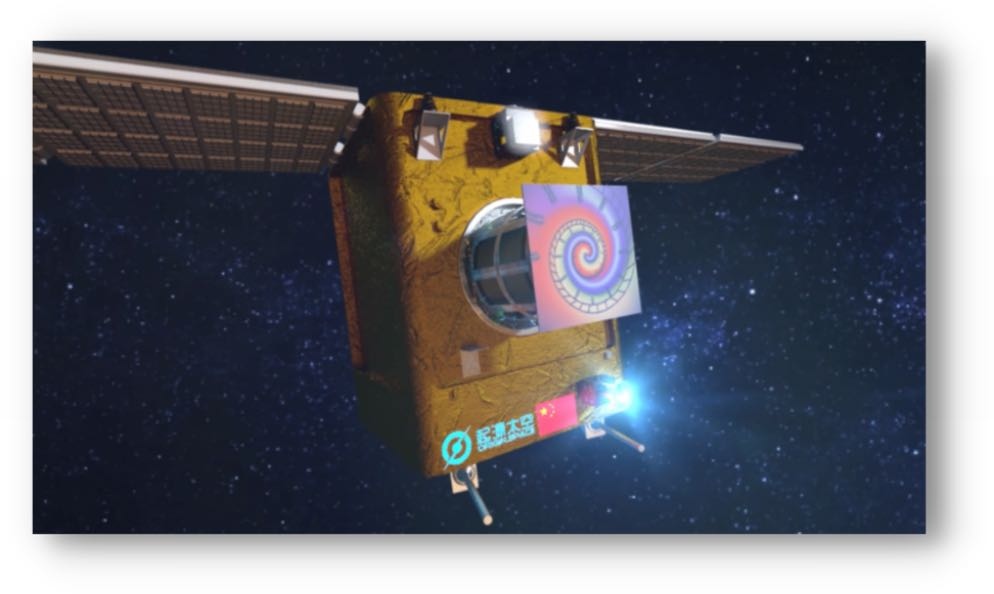
13 Nov 2022: Chinese media published an update of NEO-1 in the Global Times. NEO-1 was launched on a Long March 6 rocket for space debris removal and asteroids mining experiments in Apr 2021. - The Global Times reported the NEO-1 satellite completed an experiment using a large net to capture space debris and the…
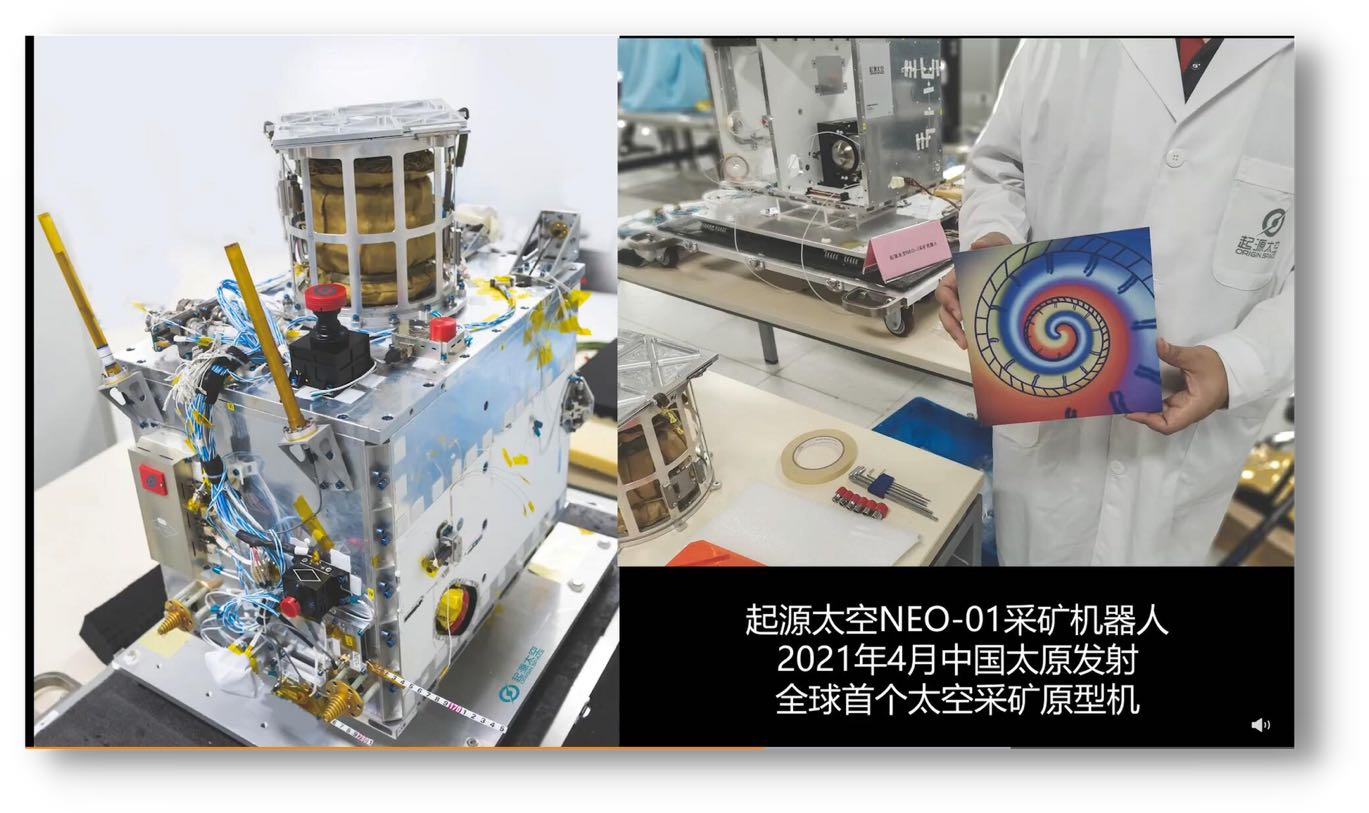
13 Nov 2022: Chinese media published an update of NEO-1 in the Global Times. NEO-1 was launched on a Long March 6 rocket for space debris removal and asteroids mining experiments in Apr 2021.
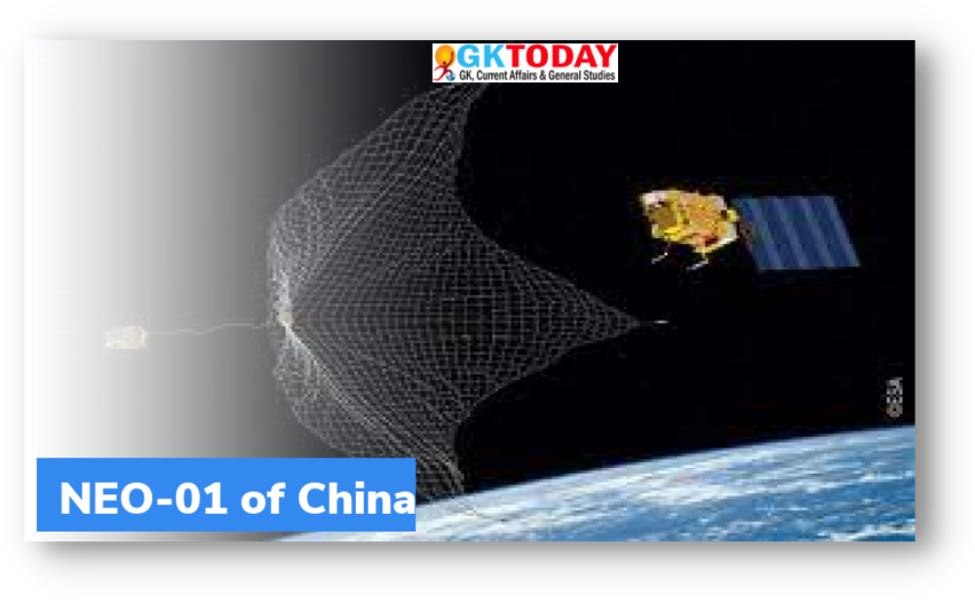
– The Global Times reported the NEO-1 satellite completed an experiment using a large net to capture space debris and the relative technique verification in key steps.
– NEO-1 deployed a small tethered target, which was then captured by a deployable net.
-NEO-1 was designed by the Shanghai Aerospace Science and Technology Co., and the operator is Shenzhen Origin Space Technology Co. and became the first commercial company in the world to complete such an experiment.Previously the company announced that NEO-1 satellite would use electric propulsion to de-orbit after completing its mission.
-NEO-1 remains in orbit along with the other 10 objects also launched on the LM-6. It’s orbit is 494×477.5km and is inclined 97.3°.
-“The goal is to verify and demonstrate multiple functions such as spacecraft orbital maneuver, simulated small celestial body capture, intelligent spacecraft identification and control,” Yu Tianhong, an Origin Space co-founder, told IEEE Spectrum in 2020.
-NEO-1 also carries a large field of view camera and other imagers.
-Origin Space is using NEO-1 as a precursor to future asteroid mining missions.
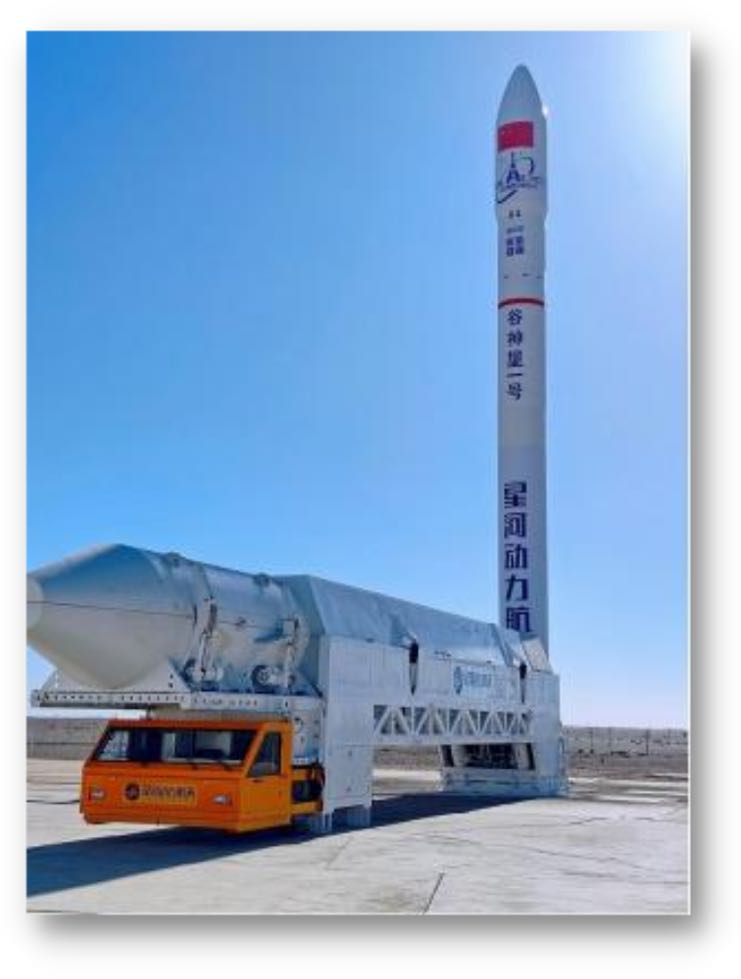
16 Nov 2022: China launched the Ceres-1 with five Jilin-1 Gaefen-03D remote sensing satellites just under 30 hours after the LM-4C launch with Yaogan-34(03). Both launches occurred at the Jiuquan Space Center. Launch Video. - Ceres-1 is a four-stage launch vehicle owned and operated by Galactic Energy. The rocket's…
16 Nov 2022: China launched the Ceres-1 with five Jilin-1 Gaefen-03D remote sensing satellites just under 30 hours after the LM-4C launch with Yaogan-34(03). Both launches occurred at the Jiuquan Space Center. Launch Video.
– Ceres-1 is a four-stage launch vehicle owned and operated by Galactic Energy. The rocket’s first three stages use solid fuel, with the fourth using hydrazine. All four stages can lift 700kg to LEO or ~270 kg to Sun Synchronous Orbit.
– Since its introduction in Nov 2020, Ceres-1 has completed four missions with a 100% success record.
– This was the first time Ceres-1 launched using a Transporter Erector Launcher (TEL). A TEL allows a launcher to be raised vertically and launch right on the TEL.
– This mission launched 5 Jilin-1 Gaofen (High Resolution)-03D satellites. Each Gaofen-03D is 42kg and have .75m resolution.
-Jilin-1 plans to launch 138 satellites by 2030 to enable round-the-clock, all-weather, and full-spectrum data acquisition.

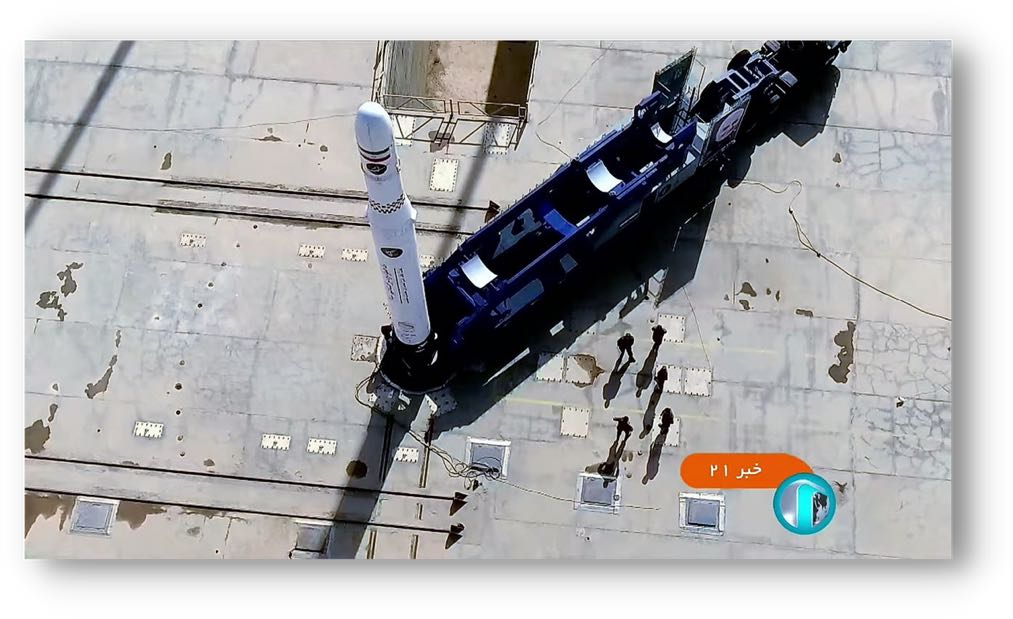
5 Nov 2022: Iran's Revolutionary Guard successfully launched a new rocket designed to eventually send 80kg satellites to low earth orbit. The test flight launched Iran's new Ghaem 100 rocket , a three-stage solid-fueled vehicle, on a suborbital test flight. Video . - The Ghaem 100 is designed to carry satellites of up…
5 Nov 2022: Iran’s Revolutionary Guard successfully launched a new rocket designed to eventually send 80kg satellites to low earth orbit. The test flight launched Iran’s new Ghaem 100 rocket, a three-stage solid-fueled vehicle, on a suborbital test flight. Video.
– The Ghaem 100 is designed to carry satellites of up to 80kg into 500km orbits.
– While launch location remains unclear, the objective was to test the first-stage of the Ghaem 100 rocket. The new rocket will be used for future launches of Iran’s Nahid communications satellites, said Amir Ali Hajizadeh, the head of the Revolutionary Guard aerospace division.
–Iran says its satellite program, like its nuclear activities, is aimed at scientific research and other civilian applications.
-The United States and other Western countries have long been suspicious of the program because the same technology can be used to develop long-range missiles. Previous launches have drawn rebukes from the US.
Over the past decade, Iran has sent several short-lived satellites into orbit and in 2013 launched a monkey into space. The program has seen recent troubles,
however. There have been five failed launches in a row for the Simorgh program, another satellite-carrying rocket. A fire at the Imam Khomeini Spaceport in Feb 2019 killed three researchers, authorities said at the time. A rocket exploded on a launchpad later that year.

4 Nov 2022: With the completion of China's new space station in 18 months, the author makes the case that China has now accomplished what Russia and the US did a few decades ago, and it did so quickly, on its own, with some improvements over previous designs. The completion of Tiangong shows that China is no longer a…
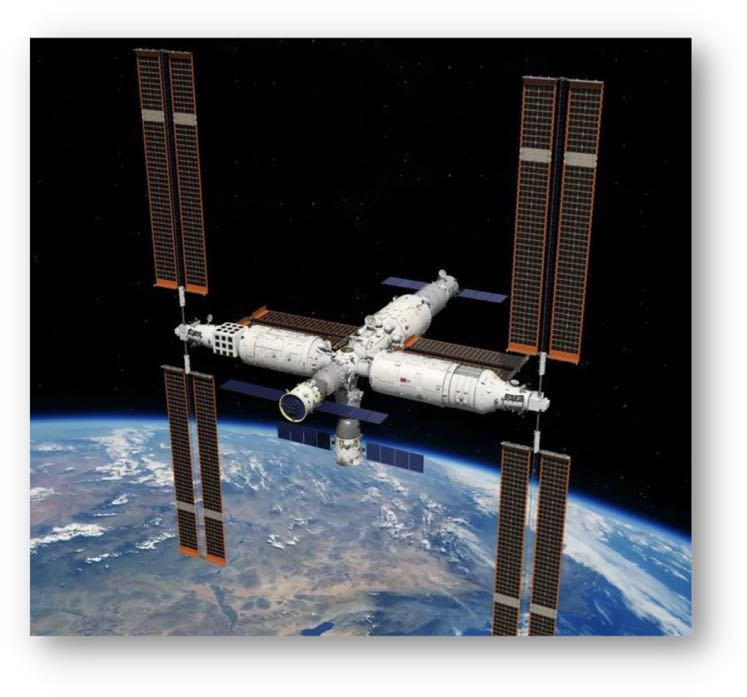
4 Nov 2022: With the completion of China’s new space station in 18 months, the author makes the case that China has now accomplished what Russia and the US did a few decades ago, and it did so quickly, on its own, with some improvements over previous designs. The completion of Tiangong shows that China is no longer a rising player in space-it’s now one of a few powers. Take a TikTok VIDEO TOUR.
– China’s new space station is a significant accomplishment for China’s rapidly growing space program, which plans to build a base on the moon, deploy a lunar rover, and send new landers and orbiters to Mars.
– The Chinese space program plans to have Tiangong last for 10-15 years, with the possibility of extending its lifespan.
– Preparation for the station began in 2011, including the launch of the first of the two test versions, it took China only 18 months to build Tiangong.
– The core module, Tianhe, launched in Apr 2021, and the first astronauts arrived that June. The next module went up in Jul 2022, followed by Mengtian on 31 Oct.
– Although smaller than the ISS, on the inside they have some creature comfort features that improve habitability and therefore astronaut productivity: less clutter, more wireless versus cabling, and a microwave.
– China’s station will offer some opportunities for partnerships, through which other countries can send experiments, and perhaps astronauts, to Tiangong. It already has a Saudi Arabian experiment on board.
– Unlike the ISS, which continually depends on the cooperation and support of its partners, China has different priorities for Tiangong, says Marissa Herron, a space policy researcher at Rand. Their focus will likely be to show Chinese leadership and that they don’t need to depend on other nations’ space agencies and companies.
– While China does have significant space military capabilities, as do the US and Russia, the space station doesn’t add to those. Similar to the ISS and Mir, Tiangong has no military purpose and is designed primarily to facilitate scientific research.
To Jan Osburg, an aerospace engineer at the Rand Corporation, the completion of Tiangong has other geopolitical implications for the United States. “We can no longer take for granted that we’re the big dogs in space,” he says. “This is a prompt for us-for the US and allies-to not drop the ball. There are different ways to run a space station and space exploration. I’d like it to be us who set the tone for humanity’s expansion into space, rather than an authoritarian regime like China.”


I'M CERTAIN ABOUT UNCERTAINTY: It may come as a surprise for me to tell you that despite all this work over 100's of years, that astrodynamics is challenged by this pesky thing called uncertainty. Astrodynamics has been around for a long time. As far back as the 1600's, folks like Kepler, Newton, Brahe, and others…
I’M CERTAIN ABOUT UNCERTAINTY: It may come as a surprise for me to tell you that despite all this work over 100’s of years, that astrodynamics is challenged by this pesky thing called uncertainty. Astrodynamics has been around for a long time. As far back as the 1600’s, folks like Kepler, Newton, Brahe, and others really got into being Astro geeks. Over time, countless equations, methods, algorithms and a lot of know-how have been developed and are applied today. All those precise equations and algorithms are awesome. Nothing wrong with them, it’s just that uncertainty is a constant companion for all who seek to determine orbits. This Jack’s Astro Corner article is going to explain why this uncertainty. Its important to know the challenges uncertainty brings and what our astro experts do about it.
SOME BUZZ WORDS OF ORBIT ESTIMATION: The estimation mathematics of orbit determination is a lot of matrix and vector math. In Astro math there are state vectors, the things we are trying to determine. For example, position and velocity of an object in space at a “now” time or at some future time. It’s 6 numbers, 3 are position in a coordinate frame like Earth Centered Inertial and 3 other numbers that are velocity in that frame. A state vector can also be the orbital elements. Sometimes we add to the state vector additional things to estimate like drag and solar radiation pressure and other odd things that effect the orbit path. A state vector is what we seek and the time of when it is current. Astro math has many equations that model orbital motion, the models we use to take a state vector and move it forward to some other time of interest. When an astro expert estimates and orbit using all sorts of nifty methods, they get the “here’s where we are” answer as well as and “here’s how fast we’re going.” They also get some additional info that is very helpful. They get numbers that describe the uncertainty of the “here’s where we are and how fast we are going” estimate. Along with the state vector we get an important matrix that captures the uncertainty, it’s called the Covariance Matrix. It is a set of numbers nicely arranged in a matrix that tells us a lot and is directly tied to this uncertainty I speak of. One more thing to foot stomp about this Astro math. Internal to the math are equations that relate what we are measuring via the sensor’s observations to the state vector we seek. We can’t directly measure a state vector, the pathway to finding it starts with the sensor’s observations. OK, enough of my astro ramblings, let’s look at two areas where uncertainty challenges us.
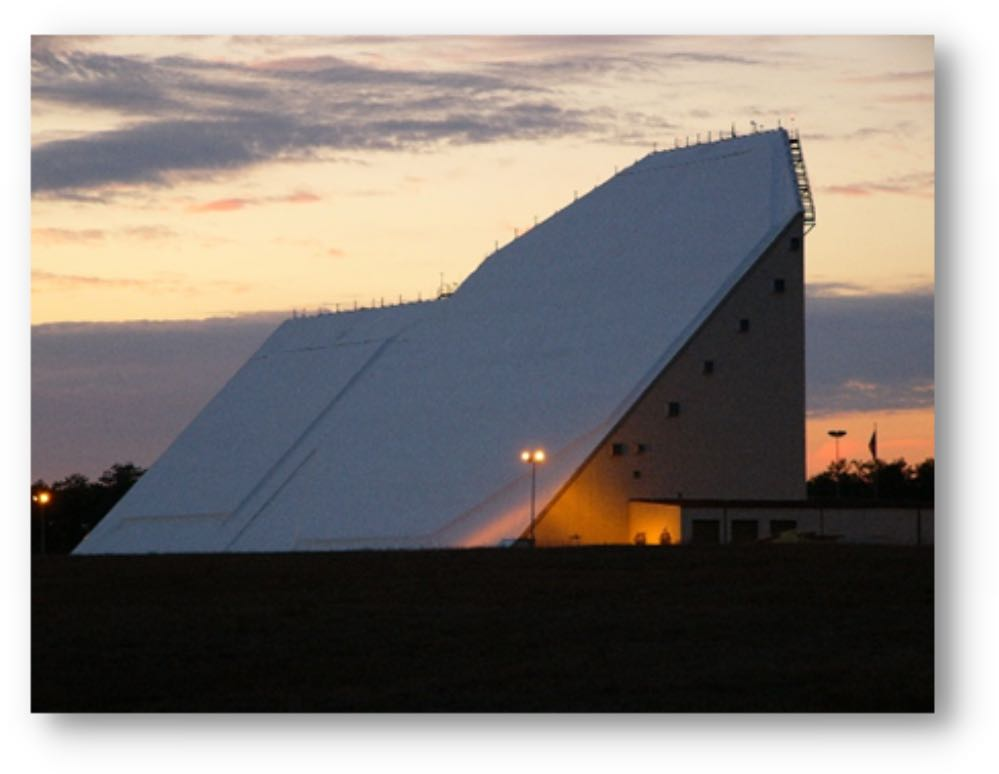
UNCERTAINTY IN THE SENSOR MEASUREMENTS/OBSERVATIONS: The sensors we use to track objects in space are amazing; radars, telescopes, electronic fences, radio receivers and some engineering technology that I don’t understand, but they work fabulously. Here’s a photo of the amazing and awesome Eglin space sensor in Florida.
They take measurements which are called observations. If you take a bunch of observations during an object passing in the field of view of the sensor you have a track. We use those time tagged observations as inputs to the orbit determination computers that host the equations, algorithms and much more. Guess what, all measurements from a sensor have some error inherent in them. Now error makes it seem like someone made a mistake, but no mistakes, it’s just the reality of we can’t measure things perfectly. We have measurement data that has some degree of uncertainty. There’s always a statistical plus or minus of what you are measuring. Sensors can also have a bias. The bias is an offset and it can vary with sensor temperature for example. For space sensors, a lot of work goes into determining these uncertainty parameters and developing a statistical summary that can be used as you apply those measurements. The observations have uncertainty and together with the sensor measurement we put that sensor uncertainty info in something called a noise matrix. We generally call them weights, or sigmas (standard deviation). They along with the actual measurement get used by the orbit determination equations and algorithms. So, right from the start we carry uncertainty into the math of orbit determination, that’s the way it is and we must use that information to ultimately determine the answer we seek, the state vector and the Covariance Matrix uncertainty data associated with that estimate. OK, hang on, we got more uncertainty coming!
UNCERTAINTY AND SIMPLICITY IN THE MATH MODELLING OF ORBITS: Let’s now look at the equations of orbit determination from an uncertainty perspective. So, did Kepler and all those old dudes leave something out? Why is there uncertainty in the math? That’s where our Astro experts have to make some calls or decisions to try to help minimize the uncertainty of their math equations that use the sensor measurements and “noise” data. They have to make math models or set of equations that can take the observations and mathematically mash on them and get the state vector answer. That’s not easy. We might assume an orbit path is a circle for the model, but the object in question is not exactly in a circle, so our model may be off a little. So, our modelling of the orbit path and all the forces acting on the object (i.e., big gravity, atmospheric drag, Earth’s odd gravity, the tugging of the Sun, Moon and other gravitational objects, the solar wind, there’s a lot more) must be made into an equation that might not fully represent what Mother Nature is dishing out. My astro friend and mentor TS Kelso adds and important point to amplify the uncertainty of the math models, he says “Force models aren’t so much uncertain but, as with any model, are simplifications of reality. The choice of a specific force model strikes a balance between keeping things like computation time reasonable and getting usable results for whatever the primary task is. And, of course, there are those cases where it appears we simply don’t understand the science as well as we would like to. So, there is simplifications and uncertainty in the models we use to propagate the state vector and also propagate the error or uncertainty we start with. The uncertainty grows over time because the equations don’t perfectly predict what will really happen to the object in space. Are we not trying hard enough? No, the efforts to model orbits are heroic and constantly being worked. We have uncertainty in the inputs (observations) and now we have uncertainty in the math models that must be simplified to work on the computers nicely. Ugh, is this bad news?
Fear not-we deal with it smartly and wisely. Like the sensor uncertainty data, we also have uncertainty data the way we model the orbit equations. That data (which is stashed away in something called a Process Noise Matrix, don’t you love these nifty terms?) can be used to numerically estimate the uncertainty at the time of each observation and know the uncertainty as we propagate to a future time of interest and how it grows. The state vector answer may be off a little. But in the techniques, we use to estimate the orbit give us something really awesome called the Covariance Matrix. This Covariance info comes as companion of the state vector estimate we get a numerical feel for what the bounds of confidence are on that estimate. What can we do with that uncertainty numerical info? Let’s look at that next.
LET’S MEET THE COVARIANCE MATRIX (UNCERTAINTY STORE HOUSE OF INFORMATION): We all want the answer; where am I? Where am I going to be and how fast will I be going? That’s important but so is the how confident am I in that answer? How much can I trust the answer? That’s where along with the answer you also need the covariance matrix information which is laden with good info to better understand the uncertainty of your state vector. Let’s look at position in the ECI coordinate frame. The state vector answer tells us “You are here and going this fast”, a moving dot in space in the ECI frame. BUT, the covariance data contained in the covariance matrix will help you understand the “it’s not a dot.” The Covariance Matrix give you info that ultimately with a little math (square root and multiplication is all you got to do) can give you the plus or minus numbers for some statistical confidence associated with the “here’s where you are” estimate.
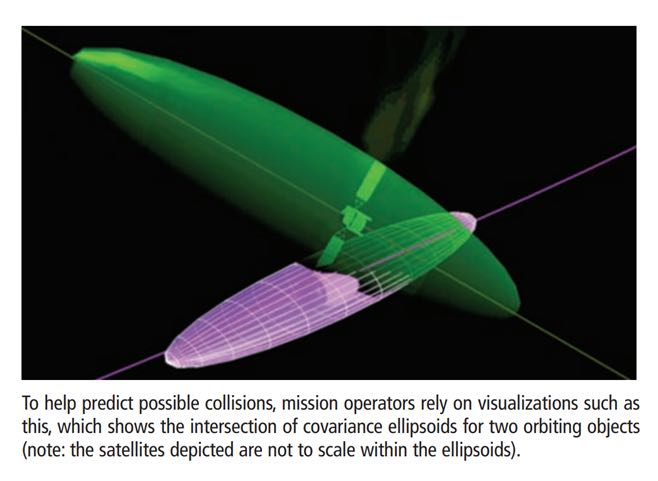
THE FOOTBALL BALL OF UNCERTAINTY: Allow me to introduce what we can do with this “plus or minus” info to get a visual idea of the uncertainty volume surrounding the state vector “dot.”. Our Astro smarties can convert this representation of uncertainty and tell you the position of the space object using what’s called error ellipsoid. It’s like a football or rugby ball shaped volume around that dot. Say what? Football? Rugby ball? At the time we estimate the “where am I and how fast am I going?” state we also estimate the error ellipsoid. Then as time marches on, we will see the error ellipsoid actually grows in size until we get some observations to re-accomplish the orbit estimate and shrink this uncertainty volume down. The way we can get that back to small is take more observations and redo the orbit determination. So, think of a “Rugby Ball of Uncertainty,” that’s what Covariance Matrix helps us understand. Here’s an illustration from Aerospace Corporation’s Crosslink magazine issue Fall 2015. It shows the concept of error ellipsoid and in this case, they are overlapping in a conjunction situation. Hummmm, that might be a problem. That issue of Crosslink is dedicated to Understanding Space Debris, it’s a must read if you are in this space business! Here’s the link: https://aerospace.org/paper/crosslink-fall-2015
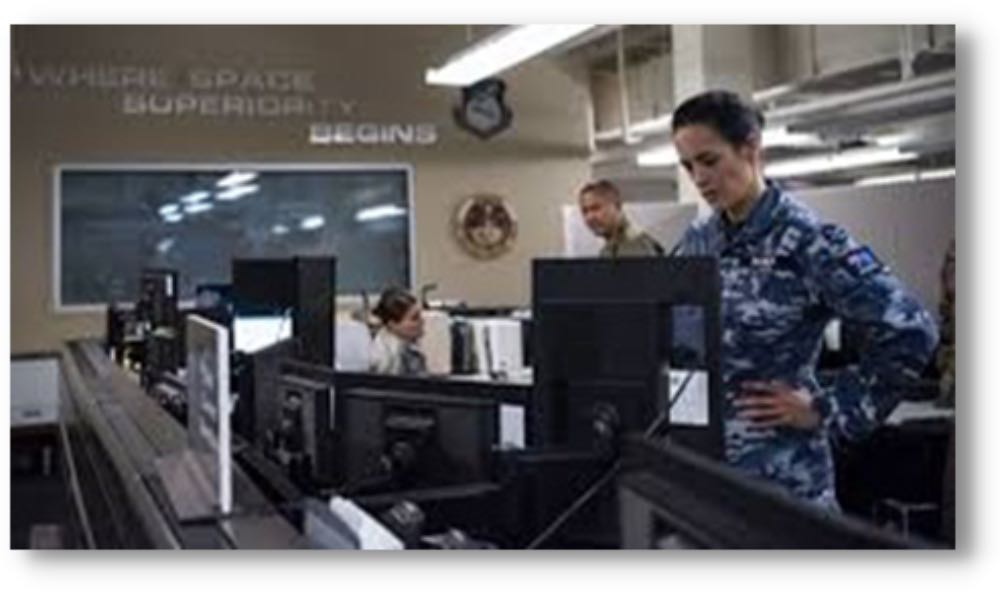
WRAP IT UP JACK: Astrodynamics rocks! Sensors aren’t perfect, but we do have some good insight into just how uncertain their measurements are. The math models we use for orbit determination are awesome and comprised of huge equations, but the models are not perfect, they are simplifications of what is really happening and thus have some uncertainty. We carry with the estimate uncertainty, but its good stuff to know. Through the orbit estimation process we can understand just where we are inside the uncertainty football or rugby ball shaped volume of “it’s in there somewhere.”. Furthermore, when we want to know the position and velocity of an object in some future time, we must use this imperfect math to advance (propagate) the state and covariance estimate forward. Uncertainty will build up. But we can also advance the covariance matrix and have a good idea just how uncertain the estimate is. It works. So next time you see your colleagues who estimate orbits. Here’s a photo of some space patriots at Vandenberg), be nice to them, they got a tough job but do it with skill, knowledge and dedication and their pesky companion tagging along call uncertainty.
THOSE WHO HELPED ME: I want to give a shout out here to Brent Skrehart of the National Space Defense Center, Richard Osedacz who long ago was an AF Academy astro student and now my astro mentor and TS Kelso who is the mastermind of Celestrak for their help in telling this story of uncertainty in orbit estimate.
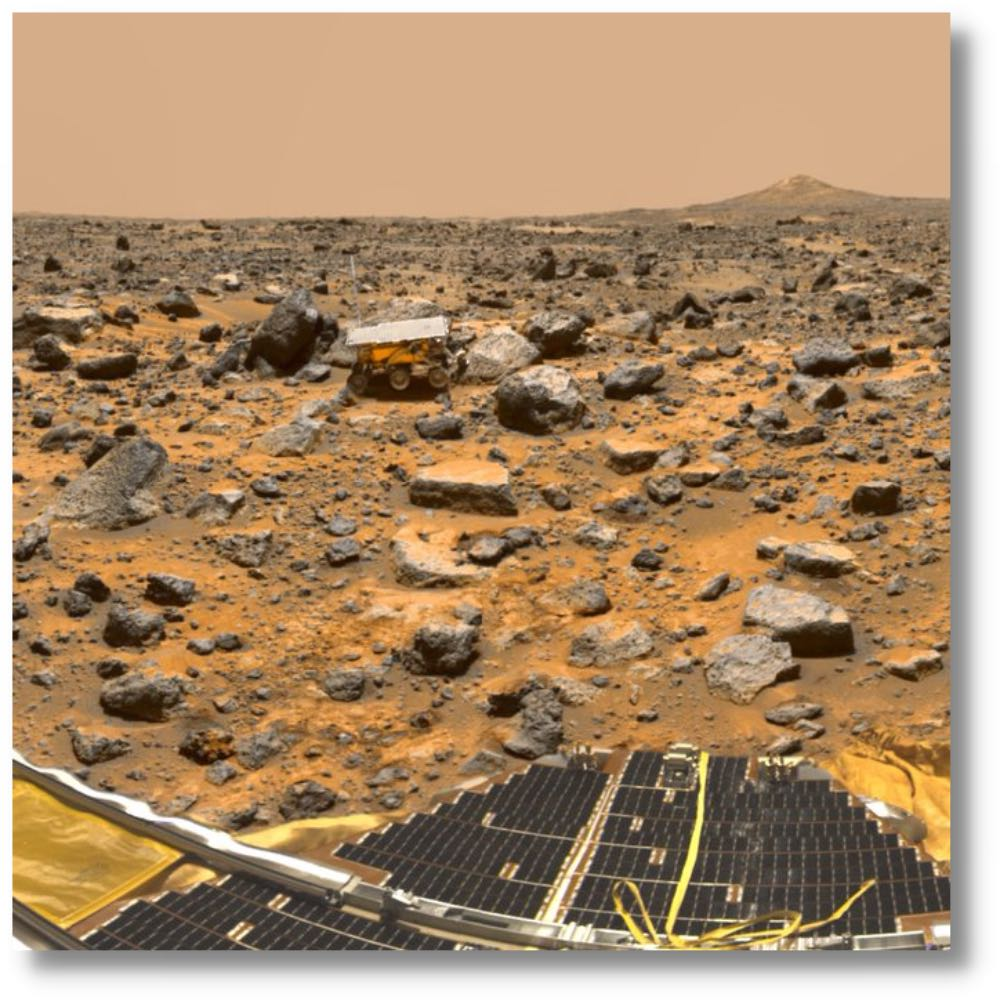
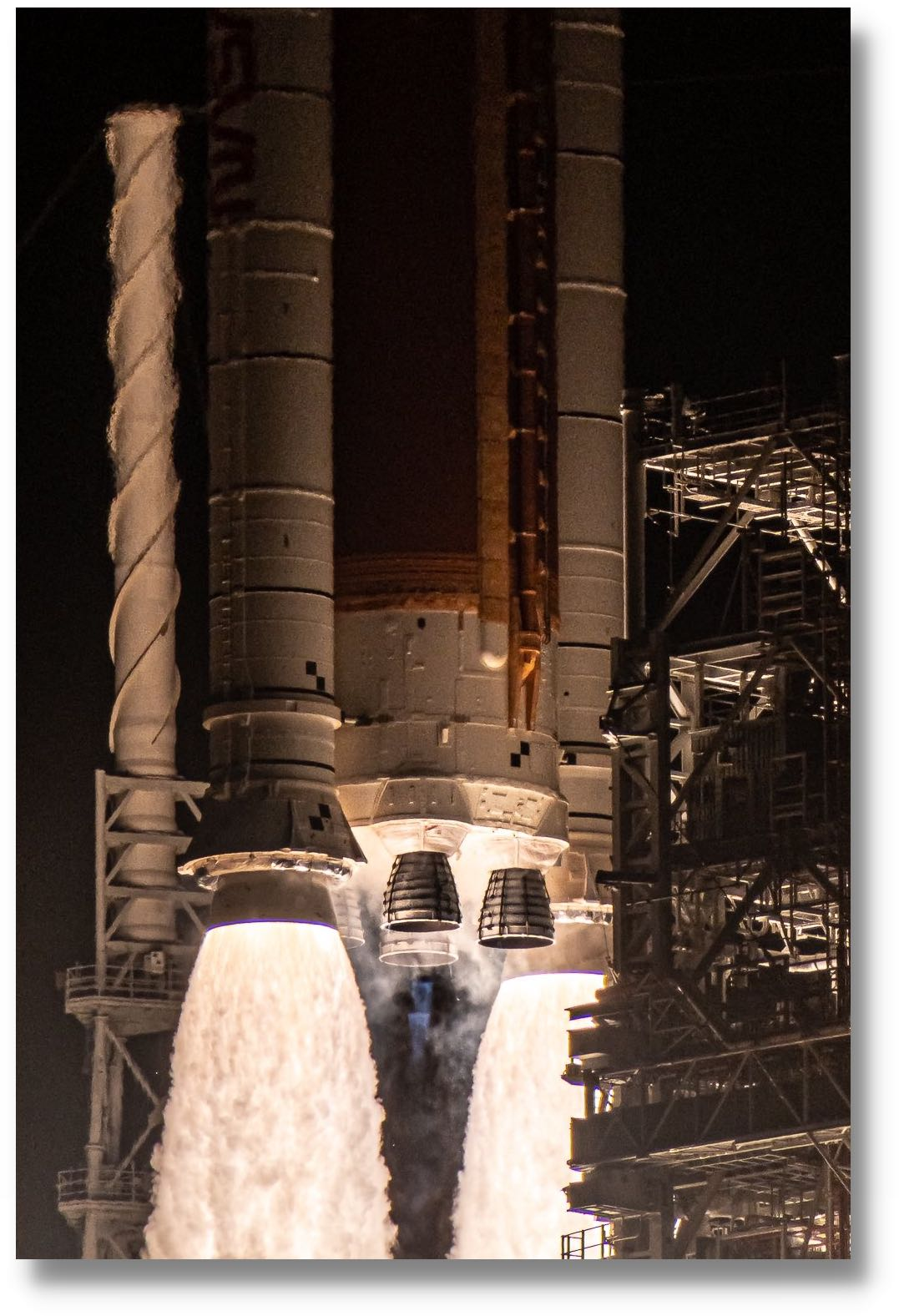
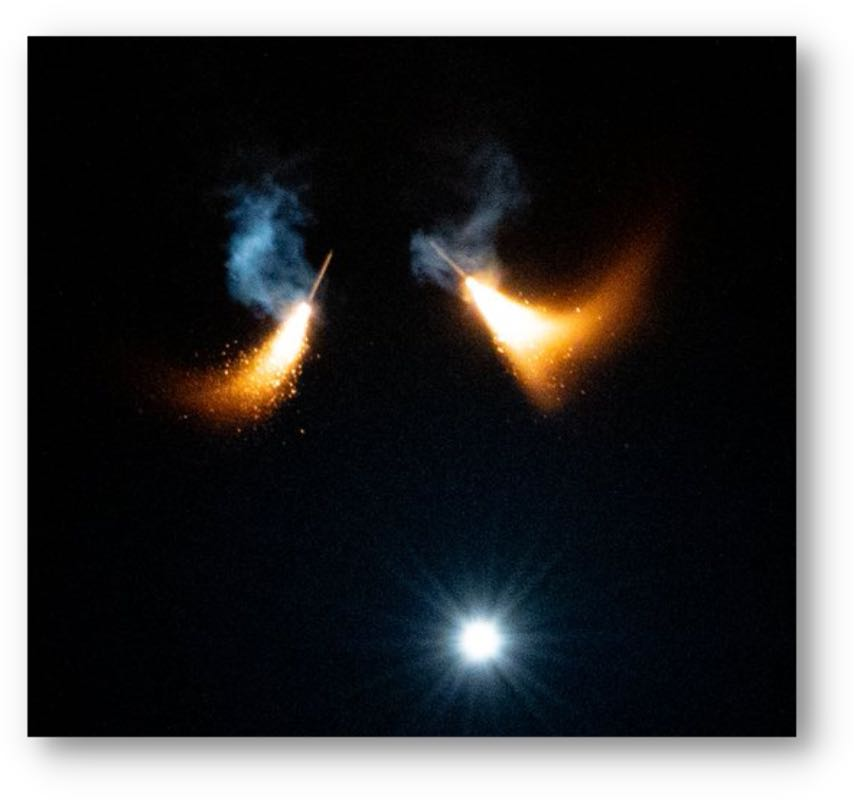
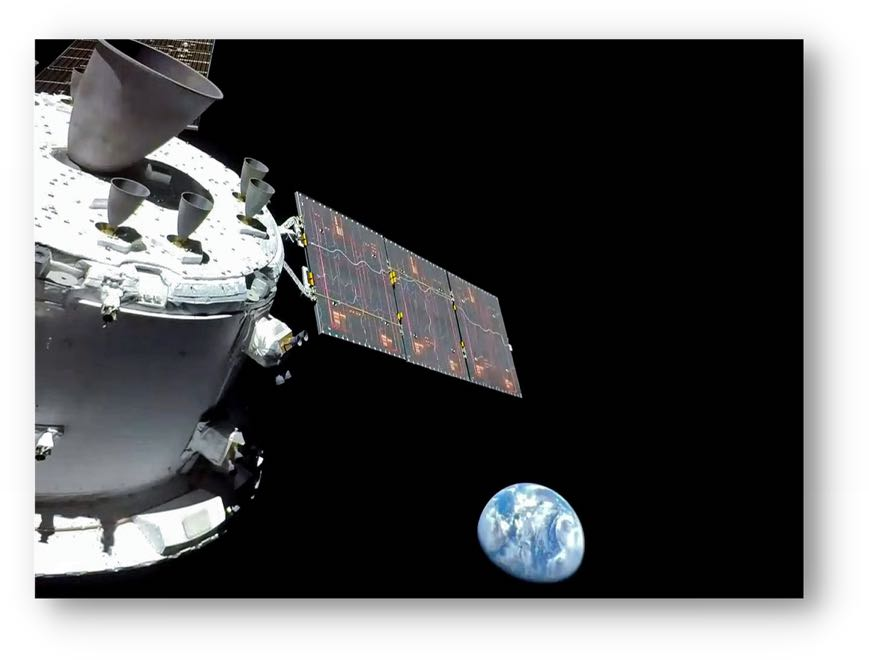
Images from the space domain, including X-37B, Tiangong, launch photography, Mars, SLS, and a message of support for Ukraine.





Flash Insider
Subscribe to unlock full access to this Issue and the complete Flash archive.
Subscribe Now Already Subscribed? Log In