



26 July 2023: China launched the Yaogan 36 Group 5 (YG-36(05)) triplets from Xichang Satellite Launch Center. There are now 15 Yaogan 36 and 15 Yaogan 35 satellites in orbit. China has paired each YG-35 triplet with a YG-36 triplet. YG-36(05) is nearly co-planar with YG-35(04). Like other YG payloads, the mission's…
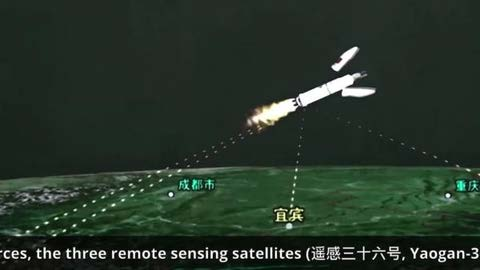
26 July 2023: China launched the Yaogan 36 Group 5 (YG-36(05)) triplets from Xichang Satellite Launch Center. There are now 15 Yaogan 36 and 15 Yaogan 35 satellites in orbit. China has paired each YG-35 triplet with a YG-36 triplet. YG-36(05) is nearly co-planar with YG-35(04). Like other YG payloads, the mission’s exact use case and goal remain classified. Launch Video.
– YG-36(05) is in the typical orbit for this constellation with an apogee of ~505 km, perigee of ~491 km, and a 35° inclination. These numbers will shift over the next few weeks as YG-36(05) maneuvers into the lead-trail-trail formation.
-As has become the pattern, YG-36(05) is plane matched with a YG-35 triplet, this time YG-35(04).
– Here are the other pairings: 1) YG-36(01) & YG-35(01); 2) YG-36(02) & YG-35(02); 3) YG-36(03) & YG-35(05); and 4) YG-36(4) & YG-35(03) .
– The Aerospace Dongfanghong Satellite Co., Ltd. developed two of the three satellites YG-36(05), with the third provided by the Shanghai Academy of Spaceflight Technology (SAST) — both of which operate under CASC. (This is true for all YG-35 & 36 triplets).
– China’s government-owned media disclosed few details about the satellites. The country’s Xinhua news agency said the satellites will be mainly used to test “new Earth-observation technology.”
– Looking at similar orbits and formations between 2018 and 2020, China launched 8 XJS satellites with similar orbital parameters. All are 35° inclined and between 460 – 475 km in altitude.
– Yaogan-35/36 satellites may operate in lead-trail configuration, with the lead satellite potentially cueing the two trailing vehicles.
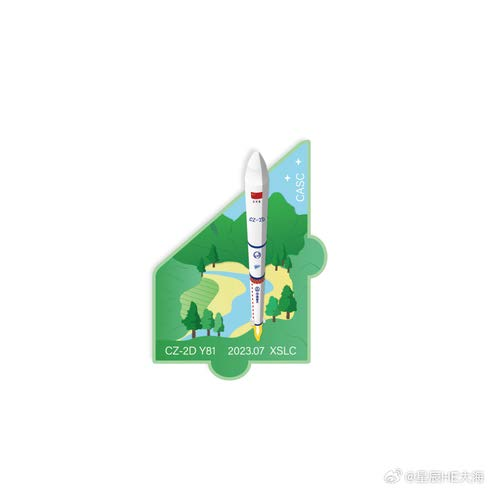
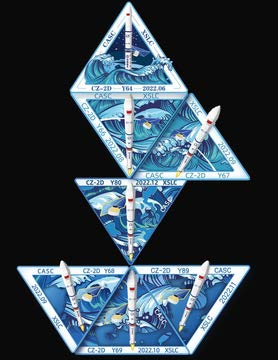
Patch-Int: Possible patch configuration for all previous Yaogan 35 & 36 missions (right). Note nautical theme and the appearance of South Pacific Islands… also kind of looks like a sailboat. New patch for YG-36(05) (left) appears to start a new puzzle.
3 Aug 2023: China launched a Long March-4C with the Fengyun-3F (FY-3F) satellite from the Jiuquan Satellite Launch Center. FY-3 satellites are low polar-orbiters, operating at ~800km altitude, inclined at 98.8°. Using ten different instruments, this spacecraft will join seven currently active satellites to monitor…
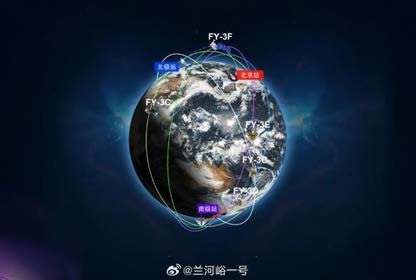
3 Aug 2023: China launched a Long March-4C with the Fengyun-3F (FY-3F) satellite from the Jiuquan Satellite Launch Center. FY-3 satellites are low polar-orbiters, operating at ~800km altitude, inclined at 98.8°. Using ten different instruments, this spacecraft will join seven currently active satellites to monitor different weather patterns and formations from space. There are 6 total FY-2 and 4 satellites operating in GEO. Launch Video.
– FY-3F is in the typical orbit for the odd numbered FY satellites, with a SMA of 826.4 km and a 98.8° inclination.
– FY-3F joins the China Meteorological Administration’s fleet of Fengyun satellites in low Earth and geosynchronous orbits. It replaces the Fengyun-3C satellite, launched in 2013.
– The satellite had a mass of around 5,070 lbs (2,300 kg) at launch, and is expected to operate for around a decade. The state-owned Shanghai Academy of Spaceflight Technology (SAST) developed the spacecraft.
-That path sends the satellite across the equator at 10:00 a.m. local time, meaning it is operating in a “morning orbit.”
-Previously, China launched FY-3E in July 2021 to provide coverage for “early morning orbit.”
-China launched the FY-3G in April 2023, however this satellite is in a much lower orbit than other FY-3 satellites likely to support its radar. FY-3G is in a 416.4 x 408 km orbit and is inclined at 50°. The other FY-3 satellites are all in orbits at >820 km and are inclined 98° (Sun synchronous orbit).
-China is currently the only country with four near-Earth orbit meteorological satellites in Sun-synchronous early morning, morning, afternoon and non-Sun-synchronous orbits.
-China also operates six environmental monitoring satellites in Geo-Stationary orbit: the FY-2 and FY-4 series spacecraft.
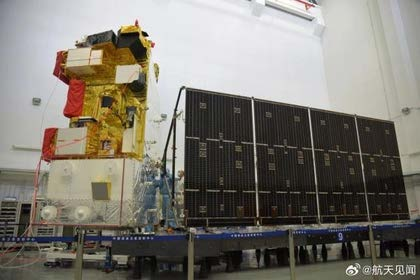

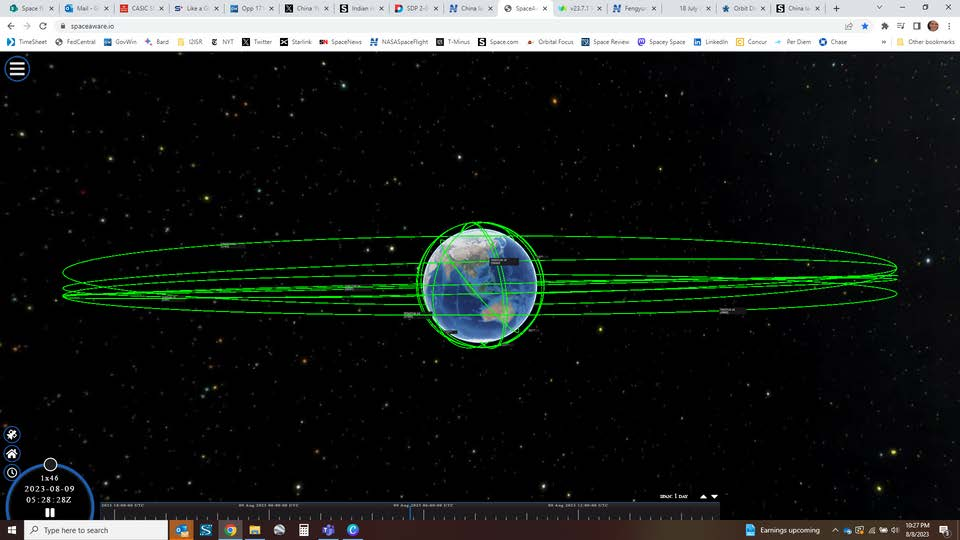
8 Aug 2023: China launched Long March 2C from the Taiyuan Satellite Launch Center carrying the Huanjing-2F, a 5-meter-resolution synthetic aperture radar satellite. Per CNAS, Huanjing-2F (HJ-2F) will support “disaster prevention, reduction, relief, and environmental protection.” Launch Video & 1 minute mission…
8 Aug 2023: China launched Long March 2C from the Taiyuan Satellite Launch Center carrying the Huanjing-2F, a 5-meter-resolution synthetic aperture radar satellite. Per CNAS, Huanjing-2F (HJ-2F) will support “disaster prevention, reduction, relief, and environmental protection.” Launch Video & 1 minute mission animation (complete with spacey soundtrack!) There’s also an 11 second video of LM-2C first stage debris in a Chinese village (disco soundtrack). Nothing like hypergolic fuel residue to boost property values!
-HJ 2F is in a 500 km SSO and is co-planar with HJ-2E (which was launched on 12 Oct 2022).
– HJ-2E & 2F (Huan Jing = Environment) satellites are the second generation of small Chinese Earth observation satellites operated by the China Centre for Resources Satellite Data and Application (CRESDA).
– Both are S-Band SAR remote sensing satellites with high mobility, precision control and stability, and long lifespans.
– There are six HJ satellites in the constellation providing all-weather (3 to 100 m meter) imagery.
– HJ-1A (2008); HJ-1B (2008); HJ-2A (2020); HJ-2B (2020); HJ-2E (2022); and HJ-2F (2023).
– HJ-2A & 2B are also co-planar.
Following the 2012 HJ-1C launch, the satellite reportedly suffered from an antenna problem, which caused a lower than planned resolution. As a remedy, the orbit was lowered. The satellite is no longer in the catalog, and observers presume it has re-entered.
– China plans to launch a total of 11 Huanjing satellites, with visible, infrared, and multi-spectral sensors, plus synthetic aperture radar (SAR). Huanjing-2F was the seventh satellite launched.
– Huanjing-2F adds to the country’s growing SAR capabilities, while a series of commercial SAR constellations also appear to be in the works, some involving public-private partnerships.





10 Aug 2023: Chinese commercial firm Galactic Energy launched it's seventh CERES-1 rocket from Jiuquan, carrying seven satellites into low earth orbit. The company is preparing for its first sea-based mission. Launch Video. - The launch carried Xiguang-1 (01), Star Pool-1B satellite, GeoSat Intelligent Emergency-1, and…
10 Aug 2023: Chinese commercial firm Galactic Energy launched it’s seventh CERES-1 rocket from Jiuquan, carrying seven satellites into low earth orbit. The company is preparing for its first sea-based mission. Launch Video.
– The launch carried Xiguang-1 (01), Star Pool-1B satellite, GeoSat Intelligent Emergency-1, and the Xi’an Hangtou -88, -96, -104 and -112 satellites. All are expected to enter roughly 500km-altitude Sun-synchronous orbits.
-Xikuang-1 (01) is a 100 kg class hyperspectral satellite belonging to the Xikuang-1 series developed by Xi’an Zhongke Xikuang Aerospace Science and Technology Co., Ltd., or Xiopm Space. The satellite carries multiple payloads including a hyperspectral camera, infrared camera, panchromatic camera, and on-board intelligent processing unit for a range of Earth observation uses.
The four Xi’an Hangtou satellites are lightweight, low-power optical satellites focusing on assisting ecological sustainability in the Qinling region of Shaanxi, Xiopm Space’s home base.
– Star Pool 1B is a wide-view, integrated sensing satellite independently developed by Elliptical Space and Time (EllipSpace). The multi-payload satellite features inter-satellite/satellite-ground communication and navigation enhancement capabilities.
–Geosat Intelligent Emergency-1 is an “AI-centered satellite” with an intelligent operating system, which is jointly developed by Geosat 2 Space Technology (Hangzhou) Co., Ltd. and Suzhou Tianxun Space Technology Co., Ltd. It is equipped with high-resolution array cameras, near-infrared cameras and IoT communications payloads, utilizing on-board intelligent processing technology.
-The Ceres-1 solid rocket booster carries a liquid propellant upper stage, and has a diameter of 1.4 meters, a length of about 20 meters, with a take-off mass of about 33 tons. It can deliver 400 kg to LEO or 300 kg to a 500 km altitude Sun-synchronous orbit (SSO).
– Galactic Energy is now preparing to make the first attempt by a Chinese commercial rocket company to launch from a mobile sea platform. The rocket will lift off near the coast of Haiyang, Shandong province, during a window starting 20 Aug, and running until the end of the month.
-The sea launch will carry the satellites Tianqi 21-24 for Guodian Gaoke, a commercial firm constructing its Tianqi low-Earth orbit narrow-band Internet of Things constellation.
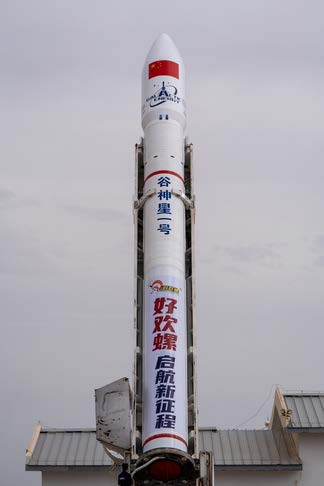
Editor’s Note: Apparently this launch was sponsored by “Hao Juan Luo 好欢螺”, a Luosifen (Chinese rice noodle soup) brand. Watch Epic Video.
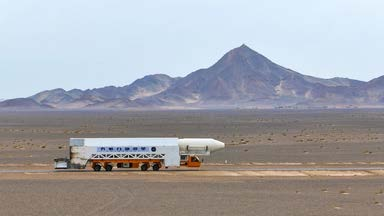



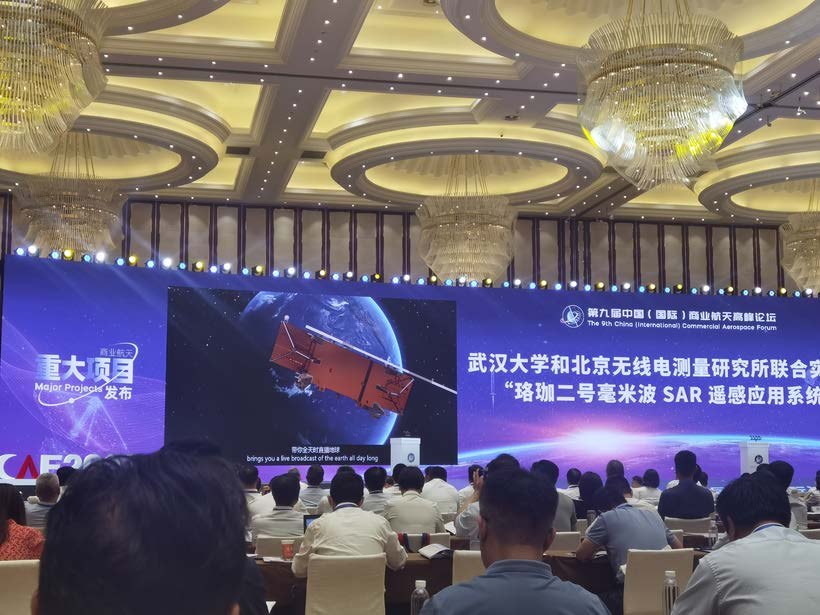
30 Jul 2023: The China Space Monitor posted a report on the 9th edition of the China Commercial Aerospace Forum (CCAF). CCAF is a two-day affair (12-13 July) and takes place in Wuhan, Hubei Province. China Aerospace Science and Industry Corporation (CASIC) is the primary organizer of the event, with involvement of the…
30 Jul 2023: The China Space Monitor posted a report on the 9th edition of the China Commercial Aerospace Forum (CCAF). CCAF is a two-day affair (12-13 July) and takes place in Wuhan, Hubei Province. China Aerospace Science and Industry Corporation (CASIC) is the primary organizer of the event, with involvement of the city and provincial governments, as well as the CNSA (China’s NASA) and CASIC rival, China Aerospace Science and Technology Corporation (CASC.) After a significant lull for CASIC’s commercial space projects over the 2020-2022 period, CASIC made several announcements signaling it was very much back as a major player in Chinese commercial space. Watch Conference Video.
– At this year’s conference, CASIC announced its plans to establish a 300-satellite VLEO constellation.
– CASIC launch subsidiary Expace announced remaining launch capacity for five upcoming launches of the KZ-11 rocket, set to launch in Q4 2023, Q2 2024, Q3 2024 (2x), and Q4 2024, representing a major ramp-up in of the company’s medium-lift rocket launch cadence.
– CASIC subsidiary Space Engineering Development Corporation made a surprisingly public comparison of costs for Chinese launch services. KZ-1A launch services are priced at Â¥19 million, or Â¥68,000 (~US$10,000) per kilogram.
– Other CCAF announcements included:


25 Jul 2023: Songjiang officials described the first phase of the G60 Starlink low-Earth-orbit broadband constellation, planned to comprise 1,296 satellites.
25 Jul 2023: During an official press conference on the topic of the “High-Quality Development in Songjiang District,” Cheng Xiangmin, Secretary of the Songjiang District Party Committee, noted that Songjiang has “accelerated the development of new fields and new ways of building a low-earth orbit broadband multimedia satellite constellation, the ‘G60 Starlink’.” A first phase will see 1,296 satellites sent in orbit.
– G60 Starlink was previously geared towards developing an internet satellite cluster without an overt constellation plan. The project is centered in Shanghai’s Songjiang District and appears to offer an alternative to the national-level Guowang plan.
– G60 refers to an expressway of the same name which runs through several cities in the Yangtze River Delta region. The project is part of a Science and Technology Innovation Valley initiative.
– A post by the Megaconstellations account suggests a request for coordination filed with the International Telecommunication Union in April could correspond to the G60 plan.
– The documentation sets out plans for 36 polar orbital planes, each filled with 36 satellites, totaling 1,296 spacecraft. The satellites would operate in the Ku, Q and V bands.
– The G60 constellation is separate from Guowang, a state-owned enterprise China established in 2021 to oversee and coordinate the construction of a 13,000-satellite network.
– Representatives noted the project will be completed in three phases, the first being to build a digital satellite manufacturing plant, satellite on-orbit measurement and operation center, and satellite internet operation center.
– G60 is linked to the Chinese shareholders of the former KLEO Connect constellation project. That Chinese-European joint venture ended in acrimony and ongoing lawsuits. U.S. technology firm Rivada is planning to use the allocated frequencies for its own constellation after it acquired spectrum rights from KLEO’s majority Chinese shareholders.
– An article from February 2023 noted that as of the end of 2022, there had been five G60 test satellites placed in orbit. Apparently, four of these satellites were two KLEO Connect pairs, launched in 2019 and 2021 respectively.
– Meanwhile, the first batch of satellites for Guowang is expected to launch later this year, possibly on a Long March 5B rocket with a Yuanzheng-2 upper stage. China is also building new commercial launch pads on Hainan island to alleviate a bottleneck in launch access.
From a Chinese technical journal: “Judging from the statistics on the deployment of satellites in various countries, there will be almost no space available in low-Earth orbit in 2030. Therefore, it is extremely important to get ahead first and seize the first-mover advantage.”




On or about 10 July 2023, SJ-21 decreased its SMA ~44km. The decreased altitude placed SJ-21 below the GEO belt, and it is now drifting slowly eastward. As a reminder , four months after launching on 23 Oct 2022, SJ-21 docked with a defunct Chinese satellite to drastically alter its geostationary orbit, demonstrating…
On or about 10 July 2023, SJ-21 decreased its SMA ~44km. The decreased altitude placed SJ-21 below the GEO belt, and it is now drifting slowly eastward.
As a reminder, four months after launching on 23 Oct 2022, SJ-21 docked with a defunct Chinese satellite to drastically alter its geostationary orbit, demonstrating capabilities only previously exhibited by the United States. See Videos Event, Tracking of Event
On or about 18 July 2023, SJ-17 decreased its SMA ~67km. SJ-17 had been maintaining its position on the GEO belt for the previous three months. The decreased altitude places SJ-17 below the GEO belt and it is now drifting eastward.


7 Aug 2023: After numerous delays, Russia launched a Soyuz-2 rocket with the first GLONASS-K2 spacecraft. GLONASS-K2 (Uragan-K2 or Cosmos-2569) promises to improve the accuracy of the Russian dual-use global positioning system. The introduction of the K2 variant was delayed by at least a decade, primarily because of…
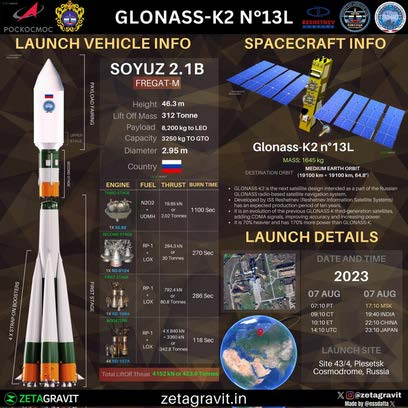
7 Aug 2023: After numerous delays, Russia launched a Soyuz-2 rocket with the first GLONASS-K2 spacecraft. GLONASS-K2 (Uragan-K2 or Cosmos-2569) promises to improve the accuracy of the Russian dual-use global positioning system. The introduction of the K2 variant was delayed by at least a decade, primarily because of Western sanctions. ISS Reshetnev announced that it had begun testing the GLONASS-K2 in July 2016. Launch Video.
– Cosmos-2569 is cataloged in a 19,133 x 19,156 km orbit with a 64.8° inclination. It is in the same orbital plane as eight other GLONASS satellites.
– There are currently 27 active GLONASS satellites in Medium Earth Orbit (MEO).
– The satellites are in three planes, each containing nine spacecraft.
– Glonass-K2 satellites are the fourth design iteration for the Glonass navigation system.
– K2 provides navigation accuracy of less than 30 cm, and features an unpressurized satellite bus (Ekspress-1000) manufactured by ISS Reshetnev.
– The satellites are equipped with an advanced thermal control system that uses electrically powered thermal panels and optical thermal coating.
– These features allow for precise temperature maintenance of spacecraft avionics, within a range of 0.1 degrees.
– K2 satellites use a novel navigation signal known as code-protected selection, transmitting three signal types: two in the L1 and L2 ranges for specialized users (military); and one channel in the L1 range accessible to the general public.
– Each satellite weighs 1,645 kg and has an operational lifetime of 10 years.
– A ban on the supply of western electronics to Russia, after the annexation of Crimea in 2014, apparently severely delayed K2 development.
– ISS Reshetnev announced that the completion of the GLONASS-K2’s preliminary design in 2012, and expected to launch in 2013. GLONASS-K2 satellites were supposed to use only indigenously-built components.
– Sanctions forced Russia to find substitutions for avionics, and elements such as gallium arsenide and germanium, used to make solar arrays.


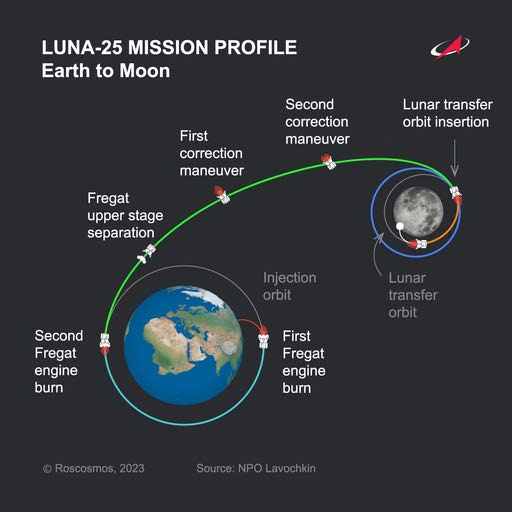
11 Aug 2023: Russia launched the Luna 25 spacecraft from Vostochny Cosmodrome, aboard a Soyuz-2.1b with a Fregat-M upper stage. This is the first lunar exploration mission by the Russian Federation: the previous spacecraft, Luna 24, was launched in 1976 by the Soviet Union. The entire future of the lunar program in…
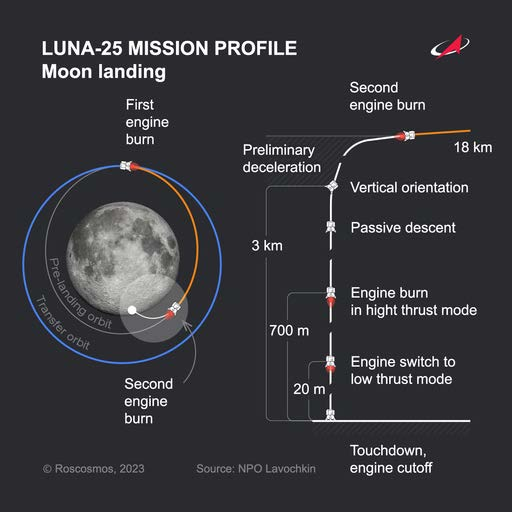
11 Aug 2023: Russia launched the Luna 25 spacecraft from Vostochny Cosmodrome, aboard a Soyuz-2.1b with a Fregat-M upper stage. This is the first lunar exploration mission by the Russian Federation: the previous spacecraft, Luna 24, was launched in 1976 by the Soviet Union. The entire future of the lunar program in Russia depends on whether this spacecraft will be able to make a soft landing near the south pole of the Moon. Launch Video.
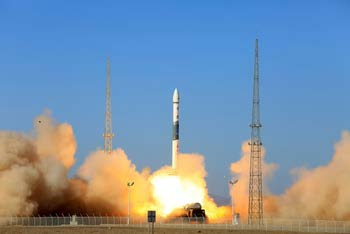
– The Soyuz-2.1b placed the spacecraft into a 200km circular orbit. After about one hour, the Frega-M fired its engine for the first time to send the lander on a trans-lunar trajectory. After two burns, at a distance of about 3,000 km from Earth, the Fregat stage separated, and Luna 25 will make the remaining journey to the Moon using its own engines.
– Luna 25 is targeting the Moon’s south polar region, where the presence of water ice has attracted the attention of numerous national space programs.
– The spacecraft is scheduled to enter lunar orbit on 16 Aug, and attempt a landing as early as 21 Aug. If successful, Russia plans to make a year’s worth of scientific observations.
– Yuri Borisov, the head of Russia’s space program, stated the typical chance of success for such a mission was about 70 percent.
– This mission is emerging as a marquee test of the Russia’s ability to chart a new path. For future missions, Russia is looking to develop electronics components that it would have bought from foreign companies.
– Vladimir Putin is attempting to strengthen political and economic ties with non-Western countries and sees Russia’s space program as one prong of that effort. When he hosted African leaders for a summit meeting in St. Petersburg last month, he promised to expand Russia’s cooperation with African countries “in the field of space technologies and their applications.”
– Per Anatoly Zak, “The architecture of the lander is very similar to what the Soviet Union used to build for landing on the moon in the ’70s. However, it’s a scaled-down version.”
– Luna-25’s main goal is to test the technologies, setting the groundwork for future lunar missions.
– During the planned yearlong mission, onboard experiments will scoop up and analyze soil samples. Ideally, the lander could dig up some water ice below the surface.

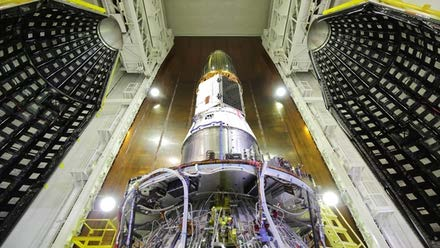
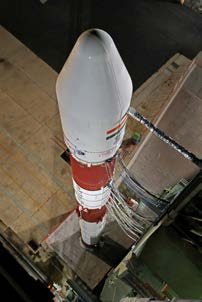
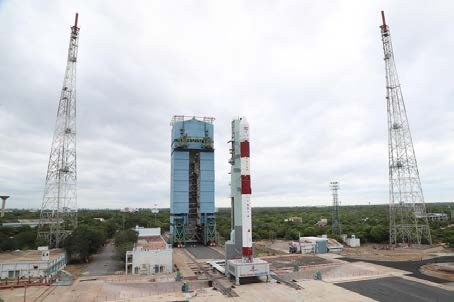
30 Jul 2023: India launched a Polar Satellite Launch Vehicle carrying seven satellites to low Earth orbit, led by Singapore’s DS-SAR synthetic aperture radar satellite.
30 Jul 2023: India launched a Polar Satellite Launch Vehicle (PSLV) from Satish Dhawan Space Centre, carrying seven satellites to low Earth orbit. The main payload was the DS-SAR, a 794-pound (360 kilograms) synthetic aperture radar satellite. Launch Video.
– All seven satellites were placed in a 535km orbit with an inclination of 5°.
– DS-SAR will provide for all-weather day and night coverage and is capable of imaging at 1m resolution at full polarimetry.
– Once deployed and operational, DS-SAR will support the satellite imagery requirements of various Government of Singapore agencies. ST Engineering will use it for multi-modal and higher responsiveness imagery, as well as geospatial services for commercial customers.
– The six other smaller satellites were developed by Singaporean universities and other organizations.
– After placing its payloads into the desired orbit the fourth stage of PSLV (PS4) de-orbited to Low Earth circular orbit ~300 x 300 km, using left over propellants to reduce orbital life of spent PS4 stage.
27 Jul 2023: Argentina became the 28th country to sign on to the Artemis Accords , NASA's framework for peaceful exploration of space and the Moon . There were concerns that Argentina would join a new Chinese-Russian lunar alliance that in mid-July, was already active in the region as it brought on Venezuela as a…
27 Jul 2023: Argentina became the 28th country to sign on to the Artemis Accords, NASA’s framework for peaceful exploration of space and the Moon. There were concerns that Argentina would join a new Chinese-Russian lunar alliance that in mid-July, was already active in the region as it brought on Venezuela as a partner.
– Argentina has a homegrown satellite manufacturing capability, a rarity in its region.
– State company Arsat launched the first Argentinian geostationary satellite in 2014, called Arsat-1. The telecommunications satellite remains operational alongside Arsat-2 that launched the following year.
– National space commission Conae has launched four satellite missions focusing on technology tests, Earth observation, and astrophysics.
– No Argentine astronaut has yet flown in space. NASA astronaut Frank Caldeiro, who was born in Argentina, died at age 51 of brain cancer in 2009 having not been assigned to a space mission.


Space imagery, charts and photographs featured in Issue 78.




Flash Insider
Subscribe to unlock full access to this Issue and the complete Flash archive.
Subscribe Now Already Subscribed? Log In