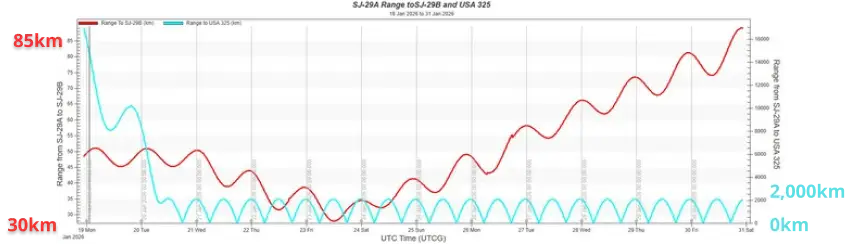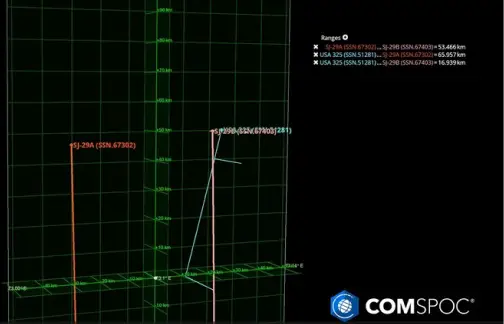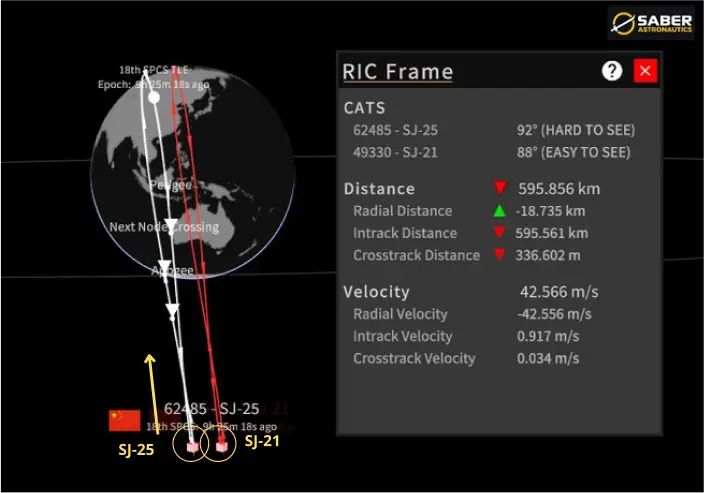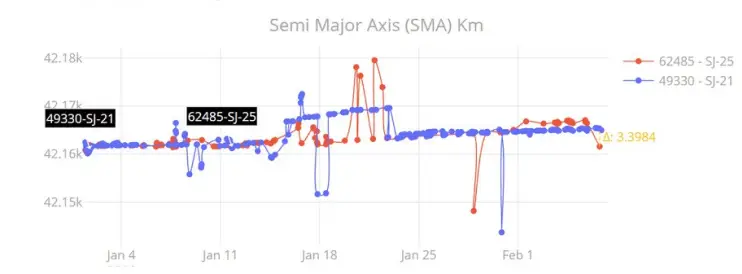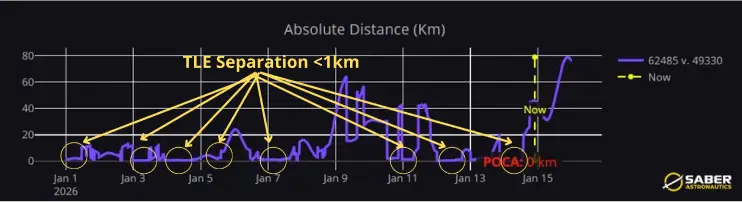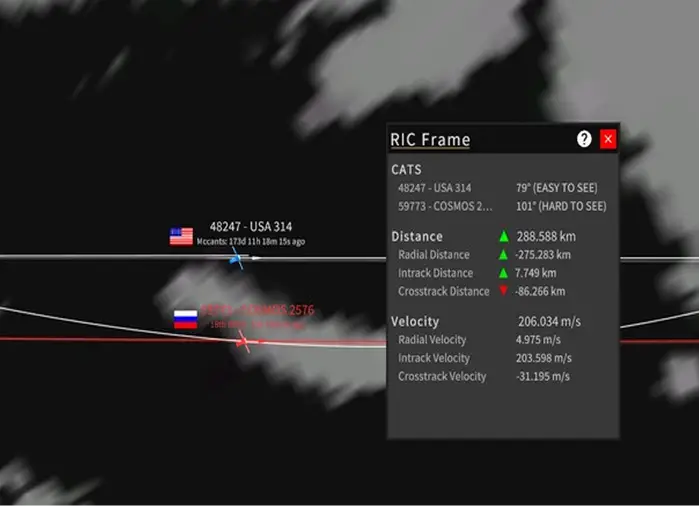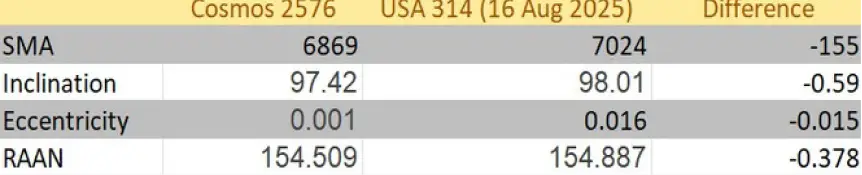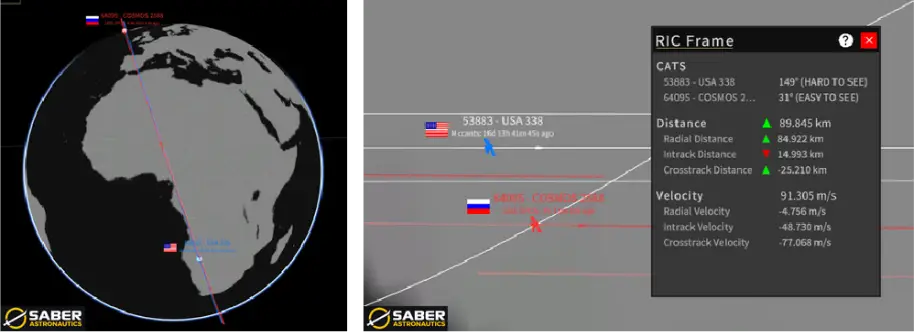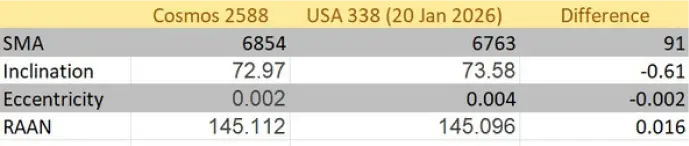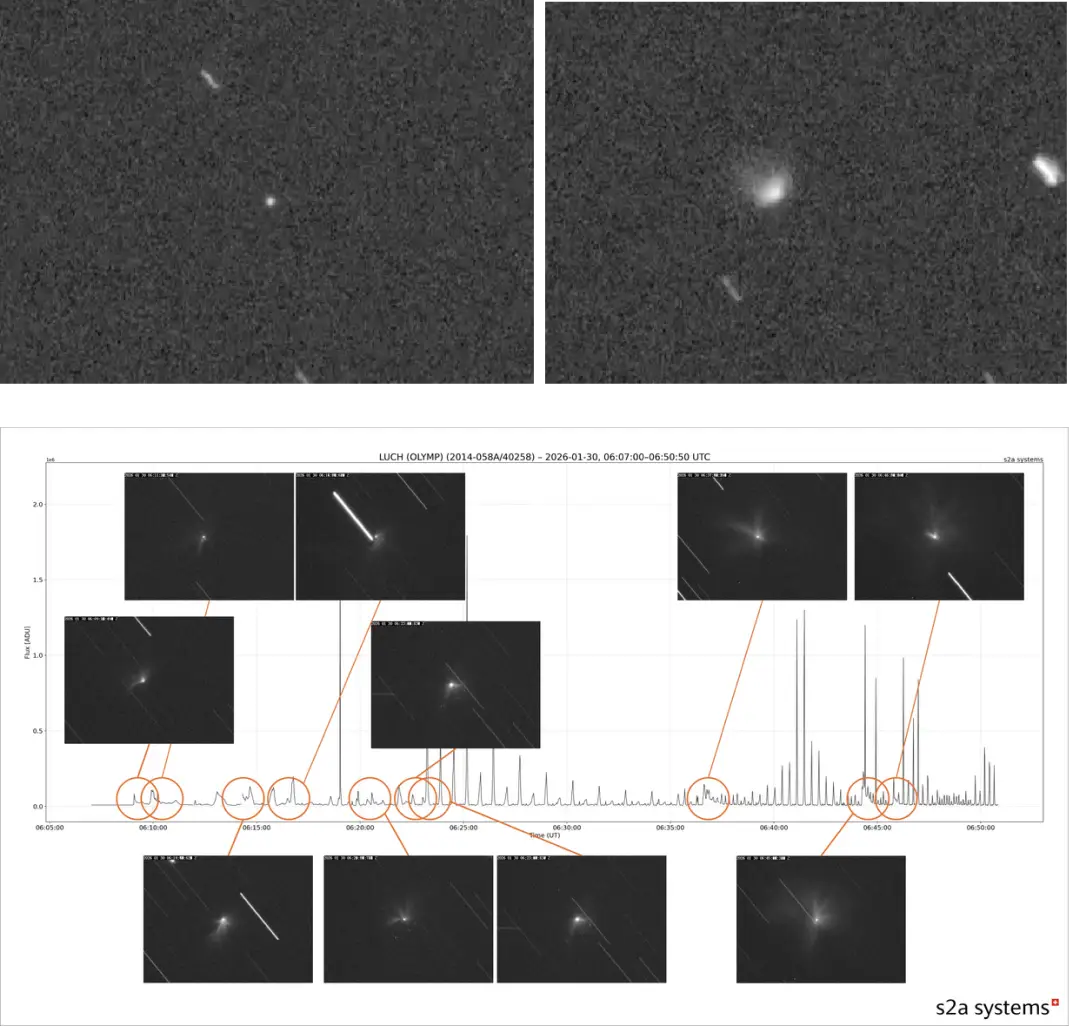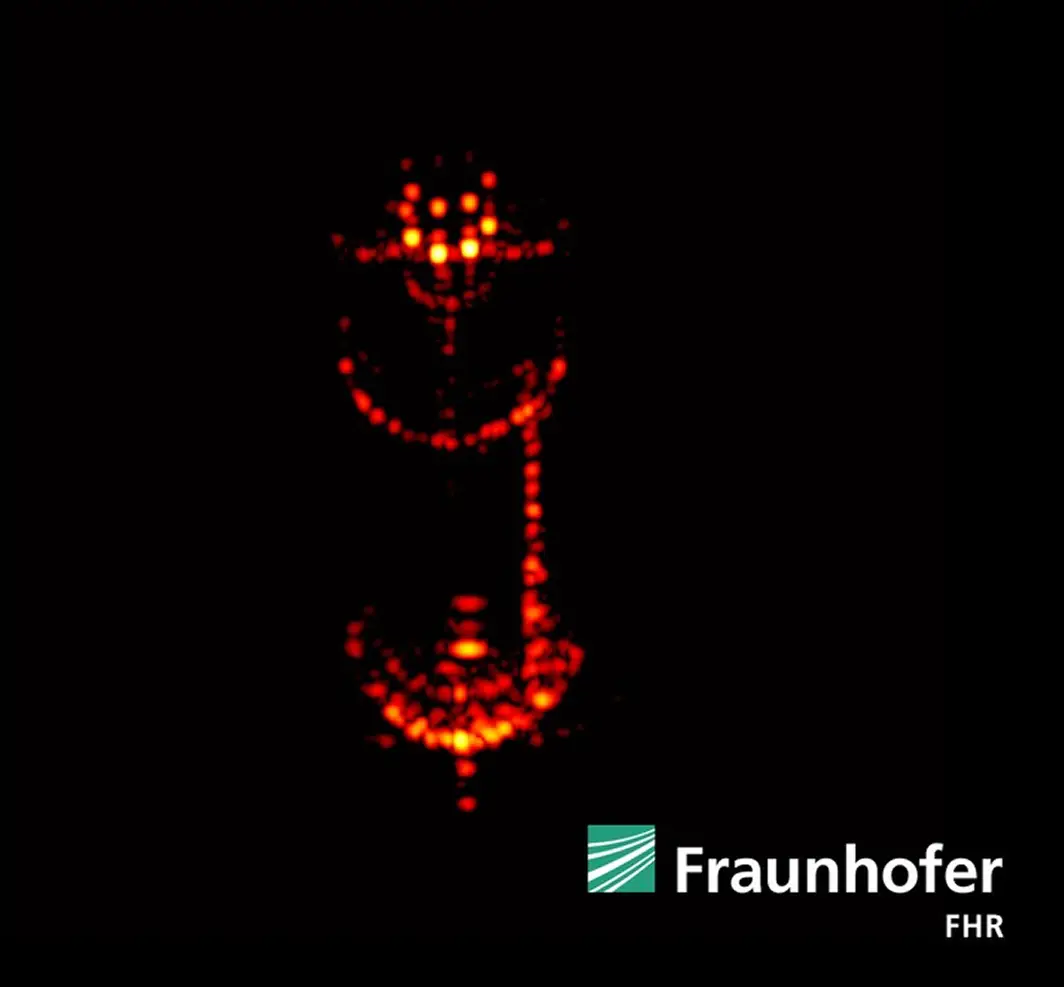
29 Jan 2026: As noted in the 18 Jan 2026 edition of the Flash, China launched Shijian-29A and Shijian-29B satellites (67302 & 67303) to GEO on 30 Dec 2025. We also noted that the SJ-29 pair settled into GEO at 73.0°E longitude with an inclination of 3.1°. What we didn’t know at the time of publishing was that USA 325 (51281), one of the United States’ Geosynchronous Space Situational Awareness Program (GSSAP) satellites, was busy getting into position to characterize the SJ-29 pair. Currently the two SJ-29 satellites are maintaining a separation of Thanks to the 30-70km of one another and occasionally within 100km of USA 325. COMSPOC_OPS team for their insights! Please check out this video! – SJ-29A and 29B remain in a co-planar orbit with an inclination of 3.1° and a RAAN of 98.67°.
USA 325 is not co- planar and has an inclination of 0.3° and a RAAN of 86.14°. -SJ-29A does not appear to have maneuvered since arrival on orbit. SJ-29B has made minor maneuvers. As a result the two satellites remain within 70km of one another. SJ- 29A is to the west of SJ-29B. -USA 325 remains within 2,000km of both satellites. The difference in inclination is the principal contributor to this separation. -At the point of closest approach USA 325 is <30km of SJ- 29A and B.
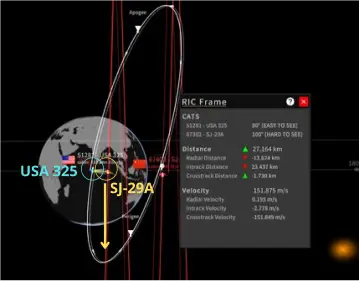
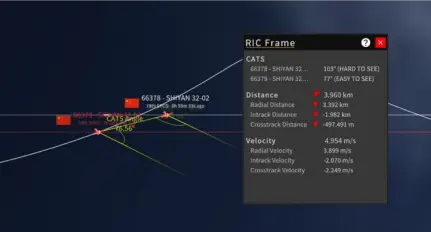
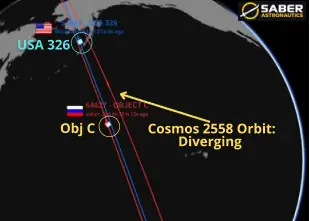
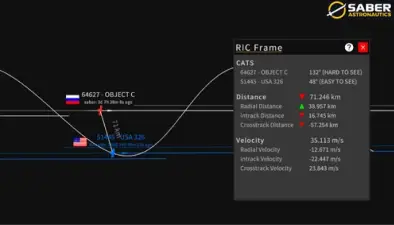
- As the SJ-29A/B pair move from north to south in their orbit USA 325 is closest to SJ-29A. SJ-29A is <100km Lighting conditions were marginal for both satellites to image one another at point of closest approach. (see graphic)
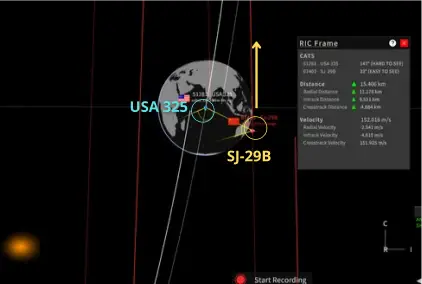
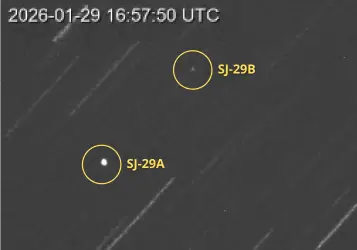
- As the SJ-29A/B pair orbit from south to north USA 325 is closest with SJ-29B. SJ-29B is <100km from USA 325 for ~22min. Lighting conditions were favorable for USA 325 to image SJ-29B at the point of closest approach. (see graphic)
– Based on their on-orbit operations it appears China is conducting some sort of on-orbit testing between SJ-29A and B…it also appears that USA 325 has positioned itself to observe/characterize both satellites for 45min/day withTransiting to the North, SJ-29B will be varying lighting conditions.
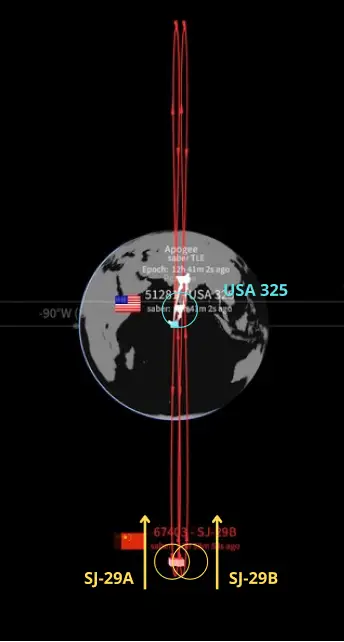
SJ-29A & 29B Make the Turn at the
Southern Most Point of their 3.1°
Inclined Orbit. USA 325 Awaits to the
North in its 0.3° inclined orbit. When closest to USA 325 (saberastro.com)