21 Mar 2026: At ~1550Z on 20 Mar, TJS-10 (58204) and TJS-3 (43874) passed one another in GEO over ~91.5°E longitude. Neither satellite maneuvered (at least as of 1600Z on 21 Mar) and TJS-10 continues to head west while TJS-3 creeps eastward. Many will recall that Chinese space operators maneuvered both satellites in early February 2026 resulting in the two satellites heading toward one another. At the point of closest approach (POCA) the satellites were ~220km apart with the majority of the separation due to differences in radial track. At POCA TJS-3 had ideal lighting conditions for imaging TJS-10, although with ~220km of separation it seems unlikely China intended to collect high-resolution imagery of either satellite. The satellites remain plane matched (nearly identical inclination and RAAN).
Given the past history of these two satellites, I had anticipated TJS-10 would decrease its SMA prior to crossing paths with TJS-3 and position itself just to the east of TJS-3 as it had in late 2023. We will see if either satellite maneuvers in the coming days to resume some sort of testing or if both continue on their merry ways to destinations as yet unknown. s2a systems was nice enough to put together a time lapse video showing TJS-10 & TJS-3 crossing paths.
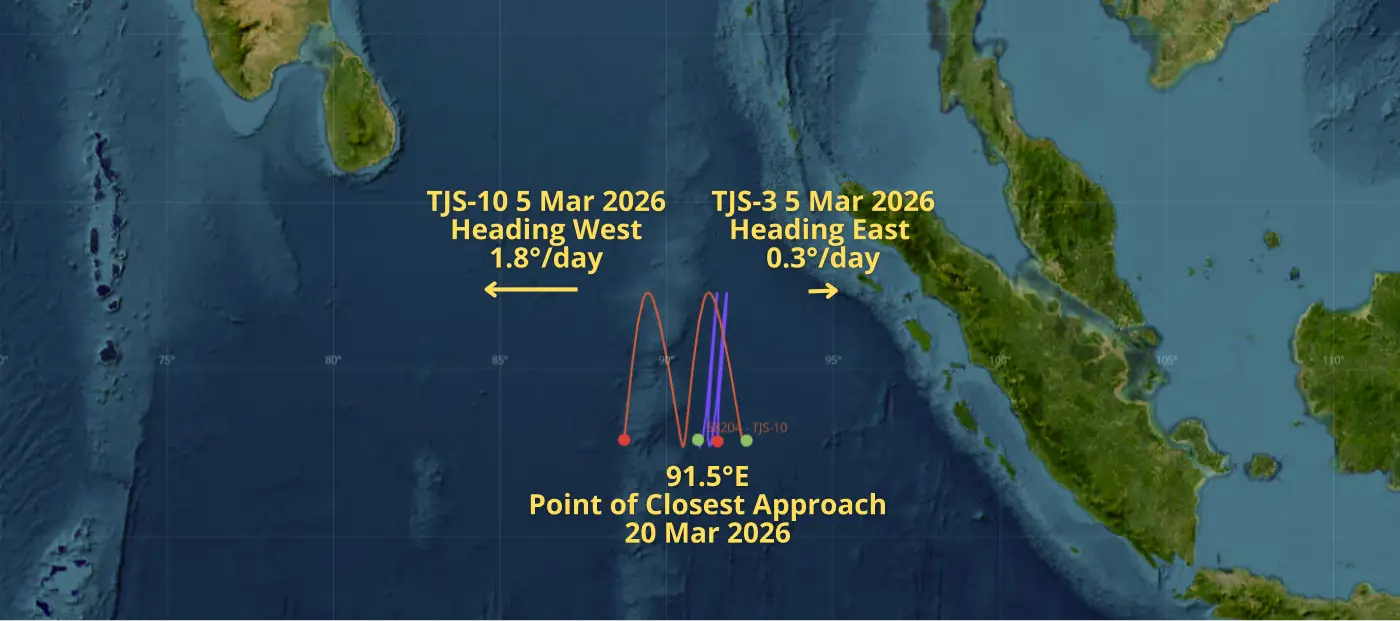
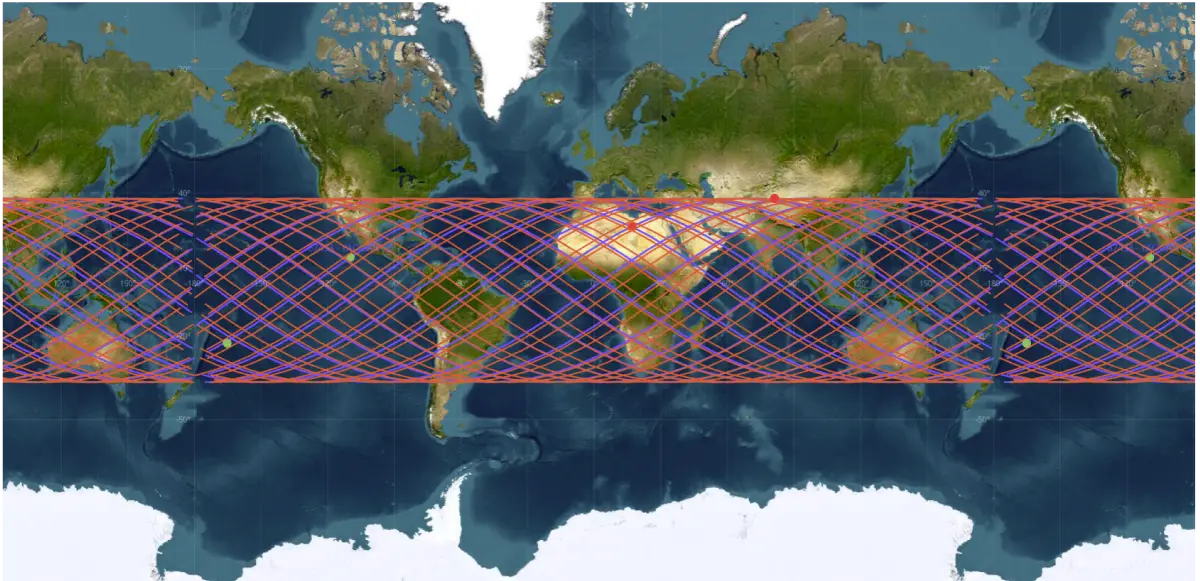
20 Mar 2026 Ground Track for TJS-3 (purple) & TJS-10 (red).
(saberastro.com)
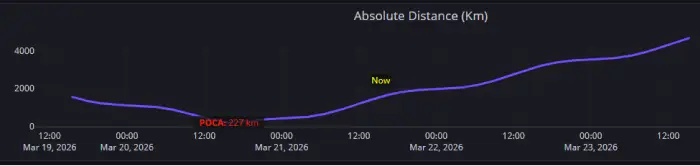
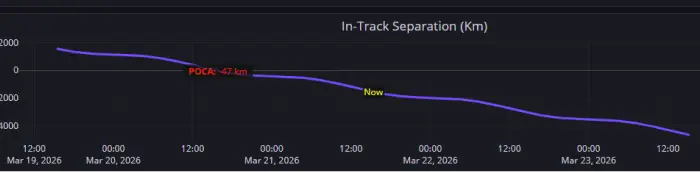
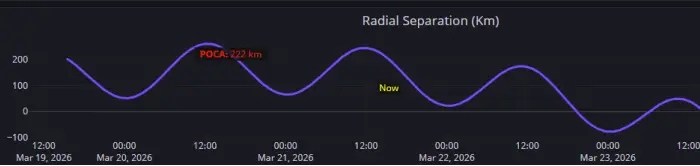
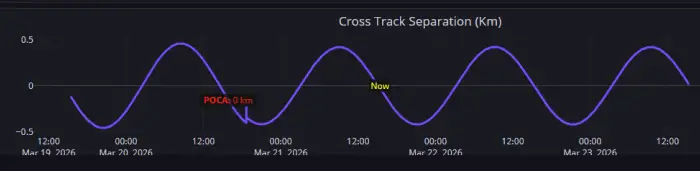
19-23 Mar 2026: TRIC Plot of Separation Distance between TJS-3 & TJS-10
Absolute Separation at POCA ~227km (Radial Separation ~222km)
(saberastro.com)
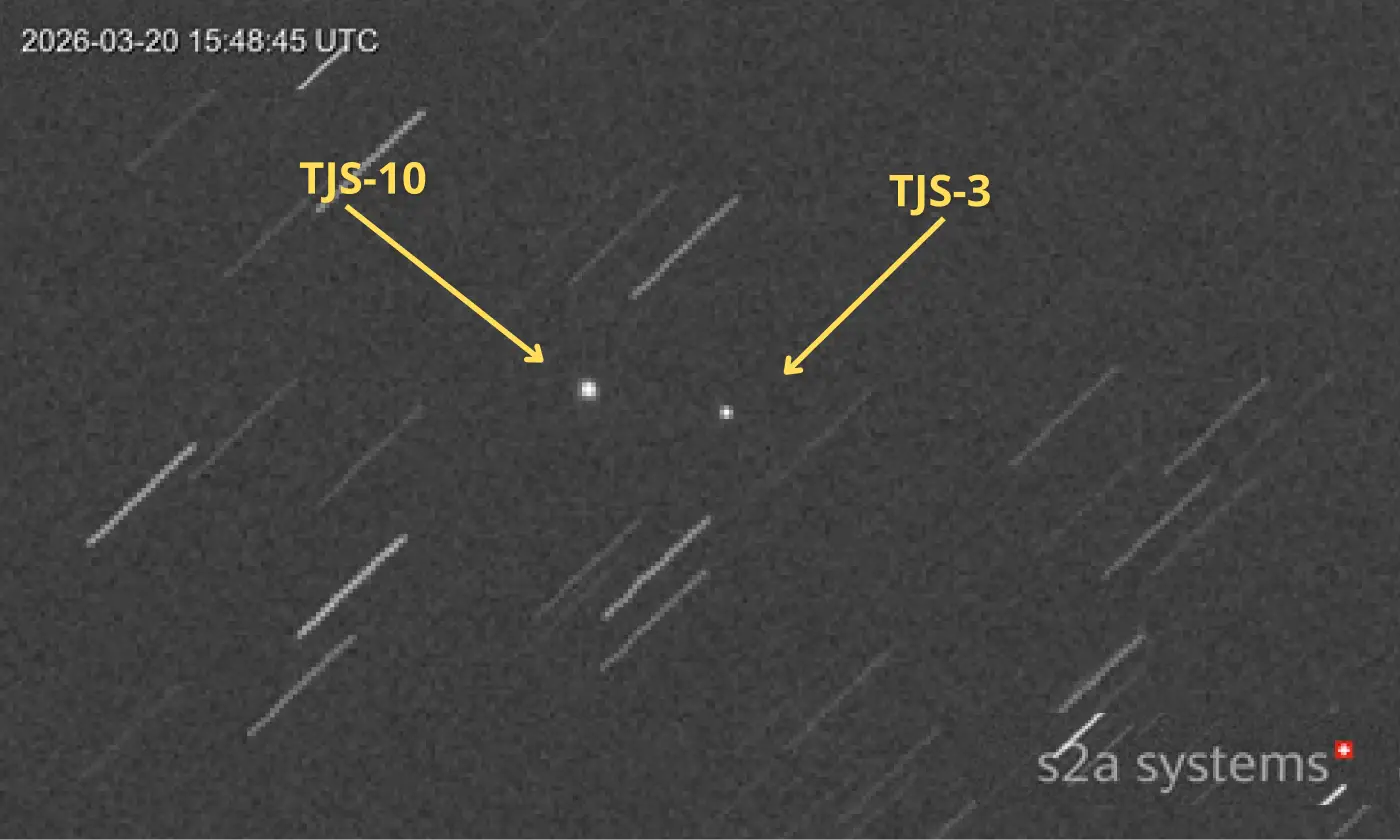
20 Mar: TJS-3 and TJS-10 Near Point of Closest Approach 15:48:45UTC
(s2a systems via X)
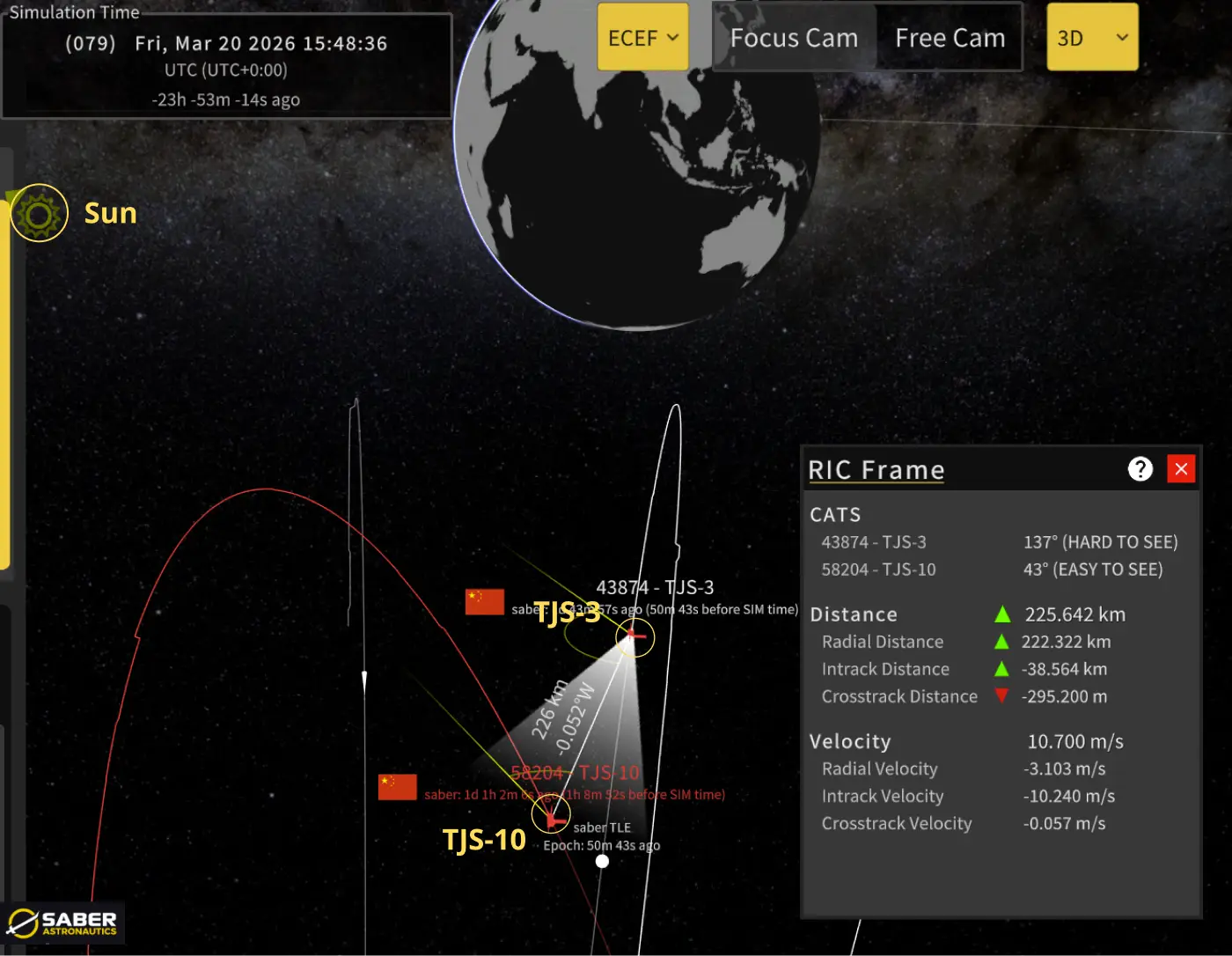
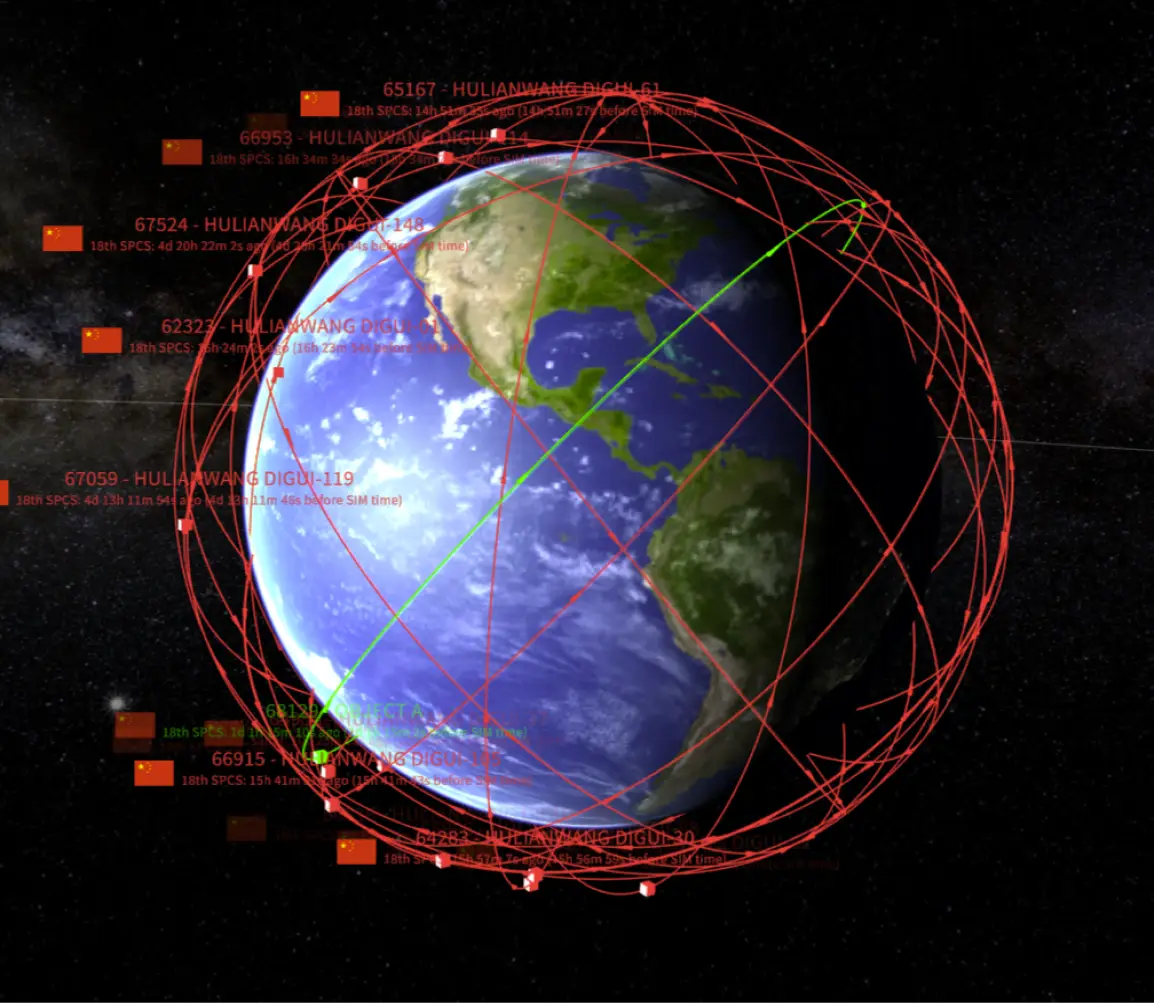
20 Mar 2026 1548Z Orbit Visualization
TJS-3 & 10 Total Separation ~225km, Solar Conditions Ideal for TJS-3 Observation of TJS-10 (although range makes high resolution imagery unlikely)
(saberastro.com)