Issue 143

Space Symposium 2026 – US and Allies Developing Joint Orbital Warfare Strategy

At the Space Symposium held at The Broadmoor this past week, the global space community gathered at a pivotal moment for the industry—where national security priorities, commercial innovation, and human space exploration are increasingly intertwined. The message from this year's Symposium was consistent across keynote sessions and panels: space is now an operational domain, not a future one.

By Rhonda Sheya

At the Space Symposium held at The Broadmoor this past week, the global space community gathered at a pivotal moment for the industry—where national security priorities, commercial innovation, and human space exploration are increasingly intertwined.

The message from this year’s Symposium was consistent across keynote sessions and panels: space is now an operational domain, not a future one. Leaders emphasized the need for resilient architectures, enhanced space domain awareness, and deeper collaboration between government and commercial partners. The pace of advancement—particularly in low Earth orbit and lunar exploration—continues to accelerate, bringing new urgency to workforce readiness and mission integration.

That forward momentum was especially evident on the exhibit floor, where organizations showcased capabilities spanning intelligence, cyber, training, and human spaceflight systems.

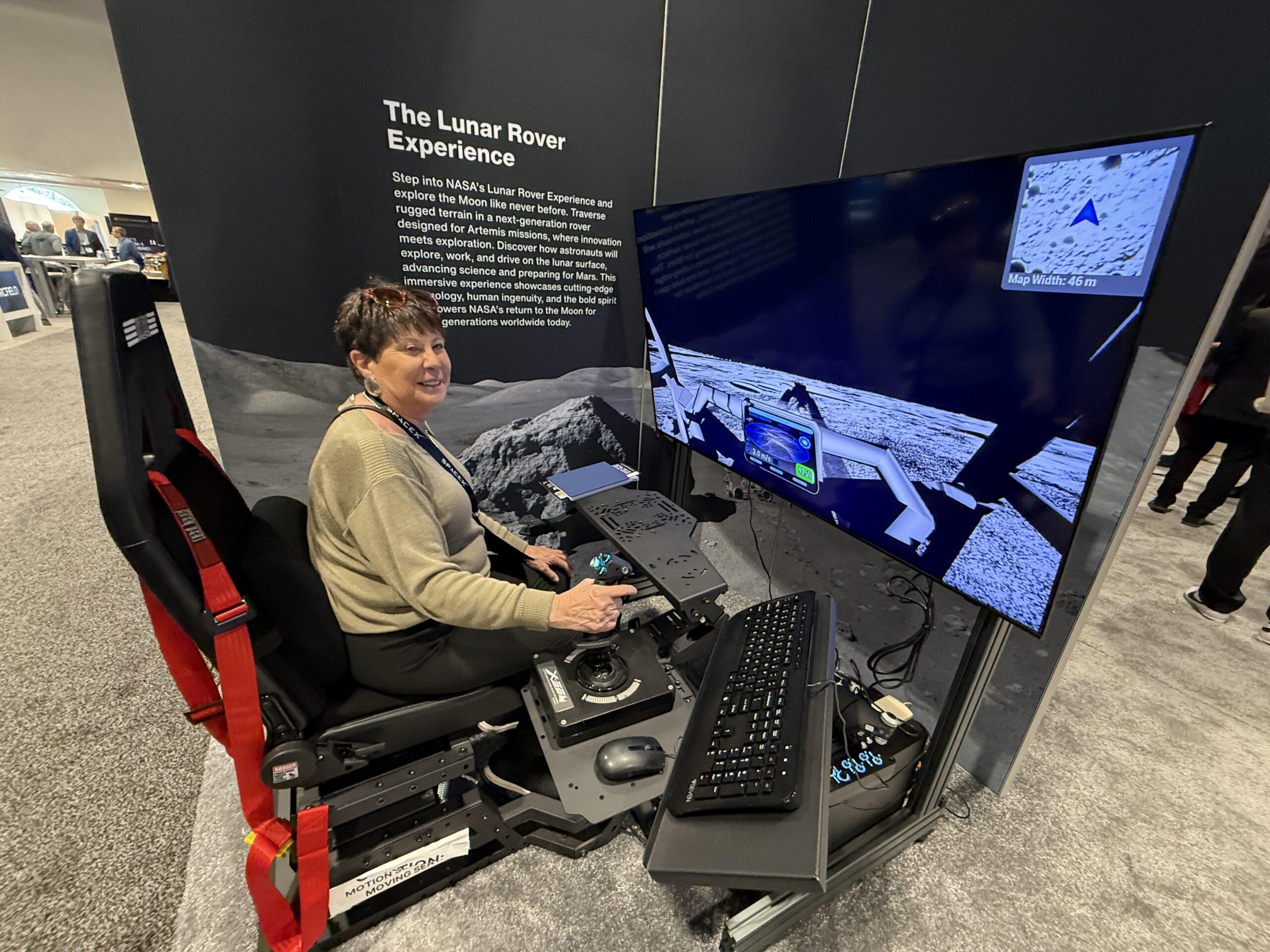
In the Space Zone, NASA offered a hands-on look at the future of lunar operations. Victoria Ugalde, a communication strategist for the EVA and Human Surface Mobility Program at Johnson Space Center, described the agency’s focus on technologies supporting Artemis-era missions, including lunar spacesuits and surface mobility systems.

A key feature was a lunar rover simulator designed to give attendees a realistic sense of navigating the Moon’s surface. According to Ugalde, the simulator uses the same software currently employed to train astronauts at Johnson Space Center. The experience is built on real terrain data captured by the Lunar Reconnaissance Orbiter, allowing users to traverse the Moon’s south pole region—complete with detailed topography, craters, and landmarks such as the Shackleton rim.

“It gives people a feel for what it would actually be like to drive on the Moon,” she explained, underscoring NASA’s effort to make complex mission concepts more accessible while highlighting the realism of current astronaut training tools.

Beyond the exhibits, the Symposium’s influence was just as apparent in the steady cadence of meetings and informal exchanges that define the week.

From behind the booth, conversations reflected a wide spectrum of priorities—from workforce development and training pipelines to emerging operational challenges in space and intelligence domains. For many organizations, these interactions serve as both a validation of capabilities and an opportunity to refine messaging in real time.

Networking extended well beyond the exhibit hall. Evening receptions and industry-hosted events created space for more candid dialogue, often strengthening connections first made during the day. At the same time, a full schedule of prearranged meetings enabled focused discussions on partnerships, program alignment, and long-term strategy.

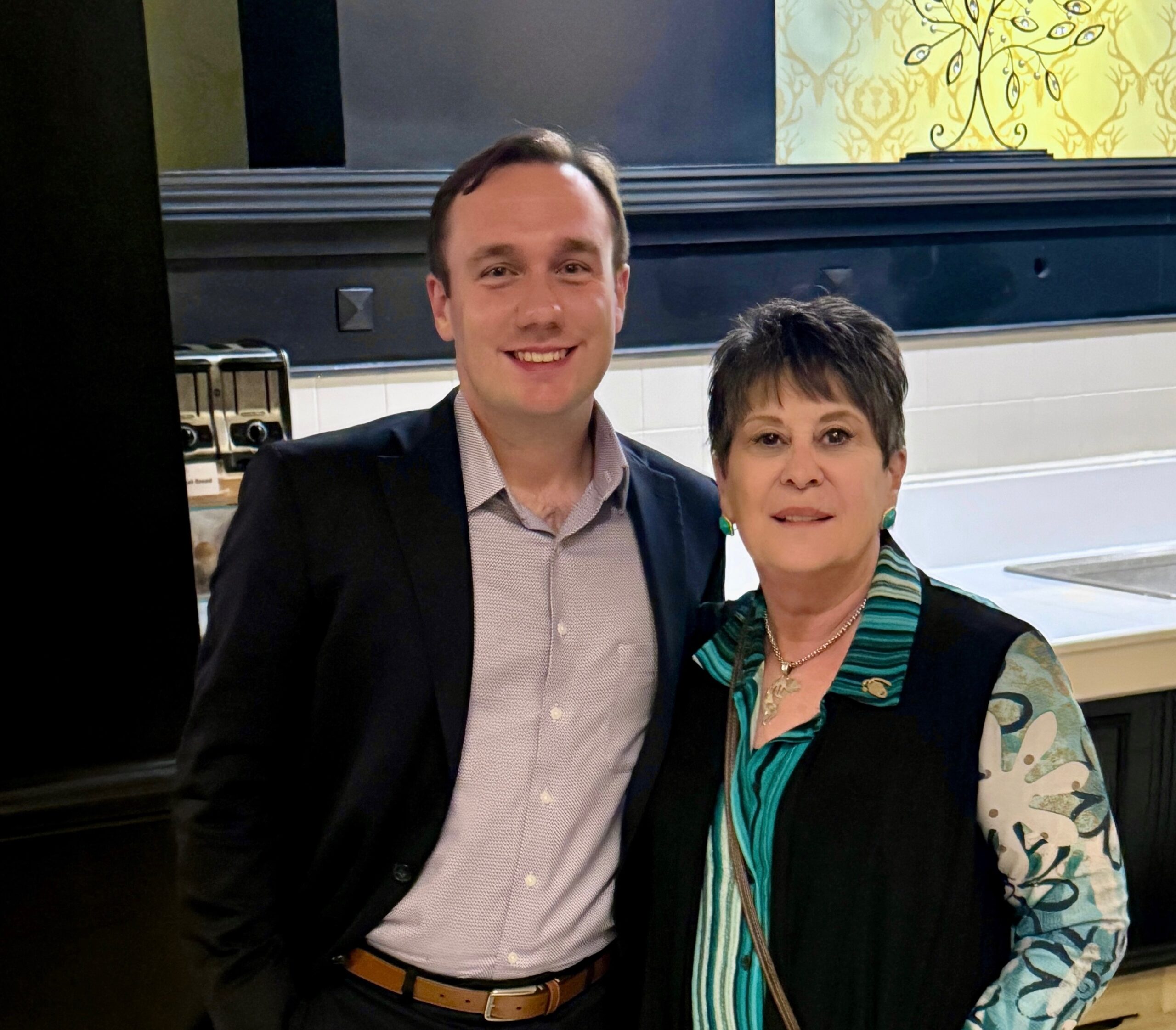
As is often the case at the Symposium, some of the most meaningful moments were unplanned. Chance encounters in hallways or between sessions frequently led to deeper conversations. One such moment was reconnecting with Eric Sundby of TerraSpace, reflecting the industry’s highly networked, collaborative nature.

Taken together, this year’s Symposium reinforced a central reality: while technology is advancing rapidly, it is the relationships—built across formal sessions, exhibit floors, and informal gatherings—that will ultimately shape the future of the space economy.

Thank you to Space Foundation and all their hard work for producing such a great event with fantastic networking opportunities.