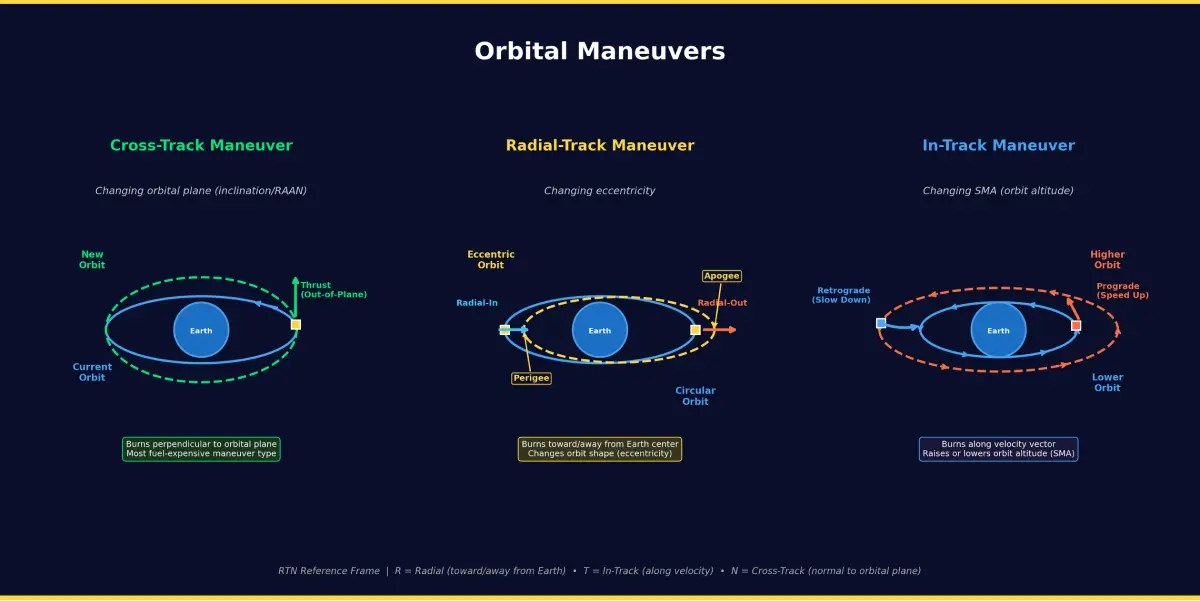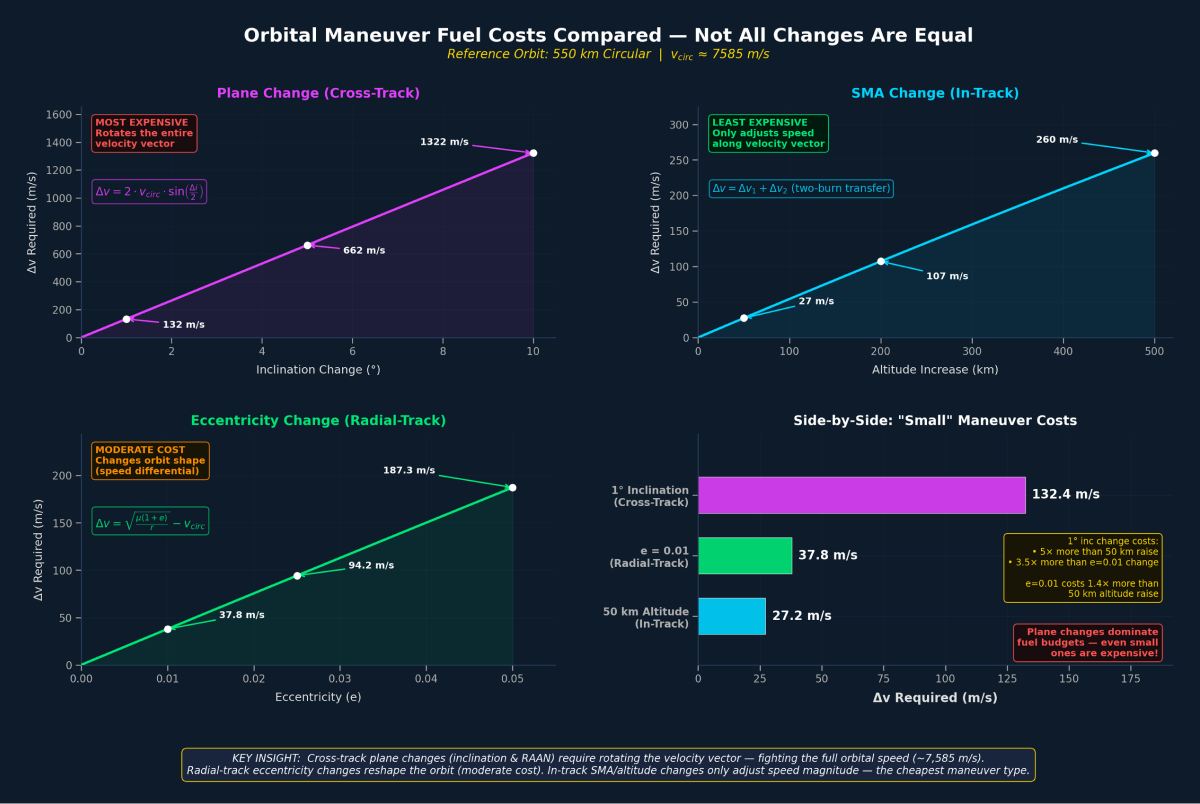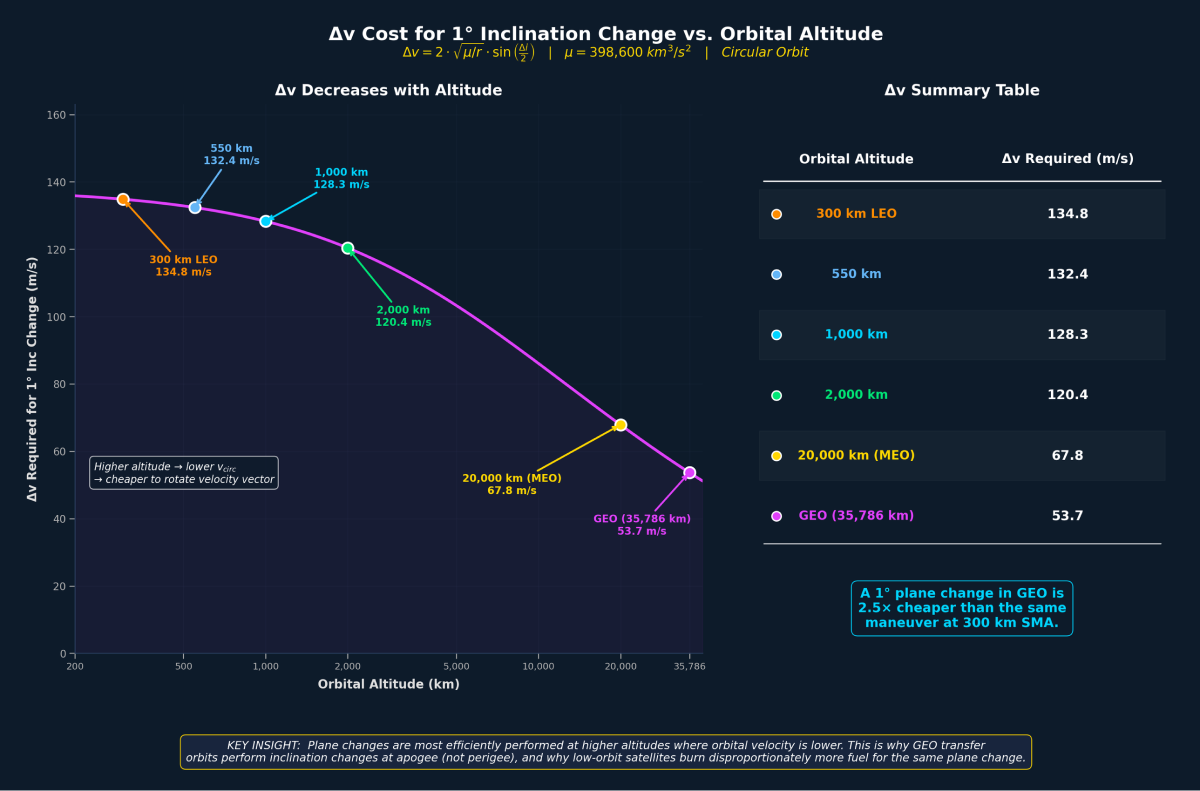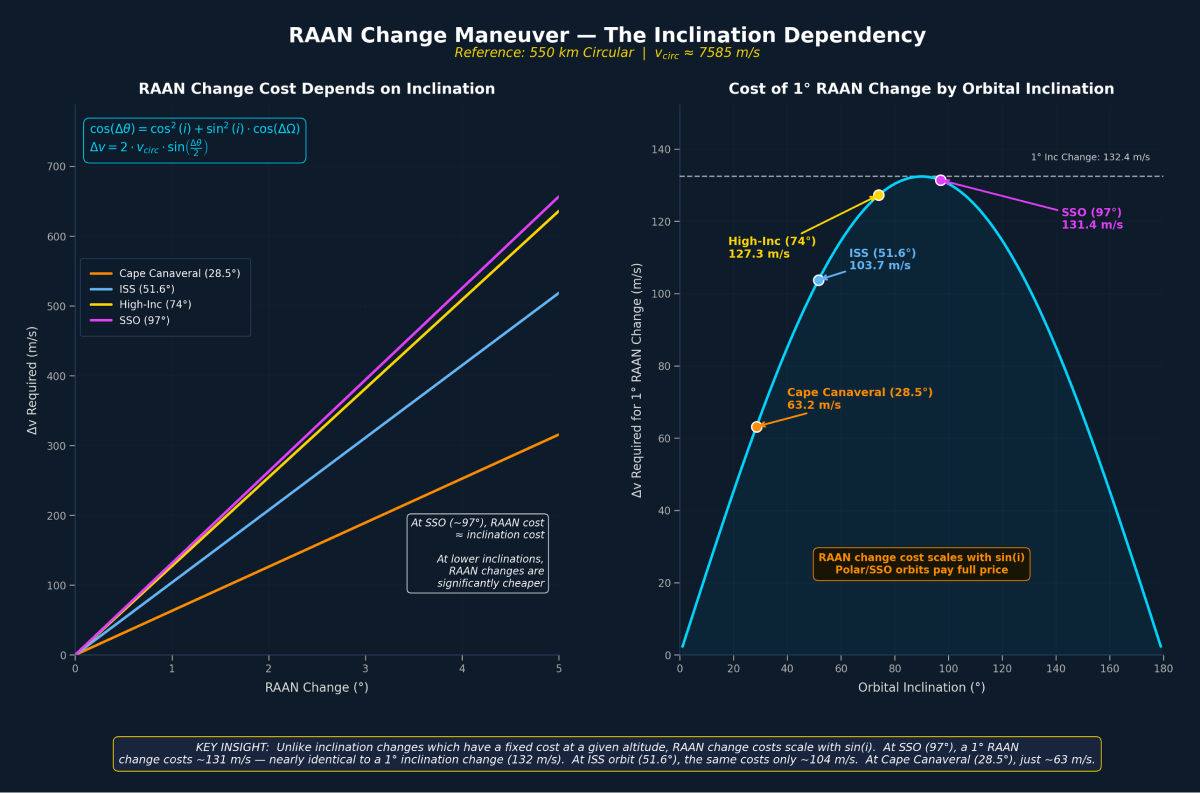
29 May 2026: Russia conducted significant plane change maneuvers with 5 Cosmos satellites. Plane change maneuvers are rare in space operations, especially in Low Earth Orbit (LEO) due to the required energy–which equates to a significant fuel investment. In this case, the fuel required to conduct such a maneuver is ~105-106m/sec. The maneuvers brought the 5 satellites into nearly co-planar orbits with ICEYE-X36 (59103) which is also inclined 97.8° and is a Synthetic Aperture Radar (SAR) imaging satellite. ICEYE is a Finnish-American aerospace and data company that designs, builds, and operates the world’s largest constellation of SAR satellites. ICEYE has been supporting Ukrainian military operations against Russia since the beginning of the conflict in 2022. We do not know Russia’s intentions or the capabilities of these particular satellites, however maneuvering into a co-planar orbit is alarming. Plane matching is the first (and most fuel expensive) step to conducting Rendezvous Proximity Operations (RPO) likely necessary for the Russian satellites to target (kinetically or non-kinetically) ICEYE-X36. We also do not know the satellites’ total fuel capacity, however the expenditure of ~106 m/sec is evidence the satellites are capable of conducting high-energy maneuvers. This capability is not common for satellites conducting typical earth observation, signal collection or communications missions.
Details:
The following Russian satellites increased their inclinations 0.8° (from 97.0° to 97.8°):
1) Cosmos 2610 (68758) (15-16 May)
2) Cosmos 2611 (68759) (20-21 May)
3) Cosmos 2612 (68762) (15-16 May)
4) Cosmos 2613 (68763) (13-15 May)
5) Cosmos 2614 (68764) (20-22 May)
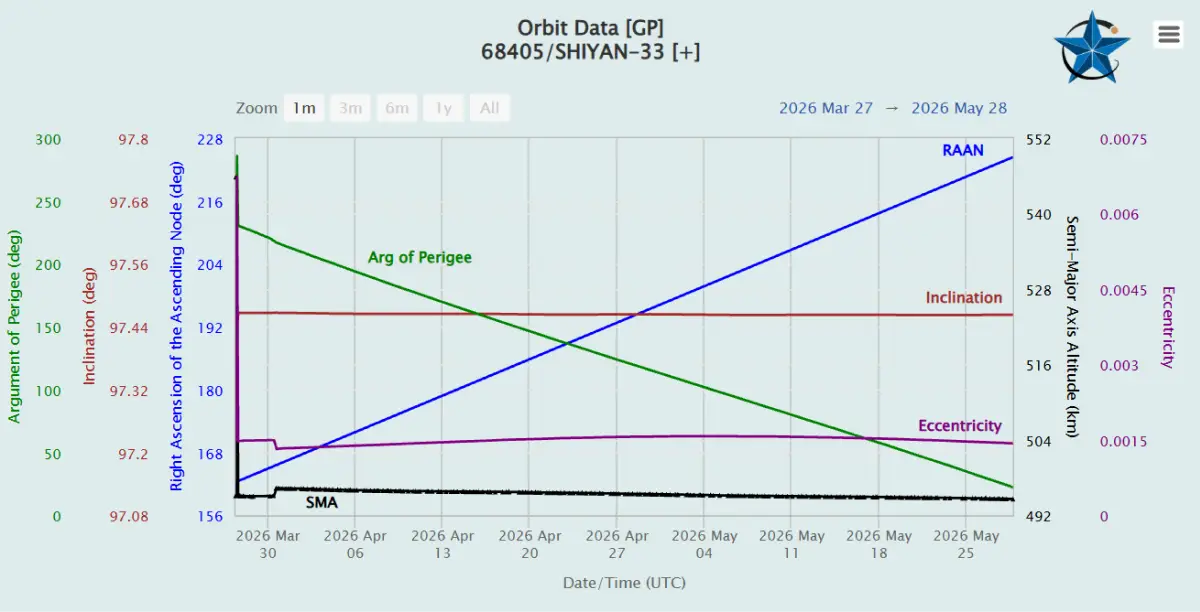
In addition to changing its inclination, Cosmos 2614 also increased its average altitude ~6km. Three of the Russian satellites (2610/11/14) have an SMA slightly greater than X36, while two (2612/2613) have SMA slightly less than X36. The Cosmos satellites have eccentricity values between .001-.002 (ICEYE-X36 eccentricity is .002).
Plane matching requires objects to have nearly equal inclination (orbit tilt) and Right Ascension of the Ascending Node (RAAN) (orbit twist). The 14-22 May maneuvers seem to have only impacted the inclination, however Russia launched Cosmos 2610/11/12/13/14 into orbits with <0.5° RAAN offset from ICEYE-X36. With the inclination changing maneuvers the five satellites are now effectively plane matched with ICEYE-X36. Russian space operators are now in position to conduct RPO with ICEYE-X36 with minor adjustments in satellite eccentricity (radial track) and average altitudes (in track).
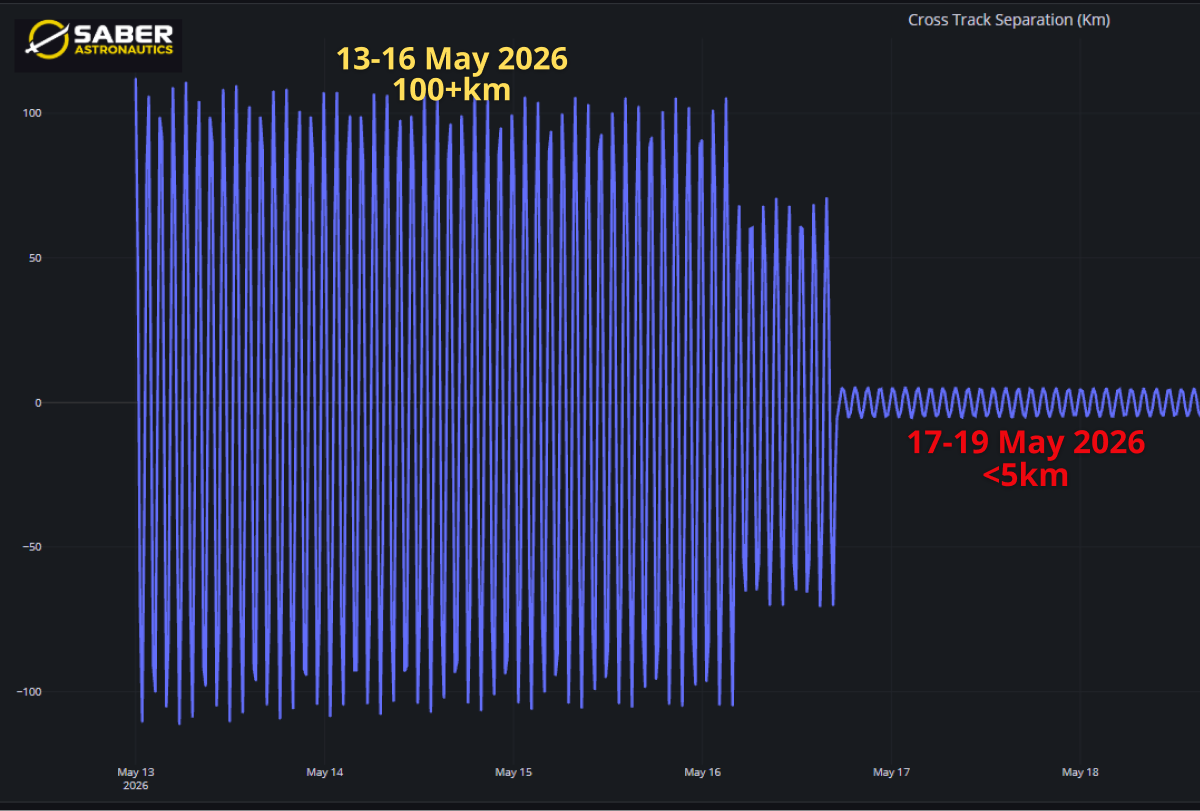
13-19 May 2026: Cosmos 2612 to ICEYE-X36 Cross Track Ranges Decrease from ~100km to <5km (saberastro.com)
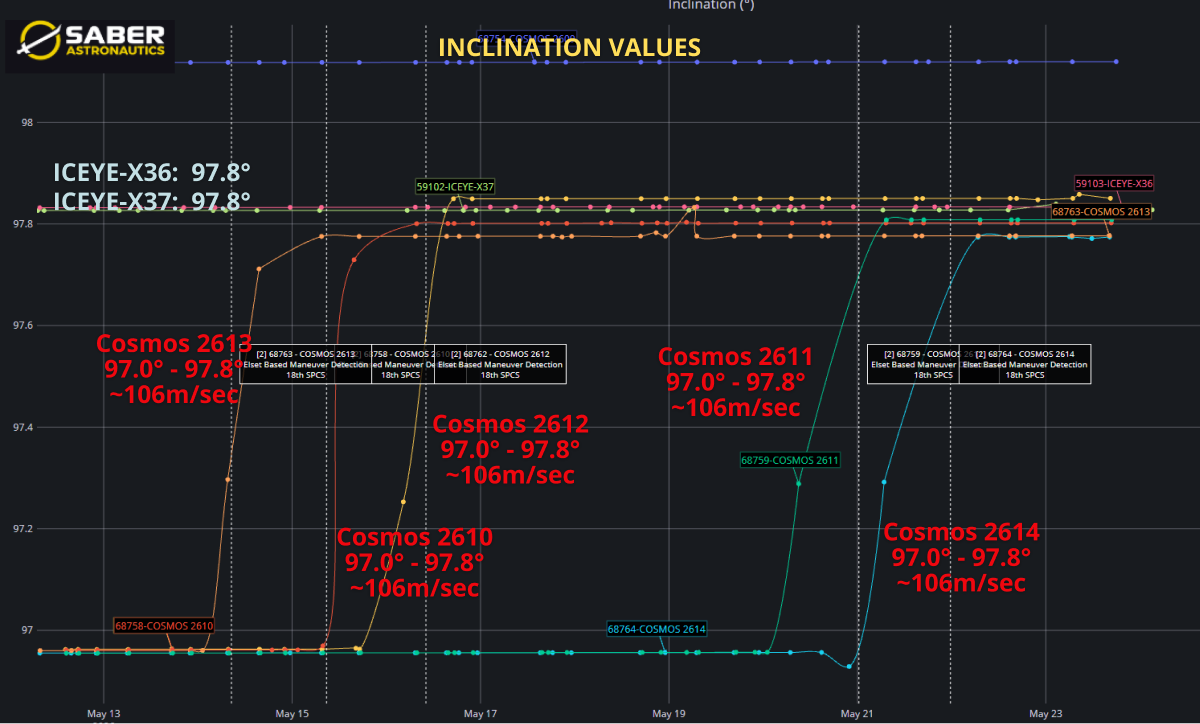
13-21 May 2026: Russia Increases Inclination 0.8°E For 5 Satellites
1) Cosmos 2613 (14-15 May); 2) Cosmos 2610 (15-16 May); 3) Cosmos 2612 (15-16 May); 4) Cosmos 2611 (19-20 May); & 5) Cosmos 2614 (20-21 May)
(saberastro.com)
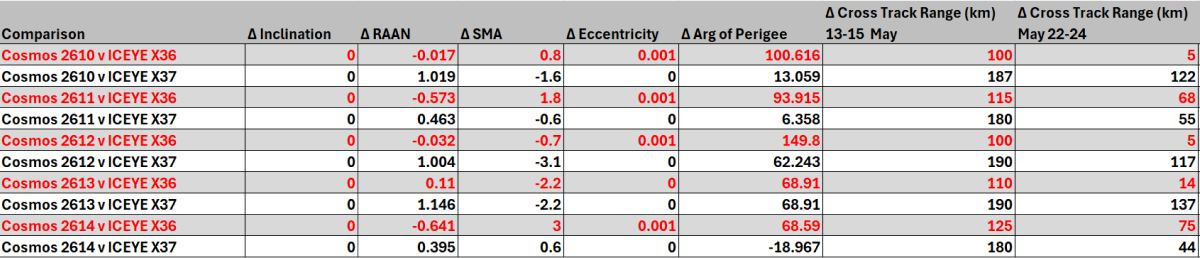
24 May 2026 1842Z: Comparing Orbital Element Values
Cosmos 2610-14 v ICEYE-X36/X37 (saberastro.com & celestrak.org)
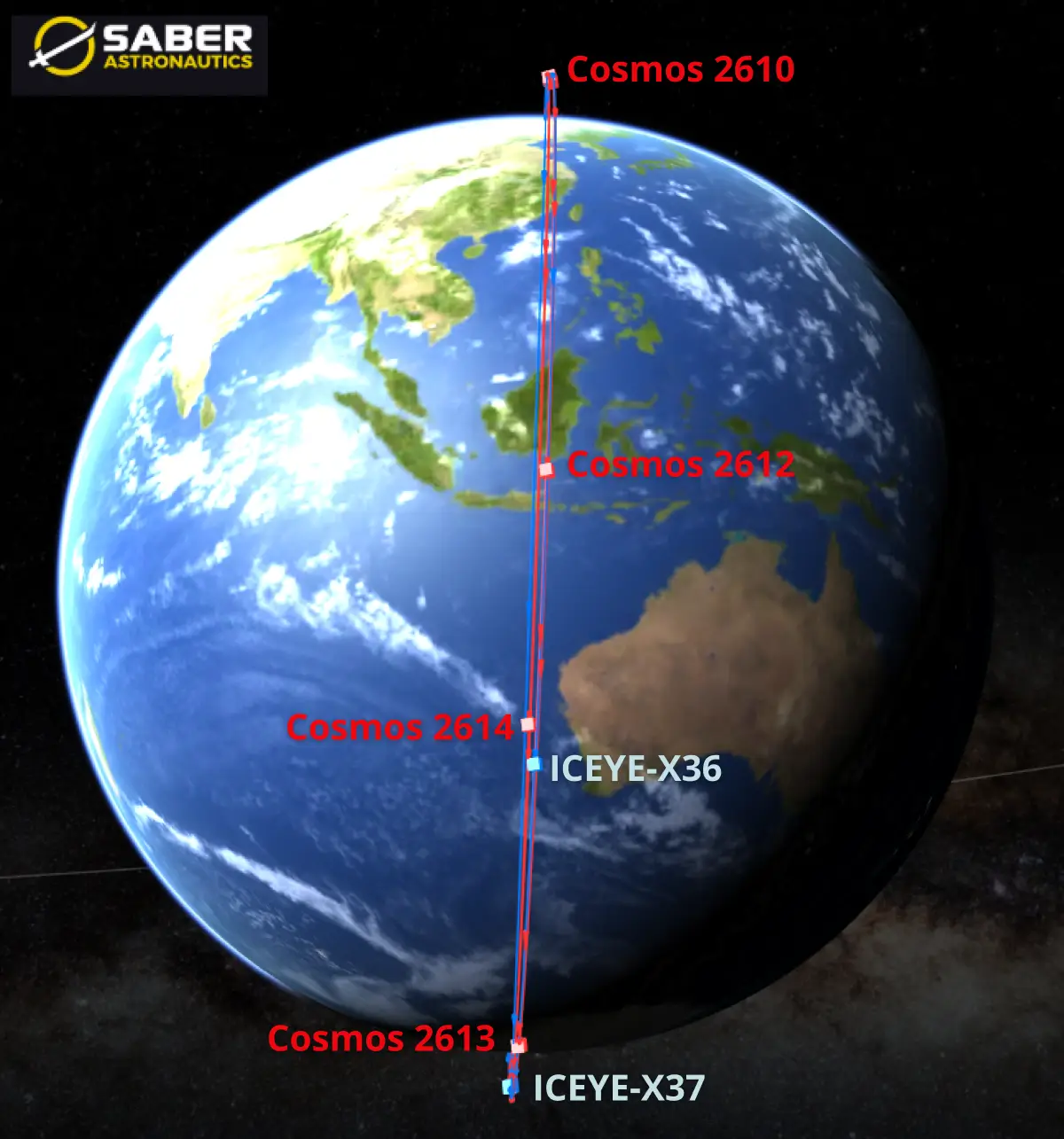
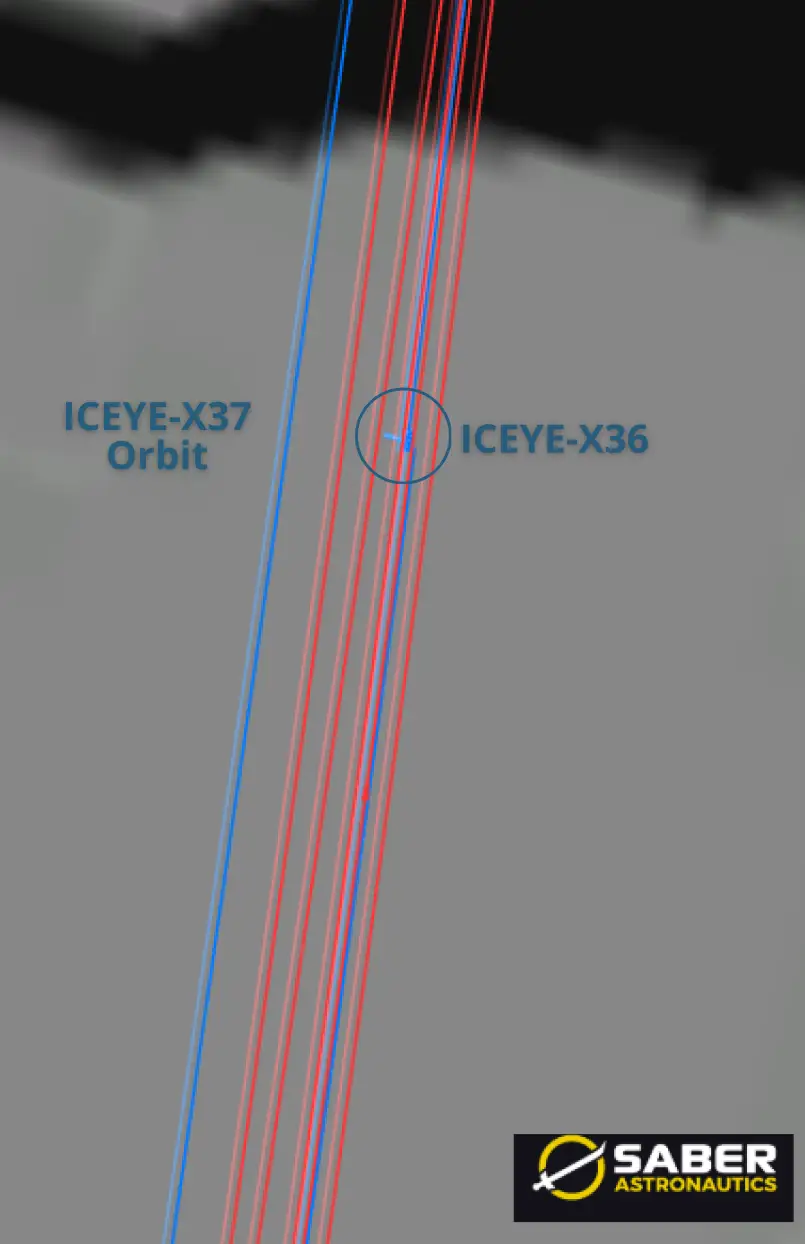
Not by Accident: Russia Has Maneuvered 5 Satellites to be Nearly Co-Planar with ICEYE-X36 (saberastro.com)
What’s Happening Now?
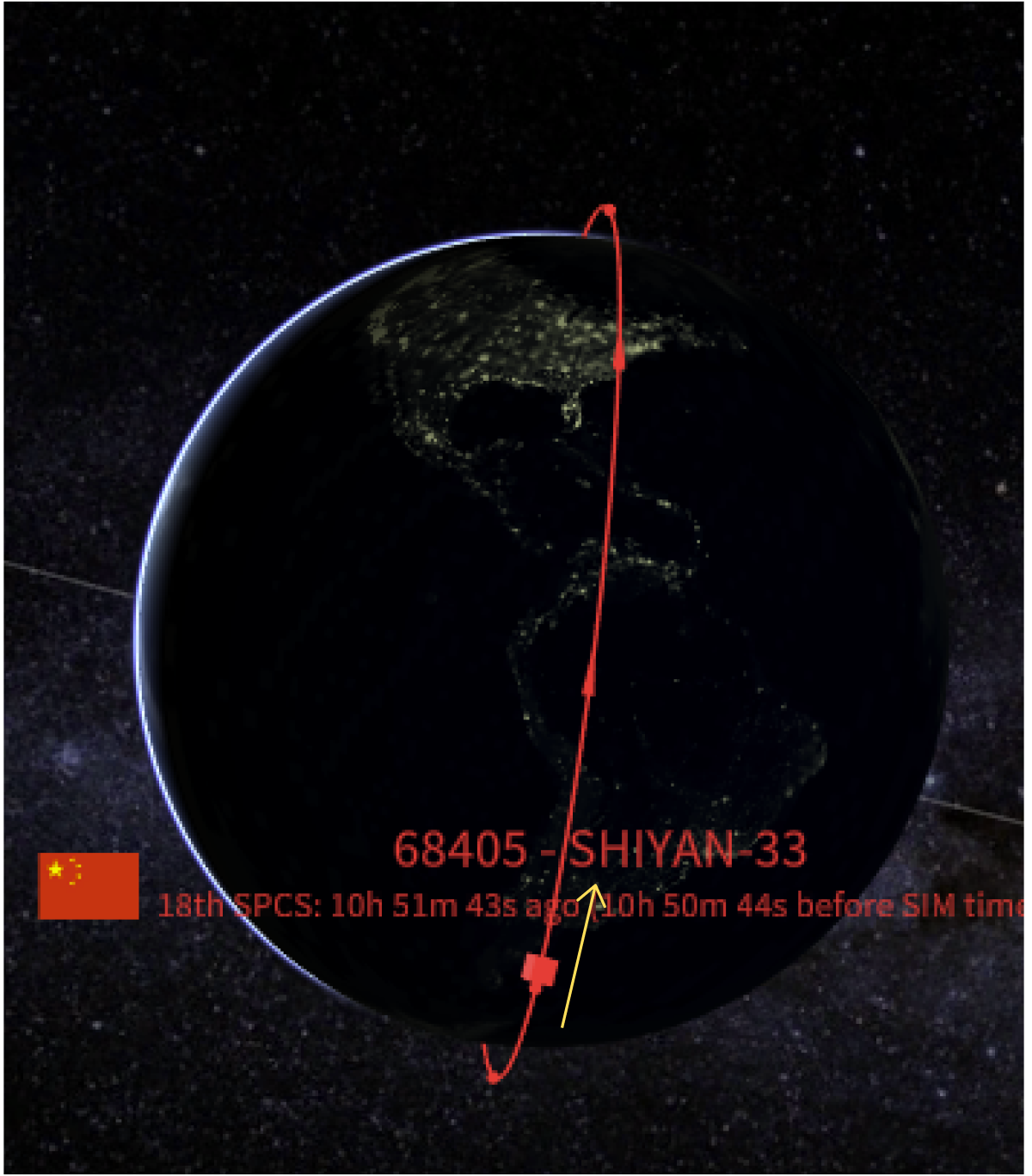
As of 29 May, Cosmos 2614 is in the closest proximity with X36. On 29 May 2026 ~0805-1035Z Cosmos 2614 and ICEYE-X36 had 4 instances where the two satellites were within <20km of one another. Cosmos 2614’s SMA is 3.12km greater than X36 as a result of Russia increasing SMA ~6km on 20 May and is nearly co-planar as discussed above.
During this 2.5hr period the two satellites had 4 instances (48 minutes apart) where their orbital paths crossed:
1) 0809Z total separation of ~13km, lighting conditions which favored Cosmos 2416
2) 0857Z total separation of ~13km, lighting conditions unfavorable for Cosmos 2416
3) 0945Z total separation of ~16km, lighting conditions unfavorable for Cosmos 2416;
4) 1033Z total separation of ~18km, lighting conditions favorable for Cosmos 2416
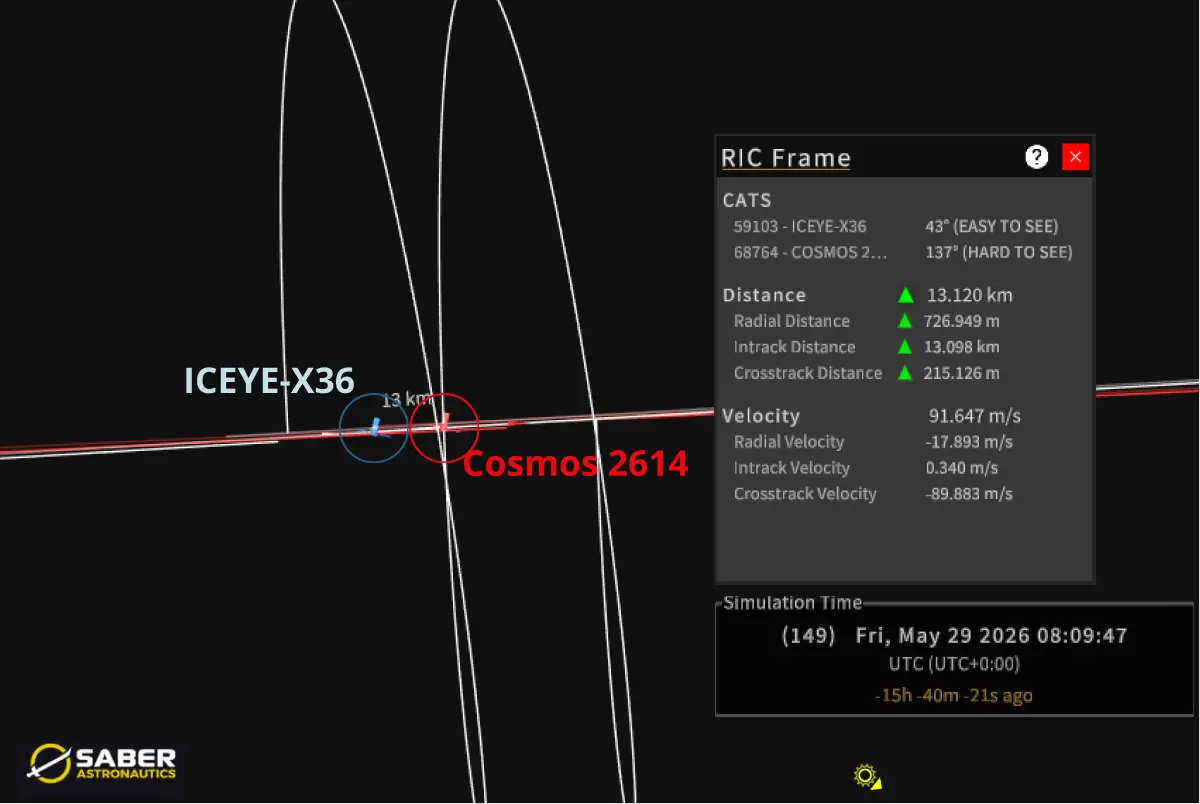
0809Z 29 May 2026: Cosmos 2614 Leads ICEYE-X36 at time of 13km Close Approach. Lighting Conditions Favorable for Cosmos 2614 (saberastro.com)
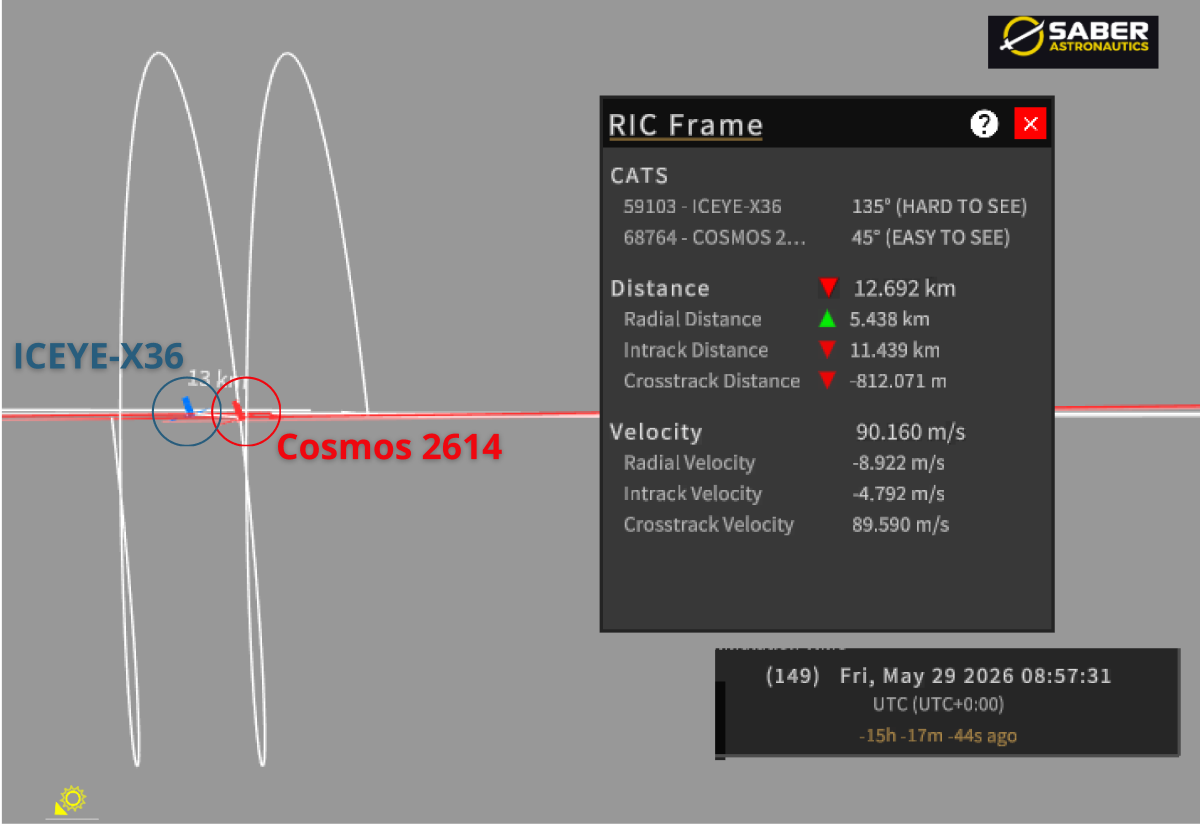
0857Z 29 May 2026: Cosmos 2614 Leads ICEYE-X36 at time of 13km Close Approach. Lighting Conditions Unfavorable for Cosmos 2614 (saberastro.com)
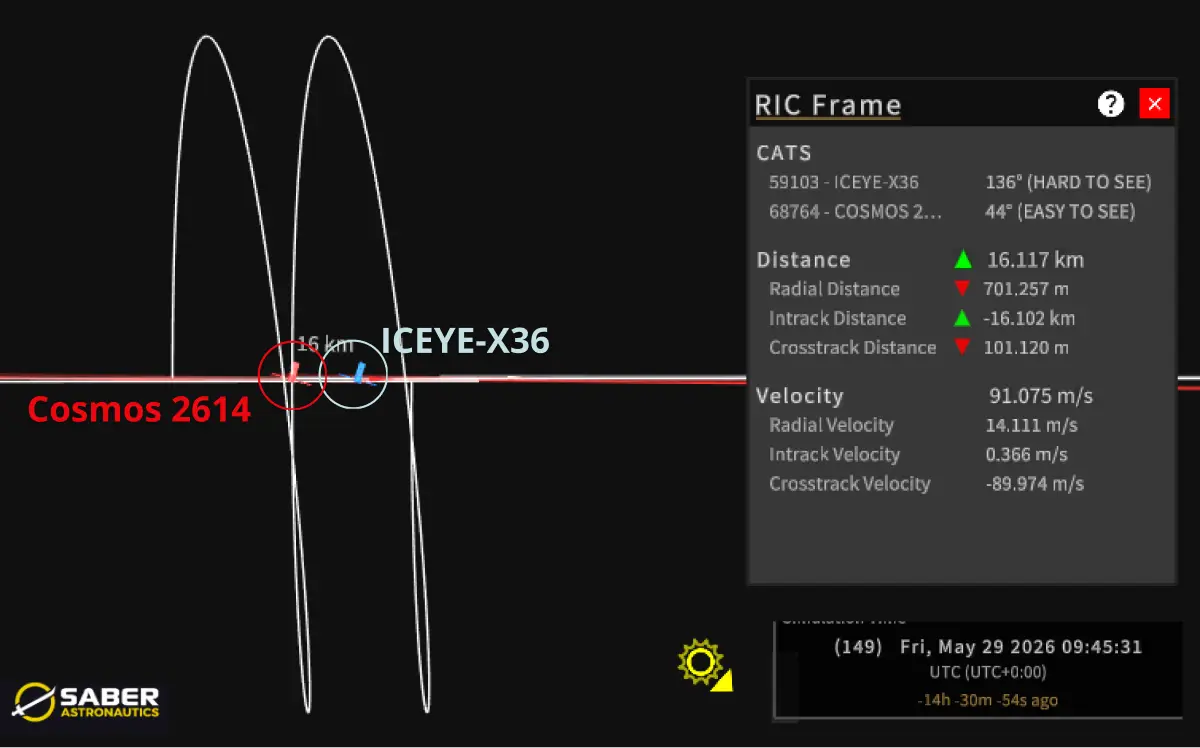
0945Z 29 May 2026: Cosmos 2614 Now Trailing ICEYE-X36 Has 16km Close Approach. Lighting Conditions Unfavorable for Cosmos 2614 (saberastro.com)
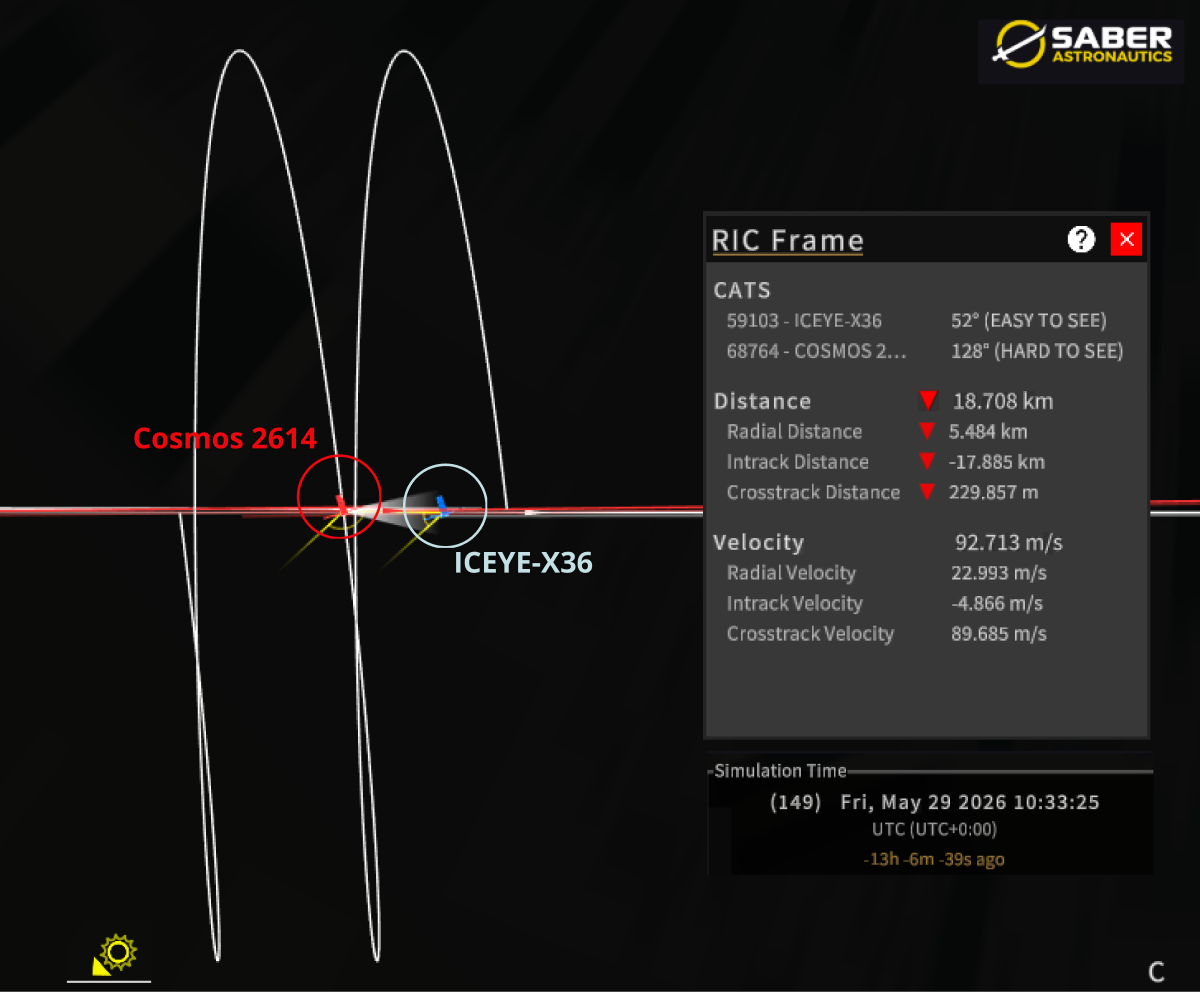
1033Z 29 May 2026: Cosmos 2614 Falls Further Behind ICEYE-X36 Has 19km Close Approach. Lighting Conditions Favorable for Cosmos 2614 (saberastro.com)
Background:
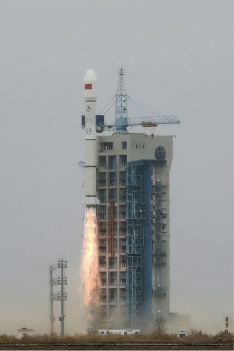
Russia launched Cosmos 2609-2614 on 17 April 2026 using a Soyuz 2.1b with a Volga upper stage. This was the first time Russia had paired the Soyuz 2.1b with the Volga upper stage and the configuration can deliver ~6,000kg to a 550km sun-synchronous orbit. Subtracting dispensers/adapters (typically 5–15% of payload mass, so ~300–900 kg for 6 satellites) this leaves roughly 5,100–5,700 kg for the 6 satellites. However, Russia deployed the satellites into two distinct orbital groups:
- Group 1 (98.25° inclination): Cosmos 2609 — ~495–550 km
- Group 2 (96.95° inclination): Cosmos 2610–2614 — ~547 km
This plane separation required additional Volga fuel requirements, which would further reduce available payload mass. The satellites in the two groups may also be different sizes.
ICEYE-X36 was launched March 4, 2024 from Vandenberg on a SpaceX Falcon 9. It’s registered under ICEYE US, has a mass of ~90 kg and is one node in a 44+ satellite constellation that Ukraine can task. ICEYE resolution can be as good as 0.5 m in spot mode covering a 5x5km area. Other modes offered are as follows: 10x10km spot at 1m resolution; 50x50km strip at 3m resolution; and 100x100km area scan at 15m resolution. In 2022 ICEYE donated one of its satellites, the “People’s Satellite,” to Ukraine, however this was prior to ICEYE-X36’s launch and the earlier ICEYE satellite’s identity remains unknown. On 26 June 2024, Ukraine’s Defense Intelligence Directorate (GUR) said it was making good use of SAR imagery provided by it’s “People’s Satellite.” Specifically Ukraine had used 38% of the nearly 4,200 (as of Jun 2024) images were used to strike Russian targets.
Editor’s Comments: Russia invested significant fuel to maneuver 5 of its satellites into co-planar orbits with ICEYE-X36. I should also note that the maneuvers also decreased the cross-track distance from ICEYE-37 (59102), but not to the same extent as with X36. X36 is a small satellite (90kg) and likely lacks the fuel/maneuverability to respond to any co-orbital threat. X36 last maneuvered over a year ago when it made a slight SMA increase on 11 March 2025.
Russia has warned previously of its intent to target commercial space capabilities assisting Ukraine. On 27 October 2022, Konstantin Vorontsov, deputy director of the Russian foreign ministry’s department for non-proliferation and arms control, spoke at a United Nations meeting on outer space security. He directly criticized Western nations’ use of commercial satellites in military operations and declared that commercial systems serving as “quasi-civilian infrastructure may become a legitimate target for retaliation.” Vorontsov further remarked that the West’s use of commercial satellites was “an extremely dangerous trend that … has become apparent during the latest developments in Ukraine.” These comments added fuel to previous declarations that Russia could target space networks operated by private companies.
Nearly four years after making these statements, Russia is showing signs of carrying out this threat.
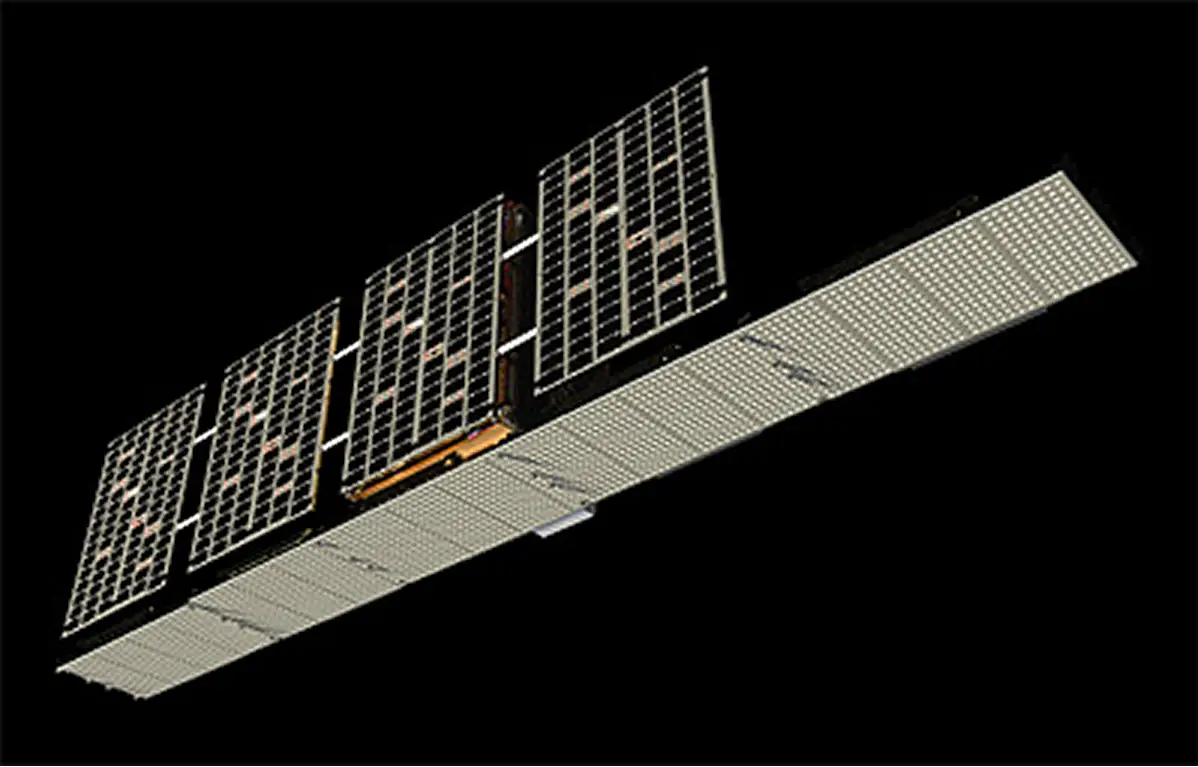
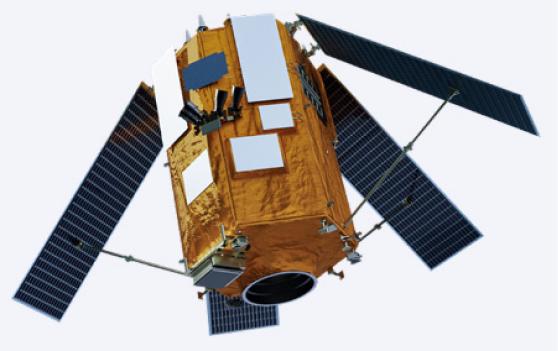
Rendering of ICEYE SAR Satellite (space.skyrocket.de)
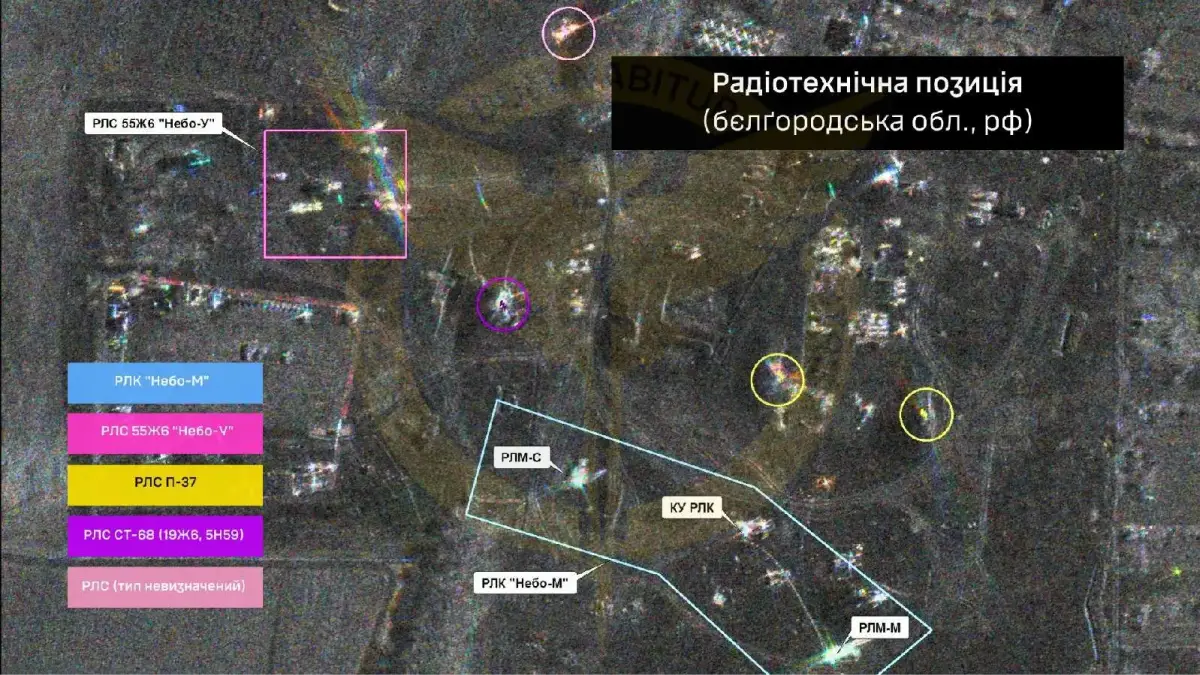
Russian Radar Systems as Seen from ICEYE SAR Imagery (@DI_Ukraine via X)
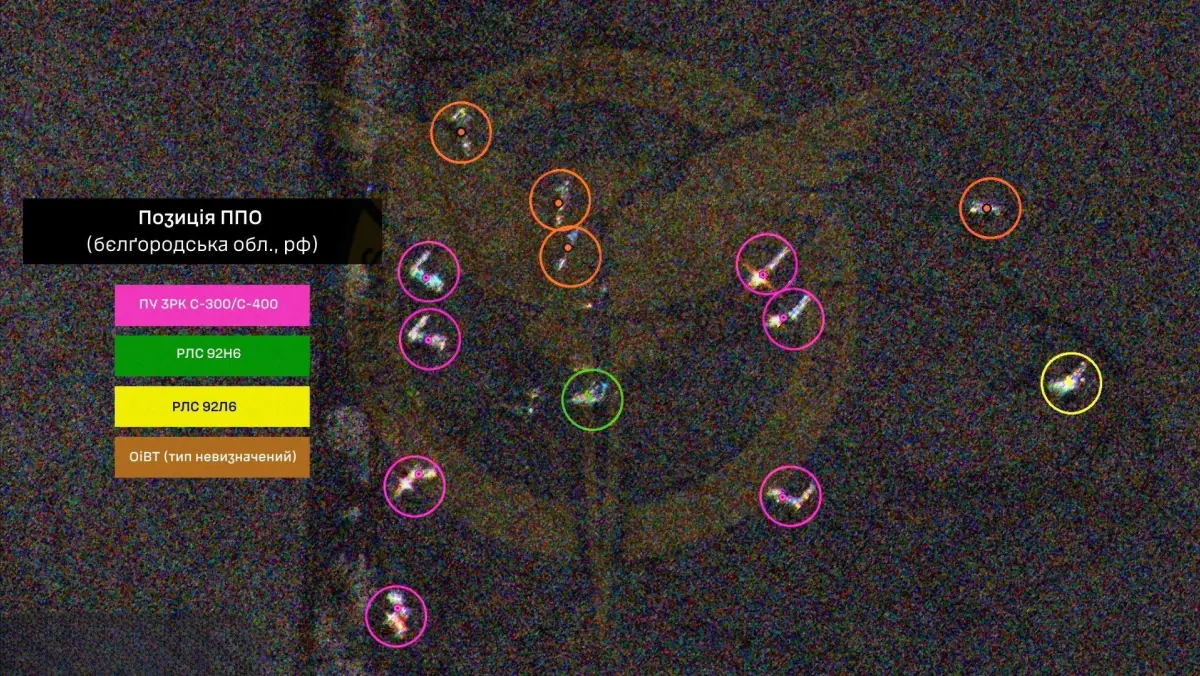
Deployed Russian Equipment as Viewed By ICEYE SAR Imagery (https://gur.gov.ua)