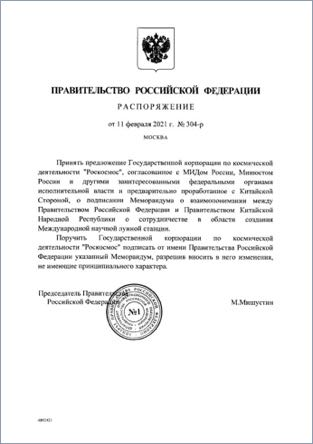
17 Feb: Russia is preparing to sign a memorandum of understanding with China to cooperate on a vision for an international lunar research station.
– “The date to sign the MoU has not been determined yet and is currently discussed with the Chinese partners,” Roscosmos said. An Order of the Government of the Russian Federation relating to the move was published online Feb. 11.
– The project appears to consist of Chinese, Russian and potentially other nations contributing their own, discrete spacecraft.
– The International Lunar Research Station (ILRS) is believed to be a Chinese-developed vision for a robotic base at the lunar south pole. The first steps will be the upcoming Chang’e-6, -7 and -8 missions and international missions such as Russia’s Luna 27.
This MoU fits a larger trend of Russia moving into a closer orbit with China. This more formal agreement builds on existing cooperation in material science, data sharing, purchase agreements and lunar exploration. Russia has opted to not sign the Artemis accords with the US and had expressed concerns that Artemis was too “U.S.-centric.” Experts expect more and more space and lunar cooperation between Russia and China if the “United State continues its space policies and practices without any change.” Watch a related podcast here.

International Lunar Research Station concept.