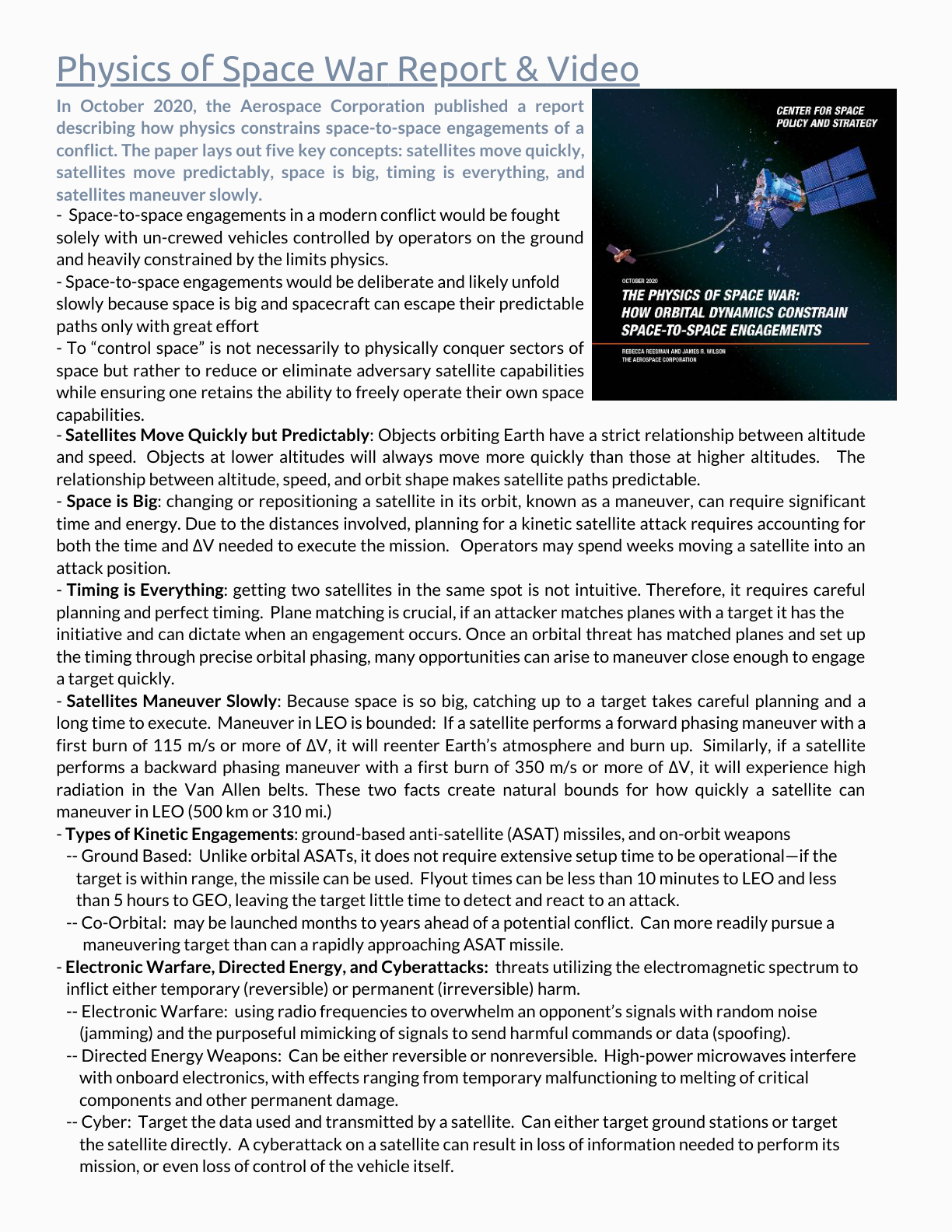
10 June 2021: US Media reports Russia is preparing to supply Iran with an advanced satellite system that will give Tehran an unprecedented ability to track potential military targets across the Middle East and beyond. Russian President Vladimir Putin dismissed the report as “garbage.”
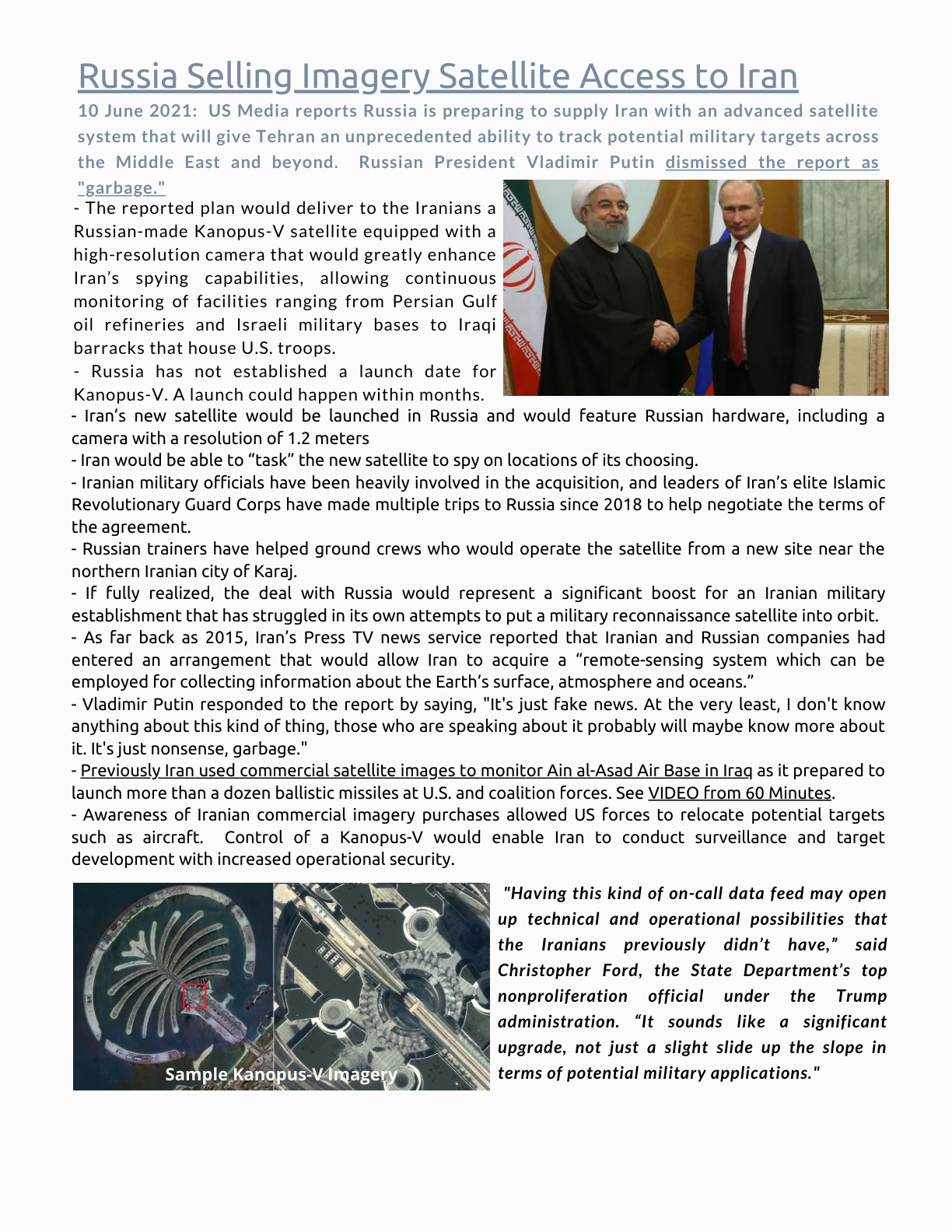
– The reported plan would deliver to the Iranians a Russian-made Kanopus-V satellite equipped with a high-resolution camera that would greatly enhance Iran’s spying capabilities, allowing continuous monitoring of facilities ranging from Persian Gulf oil refineries and Israeli military bases to Iraqi barracks that house U.S. troops.
– Russia has not established a launch date for Kanopus-V. A launch could happen within months.
– Iran’s new satellite would be launched in Russia and would feature Russian hardware, including a camera with a resolution of 1.2 meters
– Iran would be able to “task” the new satellite to spy on locations of its choosing.
– Iranian military officials have been heavily involved in the acquisition, and leaders of Iran’s elite Islamic Revolutionary Guard Corps have made multiple trips to Russia since 2018 to help negotiate the terms of the agreement.
– Russian trainers have helped ground crews who would operate the satellite from a new site near the northern Iranian city of Karaj.
– If fully realized, the deal with Russia would represent a significant boost for an Iranian military establishment that has struggled in its own attempts to put a military reconnaissance satellite into orbit.
– As far back as 2015, Iran’s Press TV news service reported that Iranian and Russian companies had entered an arrangement that would allow Iran to acquire a “remote-sensing system which can be employed for collecting information about the Earth’s surface, atmosphere and oceans.”
– Vladimir Putin responded to the report by saying, “It’s just fake news. At the very least, I don’t know anything about this kind of thing, those who are speaking about it probably will maybe know more about it. It’s just nonsense, garbage.”
– Previously Iran used commercial satellite images to monitor Ain al-Asad Air Base in Iraq as it prepared to launch more than a dozen ballistic missiles at U.S. and coalition forces. See VIDEO from 60 Minutes.
– Awareness of Iranian commercial imagery purchases allowed US forces to relocate potential targets such as aircraft. Control of a Kanopus-V would enable Iran to conduct surveillance and target development with increased operational security.
“Having this kind of on-call data feed may open up technical and operational possibilities that the Iranians previously didn’t have,” said Christopher Ford, the State Department’s top nonproliferation official under the Trump administration. “It sounds like a significant upgrade, not just a slight slide up the slope in terms of potential military applications.”
Original PDF links: Source 1 · Source 2 · Source 3 · Source 4