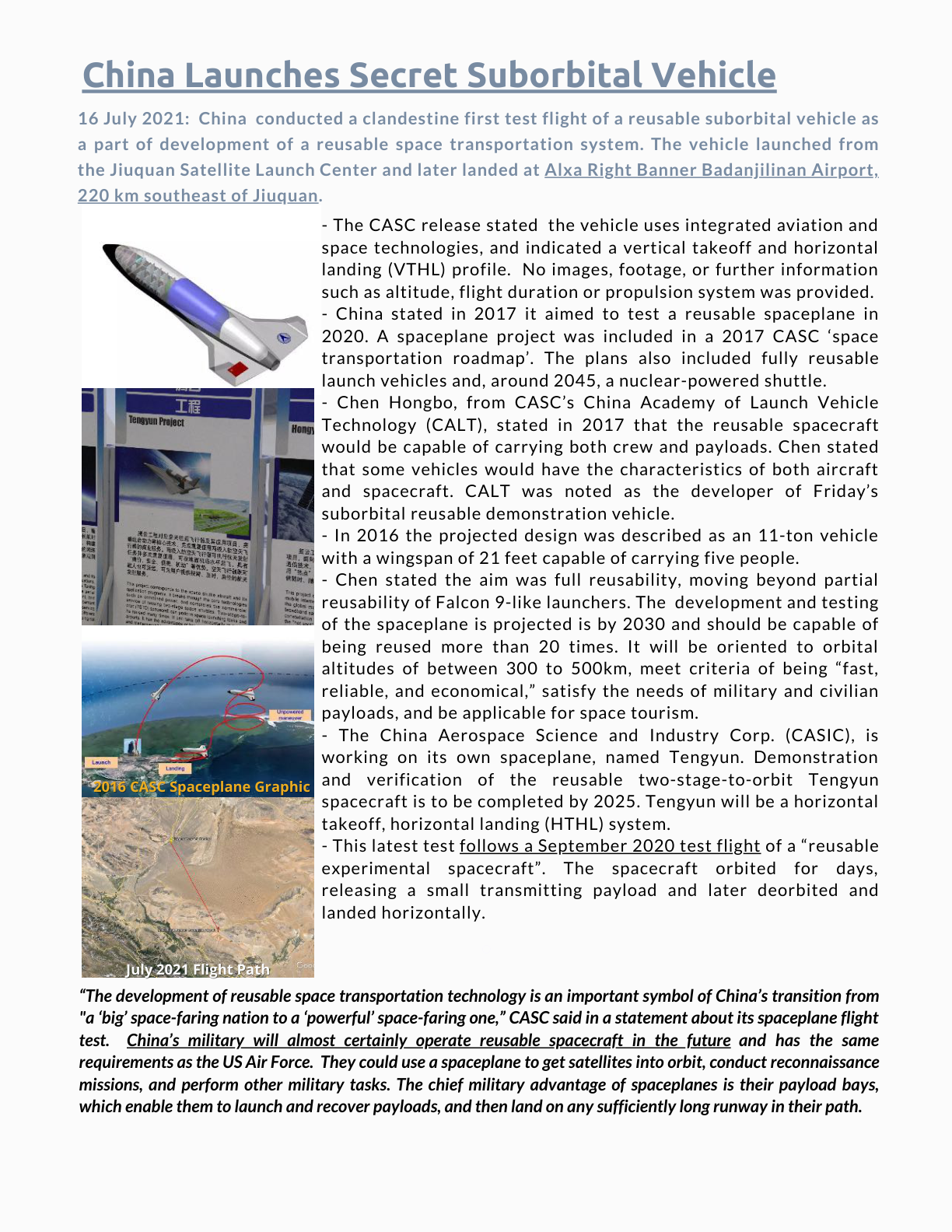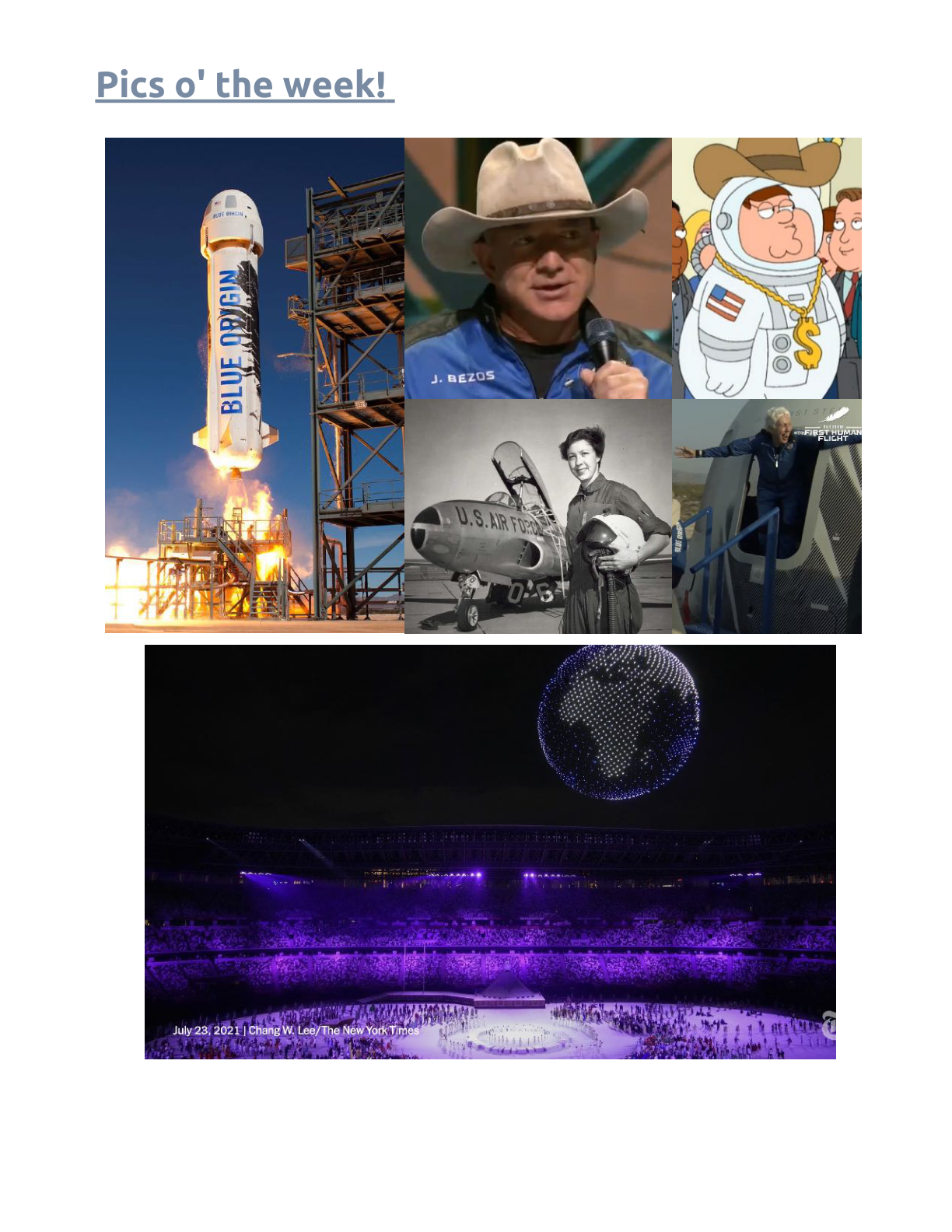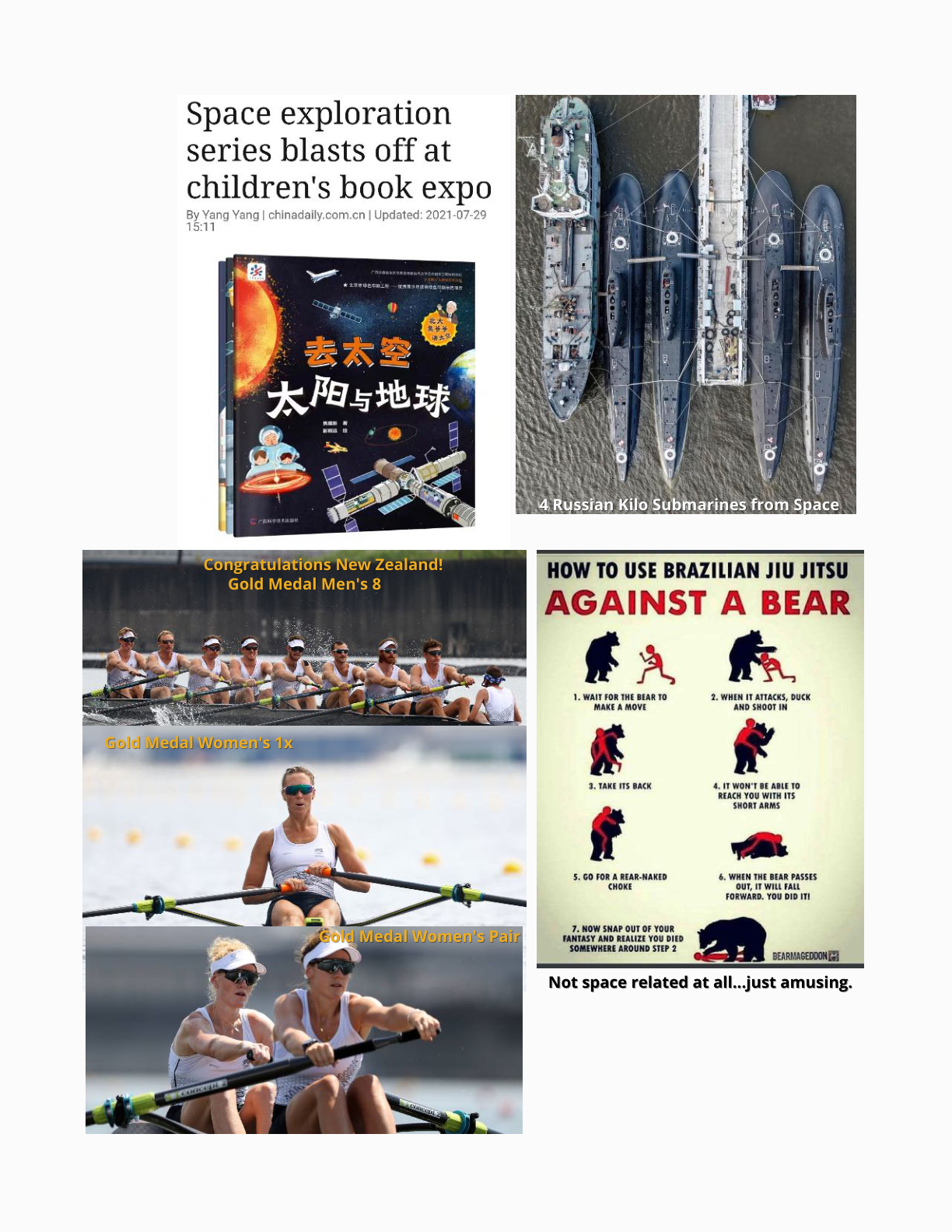
19 July 2021: China launched a Long March/Chang Zheng 2C rocket from the Xichang Satellite Launch Center. The launch carried three Yaogan-30 remote sensing satellites and the Tianqi-15 communications satellite. In addition to successfully delivering the satellites to orbit, the launch also included an experimental attempt to recover the rocket’s payload fairings. Launch VIDEO.
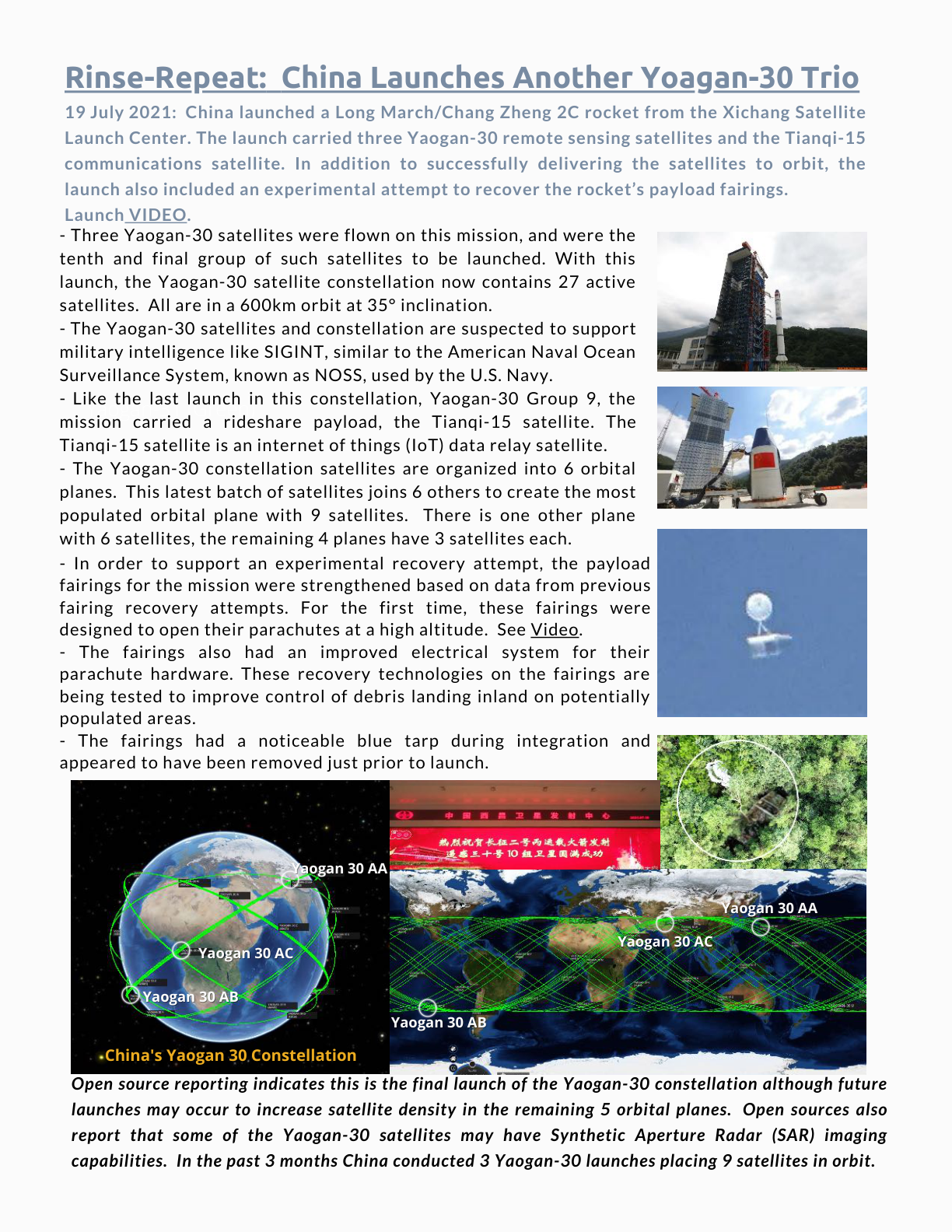
– Three Yaogan-30 satellites were flown on this mission, and were the tenth and final group of such satellites to be launched. With this launch, the Yaogan-30 satellite constellation now contains 27 active satellites. All are in a 600km orbit at 35° inclination.
– The Yaogan-30 satellites and constellation are suspected to support military intelligence like SIGINT, similar to the American Naval Ocean Surveillance System, known as NOSS, used by the U.S. Navy.
– Like the last launch in this constellation, Yaogan-30 Group 9, the mission carried a rideshare payload, the Tianqi-15 satellite. The Tianqi-15 satellite is an internet of things (IoT) data relay satellite.
– The Yaogan-30 constellation satellites are organized into 6 orbital planes. This latest batch of satellites joins 6 others to create the most populated orbital plane with 9 satellites. There is one other plane with 6 satellites, the remaining 4 planes have 3 satellites each.
– In order to support an experimental recovery attempt, the payload fairings for the mission were strengthened based on data from previous fairing recovery attempts. For the first time, these fairings were designed to open their parachutes at a high altitude. See Video.
– The fairings also had an improved electrical system for their parachute hardware. These recovery technologies on the fairings are being tested to improve control of debris landing inland on potentially populated areas.
– The fairings had a noticeable blue tarp during integration and appeared to have been removed just prior to launch.
Open source reporting indicates this is the final launch of the Yaogan-30 constellation although future launches may occur to increase satellite density in the remaining 5 orbital planes. Open sources also report that some of the Yaogan-30 satellites may have Synthetic Aperture Radar (SAR) imaging capabilities. In the past 3 months China conducted 3 Yaogan-30 launches placing 9 satellites in orbit.
Original PDF links: Source 1 · Source 2 · Source 3 · Source 4