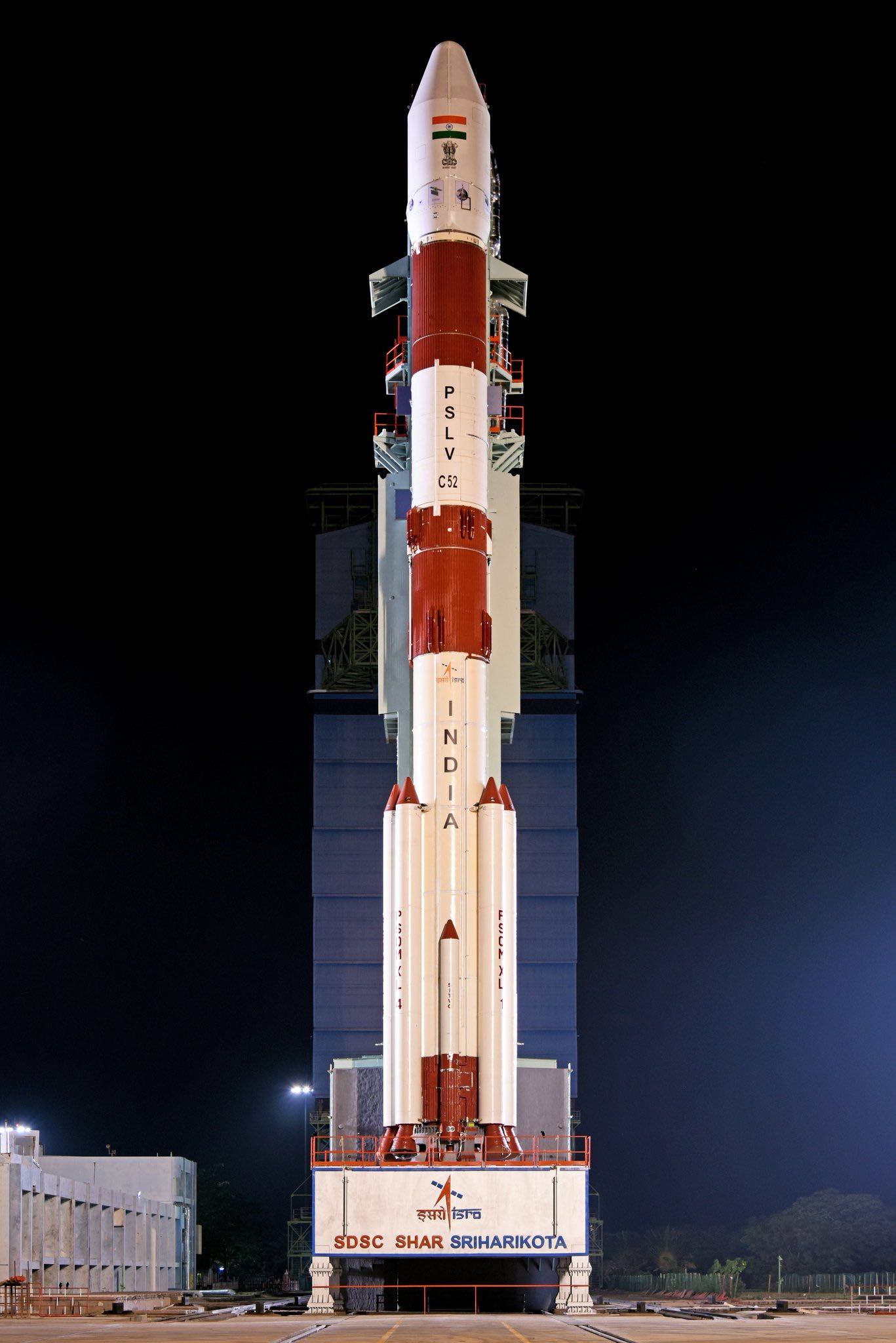
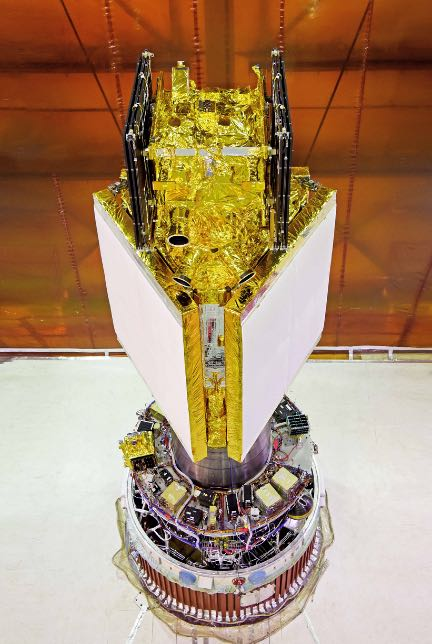
5 Feb 2022: A Soyuz-2-1a rocket with a Fregat upper stage lifted off from Pad No. 4 at Site 43 in Plesetsk. According to air traffic warnings issued ahead of the launch, the mission targeted an orbit with an inclination 67 degrees toward the Equator. The mission was to deliver an unidentified Russian military satellite to orbit. Video.
– The satellite in question is likely called Neitron, a new type of military intelligence satellite. The Ministry of Defense stated the satellite was been placed into the intended orbit and is working normally. It’s been designated Kosmos-2553.
– The Ministry of Defense officially described Kosmos-2553 as “a technological satellite equipped with newly developed on-board instruments and systems in order to test them in conditions of radiation and heavy charged particles.”
– Neitron will be joined in orbit by a sister satellite in the future, possibly named Tekhnolog. It is unclear whether Neitron is a satellite-specific name or a program name.
– Neitron was manufactured by NPO Mashinostroyeniya, a Russian design bureau that has also developed a series of Earth-imaging satellites named Kondor. These small satellites operate in low Earth orbit and can carry either optical or radar imaging payloads.
– A radar imaging Kondor was launched in 2013. A Kondor-E (export) built for the South African government was orbited in 2014. A civilian version of Kondor is set to launch later this year.
– According to posts on Russian social media, the Neitron payload is believed to be based on the Kondor platform, but it is customized for operation in a considerably higher orbit.
– Radar tracking data from the 18th Space Control Squadron of the US Space Force, indicated Kosmos-2553 entered a 1,987 by 1,995km orbit with an inclination 67.08 degrees toward the Equator. By comparison the Kondor-E orbit is 400km.
– The launch of Neitron was scheduled for late 2018 before slipping several years likely due to technical problems with the satellite.
– The Neitron designation surfaced in Russian procurement documents around 2017 and the spacecraft was listed in a corporate newspaper published by NPO Lavochkin among payloads slated for launch on the company’s Fregat upper stage during 2018.
– The orbital inclination targeted by the Neitron matched that used by the Liana electronic-intelligence constellation. However, Pion and Lotos satellites comprising that network did not require the Fregat space tug to reach their low orbits.

Soyuz-2-1a launch carrying the Neitron military payload, later designated Kosmos-2553.
Model of the Kondor-E Earth-imaging satellite with an optical sensor.
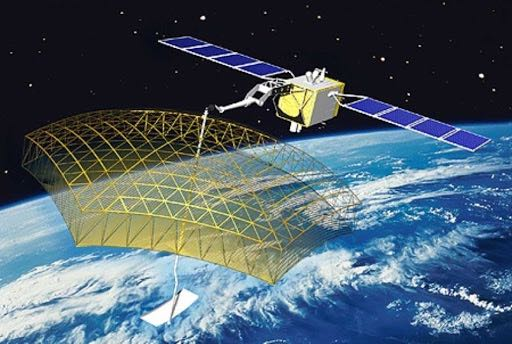
Rendering of Kondor-E in a radar-imaging configuration.
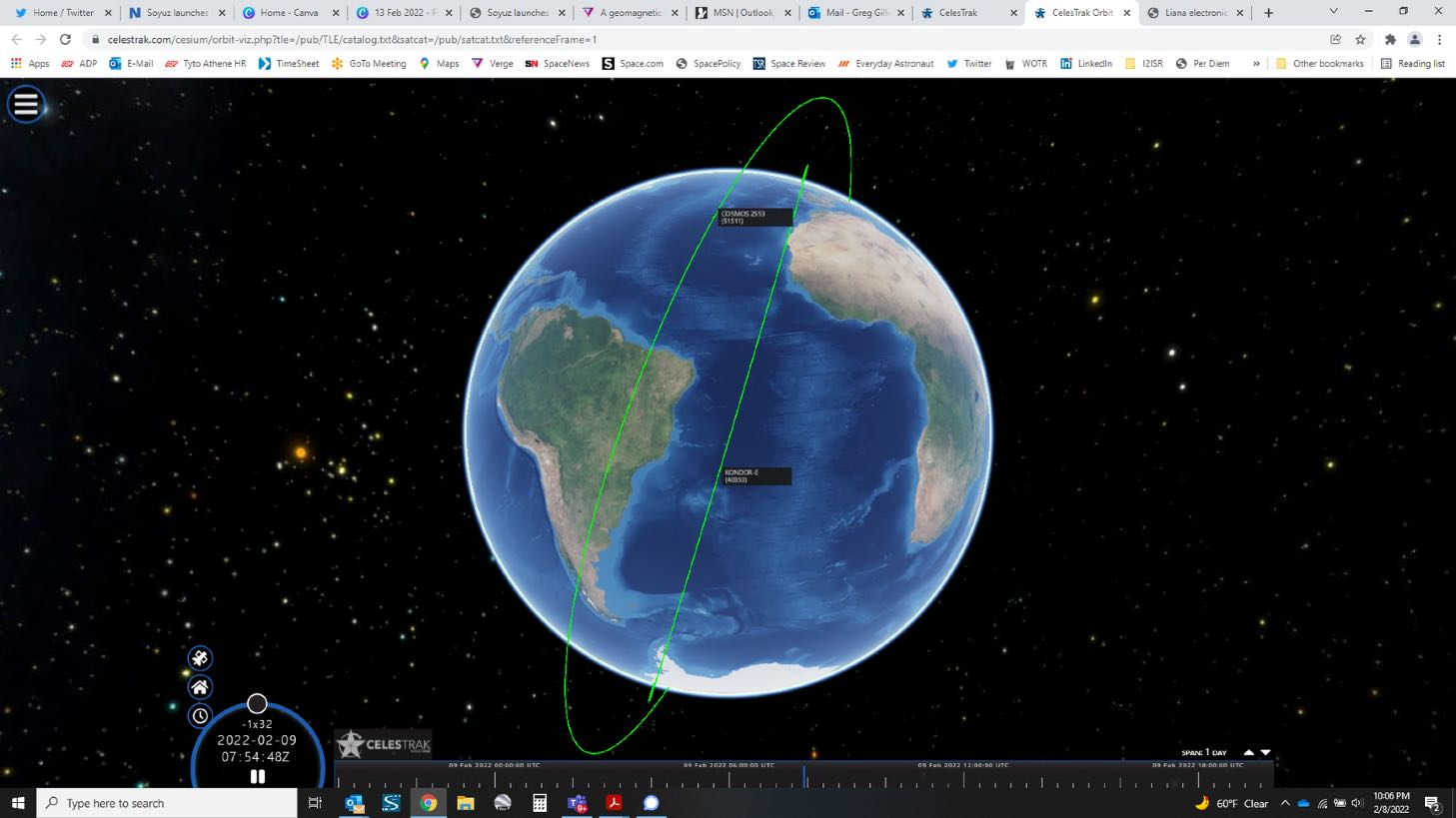
Orbital comparison of Kosmos-2553 and Kondor-E.