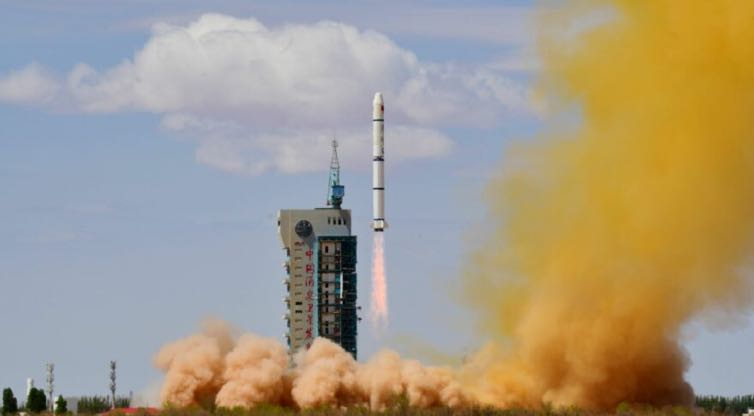
29 Apr 2022: Russia launched the Angara 1.2 rocket with an unknown payload for the Russian Aerospace Forces. The satellite is cataloged as Kosmos 2555. Launch Video. Launch Prep Video.
– The launch was the first operational flight of the Angara rocket family. Angara 1.2 can launch 3,800 kg to LEO. Russia scheduled 2 more launches for 2022. Roscosmos has one mission and the second is a commercial flight for South Korea (status unclear).
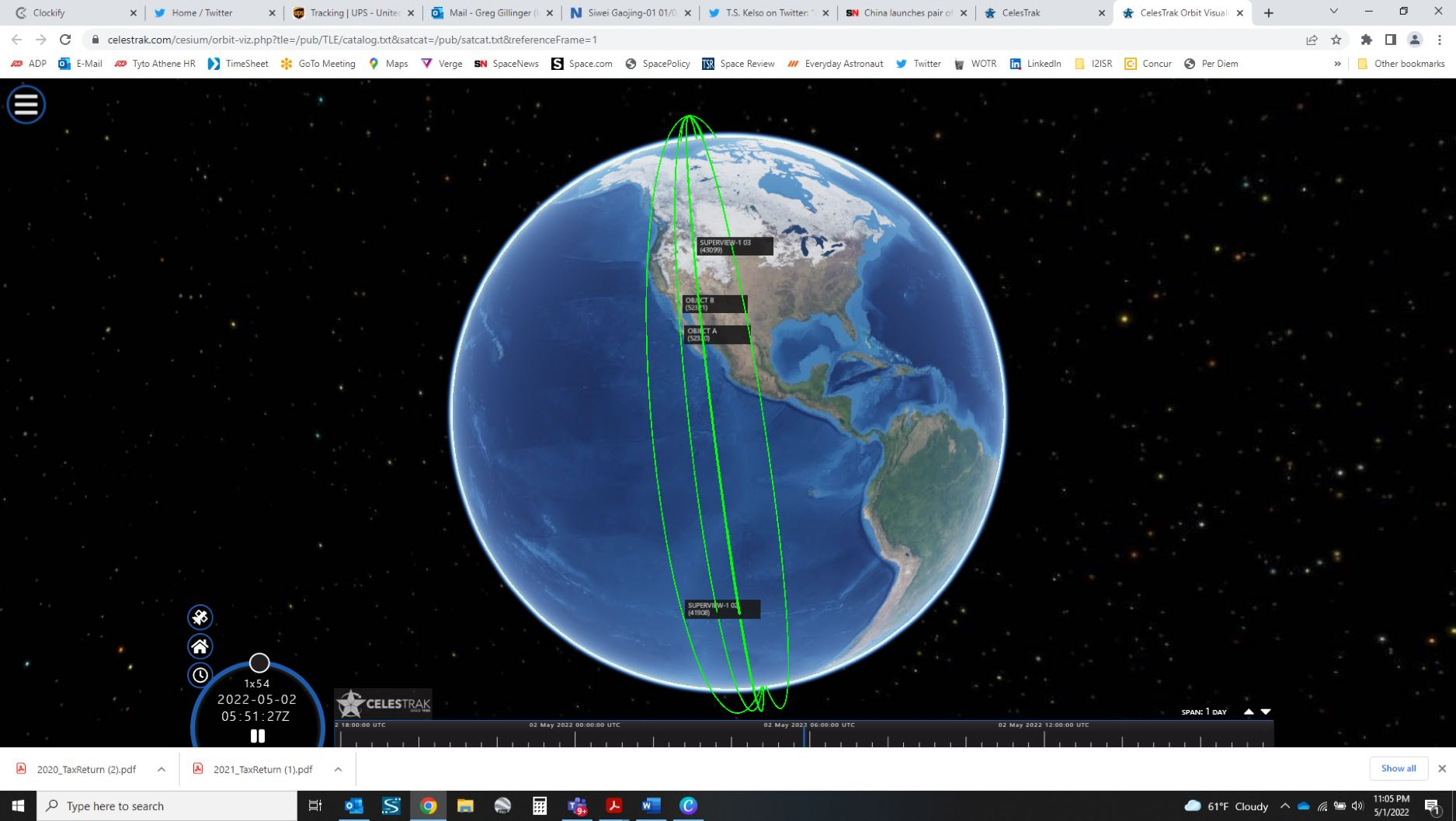
– The mission of Kosmos 2555 remains a mystery. The satellite is in a 279 x 294 km x 96.5° sun-sync orbit, typical for an earth observation mission.
– Kosmos 2555’s orbit is quite similar to the initial orbit of Kosmos 2525 launched in 2018 and Kosmos 2551 (launched in 2021).
– Kosmos 2525 was described as an “Experimental Small Satellite”, to serve as the basis for a “space-based Earth remote sensing complex.”
– Kosmos 2525 is likely the precursor of a constellation of smaller satellites to augment imagery provided by Russia’s larger Persona imagery satellites. Kosmos 2525 appears to have been operational until late 2020.
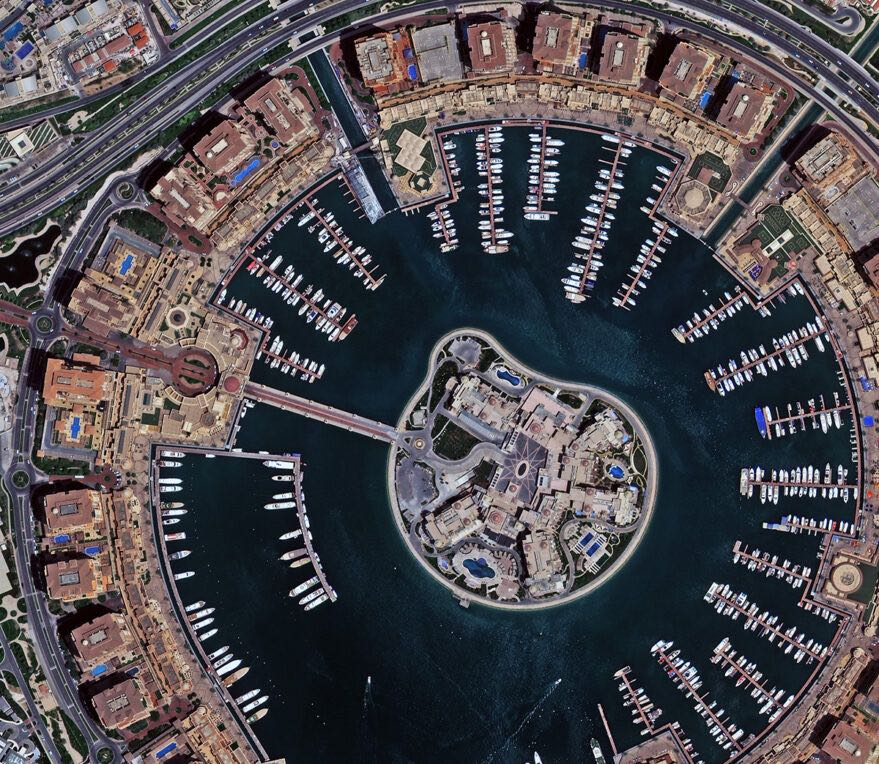
– Kosmos 2525 may be comparable to the first in a series of American commercial Earth imaging satellites called SkySat-1 with a maximum resolution of 0.9 meters in panchromatic mode.
– Kosmos 2551 did not make orbital adjustments and appears to have failed, reentering a month after launch.
– On-line posts from Russian insiders identified Kosmos 2555 as “MKA”. “MKA” is a Russian abbreviation for “small satellite” and likely not the satellite name. Later the name MKA-R suddenly showed up in NK’s Russian launch schedule, without any source.
– This post led to speculation that Kosmos 2555 was a radar imaging satellite. However, Kosmos 2555’s low altitude suggests an EO/IR remote sensing mission and not radar (radar imaging satellites typically use higher altitudes).
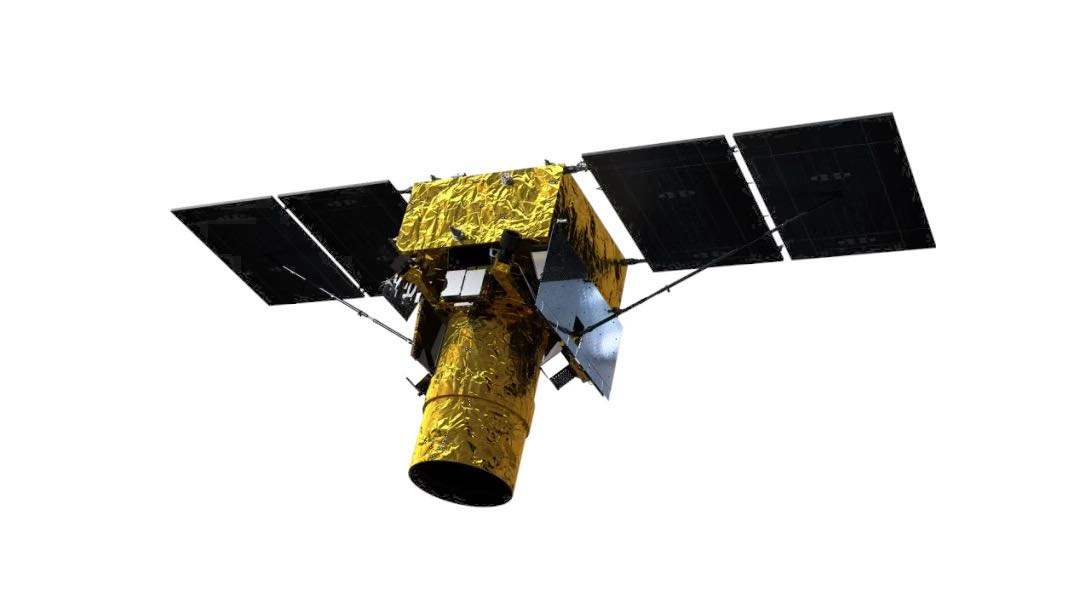
– Kosmos 2555 could be the latest Razbeg vehicle (a new type of optical reconnaissance satellite) or the secretive remote sensing satellite that Russia reportedly has built for Iran. The latter was expected to fly in the second quarter of 2021.
– Amateur radio astronomers in the Western Hemisphere have not detected S-band (frequency typical for satellite telemetry) signals. More collection required to draw any conclusions on Kosmos 2555 status.
– The Russian satellite manufacturer VNIIEM produced Kosmos 2555 and has been linked with both Razbeg program and the satellite Russia intends to export to Iran.
While not confirmed, Kosmos 2555 is likely a replacement for the failed Kosmos 2551 mission launched in Sep 2021 and re-entered less than a month later.
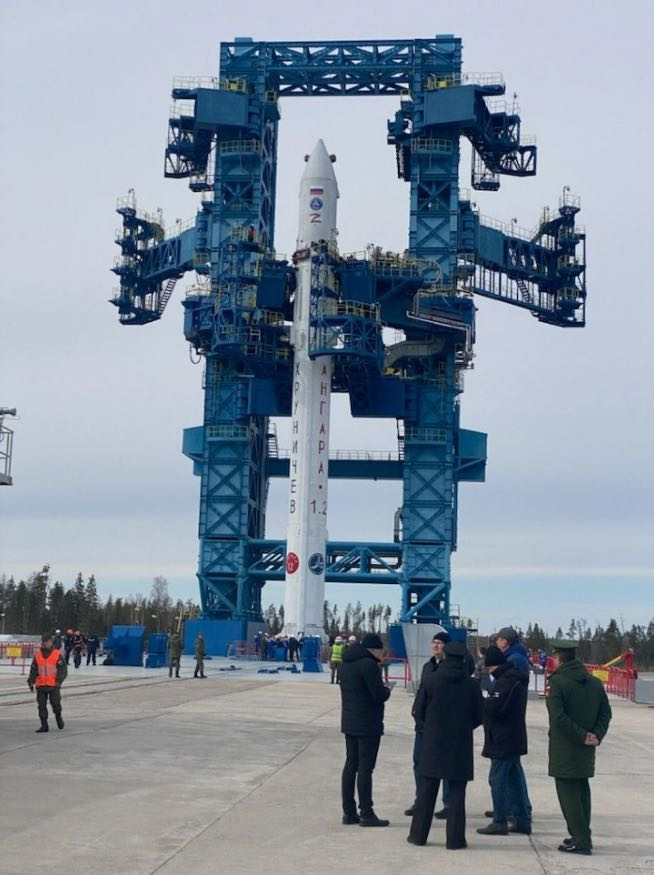
Angara 1.2 prepared for its first operational launch.
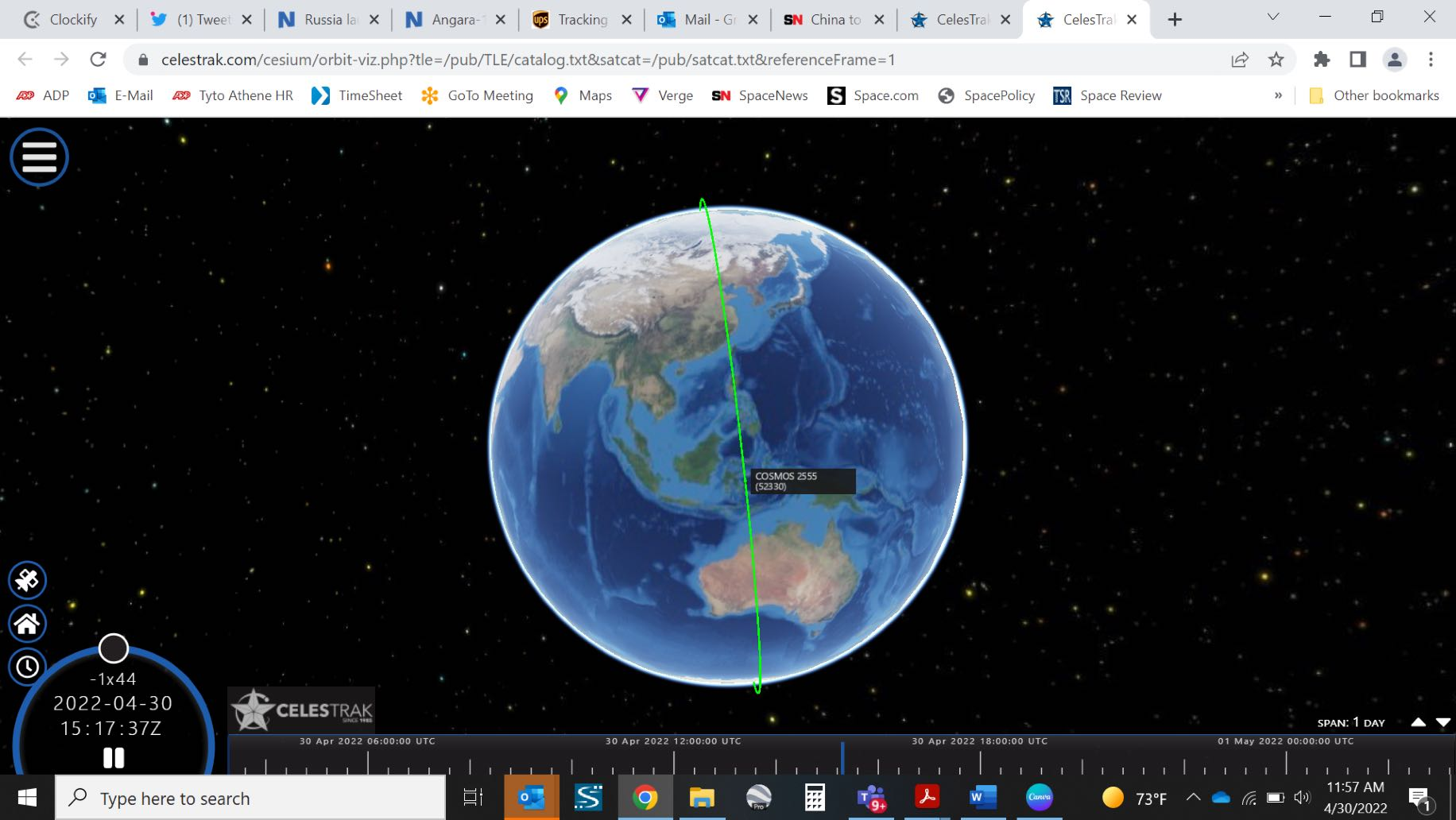
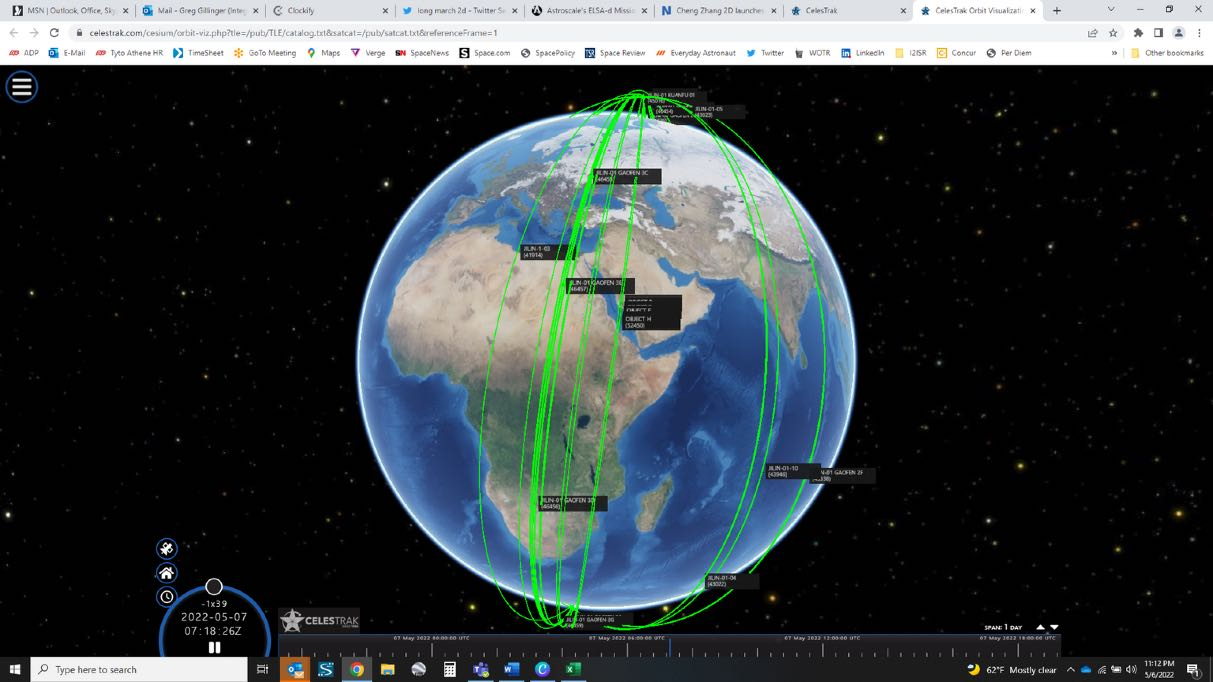
Kosmos 2555 sun-synchronous orbit visualization.