


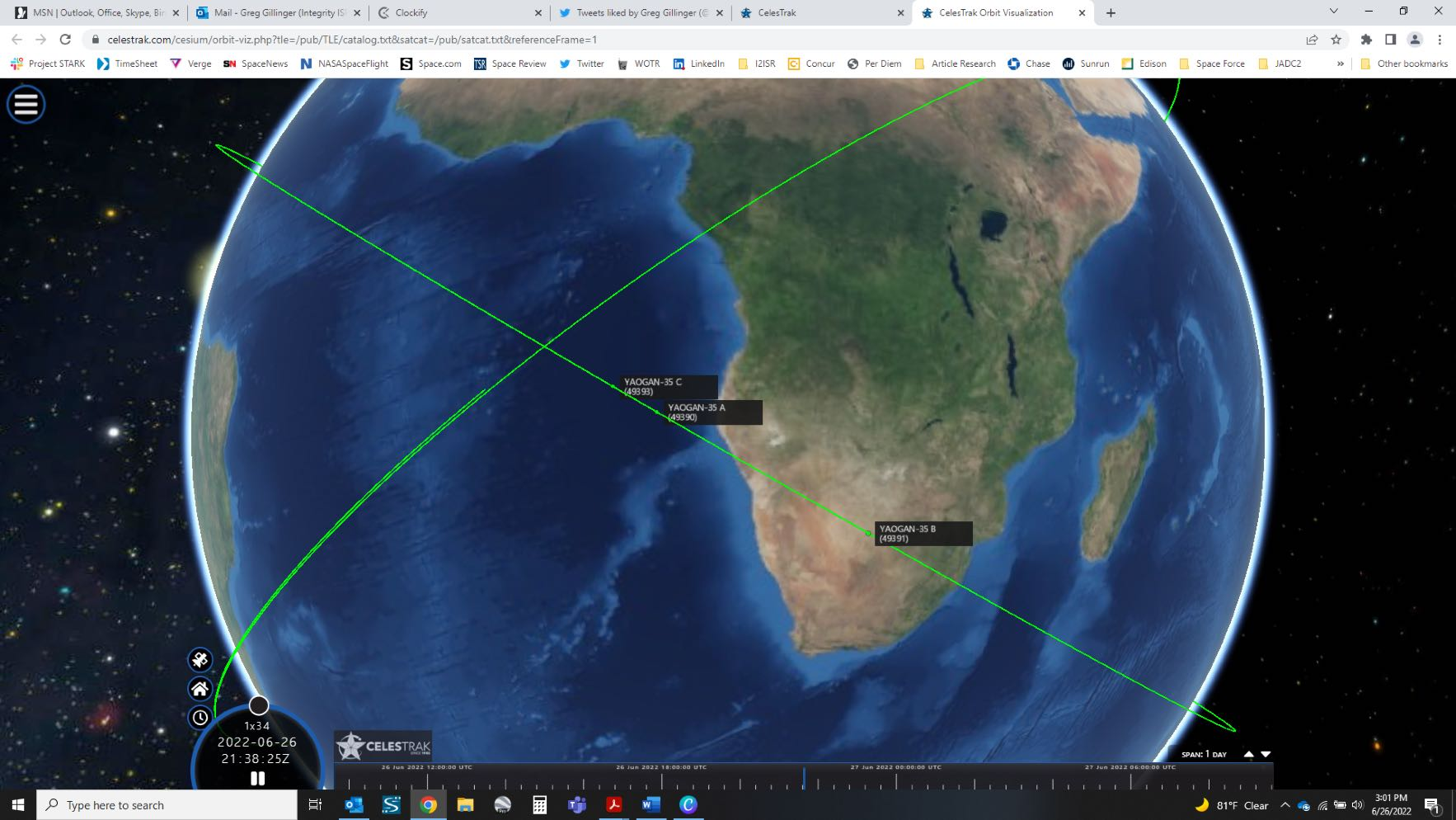
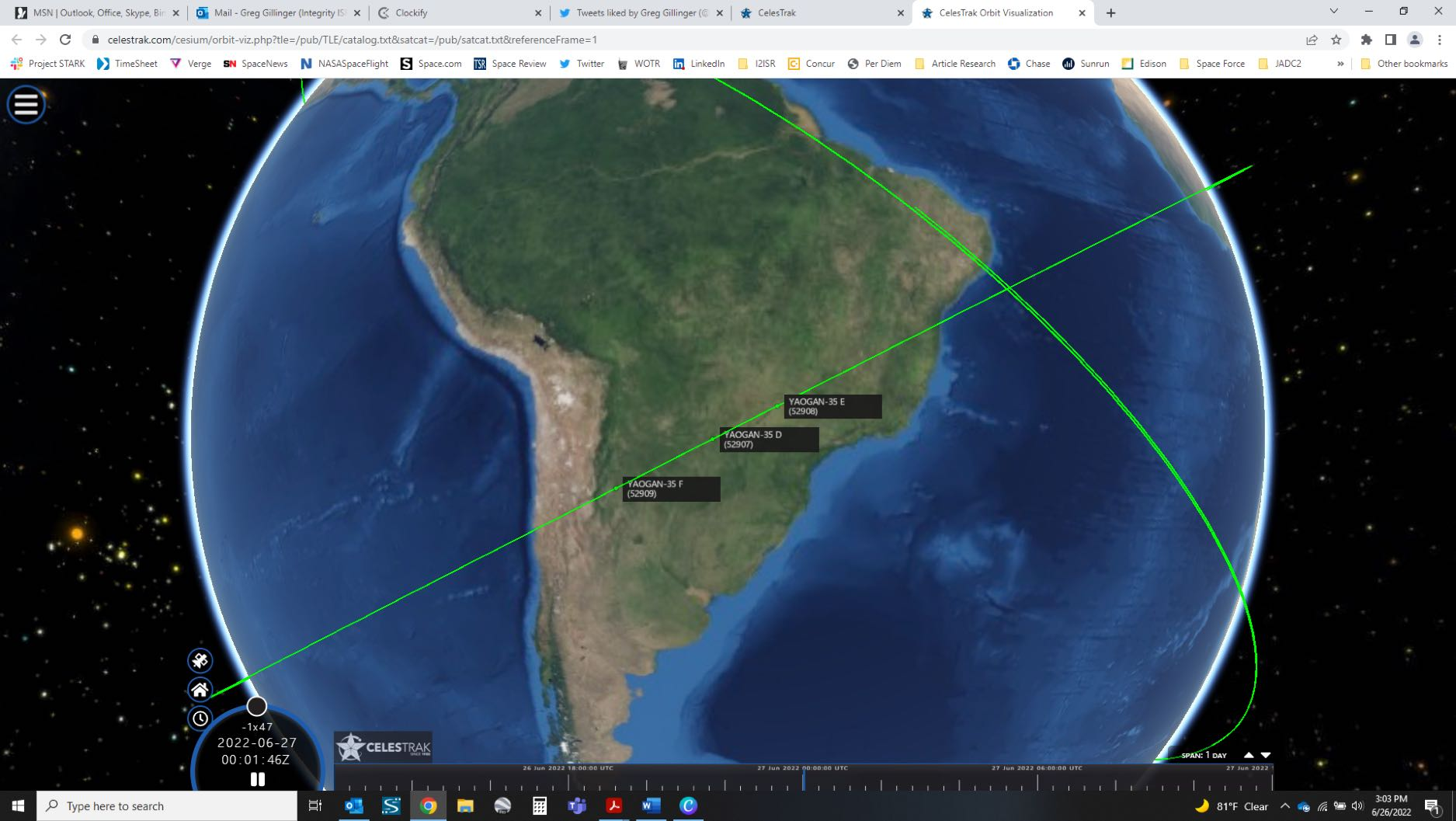


China launched the second Yaogan-35 triplet on 23 June 2022, placing three satellites into a roughly 500km, 35-degree inclined orbit.
23 Jun 2022: In its second launch of the week, China launched its second batch of Yaogan-35 satellites from the Xichang Satellite Launch Center aboard a Chang Zheng 2D. The satellites, called Yaogan 35 Group 2, are possibly related to another triplet of payloads that launched in November 2021 from the same spaceport on the same rocket. Launch Video.
– China reported the satellites would be used for “scientific experiments, land and resource census, and other fields;” however, that generic statement was to not give away the true purpose of the vehicles.
– No details on equipment, mass, or specifics were made public. Based on past missions, they were likely built by DFH Satellite based in Beijing or by the Shanghai Academy of Spaceflight Technology (SAST).
– Yaogan-35 D/E/F satellites are in a similar orbit to their predecessors, in a near circular orbit with an apogee of 503km and perigee at ~489km (e=.002). Both sets of satellites are inclined 35°.
– Other Yaogan satellites that deploy in triplets are the Yaogan-30 (30 satellites) and Yaogan-31 (12 satellites). Yaogan-30 satellites are believed to be SIGINT satellites and are also in 35 degree inclined orbits.
– Yaogan-30 satellites orbit at ~100km higher altitude and are equally spaced over the earth (separated by 120 degrees). Yaogan-31 satellites are also launched in triplets, operate in low earth orbit and within close proximity of one another.
– Yaogan-35 is at a different inclination than Yaogan-31 satellites and less than half their altitude. All Yaogan-31 satellites are inclined at 65 degrees and ~1100km altitude.
– All other Yaogan satellites operating at ~500km altitude are believed to be imagery satellites and are in sun-synchronous orbits (inclined at ~98 degrees).
– Yaogan-35 satellites may operate in lead-trail configuration, with the lead satellite potentially cueing the two trailing vehicles. The separation between the Yaogan-35 A/B/C set differs from the current Yaogan-35 D/E/F formation.
– Yaogan-35B is 4 minutes ahead of Yaogan-35A which is 1 minute ahead of Yaogan-35C. Yaogan-35E is only 1 minute ahead of Yaogan-35D which proceeds Yaogan-35F by <1 minute. The time differences are likely to change over time.
China launched Gaofen-12 (03) on 27 June 2022 into a sun-synchronous orbit; the spacecraft is believed to carry high-resolution synthetic aperture radar.
27 Jun 2022: China launched the Gaofen-12 03 (GF-12(03)) mission on board a Chang Zheng 4C from the Jiuquan Satellite Launch Center. China declared the launch to be a success minutes after liftoff. GF-12(03) launched into a Sun-Synchronous Orbit (SSO). Both the satellite and rocket are developed by Shanghai Academy of Space Technology (SAST). Launch Video.
– Gaofen (meaning “high resolution”) is the name for remote sensing satellites that are part of the China High-definition Earth Observation System (CHEOS).
– CHEOS was initiated in 2010 to provide all-weather/day coverage with synthetic aperture radar and EO satellites.
– GF-12(03) is in a 598.4×592.5km orbit with an inclination of 98°.
– GF-12(03) is slightly lower in altitude than previous GF-12 satellites: GF-12 and GF-12(02), launched in 2019 and 2021 respectively, are at 626.6 x 624.4km and are also in SSO.
– Gaofen 12 satellites are believed to be equipped with high-resolution synthetic aperture radar (SAR), with ground resolution estimated up to the sub-meter level. It is possibly a civilian version of the Yaogan 29.
– Yaogan-29 launched in 2015 is at a similar altitude of 625.4 x 621.8km and is also in SSO.
Resolution capabilities and other information has been published for lower numbered Gaofen series satellites. However information for Gaofen satellites numbered 8 and above has not been openly released, suggesting the satellites may support national defense missions.
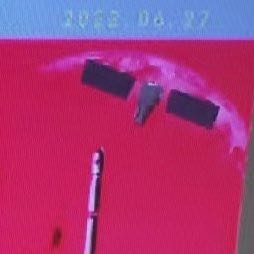

The two Shijian-6 Group 5 satellites continued closing in July 2022, with their separation decreasing from about 4km to 1km.
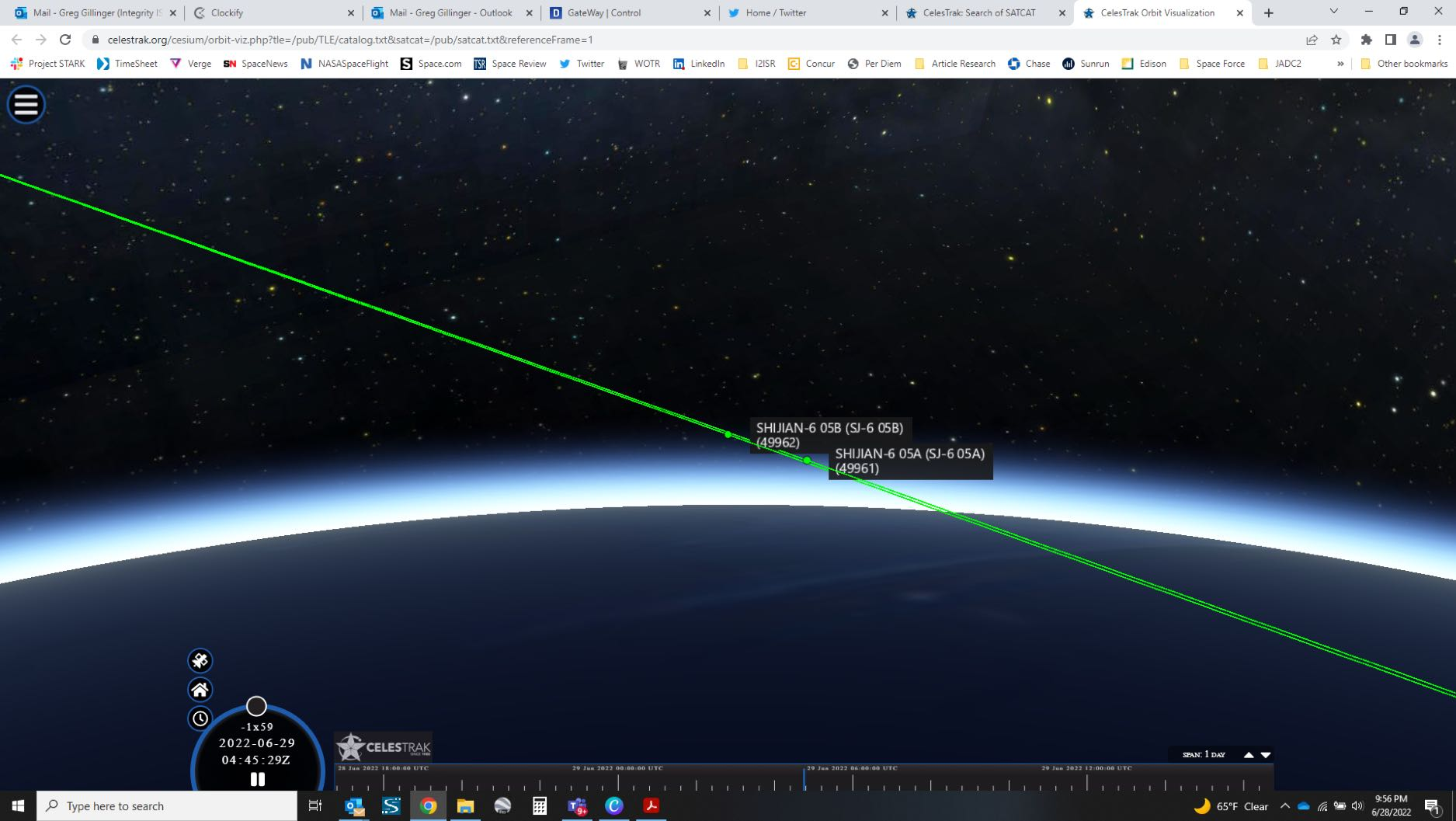
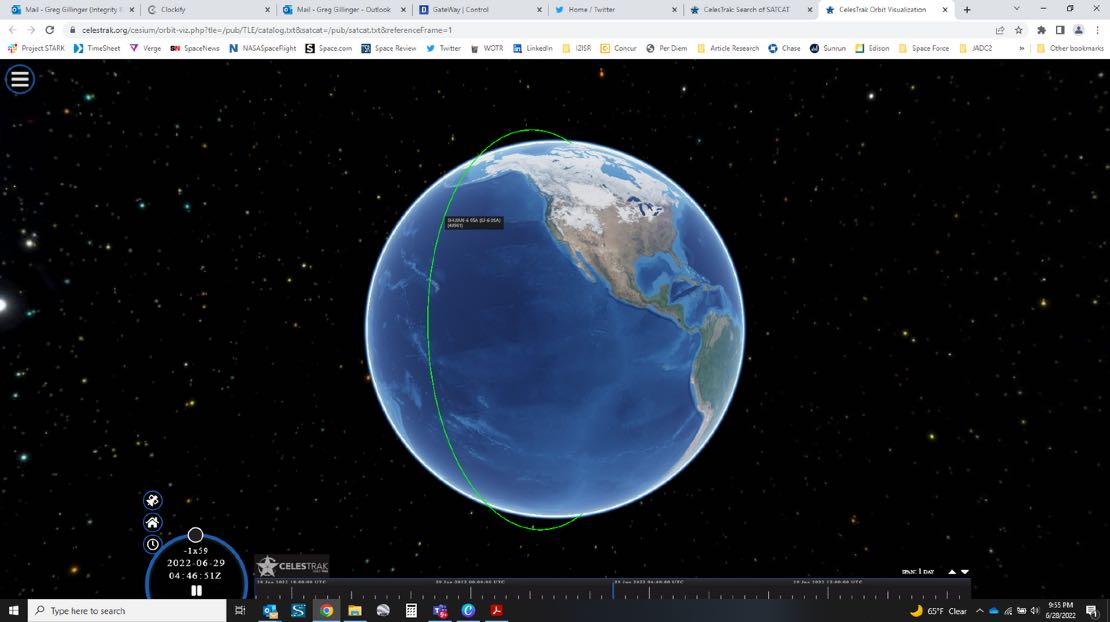
1 Jul 2022: The two suspicious SJ-6 Group 5 satellites continue to orbit near one another. Over the past 3 weeks the distance between the 2 spacecraft has decreased from 4km to 1km.
– The SJ-6 (05) satellites were launched on 9 Dec 2021 and were developed by the China Academy of Space Technology (CAST) and Aerospace Dongfanghong Satellite Co., Ltd.
– Curiously, the orbit for SJ-6 (5) satellites differs from previous SJ-6 missions. Inclination is nearly the same but altitude is ~130km lower.
– The SJ-6 (5) satellites also orbit in closer proximity to each other than previous SJ-6 missions.
– In Feb, analysis from LEO Labs indicated SJ-6 05A and 05B had setup for rendezvous and proximity operations (RPO). LEO Labs detected ingress maneuvers over several weeks resulting in periods of apparent rendezvous mid-Mar.
SJ-6 05A was trailing 05B by approximately 10 seconds.
Kuaizhou-1A returned to flight on 22 June 2022, launching the Tianxing-1 experimental satellite from Jiuquan.
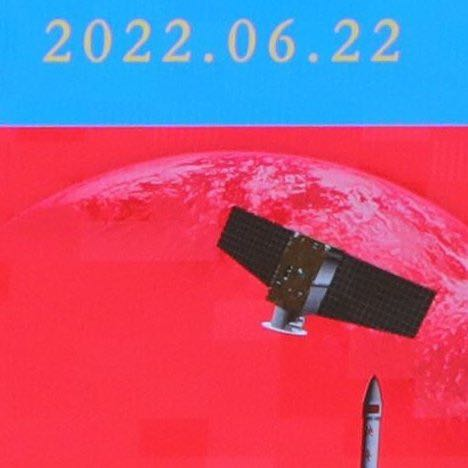
22 Jun 2022: ExSpace, a Chinese commercial launch company, launched a Kuaizhou-1A rocket and delivered the Tianxing-1 satellite into orbit. The launch occurred at the Jiuquan Satellite Launch Center and marked a return to flight after its December 2021 failed attempt. The Kuaizhou-1A (KZ-1A) consists of three solid stages and a liquid propellant upper stage. It is capable of carrying 200 kilograms of payload into a 700-kilometer SSO. Launch Video.
– The KZ-1A consists of three solid stages and a liquid propellant upper stage. It is capable of carrying 200 kilograms of payload into a 700km sun-synchronous orbit (SSO). Kuaizhou translates to “speedy vessel” in English.
– KZ-1A has now flown 15 times. The previous Kuaizhou-1A flight ended with the rocket’s second failure in December 2021. The first launch took place in Jan 2017.
– It is based on the DF-21 Intermediate-range ballistic missile (IRBM) and can use a mobile launch platform as a launch pad, which makes it very flexible in terms of launch area and pad availability.
– Giant state-owned China Aerospace Science and Industry Corporation (CASIC) is the parent company of Expace.
– Little is known about the Tianxing-1 payload. The satellite is said to be used for experiments including “space environment detection,” according to Chinese space authorities and media.
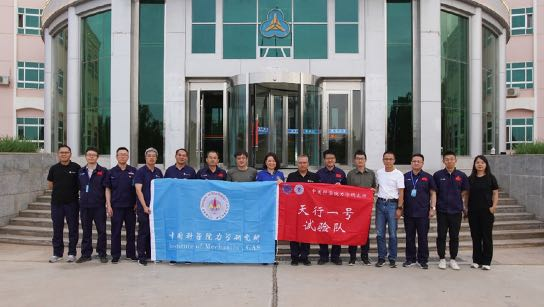
– Tianxing-1 was developed by the Institute of Mechanics under the Chinese Academy of Sciences (CAS). It is in a 286x272km 96.8° orbit.
– Tianxing-1 is not high enough to be in an SSO. SSO is common (but not required) for imagery related satellites.
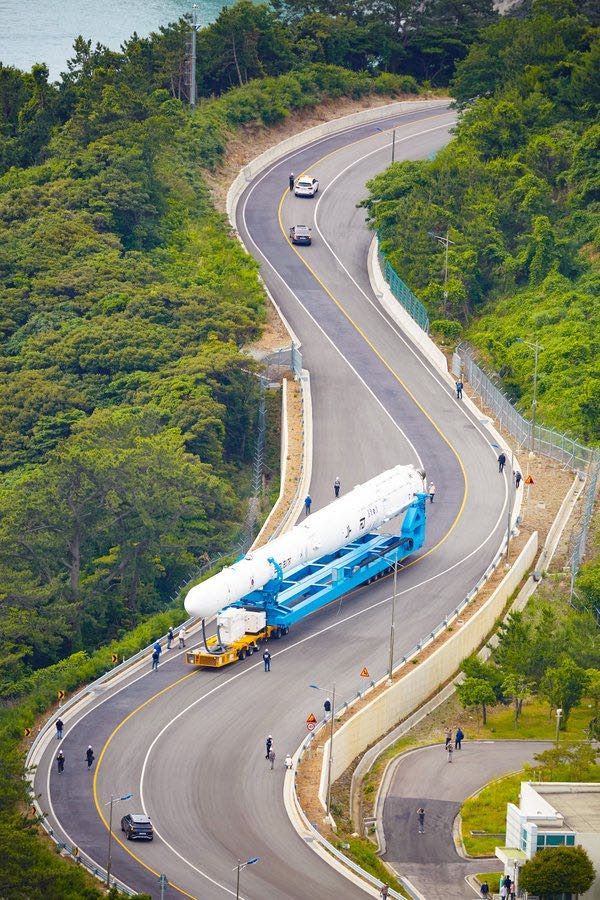
South Korea successfully reached orbit with the domestically built Nuri rocket on 21 June 2022.
21 Jun 2022: South Korea successfully launched a satellite into orbit on the domestically built Nuri rocket. The rocket lifted off from the Naro Space Center in Goheung and placed a 357-pound performance verification satellite into orbit about 435 miles (700 km) above Earth. The performance verification satellite will provide data to assist future South Korean launches. While in orbit, the satellite will test an antenna, generator, and other equipment. Launch Video.
– Reaching orbit is a milestone for South Korea after years of trial and error with its own rocket industry that left it reliant on other nations’ technology. Nuri’s first test launch last October ended in failure after one of its engines burned out early.
– South Korea is now the 10th nation to send a satellite into space using its own technology. The launch could help South Korea gain footing in the growing global space industry and potentially bolster the nation’s national defense arsenal with future spy satellites.
– The verification satellite carried four mini research satellites (CubeSats) each weighing no more than 22 pounds. The CubeSats were successfully deployed on 29 June.
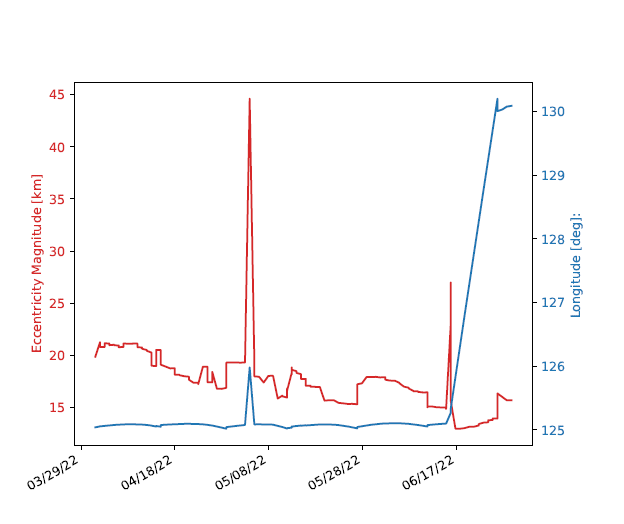
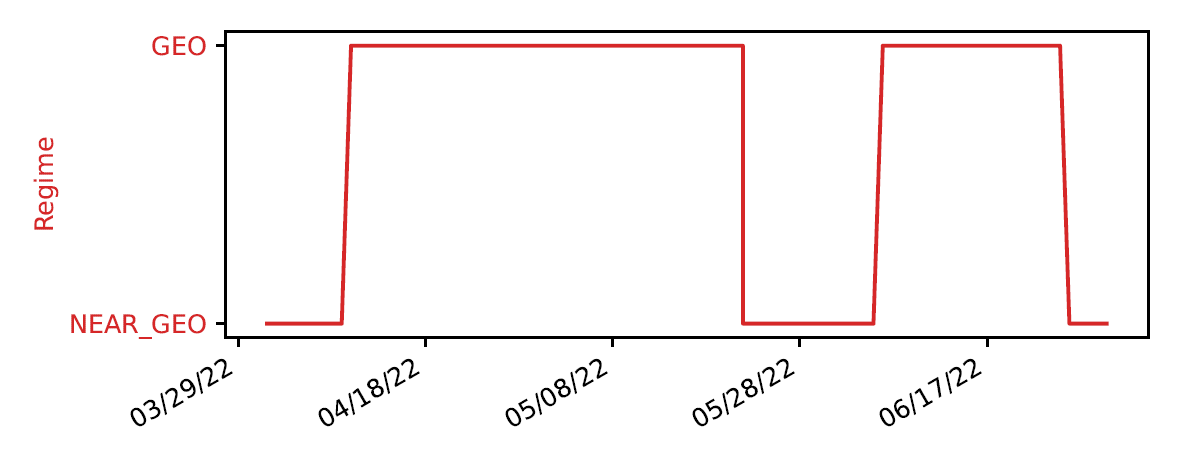
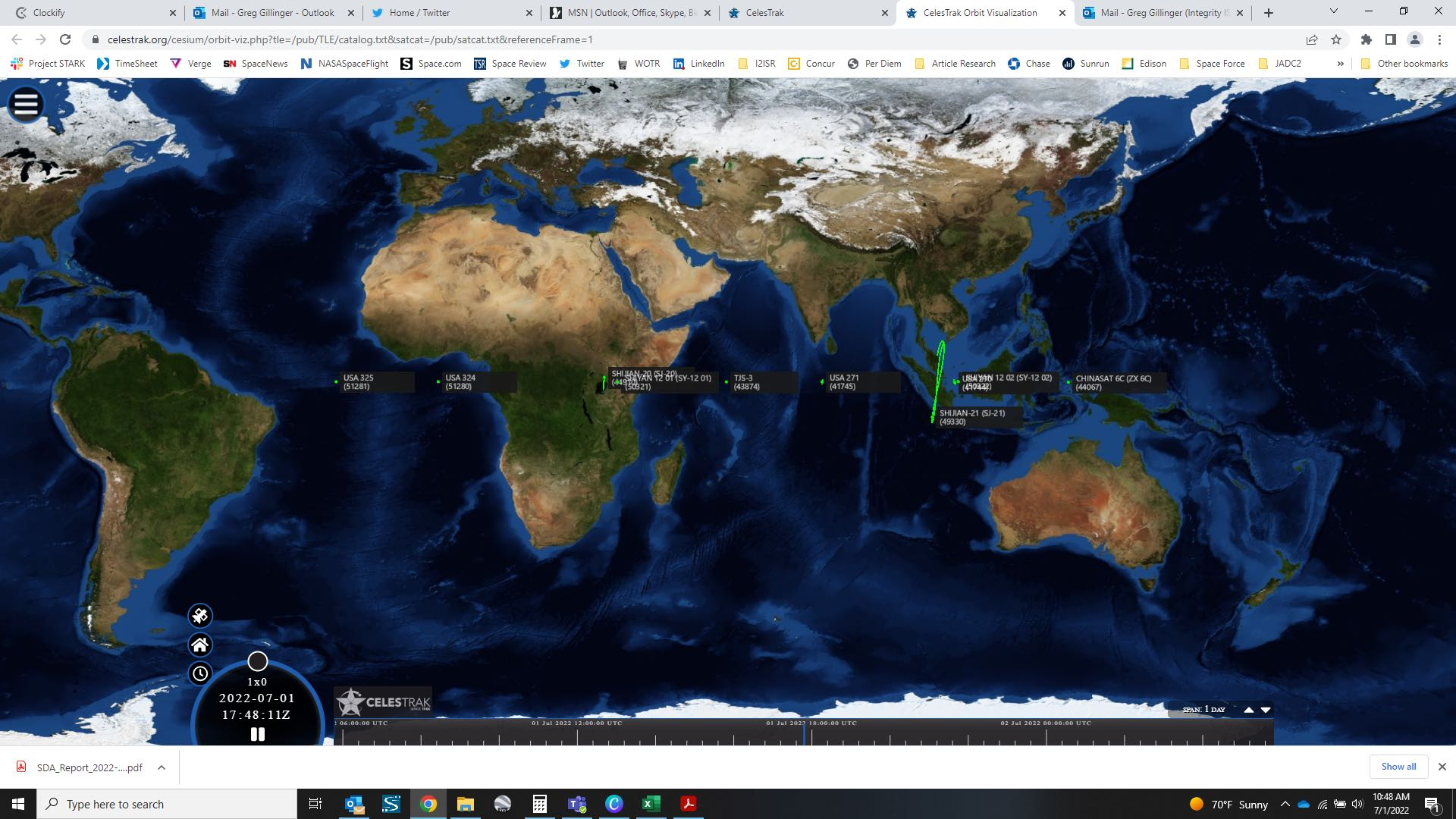
This Fortnight in GEO tracks ChinaSat-6C and Shiyan-12 maneuvers, including SY-12(02)'s altitude and drift changes near USA-270.
– ChinaSat-6C relocated westward 560kms from 125° E to 130°E.
– SY-12 (01) increased altitude ~20km and continues Westward drift. No nearby objects.
– SY-12 (02) decreased altitude and increased Eastward drift rate. No nearby objects. Prior to maneuver USA-270 was going to overtake on 26 June. SY-12 (02) and USA-270 now have similar drift rates.
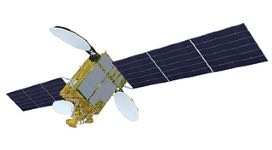
ChinaSat-6C: Zhongxing-6C (or ChinaSat-6C) communication satellite was launched 9 Mar 2019 from Xichang Launch Center. It was originally launched into the 130°E GEO slot.
– ChinaSat-6C appears to have lowered its altitude on ~15 June, drifted to 130°E and increased altitude on 23 June to slow its Eastward drift.
– The satellite has 25 C-band transponders, supporting high-quality and reliable uplink and downlink transmissions of programs for radio, TV stations and cable TV networks. ChinaSat-6C has not been affiliated with national security related missions.
Shiyan-12 (02): Shiyan-12 (02) lowered its orbit and increased its eastward drift rate. The maneuver occurred as USA-270 approached from the west.
– SY-12(02) is currently 43km below the GEO belt. Unknown if the maneuver was in response to USA-270 position. SY-12 satellites have previously maneuvered to avoid GSSAP spacecraft.
– SY-12(02) has an inclination of .1273° while USA-270 is 4x greater at .4771°.
Editor’s Note: Orbital information is courtesy of the 2022-06-24 and 2022-07-01 Space Domain Awareness Reports from Palski & Associates Inc.


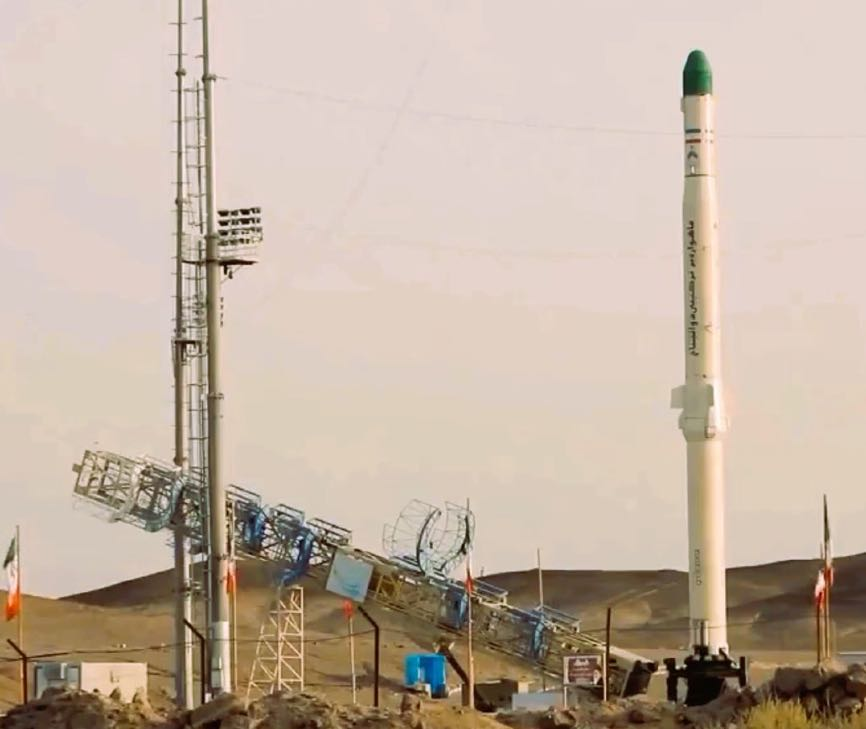
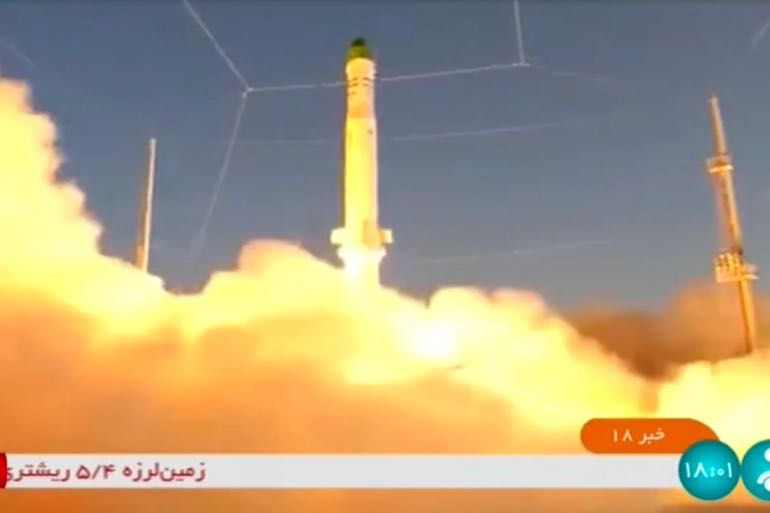
Iran announced the second Zuljanah test launch on 26 June 2022, describing the mission as an intentional sub-orbital research flight.
26 June 2022: Iranian state television said that Tehran had launched a solid-fueled rocket into space. The launch comes ahead of expected resumption of stalled talks over Tehran’s tattered nuclear deal with world powers. A Defense Ministry spokesman stated that the country carried out the 2nd launch of satellite carrier Zuljanah, saying that the launch was sub-orbital and met predetermined research aims. The three-stage carrier has 2 stages of solid propulsion and a single liquid one. Launch Video.
– There is little information available regarding the launch on altitudes or rocket performance.
– There is no reporting of any payload associated with the launch. The launch was sub-orbital; Iran claims this was intentional.
– State television aired footage of the launch, which appeared to proceed without trouble, but there was no confirmation whether it was successful.
– The launch comes after weeks of speculation as satellite images had appeared to show that Iran was preparing for a launch at the Imam Khomeini Spaceport in the province of Semnan.
– The first launch of Zuljanah satellite carrier was made on 1 Feb 2021 from the Semnan Space Center.
– Zuljanah’s primary mission is to place a satellite with a weight of about 220 kg or 10 lighter satellites with a weight of 20 kg into 500 km orbit.
– The latest launch of Zuljanah – named after the horse of the third imam in Shia Islam, Imam Hussein – comes months after the Islamic Revolutionary Guard Corps successfully put a second military satellite, Noor 2, into orbit in Mar 2022.
– Noor 2 remains in a 517x480km orbit. Iran launched Noor, its first military satellite, in 2020; that vehicle decayed from orbit on 13 Apr 2022.
Over the past decade, Iran has sent several short-lived satellites into orbit and in 2013 launched a monkey into space. The government appears to have recently sharpened its focus on space and in November 2021, Iran’s Supreme Council of Space met for the first time in 11 years.

Satellite imagery revealed evidence of an October 2021 explosion at facilities southwest of China's Jiuquan Satellite Launch Center.
10 Jun 2022: Space enthusiast Harry Stranger posted evidence of a late October 2021 explosion at China’s Jiuquan Satellite Launch Center. High-resolution imagery from Airbus and CNES show the facilities, which were possibly used for testing solid rocket motors, intact in October 2021. The apparent aftermath of an explosion is visible in an image from November 2021.
– The incident occurred at facilities constructed around 16km to the southwest of Jiuquan’s two main launch complexes.
– Further satellite imagery from Planet’s SuperDove satellites seen by SpaceNews indicates the explosion occurred between 0316Z on Oct. 15 and 0407Z Oct. 16.
– China’s Shenzhou-13 crewed mission lifted off from Jiuquan at 1623Z, 15 Oct, suggesting the blast had little or no impact on CASC, the country’s main space contractor, and its major activities.
– There is no indication that the explosion was reported by Chinese media. It is thus somewhat unclear what the facilities were used for and what caused the explosion.
Given the profile of launches at Jiuquan it is likely that the structures were related to testing and assembly of solid rockets operated by non-CASC entities.

India's PSLV-C53 mission demonstrated the POEM hosted-payload platform on the PSLV fourth stage while launching nine payloads.
30 Jun 2022: India launched its 55th Polar Satellite Launch Vehicle (PSLV) – in its Core Alone (CA) configuration – carrying nine payloads to a low Earth orbit (LEO). The PSLV’s fourth stage carried an orbital experimental module that served as a hosted payload bus. Launch Video.
– This was the second orbital launch for India in 2022 and the 15th launch of the PSLV-CA variant.
– On top of the fourth stage was the PSLV Orbital Experimental Module (POEM).
– POEM will perform in-orbit scientific experiments using the PS4 stage as an orbital platform. This will test the PS4 as a possible platform to house experiments for long-term missions. For this mission POEM carried six payloads.
– Of the three satellites not on POEM the largest was the 365kg electro-optic DS-EO Singaporean Earth Observation satellite.
– The launch also contained the NeuSAR Singaporean Synthetic Aperture Radar (SAR) Earth Observation satellite. NeuSAR is the first small Singaporean SAR satellite, and has a mass of 155 kg.
India has several missions scheduled in the coming months. After PSLV-C53, the next mission is the maiden launch of the SSLV rocket, India’s newest rocket and first dedicated small satellite launcher, set to launch NET August with EOS-2.

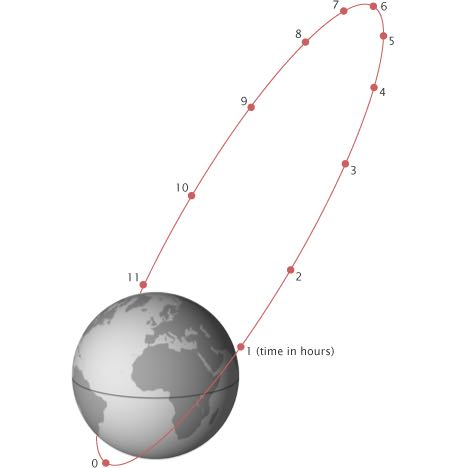
Jack's Astro Corner explains orbital eccentricity, ellipse geometry, perigee/apogee calculations, Molniya HEOs, Kepler's Second Law and the Tundra orbit.
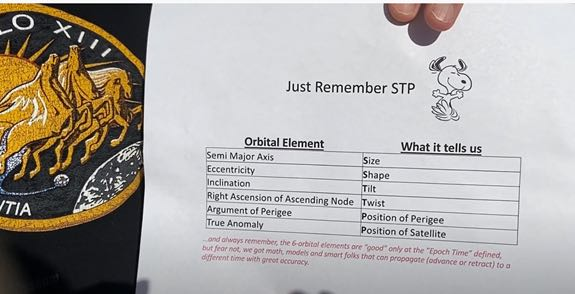
Over the summer, Jack Anthony will break down each of the six orbital elements required to uniquely identify a specific orbit and satellite in that orbit. This week we examine eccentricity. For those who can’t wait the entire summer, please visit Jack’s “Orbit Element Dance” on YouTube and you’ll find a 1:02 video featuring Jack in his driveway demonstrating this highly effective way to learn about the 6 classical orbital elements (COE). Orbit Element Dance.
Jack uses the STP method of remembering the 6 COEs: Size, Shape, Tilt, Twist, Position of Perigee and Position of the Satellite at a particular time.
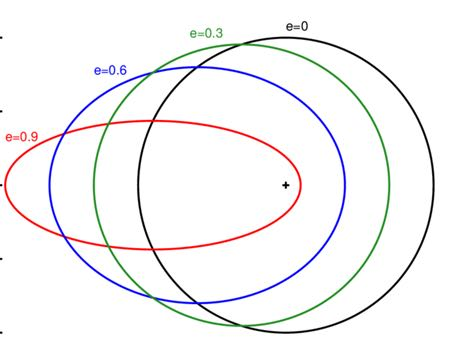
The second “S” in the STP way of remembering the 6 Classical Orbital Elements is SHAPE. The shape of an orbit is described by the ECCENTRICITY orbital element (denoted as “e”). A circular orbit has an eccentricity of 0. For closed ellipses orbiting Earth, eccentricity values are 0 to less than 1. An eccentricity of 1 is a parabola and greater than 1 is a hyperbola.
If eccentricity is around .7 to .99, it is an elongated orbit – very eccentric. This article examines a favorite high-eccentricity orbit with e=.737.
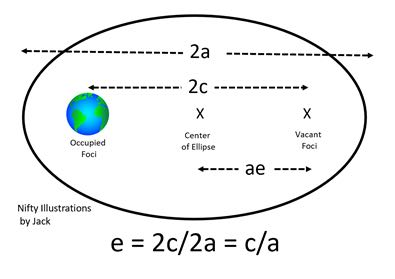
Eccentricity can be used with semi-major axis to answer key questions about an orbit. In ellipse geometry, eccentricity is determined from the major axis and the distance between the two foci: e = 2c/2a = c/a. If the orbit is circular, the foci are on top of one another and 2c=0, so eccentricity is 0.
Given e and a, you can calculate radius of perigee and apogee: Radius Perigee = a × (1-e) and Radius Apogee = a × (1+e). Subtract Earth’s radius (6378 km) to calculate altitude: Altitude Perigee = Radius Perigee – 6378 km and Altitude Apogee = Radius Apogee – 6378 km.
The Molniya orbit is a Highly Elliptical Orbit (HEO) with eccentricity around .737. It has a low perigee and a far-out apogee. Russia introduced this orbit in the 1960s because access to geosynchronous orbits from high-latitude launch sites was a propulsive challenge.
A sample HEO uses a=26600 km, e=.737 and inclination 63.4°. The orbital period is about 720 minutes or 11.99 hours. The example gives perigee altitude = 618 km and apogee altitude = 39826 km.
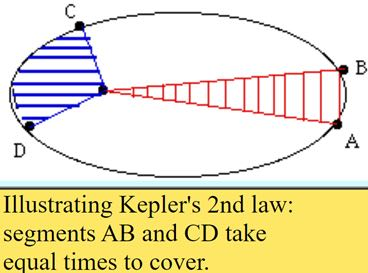
Kepler’s Second Law states that an orbiting body sweeps out equal area in equal time. The spacecraft is slowest at apogee and fastest at perigee. For the example HEO, the satellite moves through the perigee region in less than two hours and spends more than ten hours with “hang time” above the northern hemisphere.
Another non-circular orbit is the Tundra orbit. It is geosynchronous with a period of 23 hr 56 min 4 sec, a semi-major axis of 42164 km, eccentricity typically between .2 and .3, and inclination 63.4°. Next time: Tilt of an orbit – inclination.

Pics o' the week includes ASD-EUROSPACE infographics, a SAST-linked commercial logo, Tunguska imagery, BepiColombo over Mercury, a Judith Love Cohen feature and a Space Shuttle image.
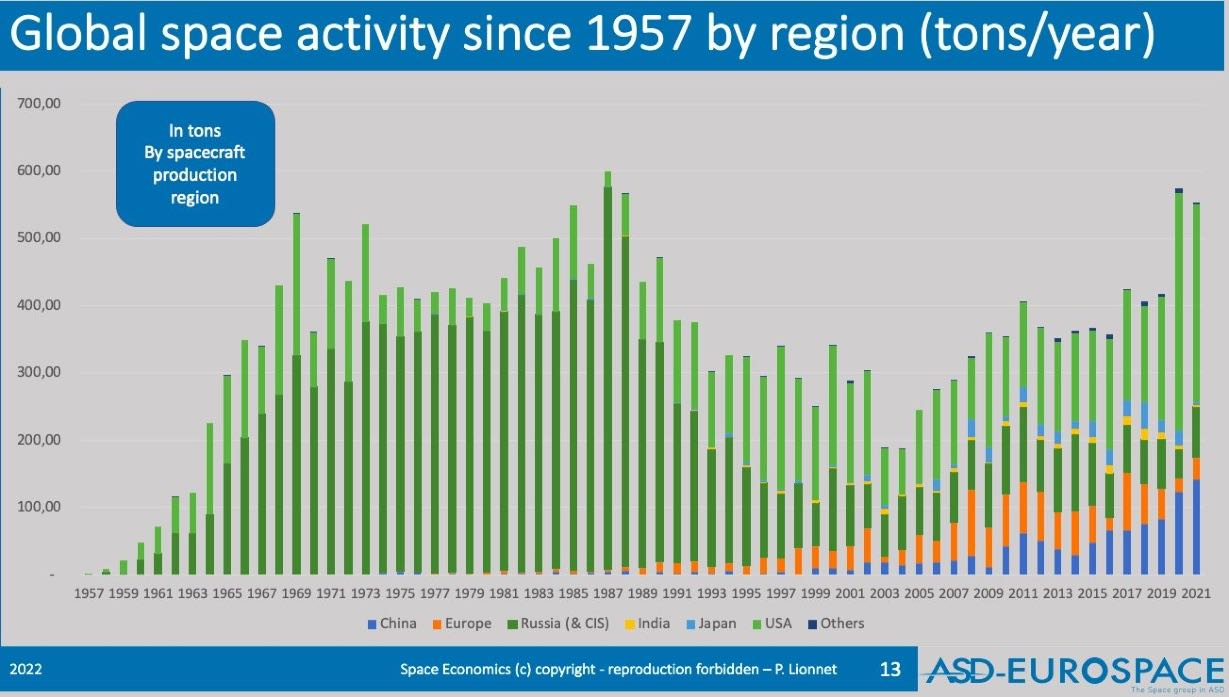
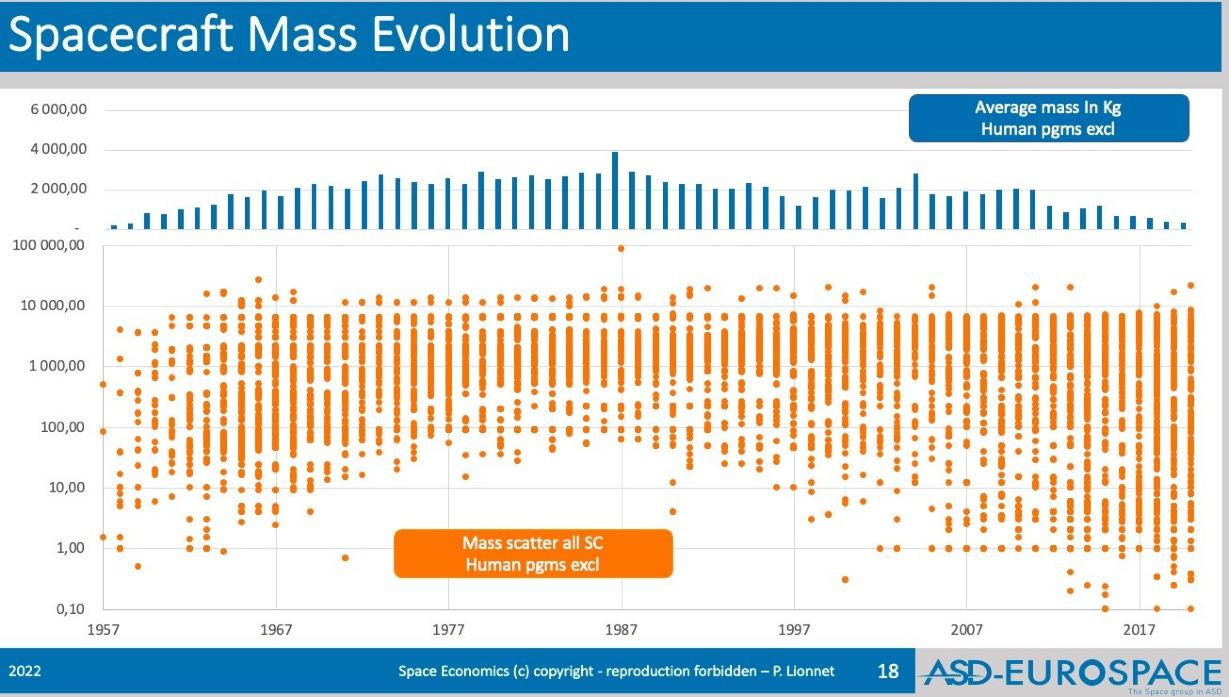
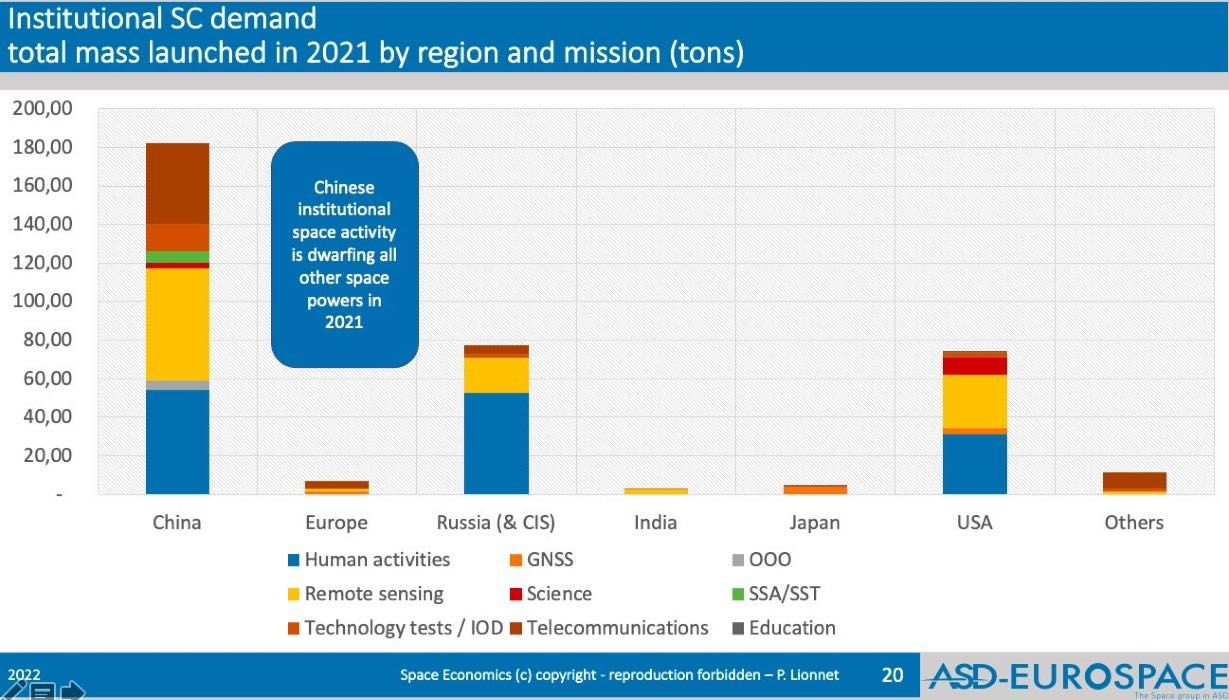
Excellent Info Graphics from ASD-EUROSPACE
Global space activity since 1957 by region (tons/year)
Spacecraft Mass Evolution
Institutional S/C demand – total mass launched in 2021 by region and mission
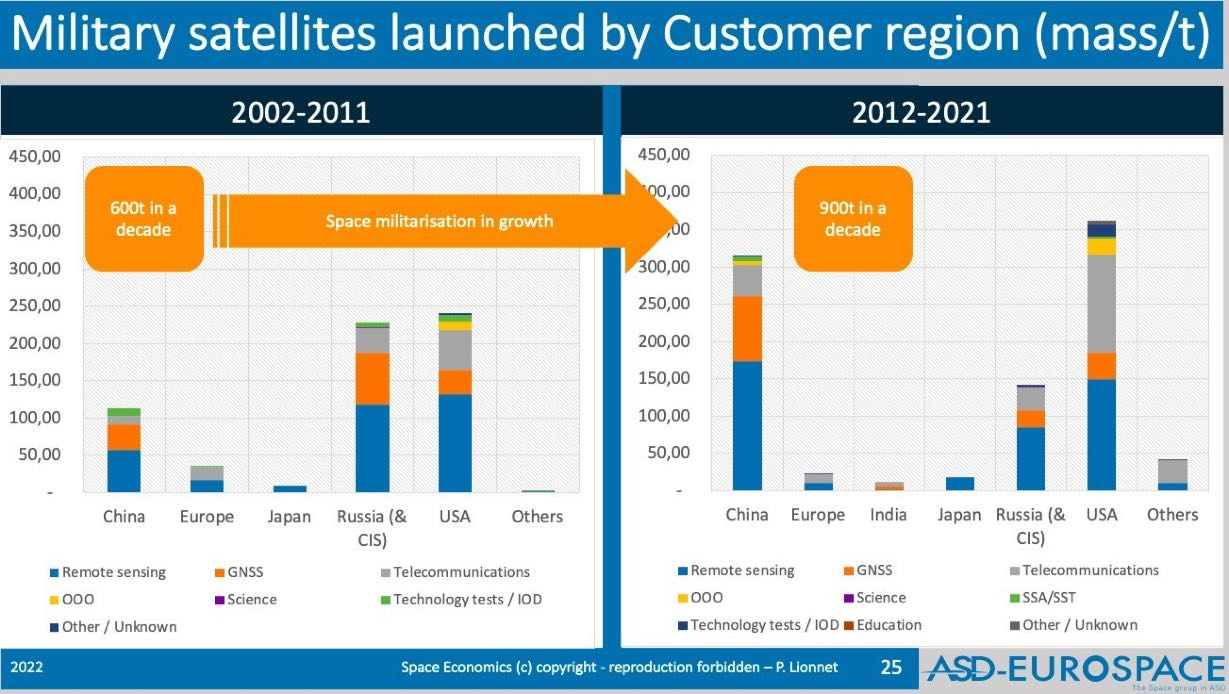
Military satellites launched by Customer region (mass/t)
Logo of a Chinese commercial satellite company owned by SAST… Alyssa, seem familiar?
On June 30, 1908 the Tunguska event took place. It exploded in the atmosphere and sent a careening fireball angling toward the ground then billowing upwards. A shock wave slammed into the forest, stripping branches from trees directly below and knocking trees flat for miles.
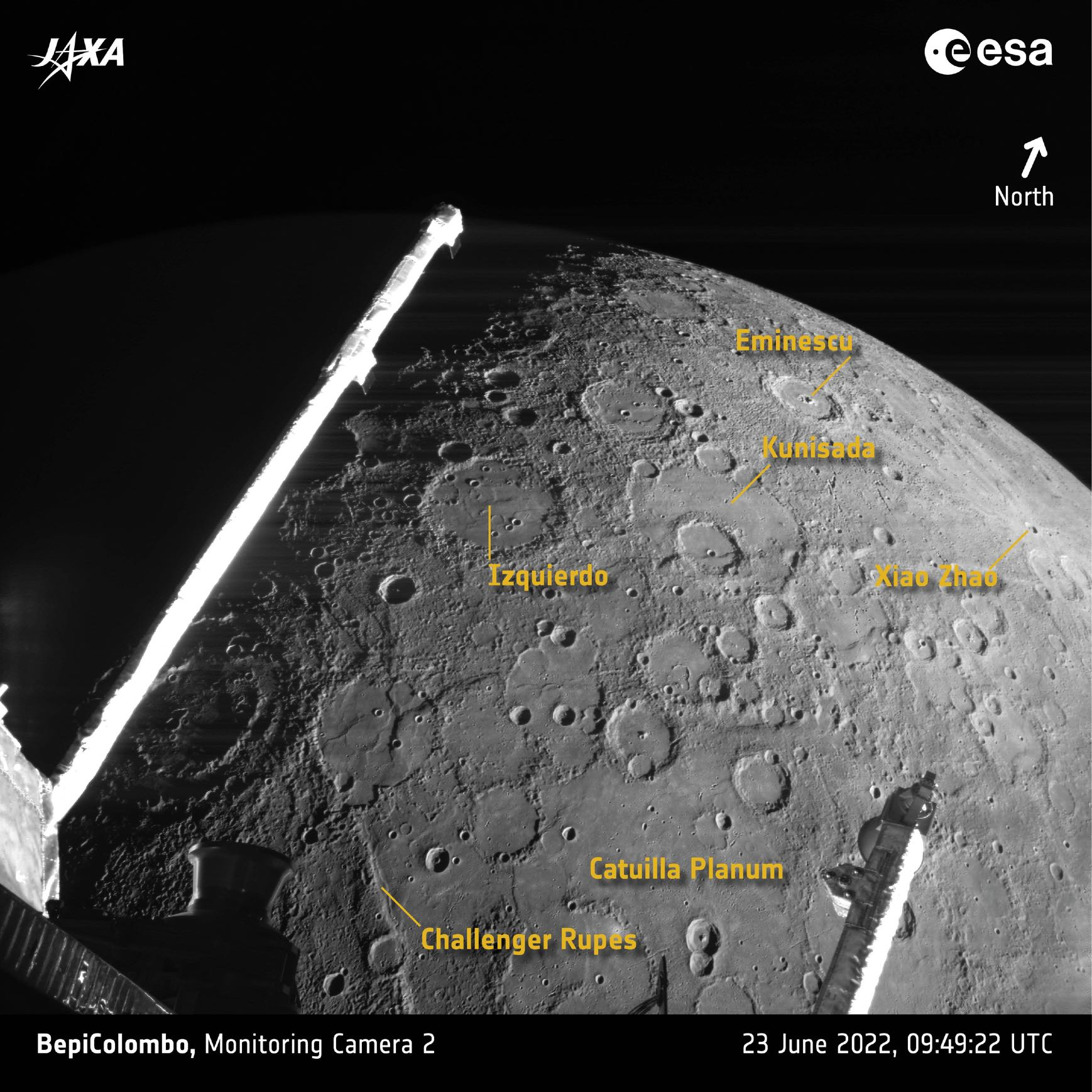
BepiColombo ~920km over Mercury during its second of six flybys. The spacecraft will begin orbiting the planet in December 2025.
This I didn’t know… proving <again> women are far tougher.
Space Shuttle image.





Flash Insider
Subscribe to unlock full access to this Issue and the complete Flash archive.
Subscribe Now Already Subscribed? Log In