7 Jul 2022: The Russian Aerospace Forces (VKS) successfully launched GLONASS-K No.16L
navigation satellite on a Soyuz rocket from Site 43/4 at the Plesetsk Cosmodrome in
northwestern Russia, the fourth in the latest series of GLONASS navigation satellites
operated by the Russian Federation. The GLONASS-K satellites are substantial improvements
over the previous-generation GLONASS-M constellation, having a longer lifetime and better
signals accuracy. Launch Video. Extended Launch Preparation Video Here and Here.
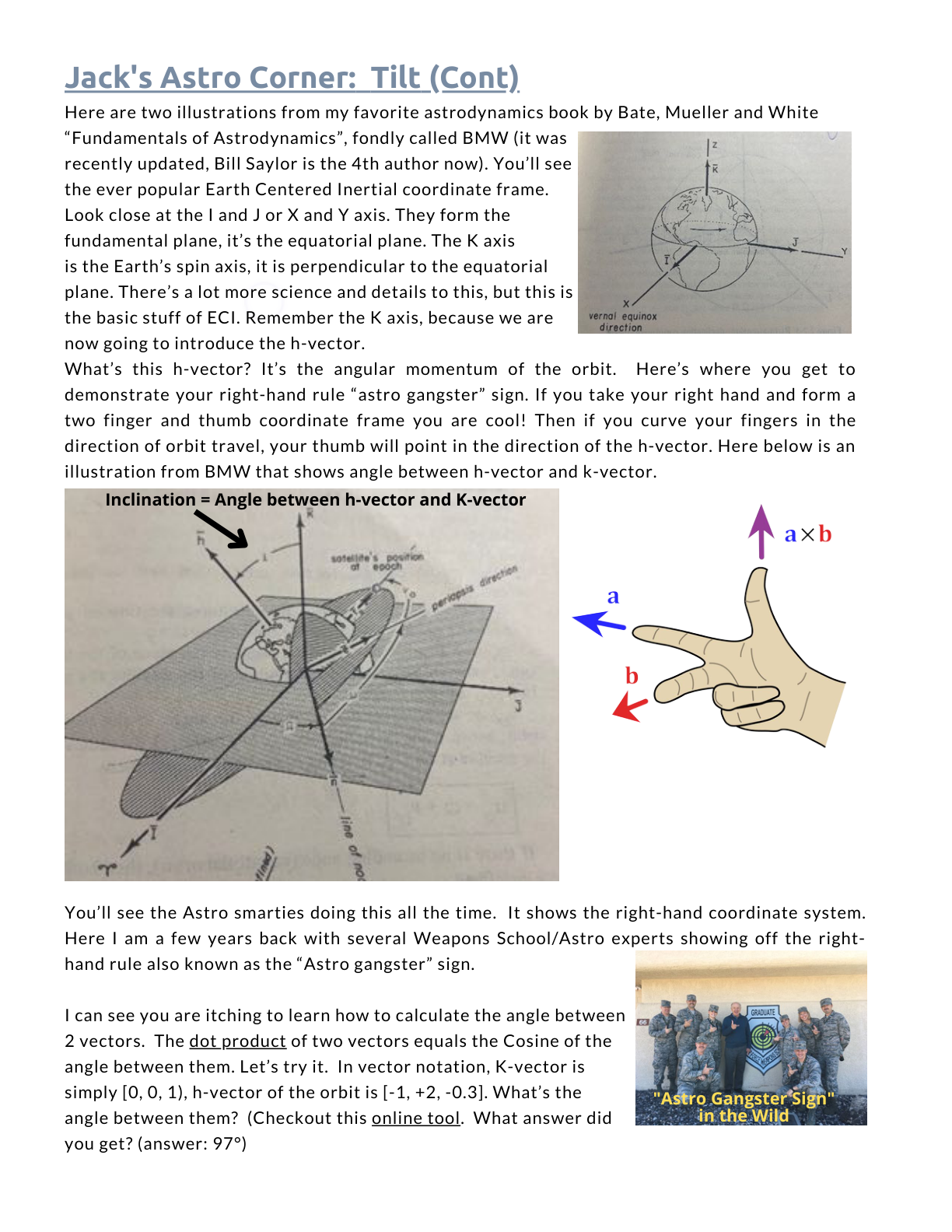
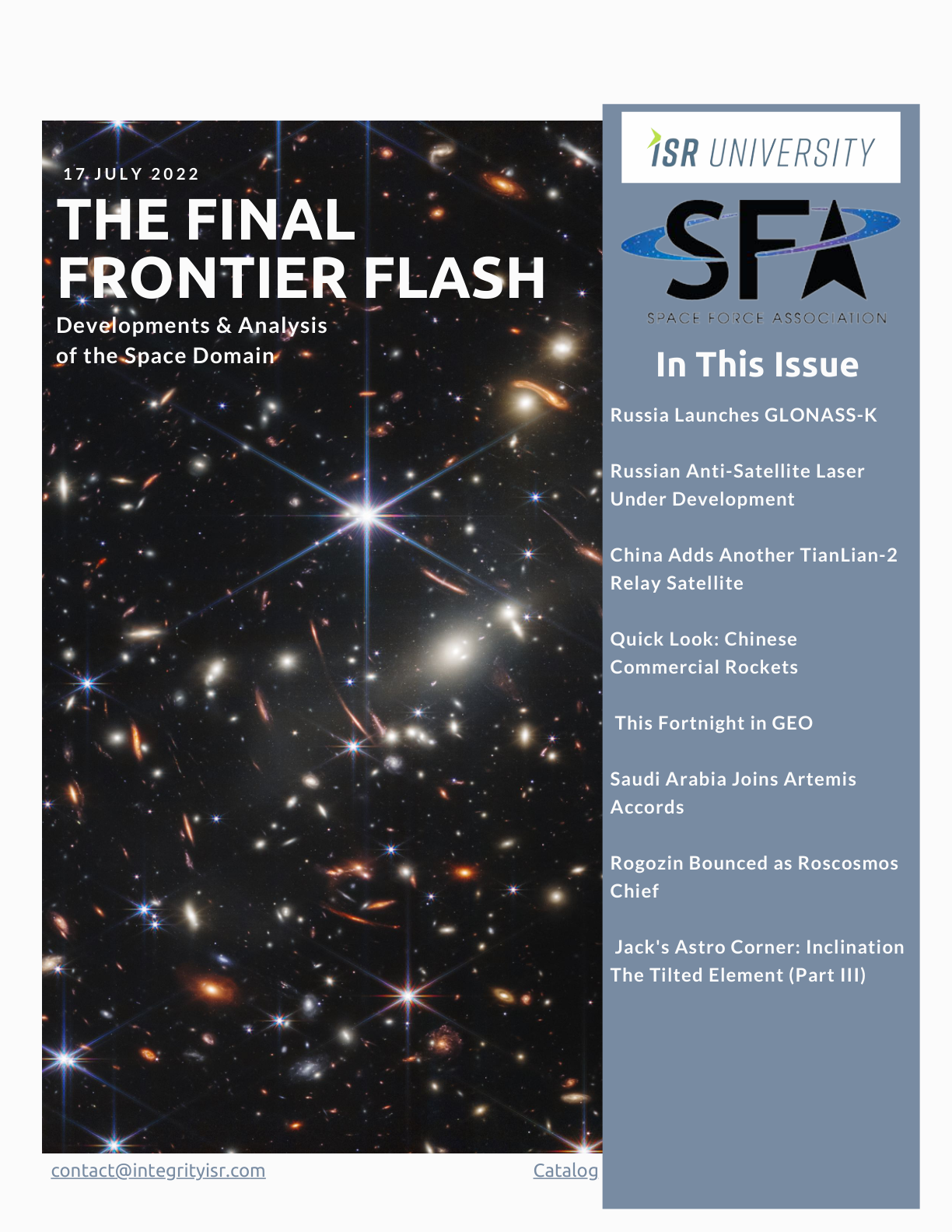
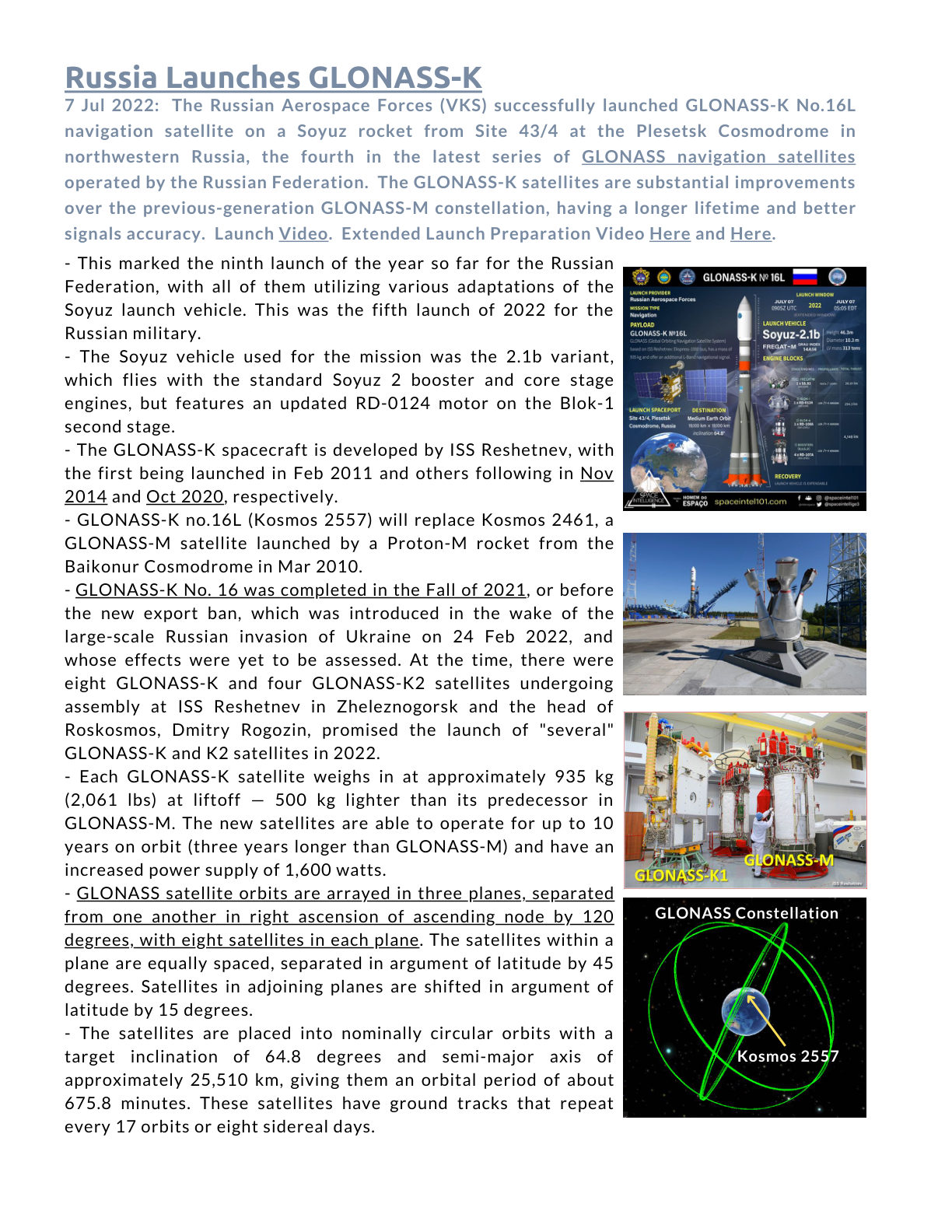
– This marked the ninth launch of the year so far for the Russian Federation, with all of them utilizing various adaptations of the Soyuz launch vehicle. This was the fifth launch of 2022 for the Russian military. – The Soyuz vehicle used for the mission was the 2.1b variant, which flies with the standard Soyuz 2 booster and core stage engines, but features an updated RD-0124 motor on the Blok-1 second stage. – The GLONASS-K spacecraft is developed by ISS Reshetnev, with the first being launched in Feb 2011 and others following in Nov 2014 and Oct 2020, respectively. – GLONASS-K no.16L (Kosmos 2557) will replace Kosmos 2461, a GLONASS-M satellite launched by a Proton-M rocket from the Baikonur Cosmodrome in Mar 2010. – GLONASS-K No. 16 was completed in the Fall of 2021, or before the new export ban, which was introduced in the wake of the large-scale Russian invasion of Ukraine on 24 Feb 2022, and whose effects were yet to be assessed. At the time, there were eight GLONASS-K and four GLONASS-K2 satellites undergoing assembly at ISS Reshetnev in Zheleznogorsk and the head of Roskosmos, Dmitry Rogozin, promised the launch of "several" GLONASS-K and K2 satellites in 2022. – Each GLONASS-K satellite weighs in at approximately 935 kg (2,061 lbs) at liftoff — 500 kg lighter than its predecessor in GLONASS-M. The new satellites are able to operate for up to 10 years on orbit (three years longer than GLONASS-M) and have an increased power supply of 1,600 watts. – GLONASS satellite orbits are arrayed in three planes, separated from one another in right ascension of ascending node by 120 degrees, with eight satellites in each plane. The satellites within a plane are equally spaced, separated in argument of latitude by 45 degrees. Satellites in adjoining planes are shifted in argument of latitude by 15 degrees. – The satellites are placed into nominally circular orbits with a target inclination of 64.8 degrees and semi-major axis of approximately 25,510 km, giving them an orbital period of about 675.8 minutes. These satellites have ground tracks that repeat every 17 orbits or eight sidereal days.
GLONASS Constellation
Kosmos 2557
Original PDF links: Source 1 · Source 2 · Source 3 · Source 4 · Source 5 · Source 6 · Source 7 · Source 8 · Source 9 · Source 10 · Source 11 · Source 12 · Source 13