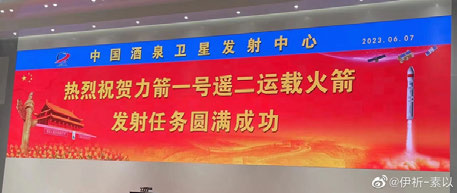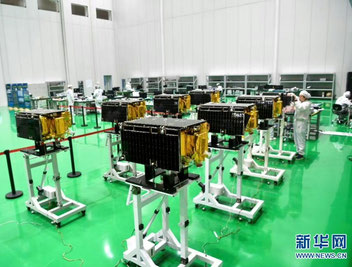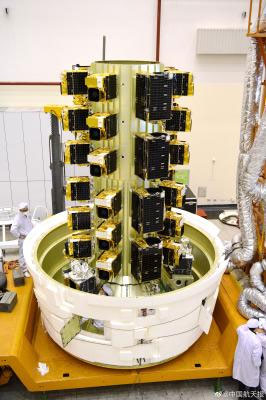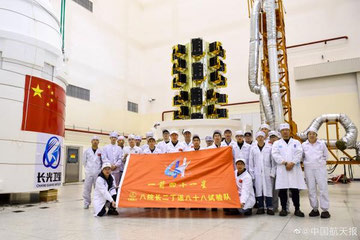
2 Jun 2023: CAS Space’s second Lijian-1 solid rocket lifted off from Jiuquan Satellite Launch Center. Aboard were the Shiyan-24A and Shiyan-24B experimental satellites. The other payloads were described as technological demonstrations and commercial remote-sensing by Chinese state media reports. The 26 payloads aboard the flight surpassed the previous national record of 22 satellites launched by the much larger Long March 8 rocket in February 2022. The new national record short-lived as less than 2 weeks later China launched 41 satellites aboard a LM-2D (see next article). Launch Video.
– Orbital data not available as of 18 June 2023.
-Shiyan series satellites are often classified and understood to be used to test new technologies and payloads for Chinese space systems. These are usually developed and launched by CASC, China’s main, state-owned space contractor.
-Beginning in 2004, China has launched 29 Shiyan satellites, 21 have been launched in the past 3 years.
-China’s Shiyan satellites operate in LEO, GEO and HEO. Most of the missions are unknown.
-China has launched 5 pairs of Shiyan satellites: 1) Shiyan-7A/B (LEO, 2013); 2) Shiyan-12A/B (GEO, 2021); 3) Shiyan-16A/B (LEO, 2022); 4) Shiyan-20A/B (LEO, 2022); and 5) Shiyan-24A/B (LEO, 2023).
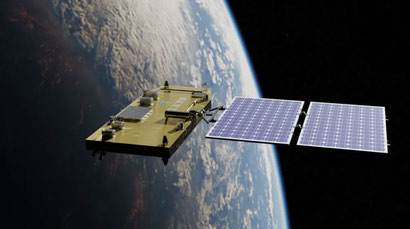
– Other payloads known to be on the flight included Xi’an Hangtou-8 for Xi’an Aerospace Investment, and Xingshidai-16 and Tianyi-26 for commercial satellite firms ADA Space and Spacety respectively. Also aboard was Fucheng-1, an interferometric imaging synthetic aperture radar (SAR) remote sensing satellite for the six-satellite Mianyang constellation.
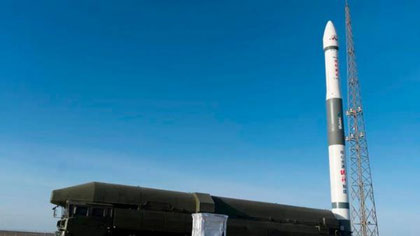
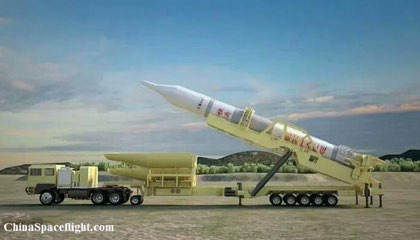
– This launch was the second flight of Lijian-1 rocket, which is China’s largest operational solid propellant launch vehicle. Its inaugural mission launched in July 2022.
-The Lijian-1 is a four-stage, solid-fuel rocket that stands 98 feet (30 meters) tall and is capable of producing 400,000 pounds (181,437 kilograms) of thrust at liftoff.
-On its debut launch last year, the Lijian-1 carried six satellites to orbit. The 2 Jun 2023 mission featured a total payload mass nearly triple that of the first Lijian-1 mission.
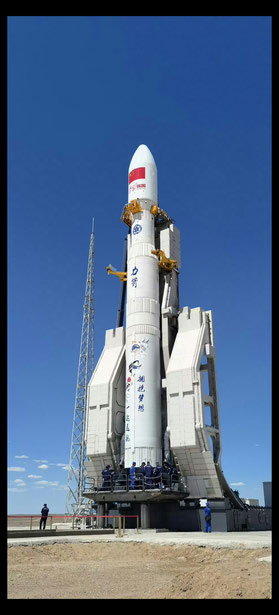
Lijian-1 solid rocket prepared for launch.
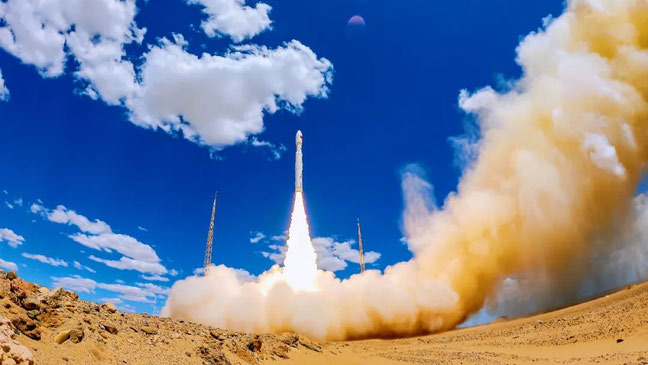
Lijian-1 lifting off from the Jiuquan Satellite Launch Center.
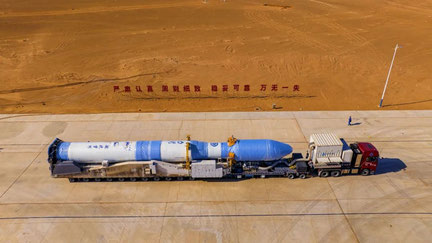
Lijian-1 transported to the launch area.
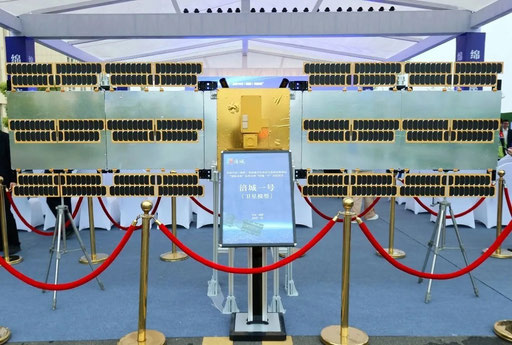
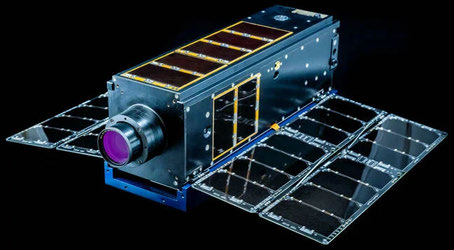
The 300 kg Fucheng-1 synthetic aperture radar satellite.