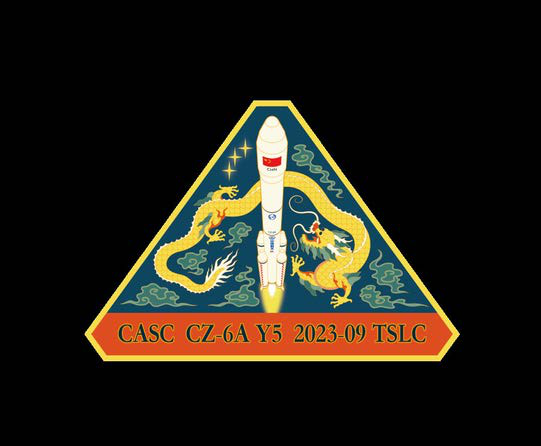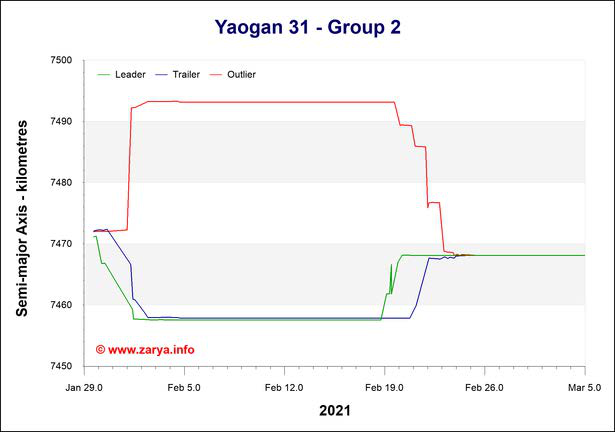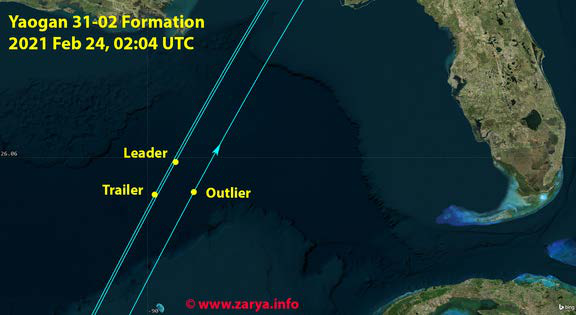
10 Sep 2023: China launched a LM-6A Y5 from Taiyuan Satellite Launch center with 3 Yaogan 40 satellites. Chinese sources stated only that the purposes of the satellites was for “electromagnetic environment probing.” The satellites are in a ~800km orbit with 86 degrees inclination. Launch Video.
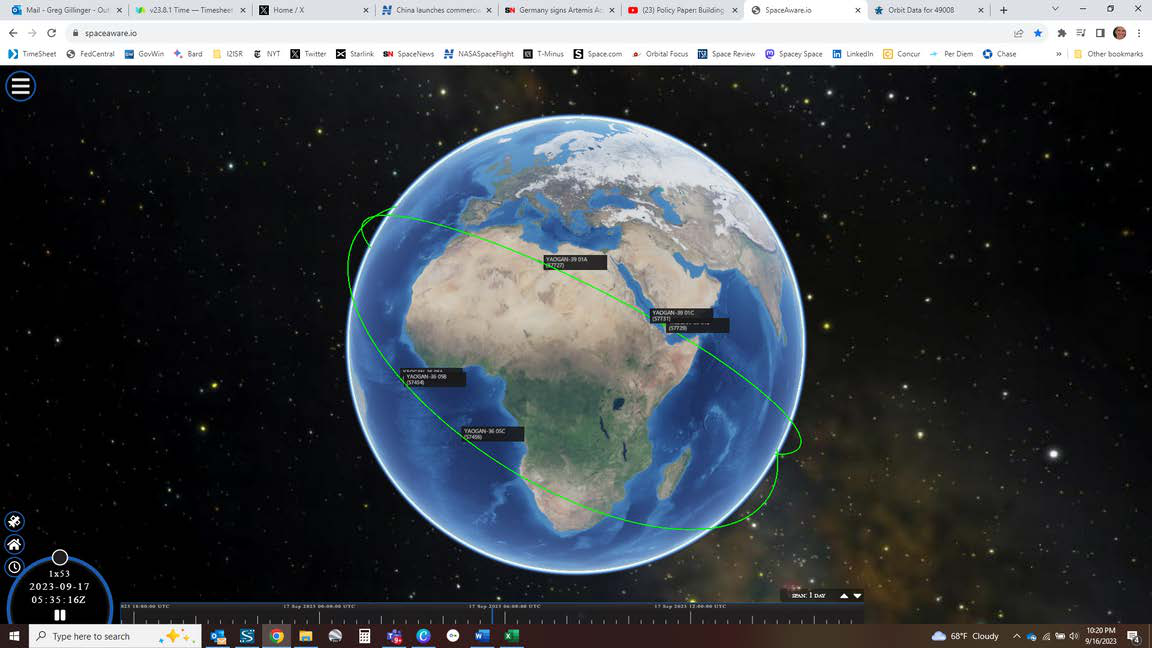
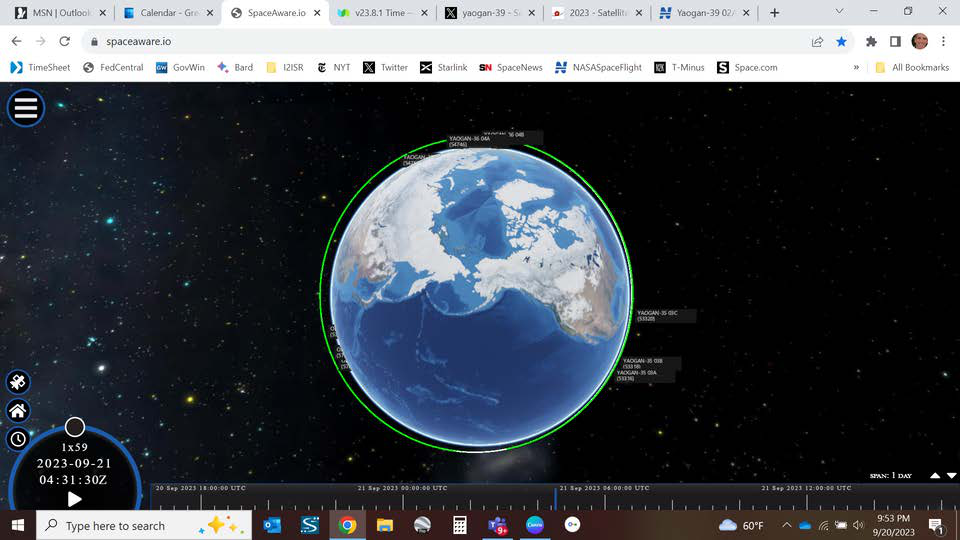
– YG-40-01A/B/C orbit is significantly different than those of other recent Chinese launch trios (YG-35, YG-36 and YG-39).
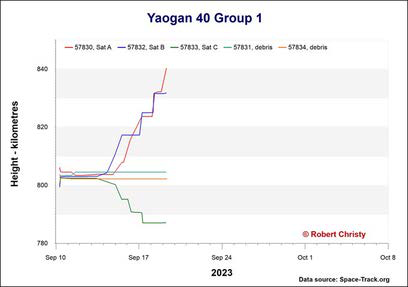
– As of 16 Sep 2023 all three satellites are continuing to maneuver and their positions relative to one another will change. Currently YG-40-01A & B have nearly identical semi-major axis (SMA) 847.6 and 849.4kms respectively. These two satellites have increased SMA since arriving in orbit. YG-40-01C’s SMA is ~60kms less than A & B at 787kms. All three share the same inclination of 86 degrees.
– YG-40-01 is the first of the Yaogan satellite family to operate in this orbit and appears to be in a unique orbit to all other Chinese satellites.
– Shiyan 20A/B and C orbit at similar altitude (SMA) but are inclined 60 degrees.
– The Fengyun-3 environmental monitoring satellites also operate at a similar altitude but again the inclination is different (98.8 degrees for FY-3s).
– There are no Gaofen or Shijian satellites operating in anything similar to this orbit.
– Taiyuan Satellite Launch Center has hosted 22 separate Yaogan launches. All were for imagery satellites (either Electro-Optical or Synthetic Aperture Radar). The Yaogan-40-01 launch was the first Yaogan launch from Taiyuan since 2015.
– YG-40-01 is the first Yaogan launch to use a LM-6.
– The LM-6A is a two-stage rocket loosely based on LM-6 but modified in many ways. It can lift 5 metric tons into a polar orbit and is usually 50 meters tall with a diameter of 3.35 meters. This specific launch used the Y5 variant which appears to be closer to 55 meters in total length.
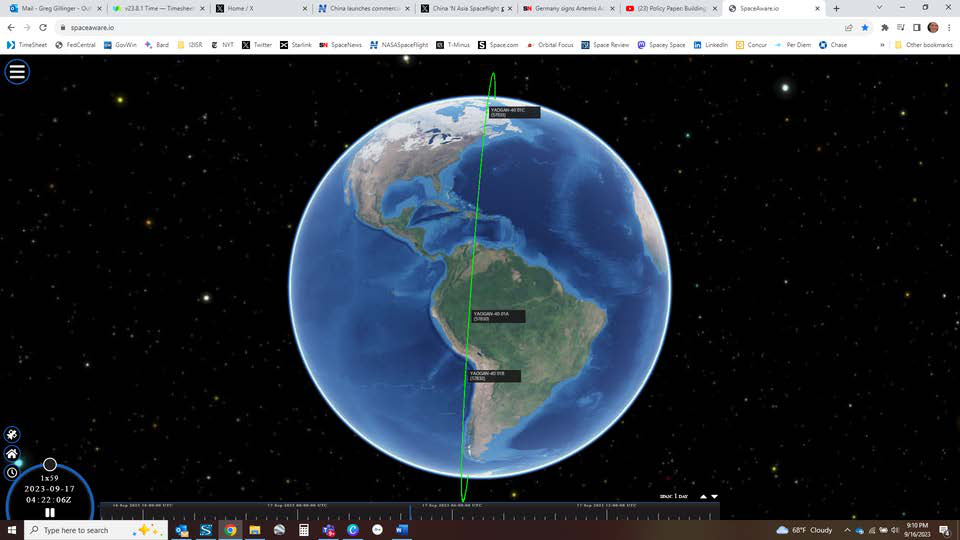
Yaogan-40-01 Triplet Formation
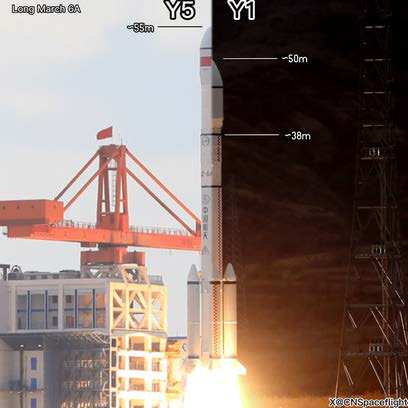
Comparison between LM-6A Y5 and Y1: the Y5 uses a longer fairing and is nearly 55 m tall