

26 Sep 2023: China launched a Long March-4C rocket from Jiuquan carrying its 4th Yaogan-33 satellite (YG-33-04). The satellite is in a sun-synchronous orbit (as are all other YG-33 spacecraft) suggesting an imagery mission. All YG-33 have been launched on the LM-4C from Jiuquan. Launch Video . -The 18 SDS tracked…
26 Sep 2023: China launched a Long March-4C rocket from Jiuquan carrying its 4th Yaogan-33 satellite (YG-33-04). The satellite is in a sun-synchronous orbit (as are all other YG-33 spacecraft) suggesting an imagery mission. All YG-33 have been launched on the LM-4C from Jiuquan. Launch Video.
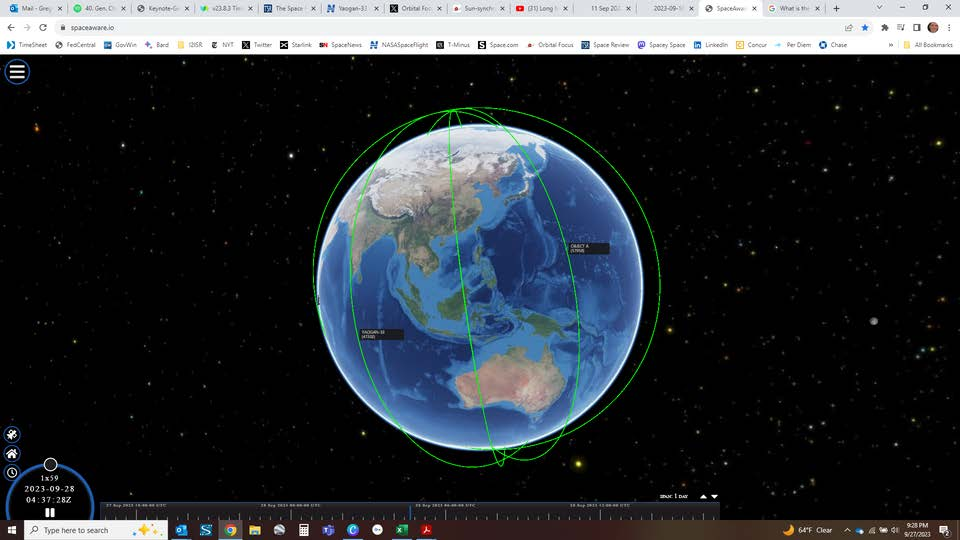
-The 18 SDS tracked YG-33-04 in a near-polar, 685 x 673 km orbit. These orbital parameters are a close match with the other 3 operational YG-33 satellites (an earlier satellite expected to be named Yaogan 33 was lost on a failed Long March 4C launch in 2019.)
-Earlier reporting suggests the spacecraft is likely part of a series of space-based synthetic aperture radar (SAR) satellites. Analysts suspect Yaogan-33 is a follow on to the Yaogan-29 satellite which was launched in 2015, and is still cataloged as “active.”
– Please note: reporting of Yaogan-33 capabilities is inconsistent: SAR, EO and SIGINT are all mentioned in different forums.
-This is the second YG-33 launched in the past 3 weeks, as China launched YG-33-03 on6 Sep 2023. YG-33-01 launched in 2020 and YG-33-02 in 2022.
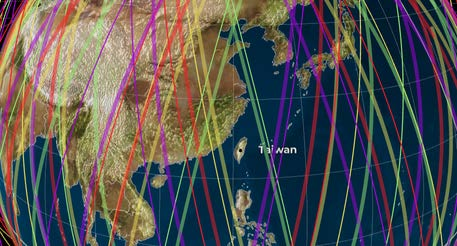
-YG-33 Constellation Coverage:
– LTDN stands for Local Time of the Descending Node and represents the time when the satellite crosses the equator when traveling from the north pole to the south pole (descending). This time is the time of day at that Earth location when the satellite is overhead. For sun-synchronous orbiting satellites, this time is the same for each time zone (that is, a satellite with an LTDN of 6 am will be overhead at 6 am for every location on the equator each day.
5 Oct 2023: China launched its third set of Yaogan-39 satellites again using a Long March-2D from the Xichang Satellite Launch Center. Beginning with the Yaogan-36-05 trio launched on 26 July 2023, China has launched 4 of these triplets into similar orbits in the past 70 days. Expect China to conduct two more launches…
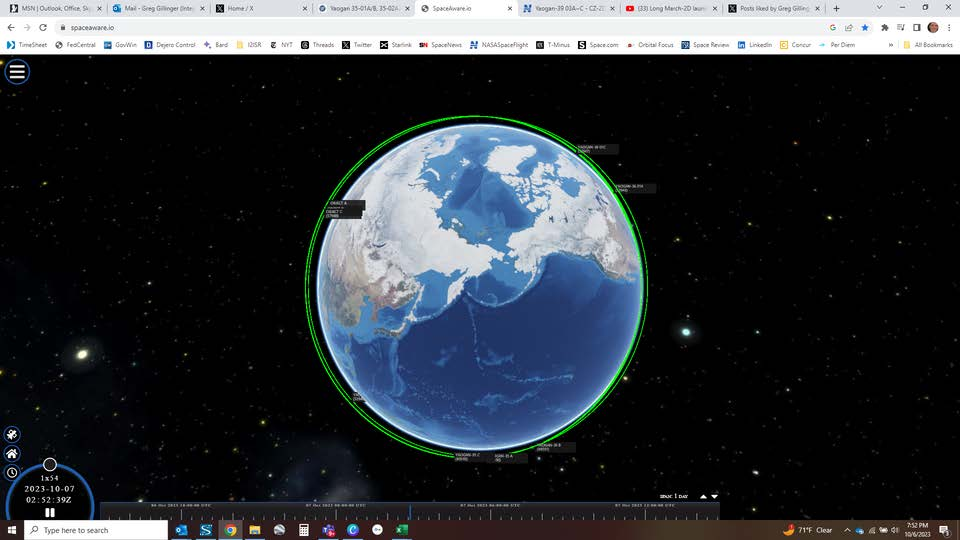
5 Oct 2023: China launched its third set of Yaogan-39 satellites again using a Long March-2D from the Xichang Satellite Launch Center. Beginning with the Yaogan-36-05 trio launched on 26 July 2023, China has launched 4 of these triplets into similar orbits in the past 70 days. Expect China to conduct two more launches in the coming weeks with YG-39-04A/B/C & YG-39-05A/B/C. If correct, China will have created a 45 satellite constellation in less than 3 years. Launch Video.
-As with YG-39-01 & 02, as well as the 30 YG-35/36 satellites, the YG-39-03 trio is in a ~500km orbit with 35 degrees inclination.
– YG-39-03A/B/C are still conducting initial maneuvers and it is too early to assess formation.
-As with its predecessors, YG-39-03 satellites are co-planar with other YG-35 and YG-36 satellites. In this case YG-39-03 is co-planar with YG-35-01 and YG-36-01. All of the YG-35/36 and 39 satellites are co-planar with other satellites of this family.
-Here’s a list of all 5 orbits:
– More broadly it appears that China is continuing to experiment with various spacing alternatives for the YG-35/36/39 satellites while also grappling with anomalies from at least 2 of the 39 satellites

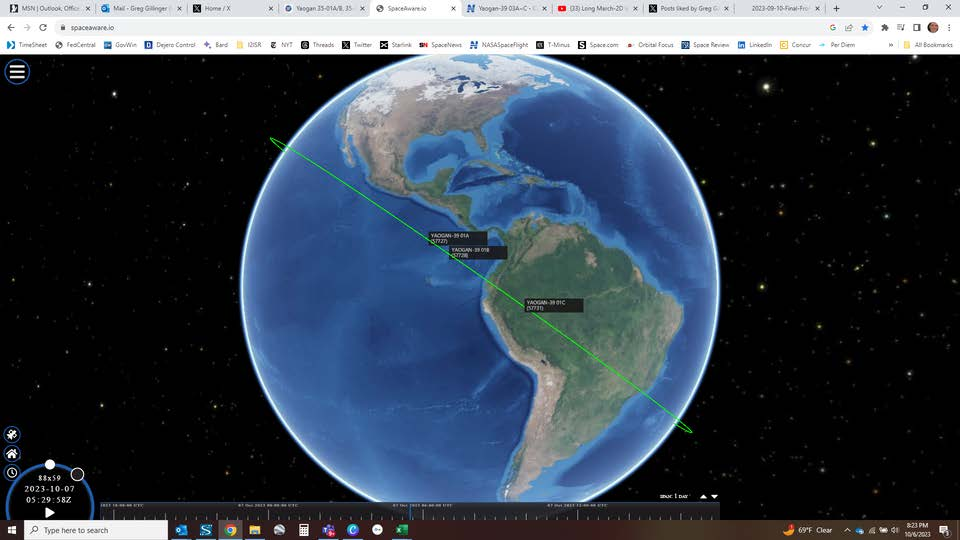
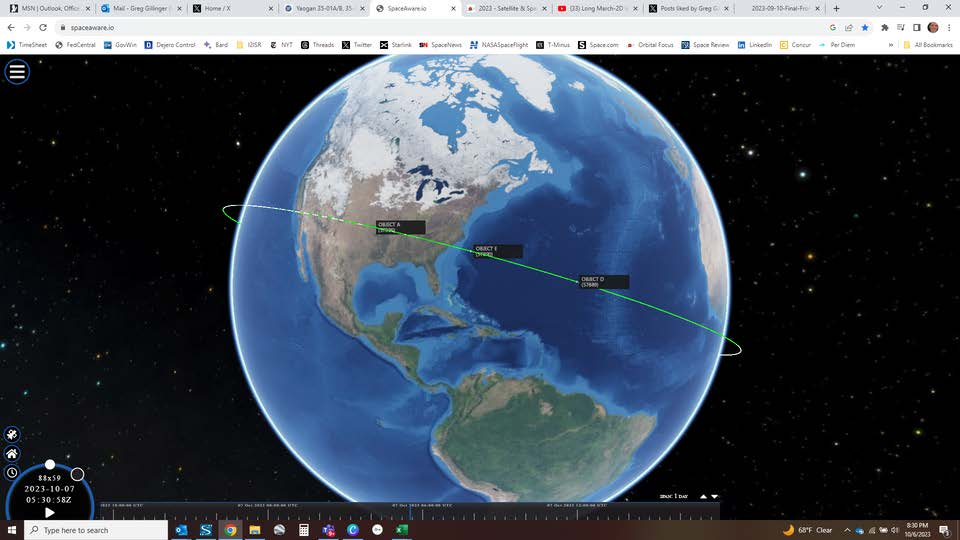
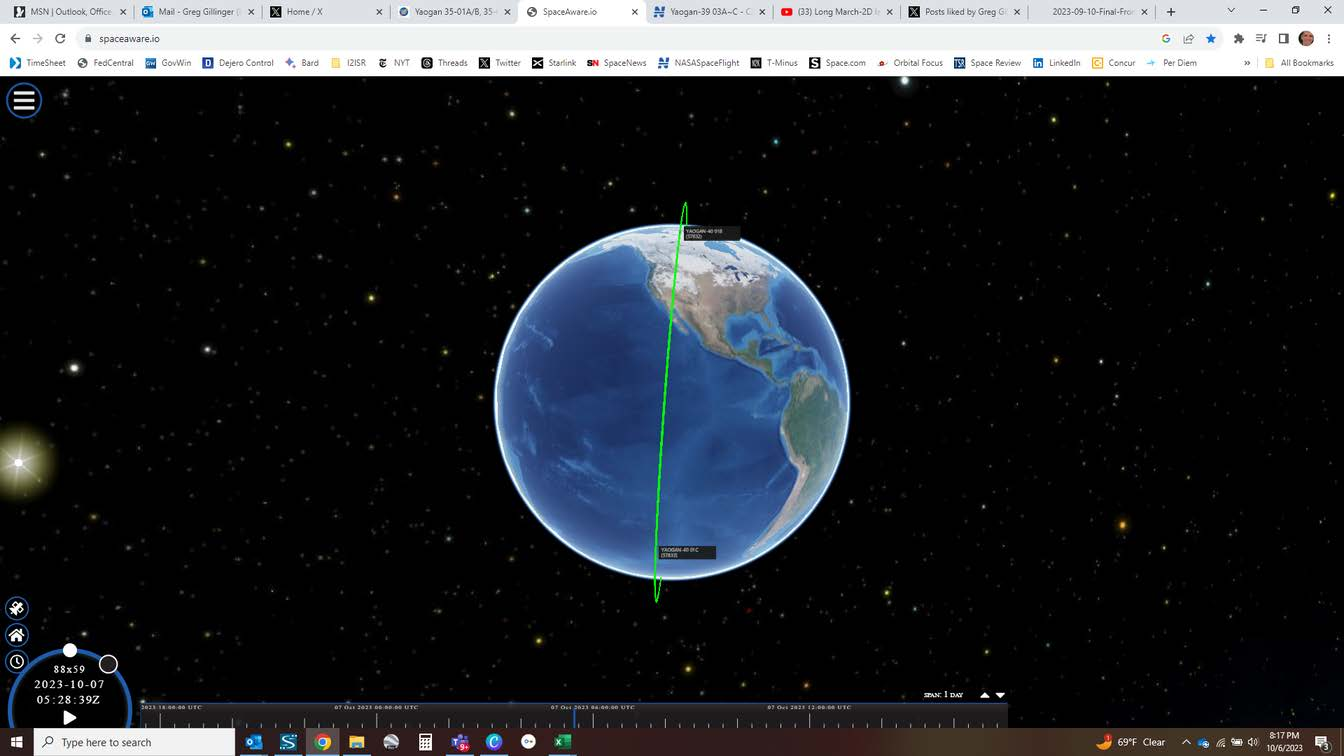
7 Oct 2023: YG-39-01A/B/C satellites appear to have maneuvered into a “typical” formation with one lead and two followers with the followers being significantly closer to one another than the lead satellite. YG-39-02 appears to remain spread out with roughly equal distance between the three satellites. YG-40C continues…
7 Oct 2023: YG-39-01A/B/C satellites appear to have maneuvered into a “typical” formation with one lead and two followers with the followers being significantly closer to one another than the lead satellite. YG-39-02 appears to remain spread out with roughly equal distance between the three satellites. YG-40C continues to maintain a lower orbit than YG-40A & 40B and has passed its sister satellites twice. Expect YG-40C to raise its orbit at some point to create a nearly equilateral triangle formation similar to the YG-31 family.
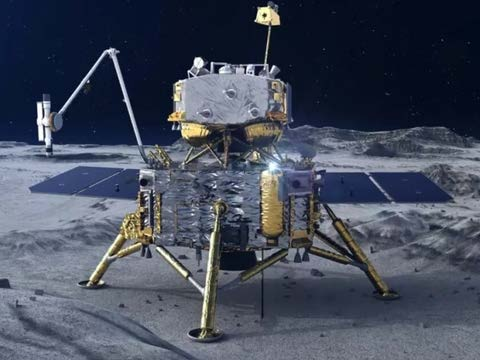
29 Sep 2023: China announced it will launch its Chang'e-6 lunar sample return mission next year in an attempt at a first-ever collection of material from the far side of the moon. China will also deploy a new lunar relay satellite in the first half of 2024 to support the mission. - Chang'e-6 will be a 8,200-kg…
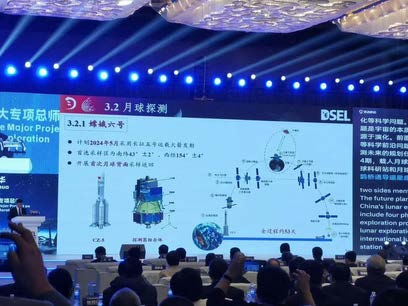
29 Sep 2023: China announced it will launch its Chang’e-6 lunar sample return mission next year in an attempt at a first-ever collection of material from the far side of the moon. China will also deploy a new lunar relay satellite in the first half of 2024 to support the mission.
– Chang’e-6 will be a 8,200-kg, four-part spacecraft that will launch on a Long March 5 rocket from the coastal Wenchang spaceport.
– The mission will use a service module for maneuvers. A lander will target a landing in the southern portion of Apollo crater within the South Pole-Aitken (SPA) basin, a gigantic, ancient impact basin which may provide access to material ejected from the moon’s depths.
– Chang’e-6 will attempt to collect 2,000 grams of material, both scooped from the surface and collected by a drill. An ascent vehicle will send a canister of collected samples back into lunar orbit for rendezvous and docking with the service module.
– The service module will then return to Earth, releasing a reentry module designed to protect the samples during a high-speed atmospheric reentry.
-Chang’e-6 is a repurposed backup to Chang’e-5. That mission launched in 2020 and collected 1,731 grams of material from Oceanus Procellarum on the moon’s near side.
-The Chang’e-6 mission will take 53 days. Chang’e-5 took 22 days.
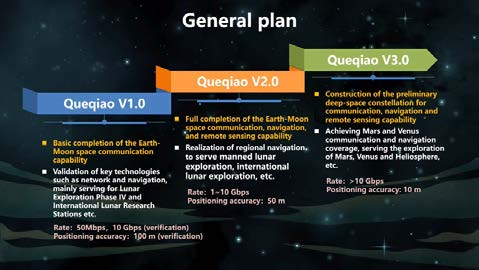
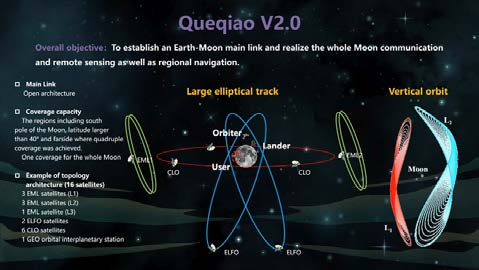
-Part of the greater complexity comes from the requirement for the Queqiao-2 (“Magpie Bridge-2”) relay satellite. The satellite will act as a communications relay between teams on the ground and lunar far side.
-Queqiao-2 will enter a distant retrograde orbit (DRO) or an inclined highly elliptical frozen orbit to support Chang’e-6, rather than the more positionally stable halo orbit around Earth-moon Lagrange point 2 used by Queqiao-1.
-The Chang’e-5 and 6 missions can also be seen as miniature test missions for getting astronauts onto the moon and safely back to Earth. China has recently stated it intends to put a pair of astronauts on the moon before 2030. Chang’e-6 is also nominally part of the China-led International Lunar Research Station (ILRS) program.
–
27 Sep 2023: Iran (specifically the Iranian Revolutionary Guard Corp ) successfully launched its third reconnaissance satellite, the Noor-3, using the three-stage Qasem rocket from Shahroud. Noor-3 is in a similar orbit with its predecessor, Noor-2. The IRGC's Space Commander praised the Noor-3 satellite's image…
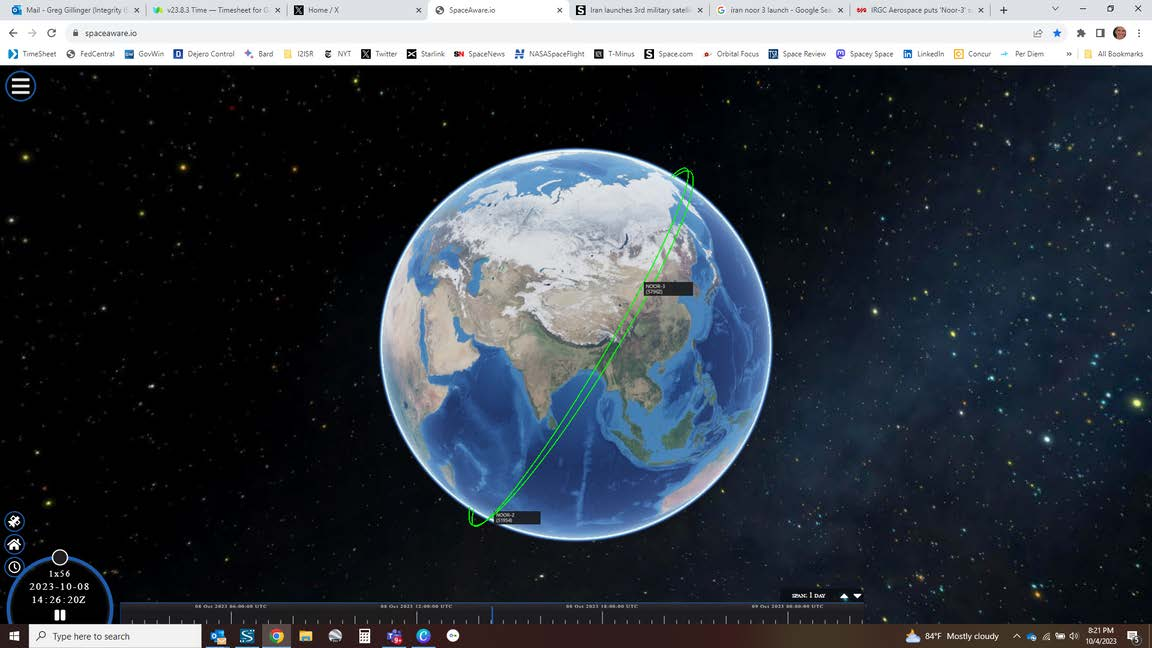
27 Sep 2023: Iran (specifically the Iranian Revolutionary Guard Corp <IRGC>) successfully launched its third reconnaissance satellite, the Noor-3, using the three-stage Qasem rocket from Shahroud. Noor-3 is in a similar orbit with its predecessor, Noor-2. The IRGC’s Space Commander praised the Noor-3 satellite’s image accuracy, claiming it had twice the image accuracy of Noor-2. Launch Video.
– Noor 3 is an imaging satellite (Noor means “light” in Persian), according to Reuters. The spacecraft’s two predecessors, Noor 1 and Noor 2, launched in April 2020 and March 2022, respectively, also atop Qased rockets.
– Noor-3 is currently in a 442 x 456 km x 60.0 deg orbit. Noor-2 orbit is 428 x 454 kms and is also inclined at 60 deg.
-Per Johnathan McDowell, “Notable that Noor 3 was launched to the *current* altitude of Noor 2, not its original altitude [of about 500 km]. The two satellites are in roughly the same orbital plane, suggesting they may work together. In contrast, Noor 1 was already on its way to reentry when Noor 2 was launched.”
-Gen Jafarabadi also claimed the satellite had signal collection capability and had been built in 18 months.
-Gen Jafarbadi also noted that Iran plans to launch 2 more satellites before March 2024.
– The Qased rocket is made of three stages, the first stage is based on an Iranian ballistic missile upgraded to loft a small payload into orbit.
– This was the third use of the Iranian military’s Qased satellite launcher. All of the Qased flights – at least those publicly known – have been successful.
–Iranian authorities released a video of the rocket’s launch from a mobile launcher, but the precise location remains undisclosed. However, details from the footage corresponded with a Guard base located near Shahroud, ~330 kms northeast of Tehran. This base operates in Semnan province, which is home to the Imam Khomeini Spaceport, responsible for Iran’s civilian space program.


25 Sep 2023: Carlos Alatorre authored a piece in The Space Review, in which he highlights the potential counterspace capabilities of China's Spaceplane program. Highlights below. - A co-orbital ASAT refers to a type of kinetic physical counter-space weapon. Kinetic physical counter-space weapons require a projectile or…
25 Sep 2023: Carlos Alatorre authored a piece in The Space Review, in which he highlights the potential counterspace capabilities of China’s Spaceplane program. Highlights below.
– A co-orbital ASAT refers to a type of kinetic physical counter-space weapon. Kinetic physical counter-space weapons require a projectile or another orbiting object to disrupt the targeted satellite. Co-orbital ASATs require the ability to adjust their orbits to move close to their targeted satellites. Within a close distance, a co-orbital ASAT could disrupt, damage, or destroy the satellite through various means.
– In December 2021, China’s Shijian-21 (SJ-21) satellite managed to dock with Compass G2, a malfunctioning Beidou satellite, and used a robotic arm to drag Compass into a graveyard orbit above geosynchronous orbit (GEO). The SJ-21 released Compass and returned to its original orbit. This is considered China’s first complete co-orbital ASAT test intended to dispose of a defunct satellite.
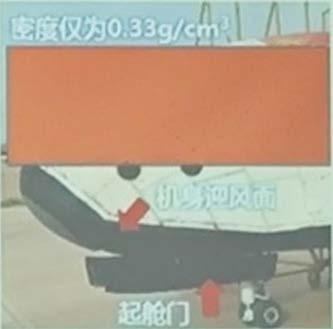
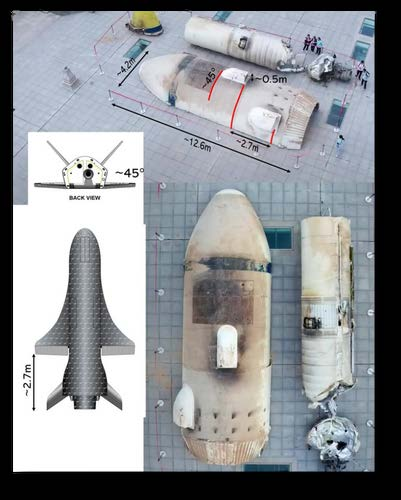
– An advantage of spaceplanes is that they are capable of both space and atmospheric flight and can launch vertically using a rocket or horizontally from a carrier airplane. Interestingly, China’s experimental spaceplanes, known as the Chongfu Shiyong Shiyan Hangtian Qi (CSSHQ), look very similar to the US X-37B Orbital Test Vehicle (OTV).
– According to tracking data from the US Space Force’s 18th Space Defense Squadron (18 SDS), after two months in low Earth orbit (LEO), China’s spaceplane raised its orbit and released an object that conducted co-orbital maneuvers.
– LeoLabs, confirmed evidence that Shenlong and the mystery object, labeled Object J, conducted a series of RPOs and at least two capture/docking operations, occurring between November to December 2022 and again in January 2023.
– According to the space program white paper released in January 2022, the Chinese government intends to “defend national security, [and] lead self-reliance and self-improvement efforts in science and technology.”
– The People’s Liberation Army (PLA) views space as a military domain and considers China to be in a space race with the US. Because space is a military domain, China is developing counter-space capabilities to “deny and degrade a potential adversary [the]use of space.”
-The PLA has stated space is a critical component for “informatized warfare”, which refers to the use of information-based systems to manage and speed up battlespace decision-making during a conflict. According to the PLA, capturing or destroying adversary satellites would degrade a military’s capabilities with precision-guided munitions.
21 Sep 2023: Ritwik Gupta and Andrew Reddie authored an article for War on the Rocks. In it they advocate that anti-satellite weapons will become increasingly marginal. The ongoing evolution and expansion of responsive launch systems will drastically shorten the timeline for replacing disabled satellites. This, in…
21 Sep 2023: Ritwik Gupta and Andrew Reddie authored an article for War on the Rocks. In it they advocate that anti-satellite weapons will become increasingly marginal. The ongoing evolution and expansion of responsive launch systems will drastically shorten the timeline for replacing disabled satellites. This, in turn, reduces the impact of successful anti-satellite strikes.
– A number of countries, the People’s Republic of China foremost among them, continue to actively research, develop, and test both kinetic and nonkinetic anti-satellite capabilities. This has led to something of a miniature arms race, with geopolitical rivals rushing to field offensive anti-satellite capabilities alongside the defensive measures to counter them.
– The Outer Space Treaty of 1967 attempted to limit the militarization of space. All parties committed not to station weapons in orbit or send weapons of mass destruction into space, while also maintaining open and cooperative scientific exploration. Crucially, the Outer Space Treaty did not place a ban on anti-satellite weapons or any military activities in Earth’s orbit.
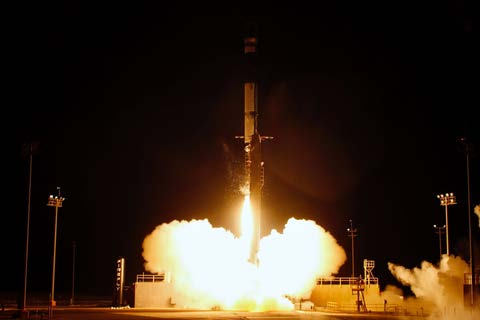
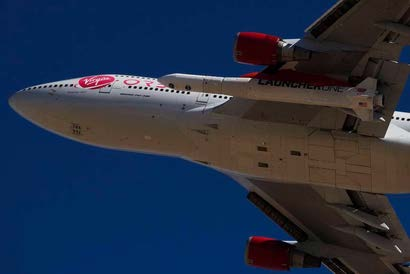
–Responsive launch refers to the ability to deliver payloads to space rapidly and on demand with minimal advance notice or lead time. Compared to the multiyear timelines that have been the norm for the past few decades, the emergence of responsive launch has become a watershed moment for access to space.
-The United States Space Force and the Defense Innovation Unit are investing in tactical response launch systems that can bring a satellite to orbit in less than 24 hours from a “go” order.
-China’s extensive state-owned space and defense enterprises, such as the China Aerospace Science and Technology Corporation, are hard at work developing new boosters to match the U.S. lead in this crucial domain.
-If new capacity can be reconstituted in a matter of days, a successful multi-million-dollar anti-satellite strike may well result in no meaningful degradation of an opponent’s space-enabled capabilities.
-the United States has been steadily evolving its strategic policy with respect to anti-satellite weapons through multiple avenues. There has been a notable increase in research, development, and testing of nonkinetic means to disable or destroy satellites that largely avoid the creation of persistent orbital debris.
-By enabling rapid reconstitution of any disabled space assets, responsive launch drives states toward developing reusable nonkinetic systems that largely avoid triggering more dangerous Kessler syndrome impacts.
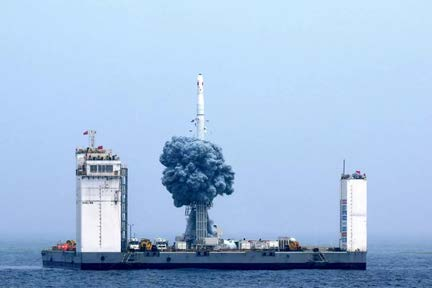
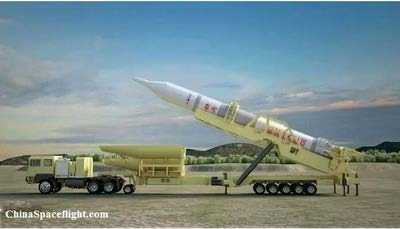
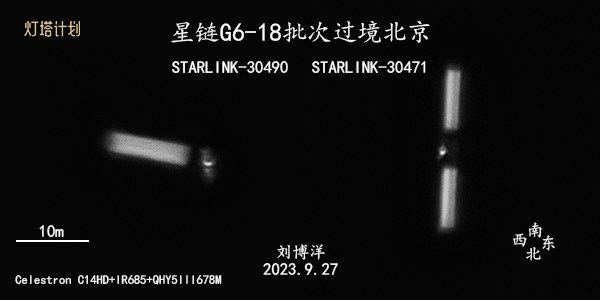
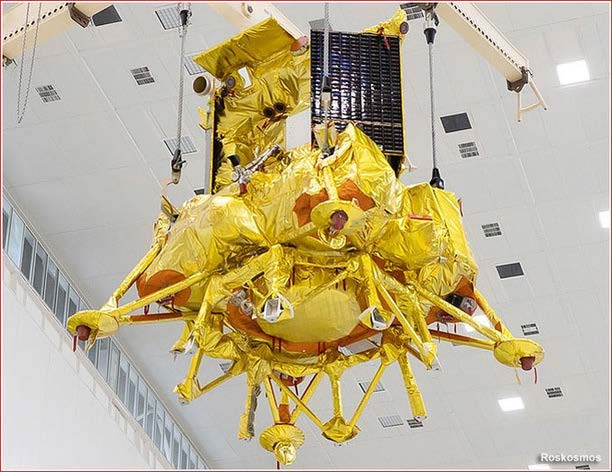
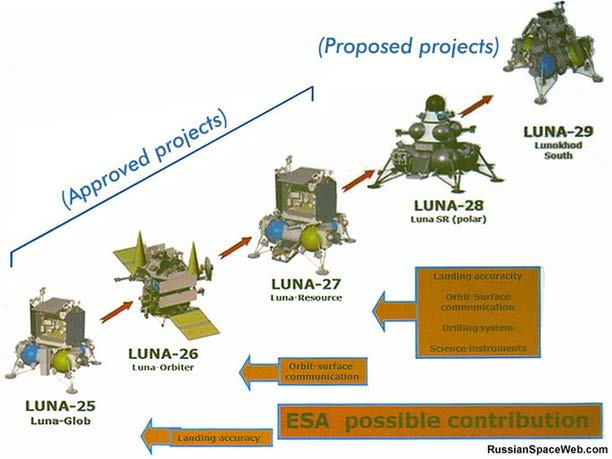
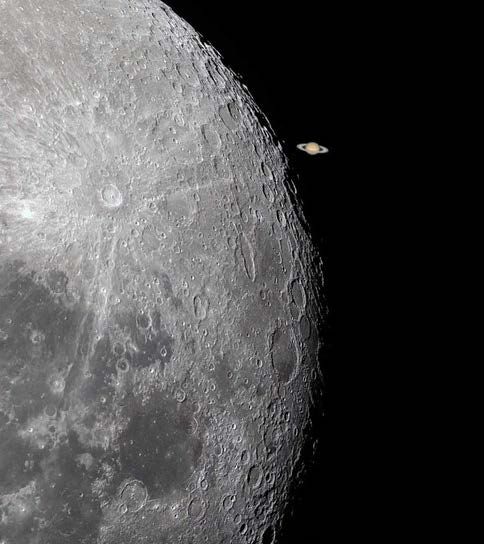
Sea-launch infrastructure, satellite imagery, lunar exploration graphics and astronomy images featured in Issue 82.



Flash Insider
Subscribe to unlock full access to this Issue and the complete Flash archive.
Subscribe Now Already Subscribed? Log In