Issue 95

Coming in Hot: YG-35 02C Re-Enters

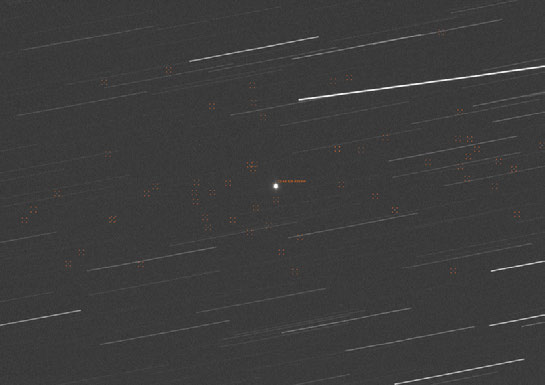
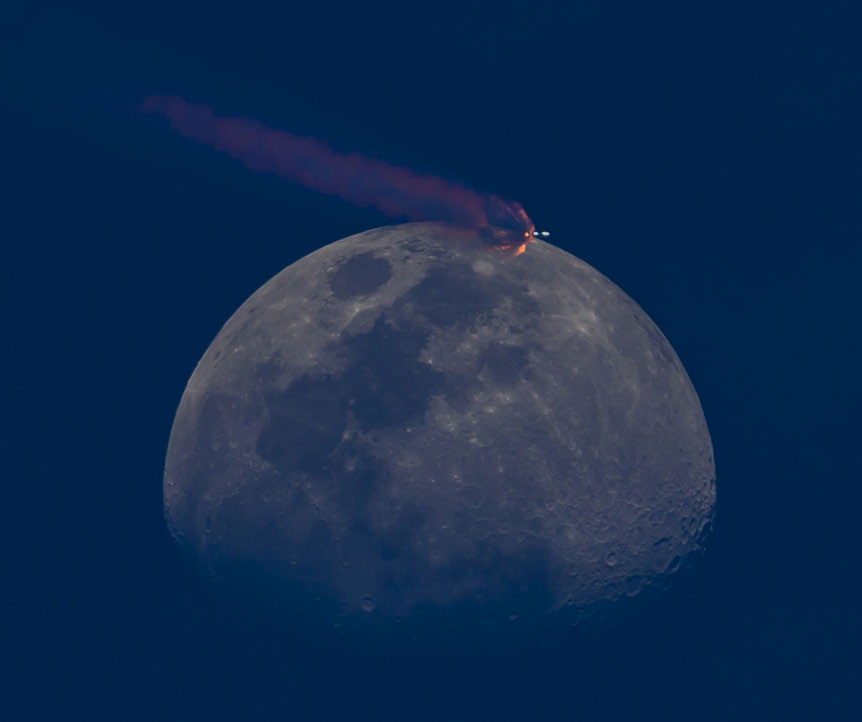
20 Apr: Yaogan-35 02C re-entered the Earth's atmosphere just after midnight UTC on 20 April. The satellite last maneuvered in late November 2022. On 15 Mar 2024 the former “Trail2” satellite had a Semi-Major Axis (SMA/altitude) of 348.7km, one month later the satellite lost nearly 100km of altitude and was at 249.7km…

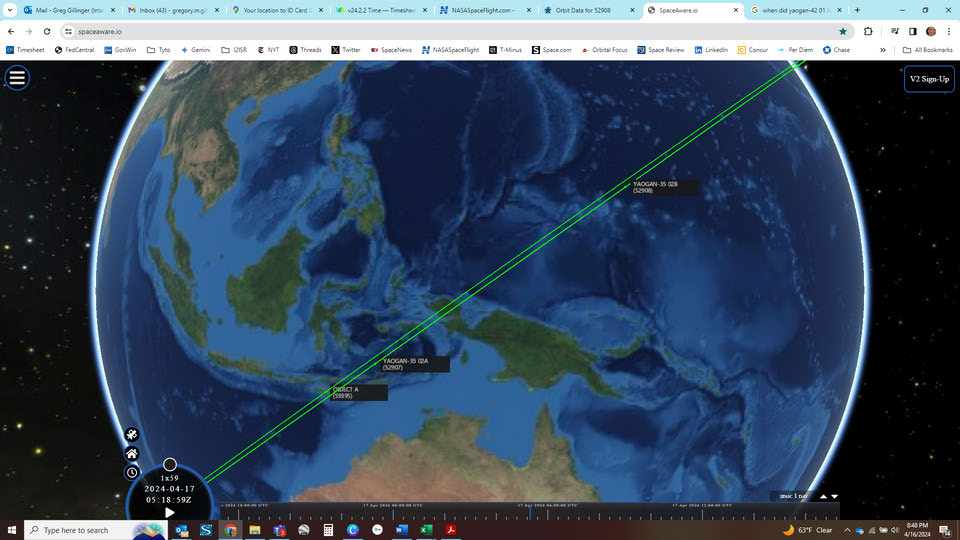
20 Apr: Yaogan-35 02C re-entered the Earth’s atmosphere just after midnight UTC on 20 April. The satellite last maneuvered in late November 2022. On 15 Mar 2024 the former “Trail2” satellite had a Semi-Major Axis (SMA/altitude) of 348.7km, one month later the satellite lost nearly 100km of altitude and was at 249.7km on 15 Apr. As YG-35 02 continued to descend it encountered more of the Earth’s atmosphere resulting in greater drag and further orbital decay. The last observation of the satellite was on 18 Apr and its altitude was just 156km. I’m also keeping an eye on YG-36 01C, another Trail2 satellite that has been slowly losing altitude. But don’t take my word for it. I ran into the one and only Jack Anthony at Space Symposium this year and we got to talking. And then Jack was nice enough to get writing, see below for his observations (which were made prior to YG-35 02’s ultimate demise).

It’s A Drag

by Jack Anthony

Â

Greg Gillinger and I were chatting during Space Symposium week, always fun! He asked me “so Jack, how low can a satellite go before it reenters?” Hummm, my general answer is 150 to 200 Km. But, there’s a lot of “it depends” involved with my answer. At this altitude you might say the steady decay of the orbit’s semi-major axis as it spirals in really steepens, poof, it’s gone. Greg has been keeping an astro eye on Yaogan 35-02C, object # 52909 as it is entering this steep decay and reentry. Celestrak’s prediction is that it may be done by time you read this issue of the Flash. Normally satellites execute periodic orbit raises to prevent reentry and stay in mission. Greg alerted me that Yaogan 36-01B (#53946) has also been on a steady descent in orbit mean altitude. It’s presently at 389 Km and at a rate of descent where in 2 to 2 ½ months it too will spiral in and decay in the Earth’s atmosphere. Something to keep an eye on. Let’s learn more!

Â

Imagine you get on an elevator with me and you ask “Jack, how hard is it to predict when an object will burn in?” Let’s go for a few floors and let me entertain you with an answer. My answer is “It’s a challenge and we astrodynamics minded geeks give it our best as we apply mathematical models of the upper atmosphere (mesosphere) where satellites are zipping through at 7+ km/sec. Much work goes into trying to model atmospheric drag at orbital altitudes, big brains continue to work the challenge. Many models have been developed. When I learned astro in the 70’s, the preferred model was called Jacchia 1971. Many more math models exist today. There’s also a significant degree of uncertainty in how we measure Sun and Earth things than can influence how high up the atmosphere goes and its density. Many Sun solar flux and Earth geomagnetic parameters feed the models. OK, one floor just went by, but we keep climbing so I keep talking…lucky you!

Â

The mathematical equations to predict a space objects motion is based on the two-body problem, the Earth’s gravity and the object. We got that down pretty good. But, the equations contain many more terms to model other forces acting on the object other than the big gravity! For example, we model how the Earth’s oblateness or football shape affects the motion. This is called J2. You can go many levels of details on the Earth’s shape and model the resultant gravity pattern to very precise levels (e.g., J3, J4 and higher order degree J22 and J “much bigger

number” pair. Geo-scientists got this down pretty good and they keep getting more exact and detailed. There is also the Sun and Moon tugging on the object as it orbits. Their gravity comes into play. The Sun and Moon gravity really affects the GEO birds inclination and sometimes a GEO satellite must bring a lot of propulsion and fuel to combat that. LEO satellites experience this third-body effect, but not as much as the GEO spaceships. Some models allow you to include gravity of Jupiter and other biggies out there. Again, our scientists get deep down into the details of who’s gravity is tugging on our spacecraft and objects out there. Now we get to the fun thing to model, atmospheric drag! We’re basically talking 600 Km and below. That’s where those little air molecules bonk the satellite and take out a wee bit of energy. Then it’s game on, the circularization of the orbit begins and then spiral decay. That’s where we can say “it’s a drag.” Hey look, another floor went by, we are still climbing and you are not getting off…. good for you! I am now going to dive deeper into the fun-filled topics behind modelling and predicting atmospheric drag as it effects a space object in LEO.

Â

To try and explain atmospheric drag in a few short floors of an elevator ride is tough. There are semester long astro courses and grad students spending months and years on the topic. Modeling drag for determining the motion of space objects is as much art as it is science. Some say it’s “voodoo magic”, others say luck is as much a part of if it as solid thinking and selection of the best model and parameters. It involves some tremendous effort by scientists and engineers to model the upper atmosphere and be able to most effectively predict the trajectory of a space object and when it will succumb to the forces of the atmosphere and burn in. As I said earlier, uncertainty is a constant companion of the effort. There’s uncertainty in the models, they are all different and they all are amazing mathematical tools. There is uncertainty in the measured parameters of the Sun “storminess” (that parameter is the F10.7 Solar Flux) and the Earth’s geomagnetic activity (Ap and Kp index) where the is a big “plus or minus” factor applied. Mother Nature is a busy lady and keeps calling audibles when it comes to Sun and Geomagnetic activity. She hides her data cards!

Â

Let’s look at what space object and space weather parameters “feed” the atmospheric models and how they help us predict the orbit’s path and ultimately the space object’s lifetime. A model or a big ole’ equation needs inputs in order to work. Things that matter! So, the first thing is “where is the space object and how fast is it going?”… this is the state vector, position and velocity in a defined coordinate frame. It’s the best estimate of that. The model essentially asked “I need to know the situation.” So, state vector is the first thing. Then it seeks info on the object in question. “What is the mass?” and “What is the cross-section area?” Hummm, mass is easy, but this cross-section area is something you may not be familiar with. It’s the area that is being presented “into the wind,” or more accurately into the direction of the velocity vector. These two terms: Area (A) and Mass (m), are the key components of a drag term, something the astro dynamos call the “B-star.” It plays a key role in how fast a space object will decay. The greater the A, the higher the force due to atmospheric drag. The higher the mass, the less the force. That is pretty darn simplified, but basically true. Sometimes the A and the m are not exactly known, perhaps it’s a satellite of a nation that is not so giving of that kind of info. Well, “we got people” that figure that out…and to very good accuracy. Greg is one of those “people.” Now, we have a space object state, we may some insight into A and m. So, the key contributor to what the atmosphere is doing is the Sun’s & Earth’s geomagnetic activity. There are many parameters

that capture the things that effect the atmosphere. The two biggies are Solar Flux and Geomagnetic Index. The Space Weather Prediction Center of NOAA is the organization that keeps track of these parameters. It’s no easy chore. I know you all are users of the amazing Celestrak.org website, they have a link to the NOAA info. Solar Flux is the parameter that feeds the equation and gives it insight into ther “storminess” on the sun. The sun spots and the solar flares, stuff like that. Yup, what’s happening on the Sun drives the atmospheric model. It also gets the Geomagnetic situation around the Earth all excited. That’s where the Ap index helps us understand how the atmosphere is behaving. All this is used to determine the force on the space object. Thus, it determines how the position and velocity vectors are affected.

Â

Guess what, the elevator door is opening and it’s time for you to get out and run away from ME. I hope my rambling regarding how we handle atmospheric drag was helpful. As space professionals in the operations and intelligence roles, its important for you to appreciate and understand what’s driving all this when’s it going to reenter stuff. So where to from here? Well, remember Yaogan-36 01B, # 53946? It’s quit doing any form or orbit maintenance and is subject to the atmospheric drag game…it’s decaying and “coming in.” Why not get on Celestrak and monitor things like mean motion and orbit period and watch it get sucked in by the Earth’s atmosphere. You just might learn something!

Â

Yaogan-35 02C orbital profile, showing its decline from approximately 348.7 km on 15 March to 249.7 km on 15 April 2024 (celestrak.org).

Yaogan-36 01B orbital profile, showing its continuing altitude decline to approximately 387.8 km on 15 April 2024 (celestrak.org).