Issue 142

Russia Launches 16 Rassvet 3 Satellites

23 Mar 2026: Russia launched a Soyuz 2.1b from Plesetsk carrying 16 Rassvet 3 satellites (68360-68376) to Low Earth Orbit. Russia did release NOTAMs for the launch, however for this launch the NOTAMS had an unusually long 9-day NOTAM window and 10-hour daily launch window. Per Bart Hendrickx: “The reason for that could…

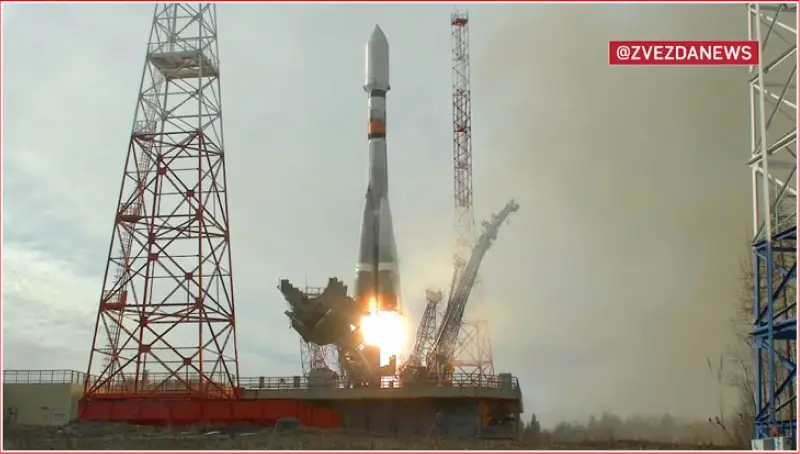
23 Mar 2026: Russia launched a Soyuz 2.1b from Plesetsk carrying 16 Rassvet 3 satellites (68360-68376) to Low Earth Orbit. Russia did release NOTAMs for the launch, however for this launch the NOTAMS had an unusually long 9-day NOTAM window and 10-hour daily launch window. Per Bart Hendrickx: “The reason for that could be the ever present danger of Ukrainian drone attacks on the cosmodrome. According to local press reports, a drone attack on Plesetsk was repelled on the day of the Obzor-R launch on December 25, 2025. Local authorities later released a picture of one of the downed drones, thanking local residents for having timely warned them of the attack.” As for the satellites themselves, the Rassvet (meaning “dawn”) satellites are part of a new Russian Low Earth Orbit (LEO) broadband internet constellation developed by Bureau 1440, designed as a sovereign alternative to SpaceX’s Starlink. There have been two previous Rassvet launches, one in 2023 and the second in 2024 (I believe these are 59779-59781 but can’t confirm…these also accompanied the Nivelir satellite Cosmos 2576). Launch Video. Watch Buro 1440 Satellite Separation Video! Watch video describing Rassvet constellation development and deployment goals.
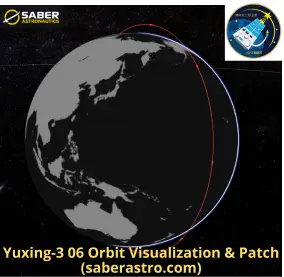
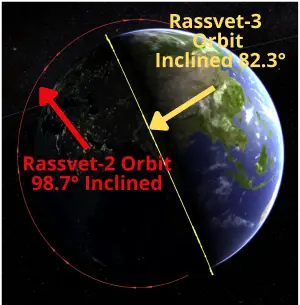
– The satellites have a low initial orbit, with an average altitude of ~306km. All are inclined 82.3°. Expect the satellites to gradually raise their orbits over the coming weeks (note: none of the satellites had maneuvered as of 5 Apr 2026). Publicly available information notes target altitudes for Rassvet as 500-800km.

– The suspected Rassvet-2 prototype satellites have an average altitude of ~786km and an inclination of 98.7°.

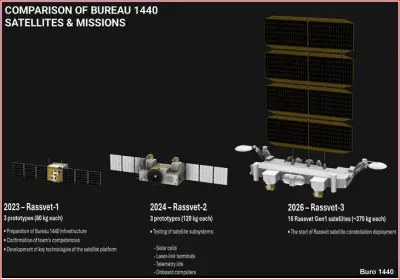
-Per Anatoly Zak, “The first 16 Rassvet-3 satellites, with a mass of around 370-kilograms each, followed trios of Rassvet-1 and -2 experimental spacecraft, launched in 2023 and 2024, respectively, as hitchhiker payloads. The first operational launch came just weeks after Starlink deactivated numerous unauthorized terminals used by the Russian occupation forces in Ukraine, further exacerbating the years-long quagmire for the Kremlin. However, at the time of the Rassvet-3 launch, it was unknown how long it would take for Buro-1440 to manufacture and deploy enough satellites and ground infrastructure to make a meaningful impact on the market at home or abroad.”

– Rassvet launch goals for 2026 are 156 satellites. The project plans to have over 250 satellites in orbit by 2027, with a target of 900 by 2035. We’ll see!


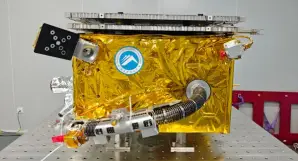
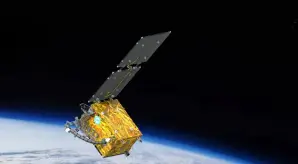
Rassvet-1, -2 & -3 Comparison
(russianspaceweb.com)


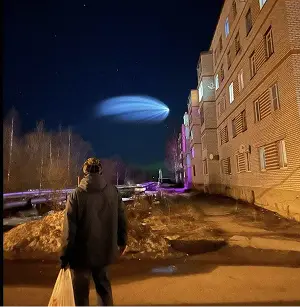
Soyuz 2.1b Lights the Night Sky
(Nasaspaceflight.com)


Rassvet-3 & Rassvet-2 Orbits
(saberastro.com)