Issue 142

Russia Launches New Meridian-M Satellite to HEO

3 Apr 2026: Russia launched a Soyuz 2.1a with Fregat-M upperstage with the Meridian 11 satellite (either 68571 or 68572, not certain which yet) from Plesetsk. This is the first Meridian-M launch since 22 Mar 2022 . The satellite is likely heading to a Molniya orbit. Orbital parameters suggest Russia intends to pair…

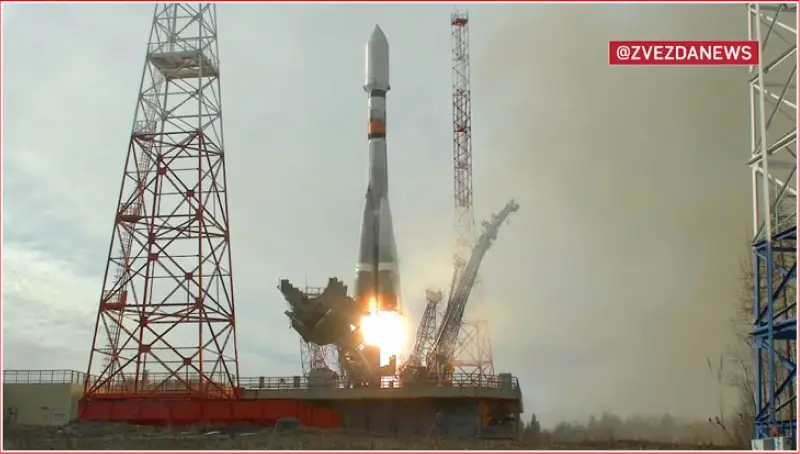
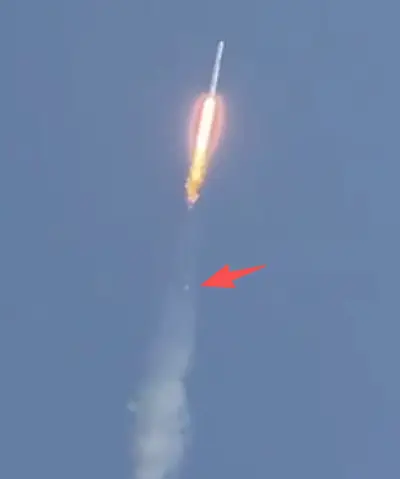
3 Apr 2026: Russia launched a Soyuz 2.1a with Fregat-M upperstage with the Meridian 11 satellite (either 68571 or 68572, not certain which yet) from Plesetsk. This is the first Meridian-M launch since 22 Mar 2022. The satellite is likely heading to a Molniya orbit. Orbital parameters suggest Russia intends to pair Meridian 11 with Meridian 8, perhaps replacing Meridian 7 which was launched in 2014. Launch Video.

– Meridian 11 is currently in a 1,000×39,700km orbit with an inclination of ~63°. Expect Russia to raise the satellite’s perigee several hundred kilometers; the perigee values of the other Meridian-M satellites ranges from ~1,466-2,219km.

– Meridian 11 joins 4 other currently active Meridian satellites:

  • Meridian 7 (40296) (unimproved version launched in 2014);
  • Meridian-M 8 (44453, launched 2019);
  • Meridian-M 9 (45254, launched 2020)
  • Meridian-M 10 (52145, launched 2022).


Soyuz 2.1a Lift Off With Meridian 11
(russianspaceweb.com)

All of the satellites are in highly elliptical Molniya orbits (HEO) inclinations varying from 63-65°. Please review Jack’s previous article on the unique characteristics of this particular inclination!

– Meridian Constellation Overview

  • Meridian 7, 8, 9 & 10 have orbital periods of ~11hrs 57min. As of 5 Apr 2026 Meridian 11 has an orbital period of ~12hrs 04min, but as noted above this will likely change in the coming days as Russia maneuvers the satellite into its final orbit.
  • Pairings:
    • Russia has synchronized the orbits of Meridian 9 & 10 with both arriving at their apogee points at nearly the same time. Meridian 9 has a 178° west RAAN offset from Meridian 10.
    • Meridian 7 and Meridian 8 arrive at their apogees about 1 hour apart (and 5-6 hours after Meridian-M 9 & 10). Meridian 7 has a 163° west RAAN offset from Meridian 8.
    • In its current orbit Meridian 11 arrives at its apogee 2-3 hours before 7 & 8. Meridian 11 has a 178° west RAAN offset from Meridian 8…matching the RAAN offset between Meridian 9 & 10. I suspect after Russia settles Meridian 11 into its final orbit it will be paired with Meridian 8. Unknown what the future holds for Meridian 7, the satellite is now 12 years old and may be ready for retirement.
  • Due to their elliptical orbits, Meridian satellites link Russian ground forces, aircraft, ships, and command centers in the Arctic, Siberia and North Sea – outside the reach of stable communications coverage unattainable from geostationary satellites over the equator.
  • The Russian Defense Ministry said the satellites relay signals between coastal stations and vessels and ice reconnaissance airplanes traveling along the Northern Sea Route in the Arctic Ocean. The Meridian satellites also serve users in northern Siberia and Russia’s Far East.

Meridian 7
Apogee ~0300/1500Z
RAAN 222.6°

Meridian 8
Apogee ~0400/1600Z
RAAN 60.1°

Meridian 9
Apogee ~1000/2200Z
RAAN 327°

Meridian 10
Apogee ~1000/2200Z
RAAN 149°

Meridian 11
Apogee ~0100/1300Z
RAAN 238.6°

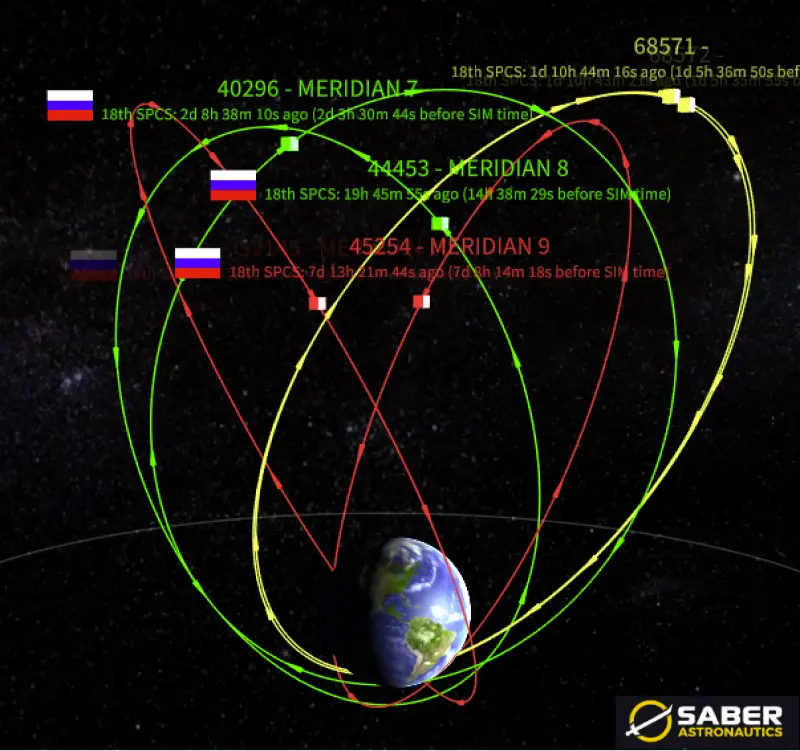
Meridian Constellation Overview (4 Apr 2026)

  • Meridian 7 & 8 (Red) Arrive at Apogee ~1hr apart and have RAAN offset of 163°
  • Meridian 9 & 10 (Green) Arrive at Apogee simultaneouly (or nearly so) and have a RAAN offset of 178°
  • Meridian 11 (Yellow) has a 178° RAAN offset with Meridian 8 (matching 9 & 10 offset) suggesting Russia will pair the 2 satellites

(saberastro.com)