24 Sep 2022: China/ExPace launched a KZ-1A four stage rocket from Taiyuan with two Shiyan experimental satellites, Shiyan 14 and Shiyan 15 on board. Both satellites were successfully delivered into a sun-synchronous orbit. Launch Video.
-Shiyan Weixing translates to “experimental satellites” in English. The spacecraft belong to a series of test satellites that launch on a variety of launch vehicles. Usually, neither the payload details nor the mass is given.
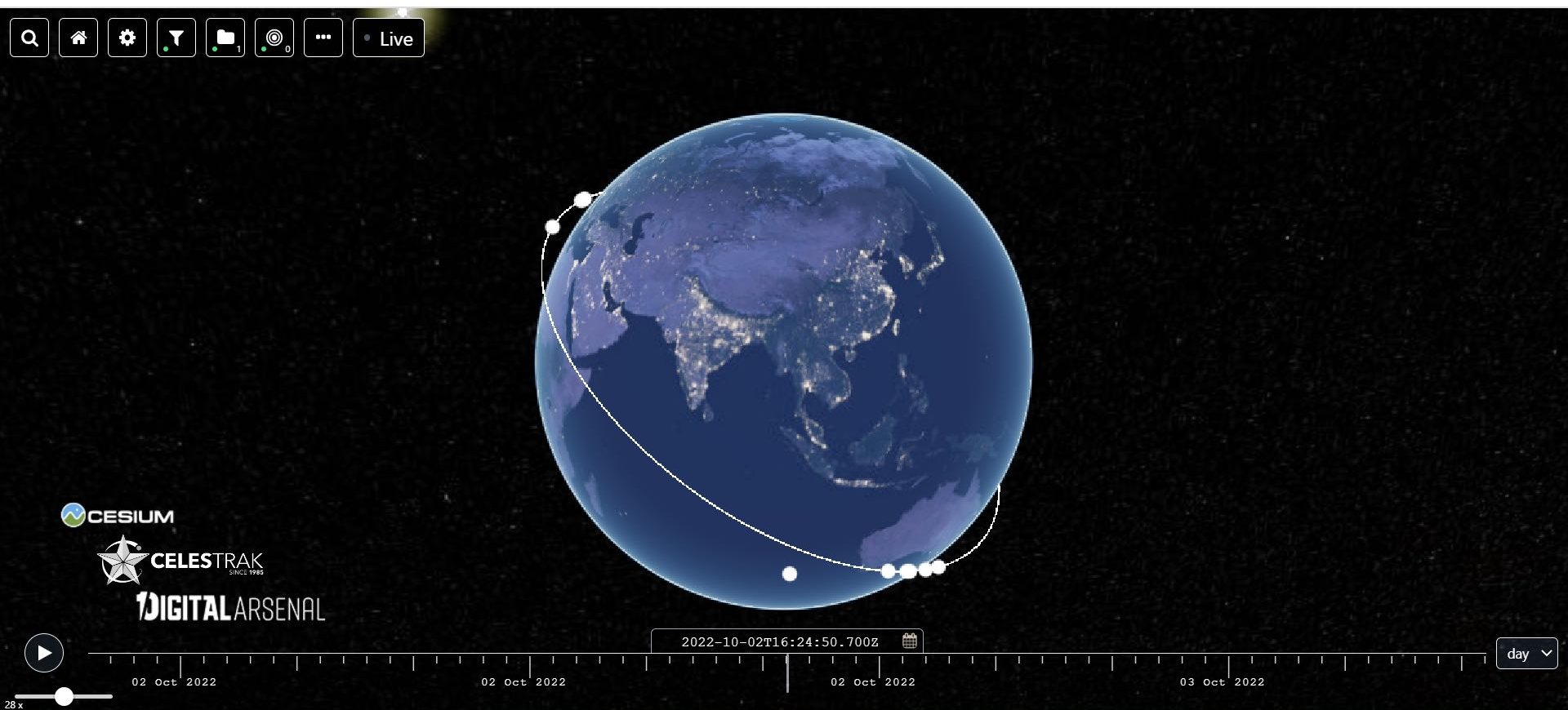
– Shiyan 14 & 15 are in a Sun-synchronous orbit (SSO) with an inclination of 97.52 degrees and an altitude of 488 by 506 km. Both payloads are listed with different purposes.
-SY-14 payload is described as a scientific research and technology validation mission. This is similar to the usual labels that the Shiyan Weixing satellites receive, based on statements for the previous missions. It is not known which company or China Aerospace Science and Technology Corporation (CASC) subordinate built the payload.
– SY-15 payload was described as a land surveyor, city planning, and disaster monitoring satellite. This is the usual description for optical satellites, which also matches the payload’s orbit. The SY-15 satellite was built by the Shanghai Academy of Spaceflight Technology (SAST), which is also referred to as the “Eight Academy.”
– This was launch number 18 for the KZ-1A rocket, with 16 successes so far. The KZ-1A can carry 200 kgs into a 700-km sun-synchronous orbit (SSO) and now launches from all three of China’s inland national spaceports.

KZ-1A launch vehicle associated with the Shiyan 14 and Shiyan 15 mission from Taiyuan.