
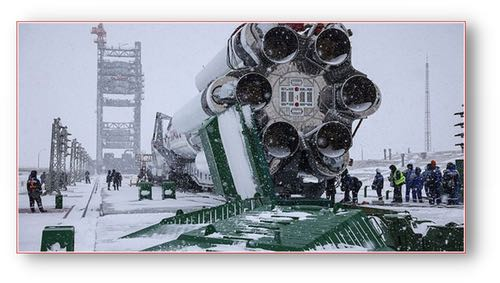
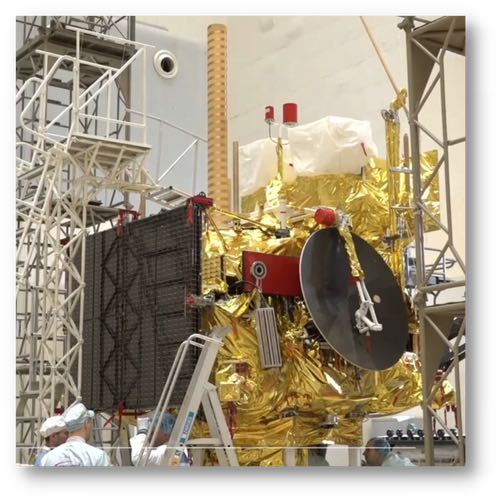
Russia launched Elektro-L #4 on 5 February 2023, expanding its active geostationary weather-satellite fleet to three.
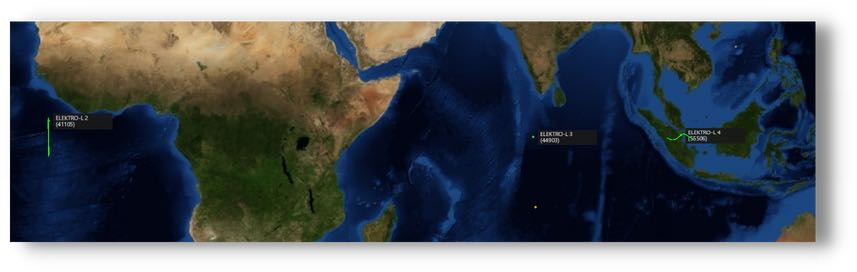
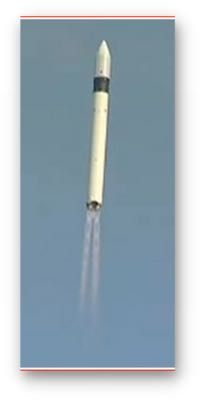
5 Feb 2023: Russia launched a Proton-M from Baikonur carrying its newest environmental-monitoring satellite, Elektro-L #4. The satellite reached geostationary orbit and began maneuvering toward its operating location near 165.8°E, increasing Russia’s active GEO-based environmental-monitoring fleet to three spacecraft. Launch Video.
– Elektro-L is a series of meteorological satellites developed for Roscosmos. They are the first Russian weather satellites to operate in geostationary orbit.
– Each spacecraft has a mass of about 1,620kg and a design life of 10 years. They can image an entire Earth hemisphere in visible and infrared wavelengths for climate monitoring, ocean monitoring and weather forecasting.
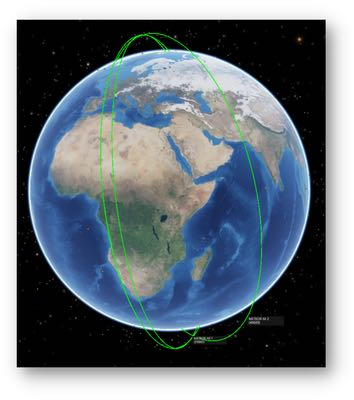
– Elektro-L operates together with the polar-orbiting Meteor-M weather-satellite series. The issue notes three active Meteor-M spacecraft on orbit.
– Data is distributed through Russia’s Scientific Research Center of Space Hydrometeorology “Planeta” and the Federal Service for Hydrometeorology and Environmental Monitoring.
– The MSU-GS imaging system provides about 1km-per-pixel resolution in two visible bands and 4km-per-pixel resolution in eight infrared bands. Normal imaging cadence is every 30 minutes, with 10-minute imaging possible during emergencies.
– Elektro-L 2 launched in Dec 2015 and Elektro-L 3 launched in Dec 2019. Russia also planned a fifth Elektro-L mission, likely around 2024.
Cosmos 2499 suffered a second breakup in January 2023, producing at least 85 trackable debris fragments in long-lived high-altitude orbits.
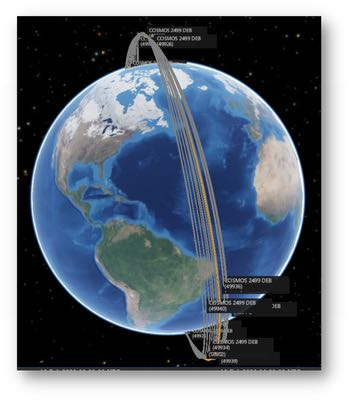
7 Feb 2023: Cosmos 2499, launched in 2014, broke apart on 3 Jan and created a debris cloud that could remain in orbit for more than a century. The breakup generated at least 85 pieces of trackable debris. Cosmos 2499 was an unannounced object launched alongside three STRELA 3M LEO communications satellites.
– Cosmos 2499 and its debris occupy polar orbits with apogees roughly 1,480-1,600km and perigees about 950-1,160km. At these altitudes, debris could take a century or more to decay.
– LeoLabs analysis pointed toward a low-intensity explosion, citing the asymmetric debris cloud, fragment velocities and the spacecraft’s known propulsion system as a possible energetic source.
– The spacecraft used the Fakel K50-10.6 liquid-propulsion system powered by hydrazine monopropellant, enabling multiple orbital changes.
– Cosmos 2499 experienced an earlier breakup on 22 Oct 2021 that generated 22 trackable fragments.
– Cosmos 2491, believed to be a similar spacecraft, broke up in 2020 in an event also attributed to its propulsion system.
– After its May 2014 launch, Cosmos 2499 approached its own Briz-KM upper stage to within about 0.76km on 9 Nov and 0.53km on 25 Nov before continuing maneuvers through 2017.
The spacecraft’s rendezvous behavior contributed to speculation that Cosmos 2499 and similar Nivelir-related satellites were testing inspection or counterspace-relevant technologies.
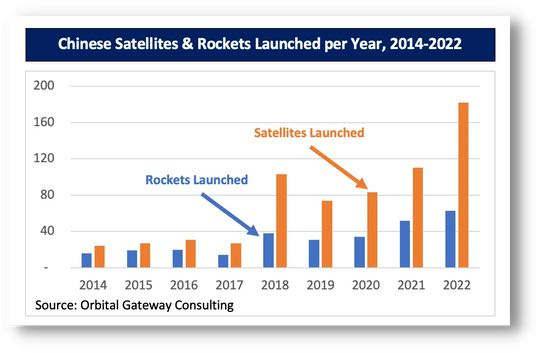
China's expanding rideshare launch supply and new commercial rockets could enable 300-400 spacecraft launches during 2023.
30 Jan 2023: The creators of the Dongfang Hour newsletter rebranded as China Space Monitor and examined the growing supply of new, frequently rideshare-focused Chinese launch vehicles and what that could mean for annual satellite and launch totals. Read the China Space Monitor analysis.
– China completed a record 63 launches in 2022, placing roughly 180 spacecraft into orbit. Historically, Chinese rideshare offerings had been limited, but the issue described 2023 as a potential turning point.
– The analysis projected at least 20 rideshare launches with five or more satellites each, potentially allowing Chinese rockets to launch 300-400 spacecraft in 2023, perhaps half for commercial customers.
– CASC launchers such as Long March 8 were expected to become more prominent. Long March 8 had launched 22 satellites on a single 2022 mission.
– CASIC’s commercial spin-off ExPace was expected to contribute with Kuaizhou-1A and the medium-lift Kuaizhou-11 after KZ-11 achieved its first successful launch in Dec 2022.
– Commercial startups were expected to attempt maiden flights of Tianlong-2, Gravity-1 and Darwin-2, with rideshare services central to their business models.
– More launch supply could accelerate semi-commercial constellations including CGSTL/Jilin, Xingyun IoT, Tianqi IoT, CentiSpace remote sensing and Golden Bauhinia.
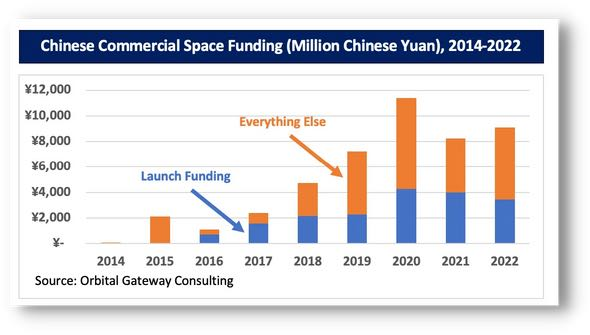
The issue assesses 2023 as a possible inflection point after roughly eight years of commercial-space investment, with greater production capacity potentially lowering launch costs and increasing available slots.
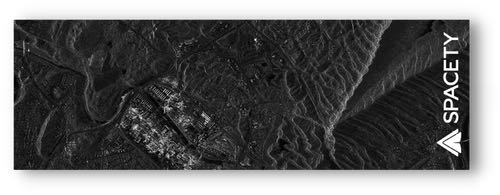
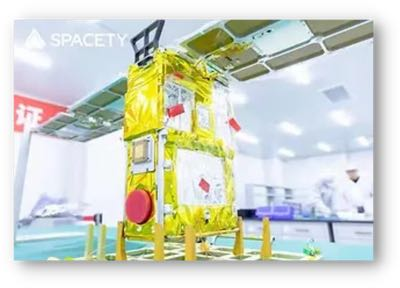
The U.S. sanctioned Spacety China for allegedly supplying SAR-derived imagery locations that supported Wagner Group operations in Ukraine.
27 Jan 2023: The United States sanctioned Changsha Tianyi Space Science & Technology Research Institute, also known as Spacety China, for allegedly providing satellite imagery of Ukraine that supported Russia’s Wagner Group combat operations. Source.
– According to the U.S. Treasury Department, Spacety provided synthetic-aperture-radar-derived locations in Ukraine to Terra Tech, a Russia-based technology company.
– Treasury stated that the imagery was gathered to enable Wagner combat operations in Ukraine.
– Spacety had launched two small C-band SAR satellites: Hisea-1 and Chaohu-1.
– Hisea-1 is described in the issue as China’s first commercial SAR satellite. It is capable of approximately 1m-resolution imagery over a 100km swath, with plans for higher-resolution products.
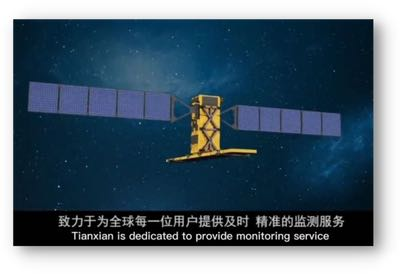
– Chaohu-1 is the first spacecraft in the planned 96-satellite Tianxian SAR constellation and was described as improving spatial resolution, swath size, imaging duration, downlink, orbit control and onboard processing.
– The issue notes continuous multi-target imaging, precise orbit determination and onboard AI processing as capabilities associated with Chaohu-1.
The constellation’s partners and capabilities are presented as a possible example of Chinese military-civil fusion, with potential economic and military dual-use value.
China planned new satellite-data-acquisition antennas at Zhongshan Station in Antarctica to support polar-orbiting spacecraft.
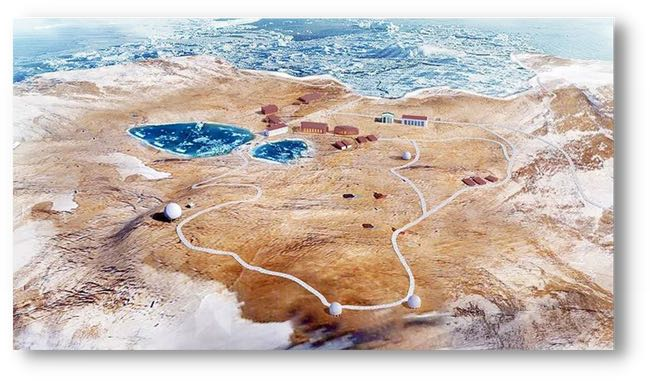
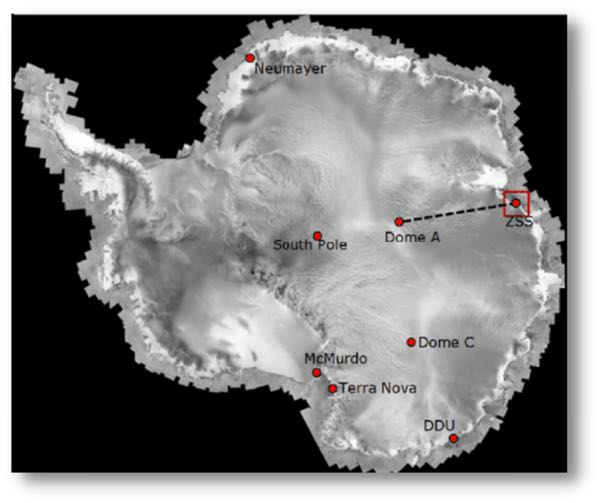
2 Feb 2023: China Space News reported that a CASIC subsidiary won a bid to build an ocean-observation satellite ground system at Zhongshan Station in Antarctica. The project adds ground-station facilities supporting satellite data acquisition. Video tour of Zhongshan Station.
– Renderings of the roughly 43.95 million yuan project showed four radome-covered antennas at Zhongshan in East Antarctica.
– The antennas would support data acquisition from Chinese satellites in polar and near-polar orbits, which pass near the poles multiple times each day and therefore offer frequent downlink opportunities.
– The spread of Chinese international ground stations has generated concern, particularly with infrastructure in South America. The issue notes that systems with clear civilian uses can also have dual-use value.
– Construction at Zhongshan, around 69° south latitude, could allow China to receive remote-sensing, weather, surveillance and other satellite data faster.
– Zhongshan Station is China’s second Antarctic research station, opened in Feb 1989, and can support roughly 60 summer and 25 winter personnel.
Ground stations are critical spacecraft infrastructure for receiving data and transmitting commands, making them another potential area of strategic competition among space powers.

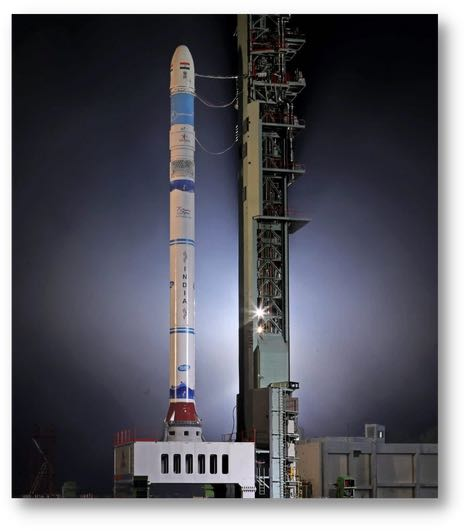
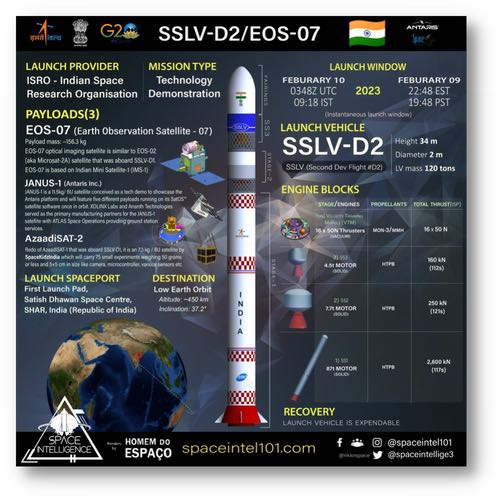
India's second SSLV demonstration succeeded on 9 February 2023, placing EOS-07, AzaadiSAT-2 and Janus-1 into low Earth orbit.
9 Feb 2023: India successfully launched its Small Satellite Launch Vehicle and placed three satellites into a circular 450km low-Earth orbit at 37.2° inclination. The mission lasted about fifteen minutes from liftoff to final spacecraft separation. Launch Video.
– The demonstration mission carried ISRO’s EOS-07 Earth-observation satellite plus the smaller AzaadiSAT-2 and Janus-1 spacecraft.
– SSLV is designed to provide lower-cost, increasingly responsive access to space for small-satellite missions.
– The first SSLV mission in Aug 2022 failed to achieve a stable orbit after a stage-separation issue, leading to vehicle changes before the second demonstration.
– SSLV is a four-stage vehicle with three solid-propellant stages followed by a liquid-propellant Velocity Trimming Module for precise orbital insertion.
– The vehicle supports multiple mounting configurations and can carry a single satellite up to about 500kg to a 500km planar orbit or approximately 300kg to sun-synchronous orbit.
– India planned dedicated SSLV launch infrastructure at a new spaceport near Kulasekharapatnam, providing more direct access to polar orbits without payload-limiting dog-leg trajectories.
The U.N. working group on reducing space threats advanced discussions on notifications, SSA sharing and ASAT-test norms, but major disagreements remained.
3 Feb 2023: The U.N. Open-Ended Working Group on Reducing Space Threats met in Geneva to discuss space security, emerging international accords, norms of behavior and data sharing. Source.
– The group’s third session ran from 30 Jan to 3 Feb and sought recommendations for norms of behavior related to on-orbit activities, especially military activities, to reduce conflict risk.
– The U.S. delegation emphasized common standards and better accuracy across the various national and commercial space-data providers used for space situational awareness.
– The Philippines and Germany proposed a permanent communications channel for launch notifications, changes to launch plans, reentry notifications and debris warnings.
– Many delegations supported, at least in principle, a ban on destructive direct-ascent ASAT missile testing. The Netherlands announced an intention to join the growing group of states making such commitments.
– Russia and China remained reluctant to accept new on-orbit behavior norms and pushed back on new SSA-sharing mechanisms and the application of international humanitarian law to space activities.
– Russia and China also criticized U.S. military-space activity and the use of commercial satellite companies to support Ukraine.
The issue notes that disagreement from Moscow and Beijing raised questions about whether the OEWG could produce consensus recommendations for the U.N. General Assembly at its final meeting.



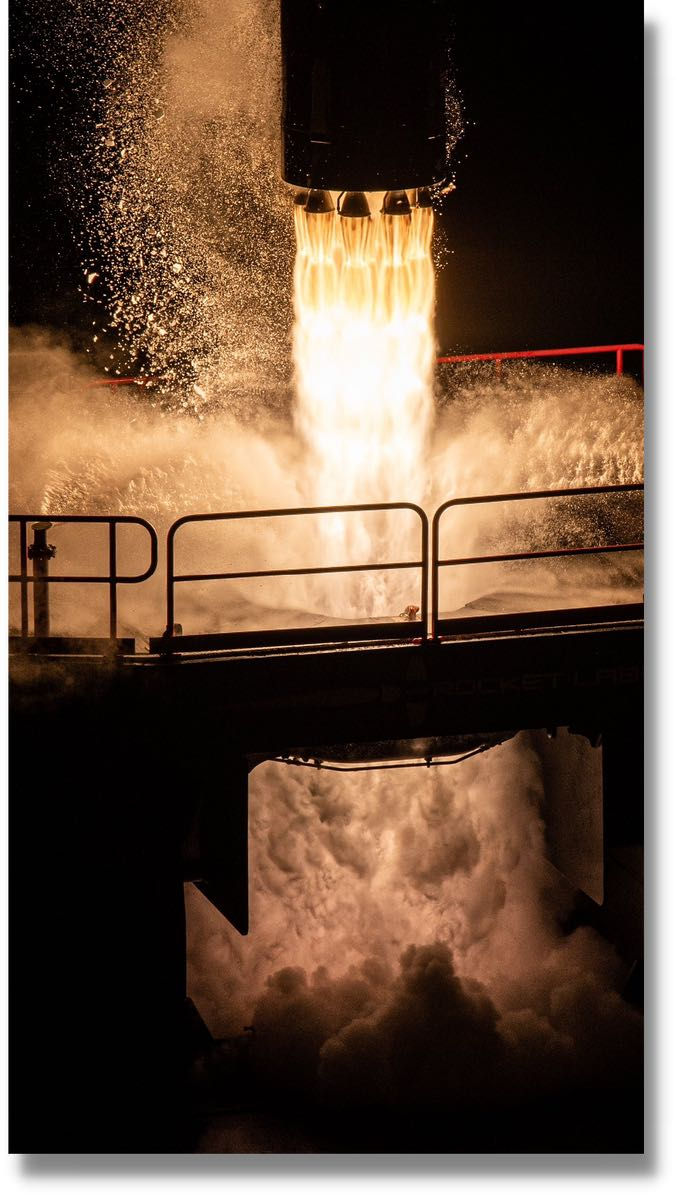
Pics o' the week includes Rocket Lab at Wallops, FAST, a Chinese spaceplane fairing comparison, new Long March 5 fairings, Cosmos 2558 and a moon/launch image.
Rocket Lab Electron rocket takes flight from Wallops Island, Virginia.
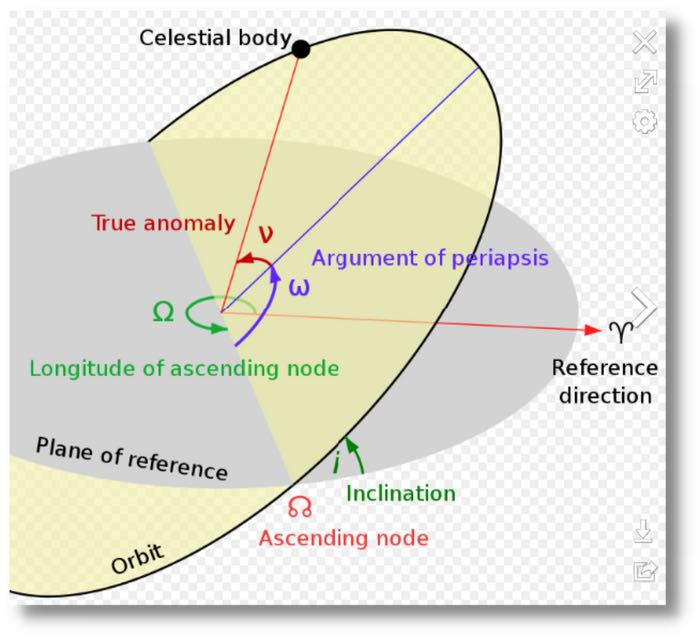
Best wishes to Jack Anthony! The issue includes an orbital-elements graphic.
More than 740 pulsars had been discovered by China’s Five-hundred-meter Aperture Spherical Radio Telescope (FAST).
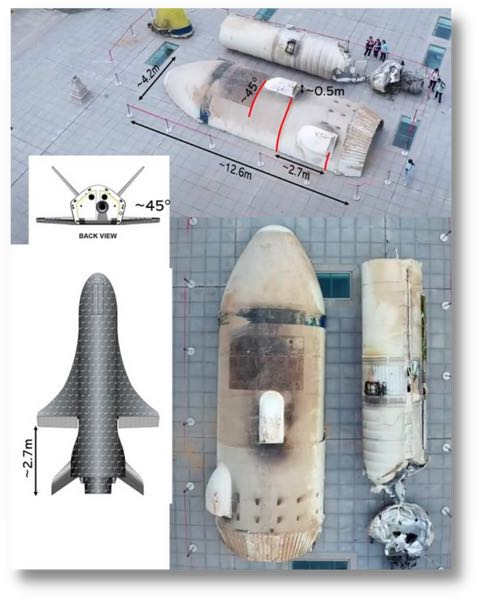
LM-2F fairing that carried China’s spaceplane. The issue notes that the distance and angle between wing and tail-fin features closely match the U.S. X-37B configuration.
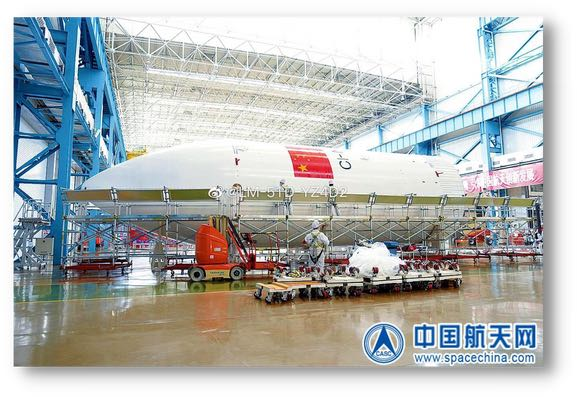
New 18.5m fairings for Long March 5.
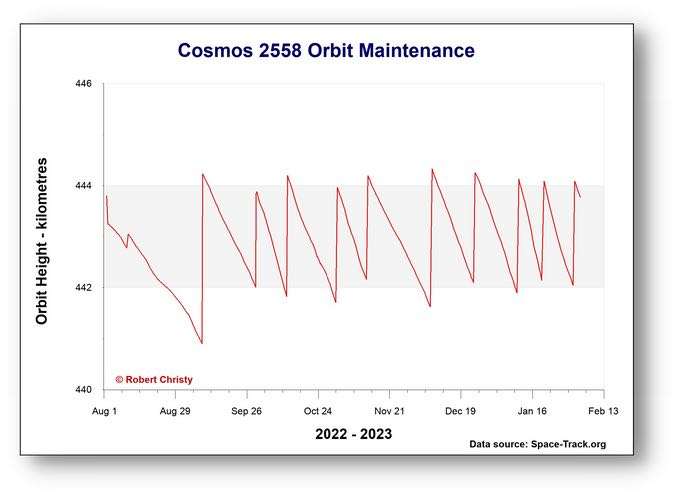
Cosmos 2558 continues to plane-match with USA 326.
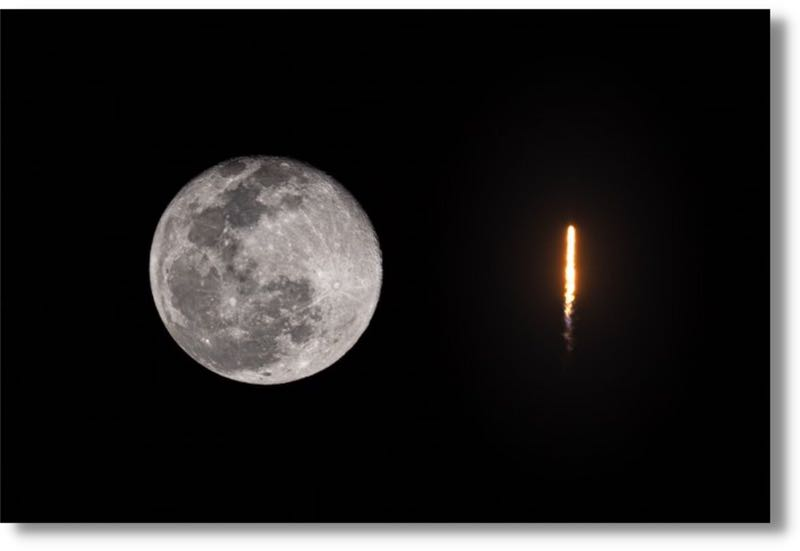
Moon and launch-plume image from the issue’s closing editorial page.

Flash Insider
Subscribe to unlock full access to this Issue and the complete Flash archive.
Subscribe Now Already Subscribed? Log In