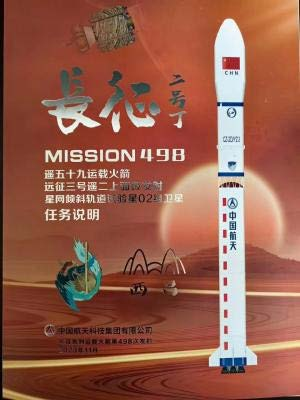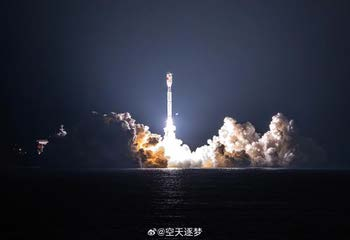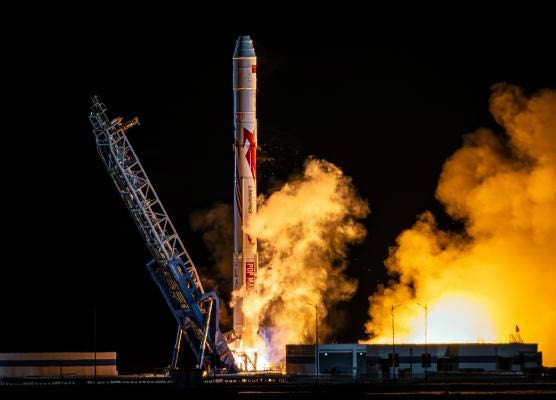
23 Nov 2023: China launched a Long March-2D with what appears to be three new “Satellite Internet Technology Test Satellites” from Xichang. According to official sources, the spacecraft successfully entered the planned orbit and “will carry out the mission of testing satellite internet technologies.” Launch Video.
– The launch announcement described the payloads as Weixing Hulianwang Jishu Shiyan Weixing (Satellite-internet technology test satellite). A similar launch took place on 9 July.
– There is some naming confusion. The satellites are also being called Xingwang Qinxie Guidao 02 zu A/B/C xing (StarNet Inclined Orbit Group 02 Sats A,B,C) and as Chuangxing-20 01/02/03. The satellites are built by the Shanghai Engineering Center for Microsatellites.
– Chinese media provided no details, but describedthe launch as carrying a single “experiment satellite for satellite internet technologies.”
– The current space catalog shows three objects, one listed as “active” and the other two as “unknown.”
– The most likely application for the satellites is testing for China’s national satellite internet megaconstellation project, Guowang. Analysts expect this program will consist of 13,000 satellites, and compete with other proliferated Low Earth Orbit constellations such as Starlink.
– This is at least the third Chinese launch to test internet technology satellites. It appears China is testing satellites at similar altitudes as western pLEO constellations.
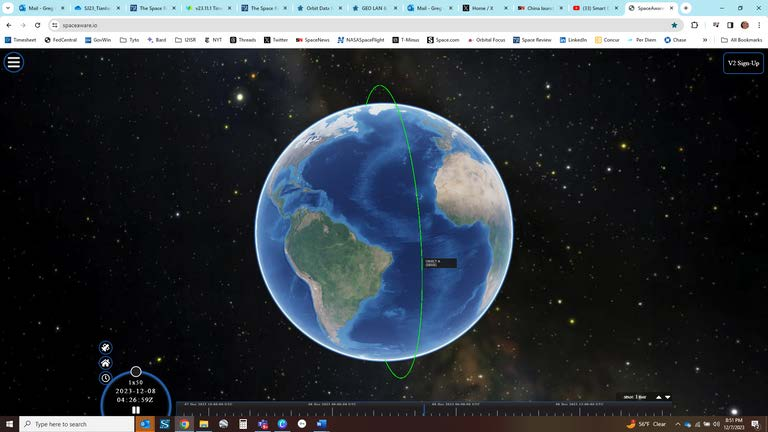
- China announced it launched a single satellite for both the 23 Nov (LM-2D) and 9 Jul (LM-2C) launches. However, both launches used very capable upper stages (YZ-3 and YZ-1S, respectively). As noted, the 23 Nov launch may have delivered three satellites to orbit, while the 9 July launch carried two payloads. Satellites from these launches are operating at ~1,100km altitudes.
- By comparison, OneWeb satellites operate in at a similar altitude, ~1,200km.
- On 8 Jun, China launched a KZ-1A with the Longjiang-3 experimental stackable communications satellite, jointly developed by a commercial satellite company and its parent entity, the Harbin Institute of Technology (HIT). Longjiang-3 is in a considerably lower orbit, 480km.
- Starlink satellites operate at a similar altitude of ~550-570km.
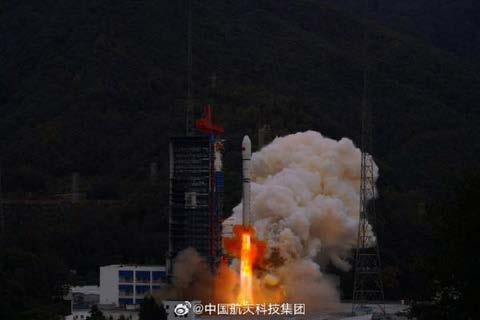
China’s 23 Nov 2023 Long March-2D launch carrying satellite-internet technology test spacecraft (NASASpaceflight).
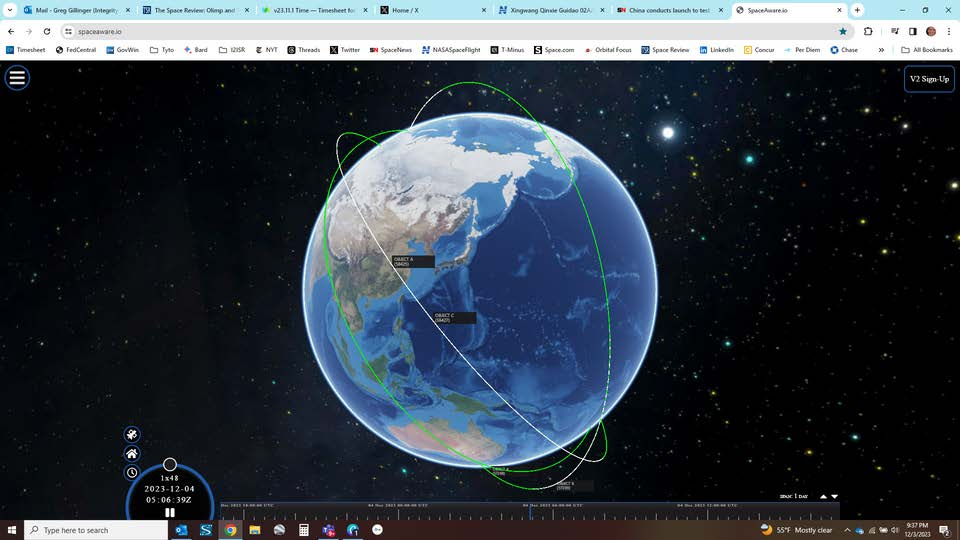
China’s three sets of test broadband internet satellites in orbit: Longjiang-3, the 9 Jul pair, and the 23 Nov trio (NASASpaceflight).