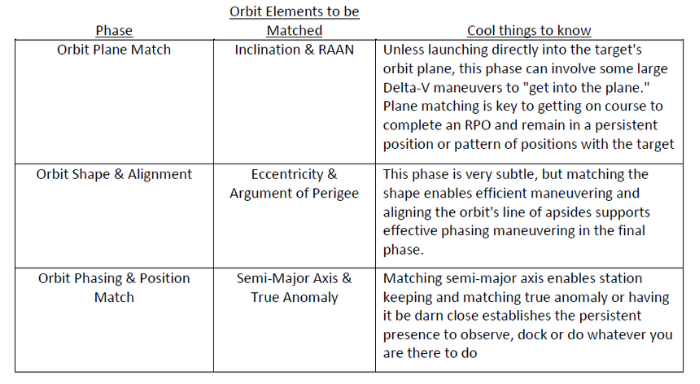
2-7 June: China is maneuvering both SJ-21 (49330) and SJ-25 (62485) in order to conduct the world’s first refueling experiment in Geosynchronous orbit. As of 6 Jun the satellites are on orbital trajectories will have them in close proximity on ~11 June. China has stated SJ-25 is an on-orbit service test vehicle, specifically a refueling satellite. SJ-21 captured and hauled away a piece of space debris in GEO back in January 2022. The US has placed TWO of its GSSAP satellites (USA 270 <41744> & USA 271 <41645>) in position to observe. Watch COMSPOC Video Link of maneuvers from 2-5 June. See Jack Anthony’s explanation of “How to Rendezvous With Another Satellite.” China appears to be following this playbook exactly!
Timeline:
- 2 Jun: the Joint Commercial Operations Cell reported that SJ-21 raised its average altitude ~296km, initiating a westward drift of ~4°/day. SJ-21 and SJ-25 remain plane matched (inclination 10.5 deg & RAAN 42.6 deg). At the time of the maneuver SJ-21 was at 133.16°E and SJ-25 was at ~120°E.
- In addition to changing its SMA, China also maneuvered to change SJ-21’s eccentricity (orbit shape) to more closely match that of SJ-25.
- 4 Jun: SJ-21 decreased its SMA ~311km, eliminating its westward drift and parked the satellite at 127.5°E. SJ-25 remained at ~120° East.
- 6 Jun: SJ-25 lowered its SMA 119km to initiate a 1.5°/day eastward drift (and toward SJ-21). At this drift rate SJ-25 and SJ-21 will be in close proximity in ~5 days (11 June 2025).
– Prior to 2 June 2025 the last time China maneuvered SJ-21 was in July 2023.
– From COMSPOC: “SJ-21 used a total of ~25 m/s of delta V and it got roughly halfway to SJ-25. Odd that they would stop — meaning, if they were only going to go halfway, why go so fast and use so much fuel? Perhaps the remaining fuel onboard 21 is not a concern.”
Editor’s Note: For those Thank you to the COMSPOC team for their fantastic collaboration!