Issue 122

Russia Launches Cosmos 2588 Co-Planar with US Satellite

23 May: Russia launched a Soyuz 2.1b with a Fregat upper stage carrying the Cosmos 2588 satellite into Low Earth Orbit. The Fregat upper stage was used to maneuver the satellite from its launch inclination of 67° to 73°. The maneuver resulted in Cosmos 2588 being nearly co-planar with a high value US reconnaissance…

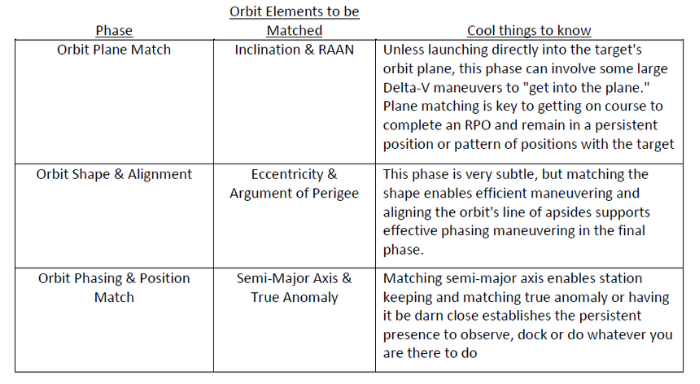
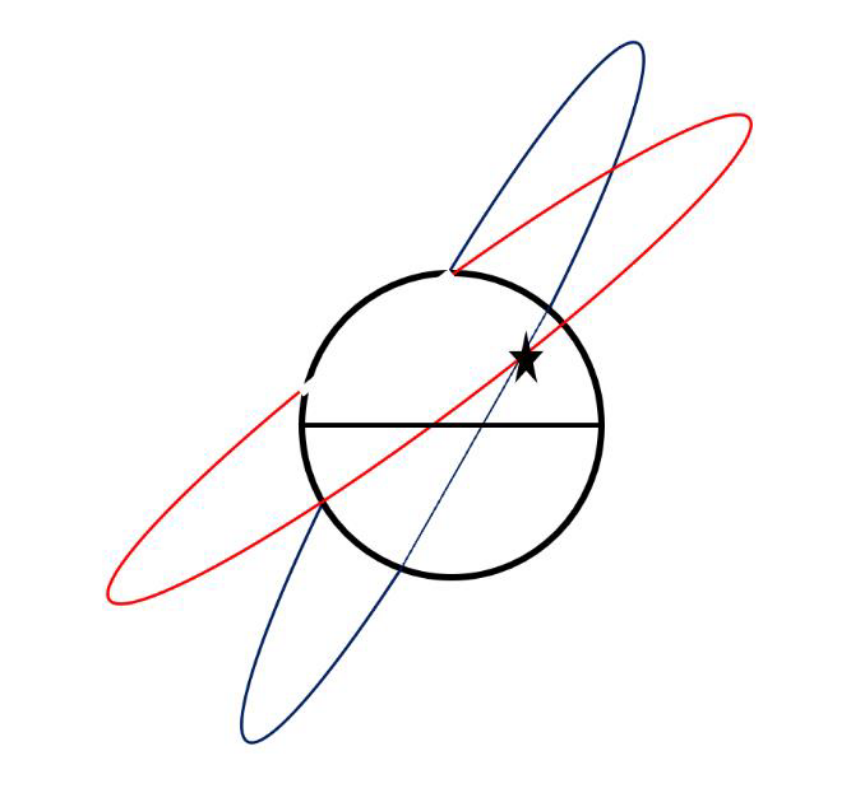
23 May: Russia launched a Soyuz 2.1b with a Fregat upper stage carrying the Cosmos 2588 satellite into Low Earth Orbit. The Fregat upper stage was used to maneuver the satellite from its launch inclination of 67° to 73°. The maneuver resulted in Cosmos 2588 being nearly co-planar with a high value US reconnaissance satellite, USA 338. This is the fourth instance in which Russia has launched a Nivilir satellite into a co-planar orbit with US reconnaissance satellites. Currently, Cosmos 2558 (53323), Cosmos 2576 (59773) and Cosmos 2588 are all nearly co-planar with USA 326, USA 314 and USA 338 respectively. Launching into a co-planar orbit enables Russia to conduct proximity operations (with potential counterspace capabilities) with minimal fuel expenditure and little warning. See Jack Anthony’s “How to Rendezvous With Another Satellite”. Not great. For MUCH more information on the Nivilir please read Bart Hendrickx latest articles (Part 1 & Part 2) in the Space Review. Note: Orbital information on the USA satellites is not available in the public space catalog, however it is available via other non-governmental sources. Launch Video.

– Cosmos 2588 is currently in a 479 x 463km orbit with an inclination of 73°. By comparison Cosmos 2558 is 452 x 459km and 97.2° inclination and Cosmos 2576 is at 490 x 482 and 97.4° inclination.

– Per Breaking Defense article: “in its current orbit, Cosmos 2588 will pass as close as 93.9 kilometers (58.3 miles) from its target (USA 338).”

– Per Slingshot Linked In post: “As the objects are at different altitudes and assuming there are no further maneuvers, the objects will have a ‘fly-by’ roughly every 4 days, leading to repeated close approaches.” Video!

– Russia likely conducted an operational test of a counterspace satellite with Cosmos 2519 and its sub-satellites, Cosmos 2521 & Cosmos 2523, from July 2017 – June 2018. (see next article)

– Per Dr Marco Langbroek:

  • “The orbit of Cosmos 2588 indeed is very similar to that of USA 338 (orbit of the latter based on observations by Independent Observers). The difference in RAAN is only 0.11 degrees, the difference in inclination is 0.6°. Cosmos 2588 orbits just above the orbit of USA 338. They can approach each other to <100 km in this orbital configuration.”
  • “This is the fourth time a Russian military satellite is placed co-orbital with a US military optical reconnaissance satellite in five years time. Earlier we had Cosmos 2542/2543 and USA 245; then Cosmos 2558 and USA 326; then Cosmos 2576 and USA 314.” (Editor’s note: Cosmos 2542/43 are no longer in orbit)


  • “The first instance (Cosmos 2542/2543) appeared to be an ‘inspector satellite’ mission; but for the second and third (Cosmos 2558 & 2576), and perhaps this new one (Cosmos 2588) as well, I think we should seriously consider that we are perhaps seeing the positioning of a counterspace capacity…a dormant co-orbital ASAT weapon.”

– Per Bart Hendrickx:

  • Paraphrasing: Prior to Cosmos 2588’s launch USA 290 and USA 338 were the only big US optical reconnaissance satellites launched in the past decade or so that have not yet been shadowed by Nivililr/14F150 satellites.
  • Unlike USA 326 & 314, which are in Sun-synchronous orbits, USA 290 & 380 are in 73° inclined orbits.
  • “It looks like plans to directly launch this 14F150 (Nivilir/Cosmos 2588) into a 73° inclination orbit with the Soyuz-2.1v were abandoned. Instead, (Russia) decided to fly it on a Soyuz-2.1b/Fregat, using the standard launch trajectory for a 67° orbit so as to avoid the use of new drop zones on Russian territory. Fregat was then used to change the inclination from 67° to 73°.”
  • “Cosmos 2558 & 2576…regularly perform orbit corrections, showing that both are still operational. They are in orbital planes close to those of the US reconnaissance satellites USA 326 and USA 314, but do stay at considerable distances from them, coming no closer than about 50 kilometers. Cosmos-2558 was orbited just about six months after USA 326, demonstrating that targets for the 14F150 (Nivilir) satellites can be selected at relatively short notice.”


  • Cosmos 2558 and 2576 (and now Cosmos 2588) are space surveillance satellites that themselves pose no direct threat to the American satellites. What US officials have probably been concerned about is that, like their predecessors Cosmos 2519 and 2542, the (three) satellites (Cosmos 2558, 2576, & 2588) may carry subsatellites armed with ASAT projectiles. During the (Cosmos 2519 & 2542) missions, these subsatellites exhibited significant maneuvering capability and fired their projectiles with Russian satellites flying in the vicinity as phantom targets or observation platforms. In other words, if Cosmos 2558 and 2576 have these subsatellites on board (which is not at all certain), they could theoretically destroy the American spy satellites.”

Editor’s Comment: It’s getting pretty sporty up there.