31 Oct 2022: In another excellent Space Review article, Bart Hendrickx examined recent collaboration between Russian and Iran. Russia built and launched a remote sensing satellite for Iran this year and three more are expected to follow in the coming years. There is also compelling evidence that a Russian company is building a communications satellite for Iran which will be launched to Geostationary Orbit in 2024.
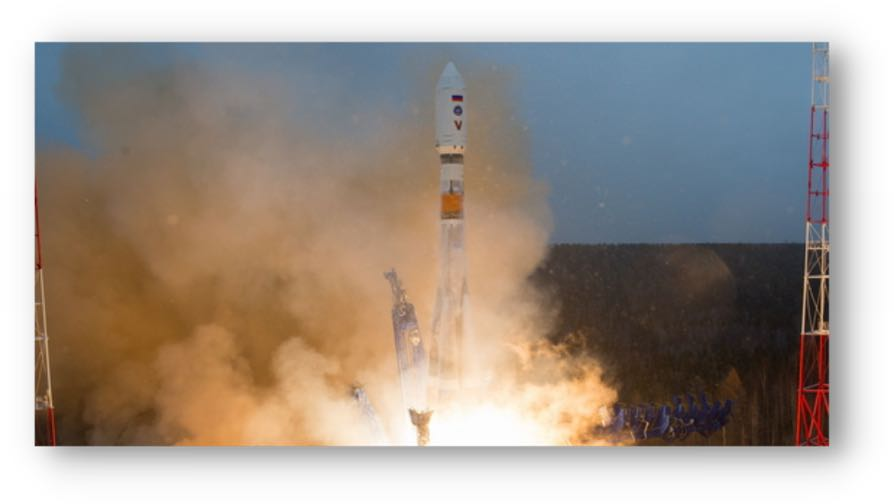
– Russia launched the Khayyam satellite into a nearly circular 500-kilometer orbit inclined 97.4 degrees.
– Russian coverage of the launch was low key with no mention of Iran.
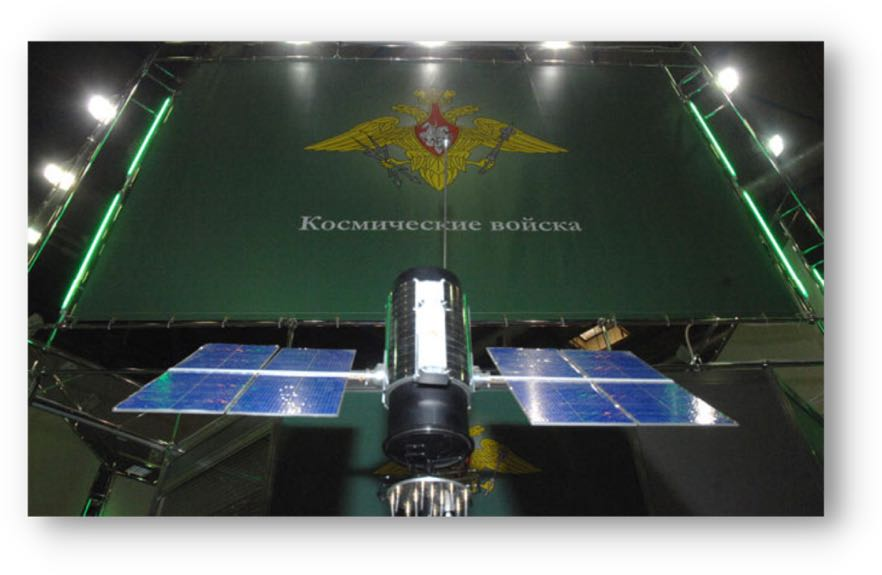
– Iran had fewer qualms about depicting the satellite. A drawing of the satellite hovering above Earth appeared on a number of Iranian websites and a scale model of the satellite was on display during a press conference held one day after the launch by the head of Iran’s space agency, Hassan Salarieh.
– Khayyam’s payload is a Korsch telescope with what are called five “optical elements”. The telescope provides imaging in one panchromatic channel and four multispectral channels (near infrared, red, green, and blue). Its linear resolution is listed as 1.1m, although one of the officials added that by Western standards it is actually 0.73m. The satellite could cover a ground swath of 12.5km from an altitude of 500km.
– Khayyam’s mission control center is located at the Mahdasht Space Center, which is roughly 60km west of Tehran, near the city of Karaj.
– It is unknown if Iran is sharing Khayyam imagery with Russia.
– Russia currently operates two high-resolution optical reconnaissance satellites of the Persona type (Kosmos-2486 and 2506). These have been in orbit since 2013 and 2015 respectively and almost certainly exceeded their design lifetime. The launch of two big next-generation spy satellites (Razdan) is years behind schedule.
– Evidence emerged in recent weeks that Russia is building a geostationary communications satellite for Iran, called the Ekvator.
-Russia plans to launch Ekvator from the Baikonur Cosmodrome with a Proton-M rocket and a Briz-M upper stage.
-Reports state Ekvator will have a total mass of about 2,300kg and a payload mass of 755kg. Two drawings of the satellite published in the report show several antennas operating in the Ka-, Ku-, and S-bands.
– Iran applied to the International Telecommunications Union for 5 GEO slots for Ka and Ku-band satellites in Mar 2017: 1) IRN-24.19E; 2) IRN-30B-24.19E; 3) IRN-30N-26E; 4) IRN-30B-34E; and 5)IRN-30B-43.5E.
-Ekvator (which may well receive a name in Farsi after it is launched) is supposed to occupy Iran’s 34°E slot within the next two years.
BREAKING NEWS: Iran’s Revolutionary Guard Corps launched a new “Ghaem-100” satellite-capable rocket yesterday morning (5 Nov) from what appears to be the Khomeini Spaceport – more to follow in the next Final Frontier Flash!

Illustration of Iran’s Khayyam remote-sensing satellite above Earth.

Iran Space Agency chief Hassan Salarieh shown beside a scale model associated with the Khayyam mission.
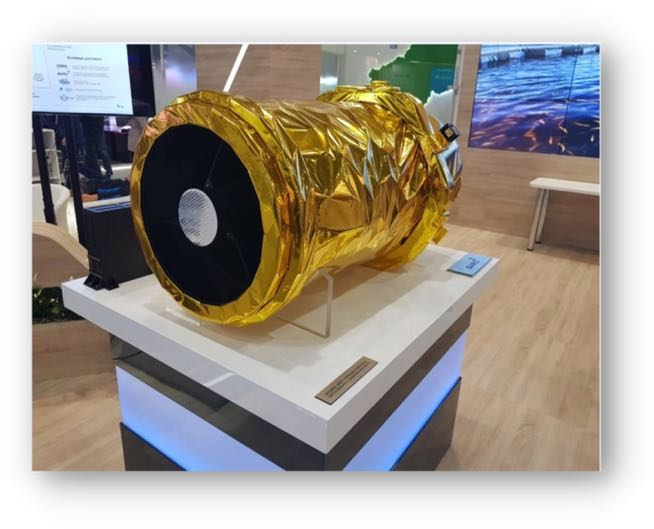
Scale model of the Khayyam remote-sensing satellite displayed after launch.

Illustration of the Ekvator geostationary communications satellite reported to be under development for Iran.